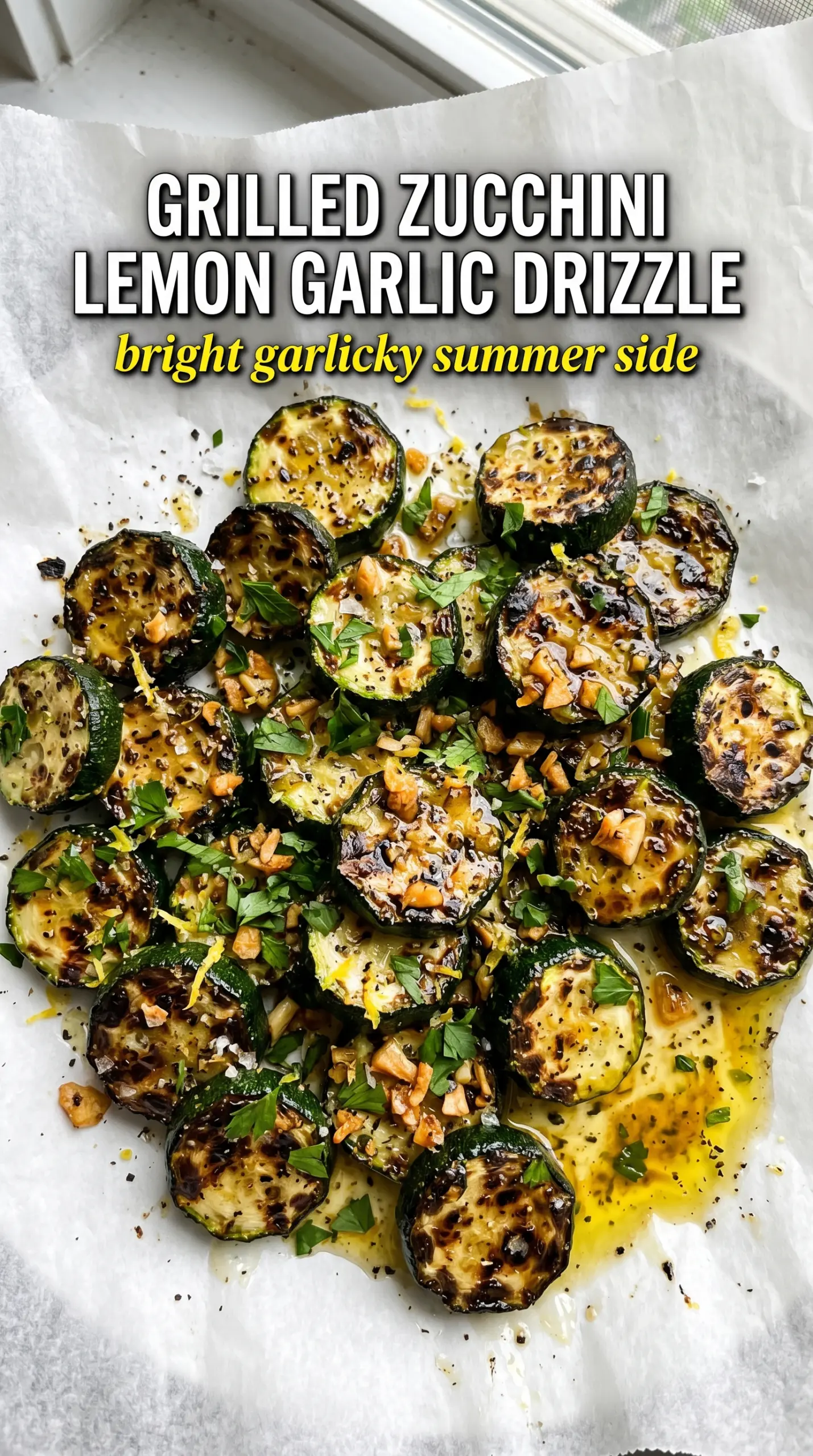
Grilled zucchini turns from ordinary to worth repeating the moment those cut sides hit a hot grate and pick up deep char marks. The edges soften, the centers stay just tender, and the warm lemon garlic drizzle slides into every groove so each bite tastes bright instead of flat. It’s the kind of side dish that disappears fast because it plays nicely with everything from chicken to fish to burgers.
The key here is treating zucchini like a quick-cooking vegetable, not something that needs to be softened into submission. A light coat of oil keeps it from sticking and helps the surface brown, while medium-high heat gives you those clean grill marks before the flesh turns mushy. The drizzle matters just as much: warming the garlic gently in olive oil takes the raw edge off without browning it, and adding the lemon off the heat keeps the sauce fresh and sharp instead of bitter.
Below, I’m walking through the little details that keep zucchini from going watery, plus a couple of smart ways to change the drizzle without losing the bright, garlicky finish.
The zucchini stayed tender but didn’t fall apart, and that warm lemon garlic drizzle soaked into the grill marks in the best way. I served it with grilled chicken and my husband kept sneaking pieces off the platter.
Grilled zucchini with lemon garlic drizzle is the side that vanishes first, especially when the sauce pools into the char marks.
The Trick to Keeping Grilled Zucchini Firm Instead of Watery
Zucchini turns soggy when the heat is too low or the slices sit on the grill long enough to dump their moisture and collapse. What you want is fast contact with a hot grate. That gives you browning before the flesh fully softens, which is the difference between a side dish with texture and one that goes limp on the platter.
Cut size matters more than people think. Thick planks hold their shape better than thin rounds, and they’re easier to flip without tearing. If your grill is clean and hot, and you leave the zucchini alone long enough to develop marks before moving it, you’ll get tender slices with a little bite left in the center.
- Zucchini planks — Halving the zucchini lengthwise gives you enough surface area for good char without making the pieces fragile. If you slice them too thin, they cook through before the grill can do its job.
- Olive oil — The first coating helps with browning and keeps the zucchini from sticking to the grates. A neutral oil works in a pinch, but olive oil fits the lemon and garlic in the finish.
- Lemon juice and zest — Juice brings the brightness, while zest adds the part of lemon flavor that doesn’t disappear in heat. If you skip the zest, the drizzle tastes flatter and more one-note.
- Garlic — Garlic is the backbone of the drizzle, but it only works if it’s warmed gently. If it browns, it turns bitter fast, so the pan comes off the heat as soon as it smells fragrant.
What Each Ingredient Is Actually Doing in This Dish
Use medium zucchini for the best balance of flavor and structure. Very large zucchini can be watery and seedy, which makes grilling less forgiving. If yours are oversized, slice them into wider planks and expect a slightly softer texture.
The drizzle is built on olive oil for a reason: it carries the garlic, lemon, and parsley onto the zucchini instead of sitting on top like a dressing that won’t cling. Fresh lemon juice matters here. Bottled juice tastes harsh in a sauce this simple, and there’s nowhere for that off note to hide. Parsley is not just garnish either; it gives the warm oil something fresh and grassy to hold onto at the end.
Building the Grill Marks Before the Drizzle Goes On
Seasoning and Oiling the Zucchini
Brush the zucchini lightly with olive oil, then season it with salt and black pepper. You want a thin, even coat, not a slick surface, because too much oil can cause flare-ups and keeps the vegetable from browning cleanly. Salt the zucchini just before it goes on the grill so it doesn’t start sweating while it waits.
Grilling Over Direct Heat
Set the zucchini on a preheated medium-high grill and leave it alone for 3 to 4 minutes per side. If it sticks when you try to turn it, it probably needs another minute; once it’s ready, it releases more easily and shows a dark, defined char. Pull it off when it’s tender but still holds its shape, since carryover heat will soften it a little more on the platter.
Warming the Garlic Without Browning It
Heat the olive oil for the drizzle in a small pan over medium heat, then add the garlic and cook just until fragrant, about 1 minute. The garlic should smell sweet and sharp, not toasted. If it starts to color, take the pan off the heat immediately, because browned garlic will carry bitterness into the whole sauce.
Finishing the Sauce and Serving Hot
Stir in the lemon juice, zest, red pepper flakes, parsley, salt, and pepper after the pan comes off the burner. That keeps the lemon bright and the parsley fresh. Pour the drizzle over the zucchini while both are warm so the sauce settles into the grill marks instead of sliding off the surface.
Three Smart Ways to Change the Drizzle Without Losing the Point
Make It Dairy-Free and Naturally Gluten-Free
This recipe already fits both of those categories as written. That’s useful when you’re cooking for a mixed table, because the flavor still feels complete without relying on butter, cheese, or breading for support. The lemon garlic drizzle does all the heavy lifting on its own.
Swap the Parsley for Basil or Dill
Parsley keeps the drizzle clean and fresh, but basil adds a softer sweetness and dill gives it a sharper, almost cucumber-like edge. Use the same amount and add the herbs at the end so they stay bright. Basil works best with grilled chicken or fish, while dill leans a little more summery and tangy.
Turn Up the Heat With More Red Pepper Flakes
The quarter teaspoon in the base recipe gives a gentle hum of heat. If you want a stronger bite, double it, but stop short of turning the drizzle into a chili sauce, because the lemon should stay in charge. This is the easiest way to make the dish feel a little more substantial next to grilled meat or pasta.
Add Parmesan at the Table
A little finely grated Parmesan adds salt and a savory edge, but it changes the dish from bright and clean to richer and more Mediterranean-feeling. Sprinkle it on after the drizzle goes over the zucchini so it doesn’t melt into clumps in the pan. This works best when you’re serving the zucchini with grilled steak or roasted chicken.
Storage and Reheating
- Refrigerator: Store leftovers in an airtight container for up to 3 days. The zucchini softens as it sits, and the drizzle will soak in.
- Freezer: I don’t recommend freezing this dish. Zucchini releases too much water after thawing, so the texture turns mushy.
- Reheating: Warm gently in a skillet over low heat or serve at room temperature. High heat is the mistake here, because it pushes already-tender zucchini into collapse and dulls the lemon.
Answers to the Questions Worth Asking
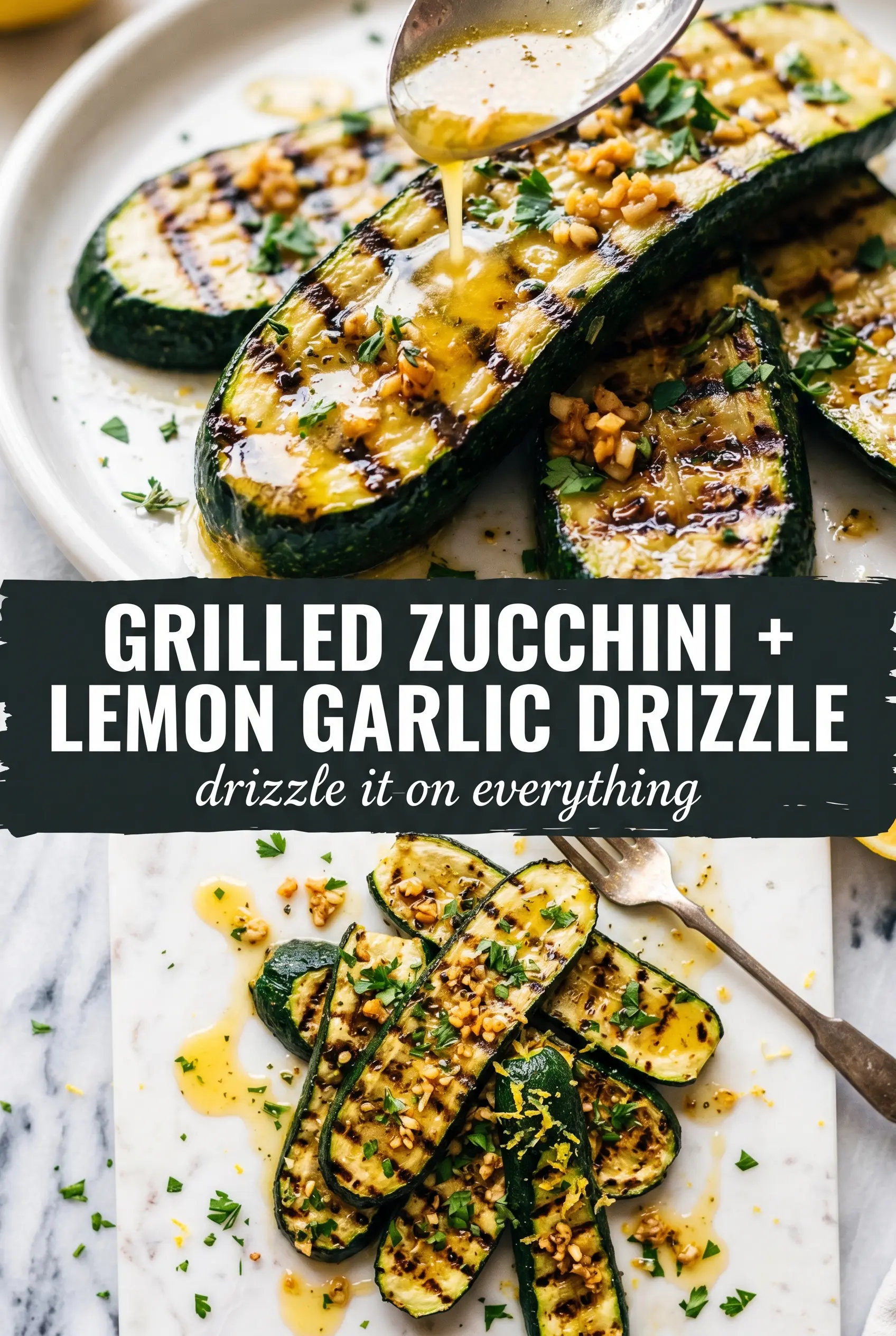
Grilled Zucchini with Lemon Garlic Drizzle
Ingredients
Equipment
Method
- Brush the zucchini planks with olive oil and season with salt and black pepper to taste.
- Preheat the grill to medium-high and oil the grates.
- Grill the zucchini for 3–4 minutes per side until char marks form and the zucchini is tender, then arrange on a serving platter.
- Warm 4 tablespoons olive oil in a small pan over medium heat.
- Add the minced garlic and cook for 1 minute until fragrant, then remove from heat.
- Stir in the lemon juice, lemon zest, red pepper flakes, and chopped parsley.
- Pour the warm lemon garlic drizzle generously over the grilled zucchini and serve immediately.