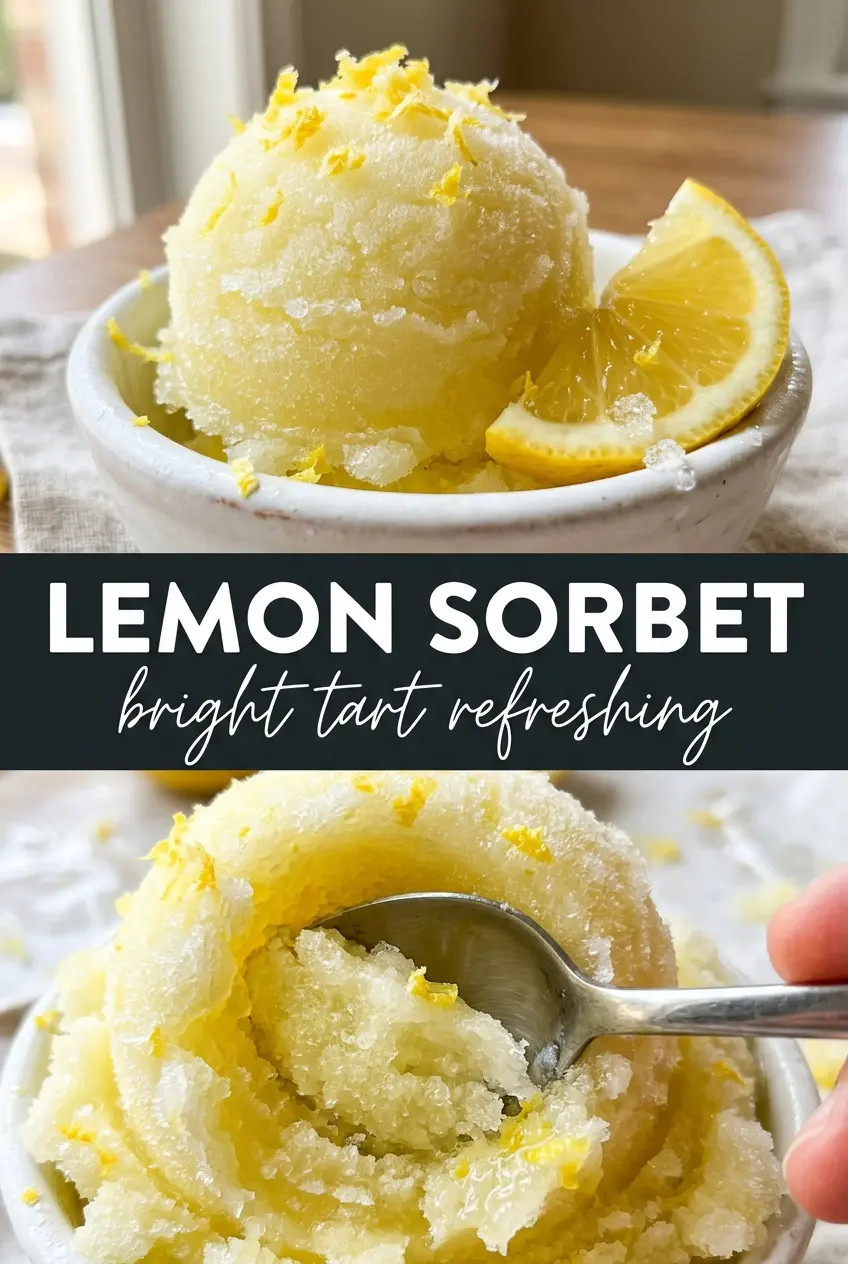
Brilliantly tart lemon sorbet has a way of cutting straight through a meal and resetting your palate in one spoonful. The texture should be light and icy, not hard and brittle, with enough body to scoop cleanly and enough brightness to taste like fresh lemon rather than lemon candy. This version keeps the ingredient list short, which matters here because sorbet has nowhere to hide. When the lemon juice is balanced with a simple syrup that’s fully dissolved and completely cooled, the result is clean, sharp, and refreshing instead of grainy or flat.
The detail that makes the biggest difference is temperature. Warm syrup mixed into lemon juice dulls the flavor and slows freezing, so the base needs to chill until it’s very cold before it ever meets the machine. The optional egg white gives the sorbet a softer, slightly creamier texture without making it taste eggy, but it works best when the base is already cold and the peaks are only soft. That little bit of air keeps the finished sorbet from freezing into a dense block.
Below, I’ve included the one step people rush most often, plus a few ways to adapt the texture if you like your sorbet a little smoother or a little more intense.
The lemon flavor was bright without being sharp, and the egg white kept it from freezing into a rock-solid block. I churned it exactly 25 minutes and it scooped beautifully after a short freeze.
Bright, icy lemon sorbet with a smooth scoop and a fresh citrus finish deserves a spot on your dessert board.
The Part That Keeps Lemon Sorbet from Turning Icy and Sharp
Lemon sorbet fails in two common ways: it freezes into a hard block, or it tastes aggressively sour without enough sweetness to round it out. The simple syrup does more than sweeten the mixture. It controls how the sorbet freezes, which is why the sugar has to fully dissolve before the base chills. If any granules are left behind, they can make the texture feel sandy instead of smooth.
The other piece that matters is balance. Fresh lemon juice brings the punch, but zest adds aroma that plain juice can’t give you. Without zest, the sorbet tastes thinner and less complete. If you’re tempted to cut the sugar, keep in mind that sorbet needs enough sugar to stay scoopable straight from the freezer.
What Each Ingredient Is Doing in This Lemon Sorbet

- Fresh lemon juice — This is the backbone of the sorbet, so use juice from real lemons, not bottled. Bottled juice tastes flatter and often a little bitter. Strain out seeds and excess pulp, but don’t worry about a little texture from the zest.
- Lemon zest — Zest gives the sorbet that bright, almost floral lemon aroma that makes each bite taste fresher. Use only the yellow outer layer; the white pith underneath can turn bitter. If your lemons are waxed, scrub them well before zesting.
- Granulated sugar — Sugar sweetens the mixture and keeps it scoopable. Honey or maple syrup changes the flavor and freezing behavior, so they’re not good one-for-one swaps here. If you want a slightly softer freeze, don’t reduce the sugar.
- Egg white — This is optional, but it does give the sorbet a lighter, silkier finish. Whip it to soft peaks only, then fold it in gently so you keep the air that helps with texture. Skip it entirely if you want a cleaner, more classic sorbet.
- Pinch of salt — Salt doesn’t make the sorbet salty. It sharpens the lemon and keeps the sweetness from tasting one-note.
Building the Base Before It Goes Into the Machine
Make the syrup first
Combine the sugar and water in a saucepan and heat it just until the sugar disappears. You’re not looking for a boil or a reduction. The liquid should turn completely clear, with no grit left on the spoon when you rub it between your fingers. Then let it cool all the way down before moving on, because warm syrup will mute the lemon and delay freezing.
Blend in the lemon while it’s cold
Stir the cooled syrup with the lemon juice, zest, and salt, then refrigerate until the base is cold enough to feel chilled through the bowl. This matters more than people think. A cold base churns faster and freezes smoother, while a lukewarm one stays loose too long and tends to make larger ice crystals.
Fold in the egg white gently
If you’re using the egg white, whip it to soft peaks and fold it in after the mixture is cold. Hard peaks are too stiff and don’t incorporate as evenly. The goal is a little lift, not a meringue. Stirring it in aggressively knocks out the air and gives you a denser sorbet.
Churn until thick and slushy
Run the mixture in your ice cream maker until it looks like thick, fluffy slush and pulls away from the sides. Most machines land in the 20 to 25 minute range, but the real cue is texture, not the clock. If it still looks soupy, give it more time; if it starts looking dry and icy, stop and move it to the freezer.
Freeze just long enough to set
Transfer the sorbet to a container and freeze until firm, about 2 hours. Cover the surface with parchment or press plastic wrap directly on top if you want to keep ice crystals down. Let it sit at room temperature for a few minutes before scooping, because lemon sorbet taken straight from the freezer can be too hard to serve cleanly.
Three Ways to Adjust This Sorbet Without Losing the Bright Lemon Bite
Dairy-Free and Naturally Light
This recipe is already dairy-free as written, which is one reason it stays so clean and refreshing. Keep it that way if you want the purest lemon flavor and the palest color. The texture will be a little icier than a custard-based dessert, but that’s exactly what sorbet is supposed to be.
Smoother and Softer with Egg White
If you like a sorbet that scoops with less resistance, keep the egg white. It adds air and gives the finished texture a softer edge right out of the freezer. The tradeoff is a slightly less intense, more rounded mouthfeel, but the lemon flavor still comes through strongly.
Lime or Mixed Citrus Version
You can swap part of the lemon juice for lime or orange juice if you want a different citrus edge. Keep at least half the total juice as lemon so the sorbet still tastes bright rather than candy-sweet. Orange softens the sharpness, while lime makes it sharper and a little more aromatic.
Storage and Reheating
- Refrigerator: Not recommended. Sorbet melts and loses its texture almost immediately once chilled only in the fridge.
- Freezer: Store in an airtight container for up to 2 weeks. After that, it will still be safe, but the texture gets icier and the lemon flavor starts to fade.
- Reheating: Reheating doesn’t apply here. For serving, let the container sit at room temperature for 5 to 10 minutes so the sorbet loosens enough to scoop without smashing it.
Answers to the Questions Worth Asking
Lemon Sorbet
Ingredients
Equipment
Method
- Combine sugar and water in a saucepan and stir over medium heat until the sugar fully dissolves.
- Remove from heat and let the syrup cool completely until no warmth remains.
- Stir the cooled simple syrup with lemon juice, lemon zest, and salt until the mixture looks evenly pale and fragrant.
- Refrigerate the lemon mixture until very cold, about 4 hours, so it churns smoothly.
- If using egg white, whip it to soft peaks and fold it gently into the cold lemon mixture to keep it airy.
- Churn in an ice cream maker until thick and slushy, about 20–25 minutes, with a visibly aerated texture.
- Transfer to a container and freeze at least 2 hours until firm, then scoop and serve in chilled bowls or hollowed lemon halves.