Golden, juicy baked boneless skinless chicken thighs are the kind of weeknight dinner that earns a permanent spot in the rotation. The edges get deeply seasoned and lightly caramelized at high heat while the inside stays tender, not dry or stringy. You get all the payoff of roasted chicken with almost no fuss.
The trick is starting with dry chicken thighs and a hot oven. Boneless, skinless thighs cook fast, but they still need enough space on the pan to brown instead of steam. The seasoning mix is simple on purpose: olive oil helps it cling, smoked paprika adds color, and garlic, onion, and Italian seasoning build a savory crust that tastes like you spent more time on it than you did.
Below, I’ve included the small details that matter most, from why 425°F works so well to what to do if your thighs release a lot of liquid on the pan. There’s also a few useful ways to change the seasoning without losing that juicy, reliable result.
I was shocked how juicy these stayed at 425 and the seasoning formed a real crust instead of sliding off. I baked them on parchment and the pan cleanup was nothing.
Juicy baked boneless skinless chicken thighs are the kind of dinner you’ll want to keep on repeat for busy nights.
The Reason These Thighs Brown Instead of Steam
Boneless skinless chicken thighs are forgiving, but they still need a little help to get that roasted texture people want. The biggest mistake is crowding the pan. When the pieces sit too close together, the moisture coming off the chicken traps itself under the meat and you end up with pale, soft surfaces instead of browned edges. Give each thigh space and use a foil-lined sheet pan so the hot air can move around them.
High heat matters here too. At 425°F, the outside of the chicken starts to caramelize before the interior has time to dry out. That’s why this method works so well for boneless thighs, which have enough fat to stay juicy but can still turn rubbery if they’re baked too long. Pull them when the center hits 165°F and let them rest for a few minutes so the juices settle back in.
What Each Ingredient Is Actually Doing in This Chicken Thigh Recipe
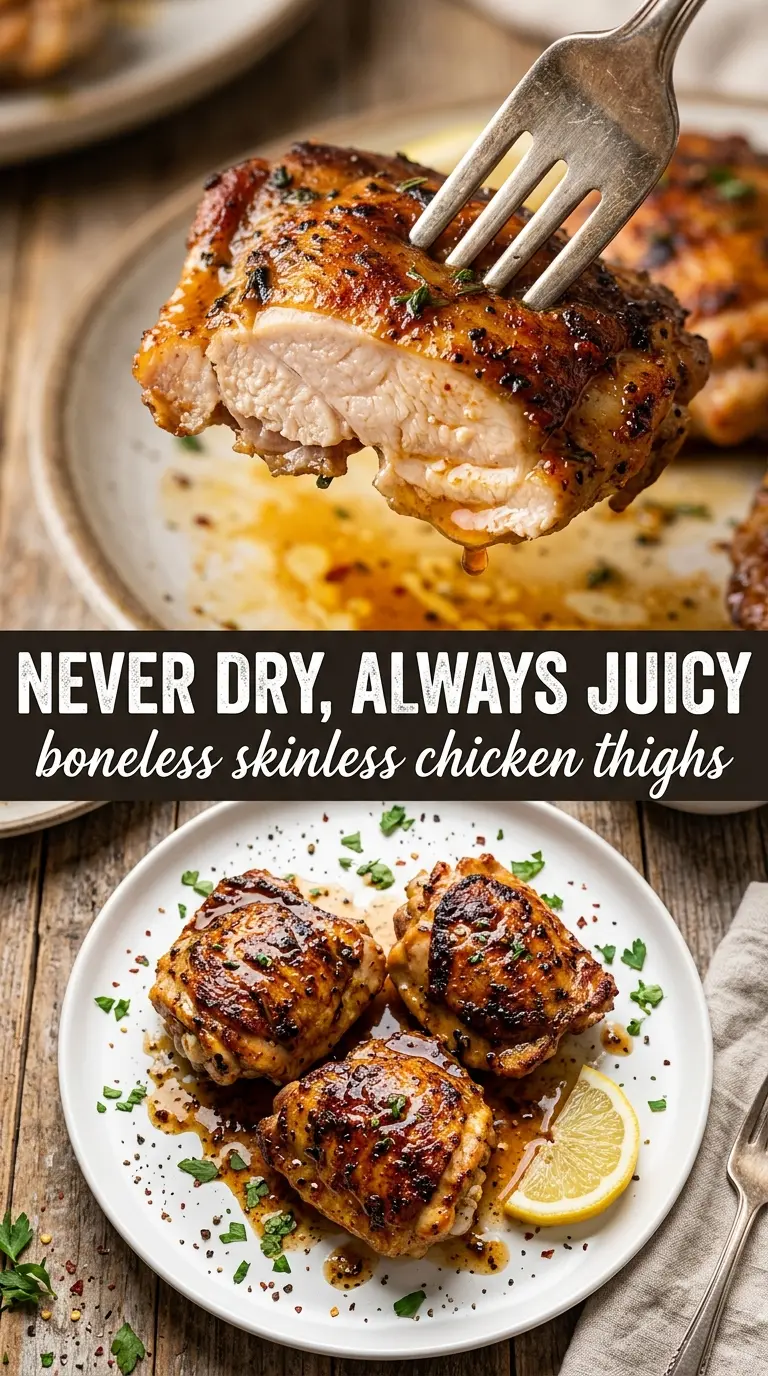
- Chicken thighs (pat dry for browning) — Thighs are more forgiving than breasts. Pat dry so they brown properly instead of steam.
- Oil or butter (the browning medium) — High-heat oil essential for proper searing. Creates deep pan flavor through browning.
- Seasonings (salt, pepper, spices) — Build flavor boldly. Thighs carry flavor better than white meat.
- Aromatics (garlic, onion, ginger, herbs) — Cook with oil to bloom flavors. These become the foundation of the dish.
- Sauce or braising liquid (soy, honey, wine, or broth) — This keeps thighs moist and adds flavor. Thighs stay juicy even if slightly overcooked.
- Vegetables (if using potatoes, carrots, or others) — Layer by cooking time so everything finishes together.
- Acid (vinegar, wine, citrus, or soy) — This brightens sauce and prevents heavy thigh flavor from becoming monotone.
- Proper doneness (165°F internal temperature) — Thighs stay juicy at this temp. Thermometer ensures accuracy without guessing.
What Each Seasoning Is Actually Doing Here
- Boneless skinless chicken thighs — Thighs stay moist better than breasts and hold up well to a hot oven. If you swap in chicken breasts, reduce the bake time and watch closely, because breasts dry out faster and won’t forgive an extra five minutes the way thighs will.
- Olive oil — This helps the spices stick and promotes browning. A neutral oil works fine, but don’t skip it or the seasoning will look dusty and the surface won’t crisp the same way.
- Smoked paprika — This is what gives the chicken its warm color and a little depth. Regular paprika works in a pinch, but you’ll lose some of that roasted, slightly smoky finish.
- Garlic powder, onion powder, and Italian seasoning — These build the savory base without burning in the oven the way fresh garlic can. If you only have dried oregano and basil, use those, but the blend here tastes fuller and more rounded.
- Lemon wedges and parsley — These aren’t just garnish. A squeeze of lemon wakes up the seasoning and cuts through the richness, while parsley gives the finished chicken a fresh look and taste.
How to Get Juicy Chicken With a Real Roasted Edge
Dry the Chicken First
Pat the chicken thighs dry with paper towels before anything else. Moisture on the surface is the enemy of browning, and if you skip this step the spices will slide around instead of forming a coating. You want the chicken to look matte, not slick, before it goes into the seasoning bowl.
Coat It Evenly
Toss the chicken with olive oil first, then add the spices so everything clings in a thin, even layer. If the seasoning clumps in one spot, that area can taste muddy or overly salty while the rest stays bland. Use your hands if needed; it’s the fastest way to work the seasoning into the curves of the thighs.
Roast at High Heat Without Crowding
Arrange the thighs in a single layer on the baking sheet with a little room between each one. If they’re overlapping, the underside stays pale and the tops can’t brown properly. Bake until the edges look caramelized and the thickest part reaches 165°F. If your oven runs hot, start checking at 20 minutes, because thighs can go from perfect to dry faster than people expect.
Rest Before Serving
Give the chicken 3 to 5 minutes to rest after it comes out of the oven. That short pause keeps the juices from spilling all over the cutting board the moment you slice in. Finish with lemon juice right before serving for the brightest flavor and the cleanest contrast to the seasoned crust.
How to Adapt These Chicken Thighs for Different Nights
Make It Gluten-Free Without Changing the Method
This recipe is naturally gluten-free as written, so there’s nothing to replace. Just check your Italian seasoning blend if it’s a store mix, since a few brands include anti-caking additives or spice blends you may want to avoid.
Swap the Spice Profile for a Different Mood
Keep the oil and salt the same, then trade the Italian seasoning for taco seasoning, Cajun seasoning, or lemon pepper. The cooking method stays identical, but the final chicken shifts from herby and mellow to smoky, punchy, or bright depending on the blend you choose.
Use Chicken Breasts, But Watch the Clock
You can use boneless skinless chicken breasts, but they need less time and a closer eye. Start checking early and pull them as soon as they reach 165°F, because breasts dry out faster and won’t stay as juicy during the extra few minutes thighs can handle.
Storage and Reheating
- Refrigerator: Store in an airtight container for up to 4 days. The seasoning stays good, though the crust softens a little after chilling.
- Freezer: These freeze well for up to 2 months. Freeze in a single layer first if you can, then move to a bag or container so the pieces don’t stick together.
- Reheating: Warm in a 350°F oven or air fryer until heated through. The biggest mistake is blasting them in the microwave too long, which turns the edges rubbery and pushes the juices out.
Answers to the Questions Worth Asking
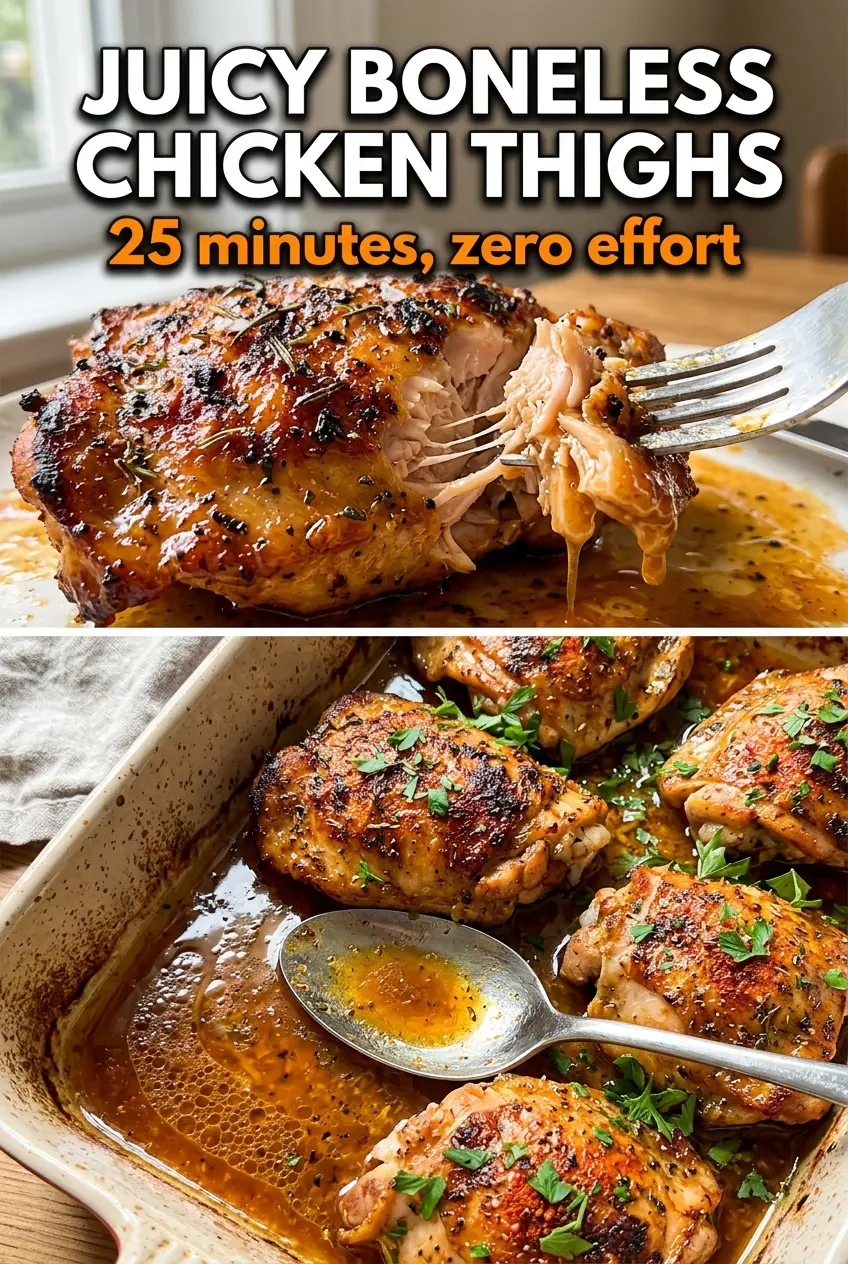
Baked Boneless Skinless Chicken Thighs
Ingredients
Equipment
Method
- Preheat oven to 425F and pat the boneless skinless chicken thighs dry for better browning.
- Toss the chicken with olive oil, garlic powder, onion powder, smoked paprika, Italian seasoning, salt, and black pepper until evenly coated.
- Arrange chicken on a foil-lined sheet pan in a single layer, making sure the pieces do not crowd for even caramelization.
- Bake at 425F for 20-25 minutes until the edges caramelize and the internal temperature reaches 165F.
- Rest chicken for 3-5 minutes so juices redistribute, then serve warm.
- Serve with lemon wedges and fresh parsley over the top.