Glossy, sticky chicken thighs with deeply caramelized edges and a savory-sweet glaze earn a permanent spot in the dinner rotation fast. The skin turns crackly in the oven, the sauce tightens into a lacquer, and the garlic-ginger backbone keeps the sweetness from tipping over. It’s the kind of pan that lands on the table and gets quiet for a minute, which tells you everything you need to know.
This version works because the marinade does double duty: it seasons the meat before it goes into the oven, then reduces on the chicken as it roasts. Bone-in, skin-on thighs stay juicy at a higher heat, and the sugar in the glaze needs that heat to caramelize instead of just sitting there tasting sweet. The vinegar matters too; it sharpens the sauce so the glaze tastes balanced instead of heavy.
Below, I’ll show you how to keep the glaze from burning before the chicken is cooked through, plus the small finishing move that gives you that deep mahogany color without drying out the meat.
The marinade made the chicken taste seasoned all the way through, and the glaze turned shiny and sticky without burning. I baked it the full time and the skin still came out crisp at the edges.
Save these glazed soy sauce brown sugar chicken thighs for a sticky, caramelized dinner with crisp skin and a fast marinade.
The Trick to Keeping the Sugar From Burning Before the Chicken Is Done
The main failure point here is heat control. Brown sugar caramelizes fast, and on bone-in thighs that need time to cook through, a hot oven can push the glaze from glossy to bitter before the meat is ready. That’s why the first stretch of baking is about setting the skin and starting the sauce, then the finish is about building color in the last few minutes.
Chicken thighs are forgiving, but this glaze isn’t. If the pan starts looking dry, brush with the reserved marinade, not extra sauce poured over the top in one heavy layer. Thin coats caramelize; thick puddles burn.
- Bone-in, skin-on chicken thighs — This cut stays juicy while the glaze cooks down. Boneless thighs work in a pinch, but they cook faster and don’t give you the same rich, crisp finish. Reduce the bake time and start checking early if you swap.
- Brown sugar — Packed brown sugar gives the glaze its sticky body and deep molasses note. Light or dark both work; dark brown sugar makes the sauce a little deeper and more robust.
- Soy sauce — This is the salt and the savory backbone. Use regular soy sauce for balance; low-sodium is fine if that’s what you keep on hand, but don’t replace it with liquid aminos unless you want a thinner, less rounded glaze.
- Apple cider vinegar — The vinegar keeps the glaze from tasting flat. Rice vinegar works too, but plain white vinegar tastes sharper, so use a little less if that’s your only option.
- Ginger and garlic — Fresh ginger and minced garlic make the sauce taste cooked, not bottled. Powdered versions can work in a pinch, but the fresh aromatics hold up better during the bake and give the glaze more lift.
What Each Ingredient Is Actually Doing in This Chicken Thigh Recipe

- Chicken thighs (pat dry for browning) — Thighs are more forgiving than breasts. Pat dry so they brown properly instead of steam.
- Oil or butter (the browning medium) — High-heat oil essential for proper searing. Creates deep pan flavor through browning.
- Seasonings (salt, pepper, spices) — Build flavor boldly. Thighs carry flavor better than white meat.
- Aromatics (garlic, onion, ginger, herbs) — Cook with oil to bloom flavors. These become the foundation of the dish.
- Sauce or braising liquid (soy, honey, wine, or broth) — This keeps thighs moist and adds flavor. Thighs stay juicy even if slightly overcooked.
- Vegetables (if using potatoes, carrots, or others) — Layer by cooking time so everything finishes together.
- Acid (vinegar, wine, citrus, or soy) — This brightens sauce and prevents heavy thigh flavor from becoming monotone.
- Proper doneness (165°F internal temperature) — Thighs stay juicy at this temp. Thermometer ensures accuracy without guessing.
Building the Glaze in a Way That Actually Clings
Whisking the Marinade Until the Sugar Dissolves
Stir the soy sauce, brown sugar, oil, garlic, vinegar, ginger, and red pepper flakes until the sugar loosens and the mixture looks glossy. You don’t need every grain gone, but it should look unified rather than sandy at the bottom of the bowl. If the sugar stays clumped, it won’t coat the chicken evenly and the glaze can turn patchy in the oven.
Marinating for Flavor, Not Just Waiting Out the Clock
Let the chicken sit in the marinade for at least 30 minutes so the seasoning reaches past the surface. Up to 24 hours is fine if you want deeper flavor, but don’t leave it longer or the skin can soften too much and lose its edge in the oven. Turn the thighs once or twice if you’re marinating overnight so every piece gets coated.
Baking Hot Enough to Caramelize
Set the thighs skin-side up in the baking dish and reserve the marinade before they go in. Bake at 425F until the skin starts to bronze and the fat renders out, then baste with the reserved marinade for the last stretch. If the pan looks like it’s darkening too quickly, tent loosely with foil for a few minutes; you want a deep glaze, not a burnt one.
Broiling for the Final Shine
The broiler is for color, not cooking the chicken from raw. A quick 2 to 3 minutes is enough to turn the glaze mahogany and bubbly. Watch it the whole time, because sugar can go from caramelized to scorched in a blink. Finish with sesame seeds and green onions while the glaze is still tacky so they stick.
How to Make This Chicken Fit the Night You’re Having
Make It Spicier Without Throwing Off the Glaze
Add another 1/4 teaspoon of red pepper flakes or a little chili paste to the marinade. That boosts heat without thinning the sauce, and the sweet-savory balance still stays intact.
Swap in Boneless Thighs for a Faster Dinner
Boneless thighs cook faster and are easier to portion, but they won’t give you quite the same juicy bite or crisp skin. Start checking them around 18 to 20 minutes and keep a close eye on the broiler because the glaze will brown faster on the thinner meat.
Use Tamari for a Gluten-Free Version
Tamari swaps in cleanly for soy sauce and keeps the same deep savory base. Check the label anyway, since not every tamari is certified gluten-free, and the rest of the recipe can stay exactly the same.
Storage and Reheating
- Refrigerator: Store for up to 4 days. The glaze firms up a bit in the fridge, but the flavor gets even better by the next day.
- Freezer: These freeze well for up to 2 months. Wrap the thighs tightly with some of the sauce, then thaw overnight in the refrigerator before reheating.
- Reheating: Reheat covered at 325F until warmed through, then uncover for a few minutes to bring the glaze back to life. The biggest mistake is blasting them on high heat, which dries the meat out and turns the sugar harsh.
Answers to the Questions Worth Asking
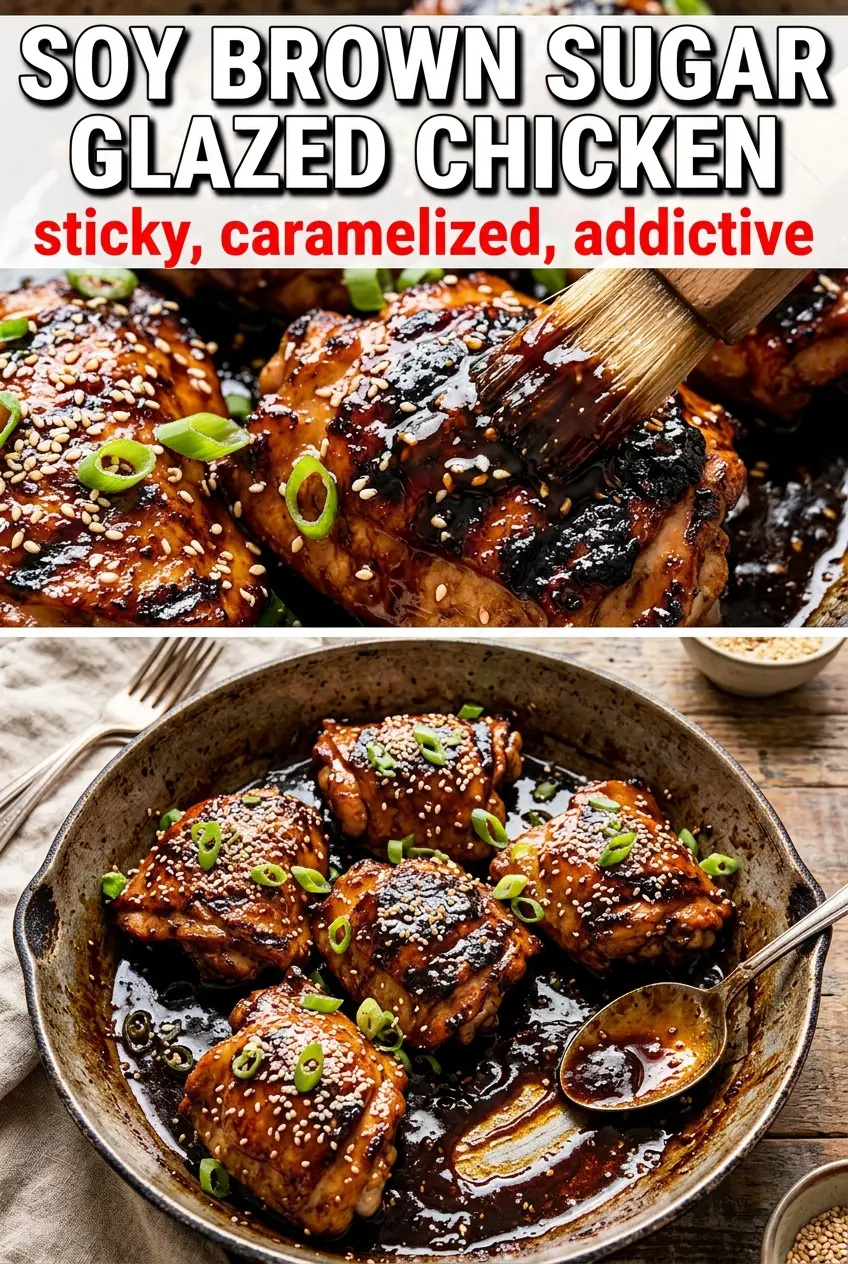
Glazed Soy Sauce Brown Sugar Chicken Thighs
Ingredients
Equipment
Method
- Whisk soy sauce, brown sugar, olive oil, garlic, apple cider vinegar, ginger, and red pepper flakes together until the sugar dissolves and the mixture looks smooth.
- Place bone-in skin-on chicken thighs in the marinade and marinate for at least 30 minutes or up to 24 hours, turning once so the surface is coated.
- Preheat the oven to 425F and place the chicken skin-side up in a baking dish, reserving the marinade for basting.
- Bake for 20 minutes, then baste the chicken with the reserved marinade.
- Bake 10-15 more minutes at 425F until the glaze looks caramelized and the chicken is cooked through.
- Broil 2-3 minutes to deepen the caramel color and add an extra sticky sheen to the glaze.
- Rest briefly, then garnish with sesame seeds and sliced green onions before serving.