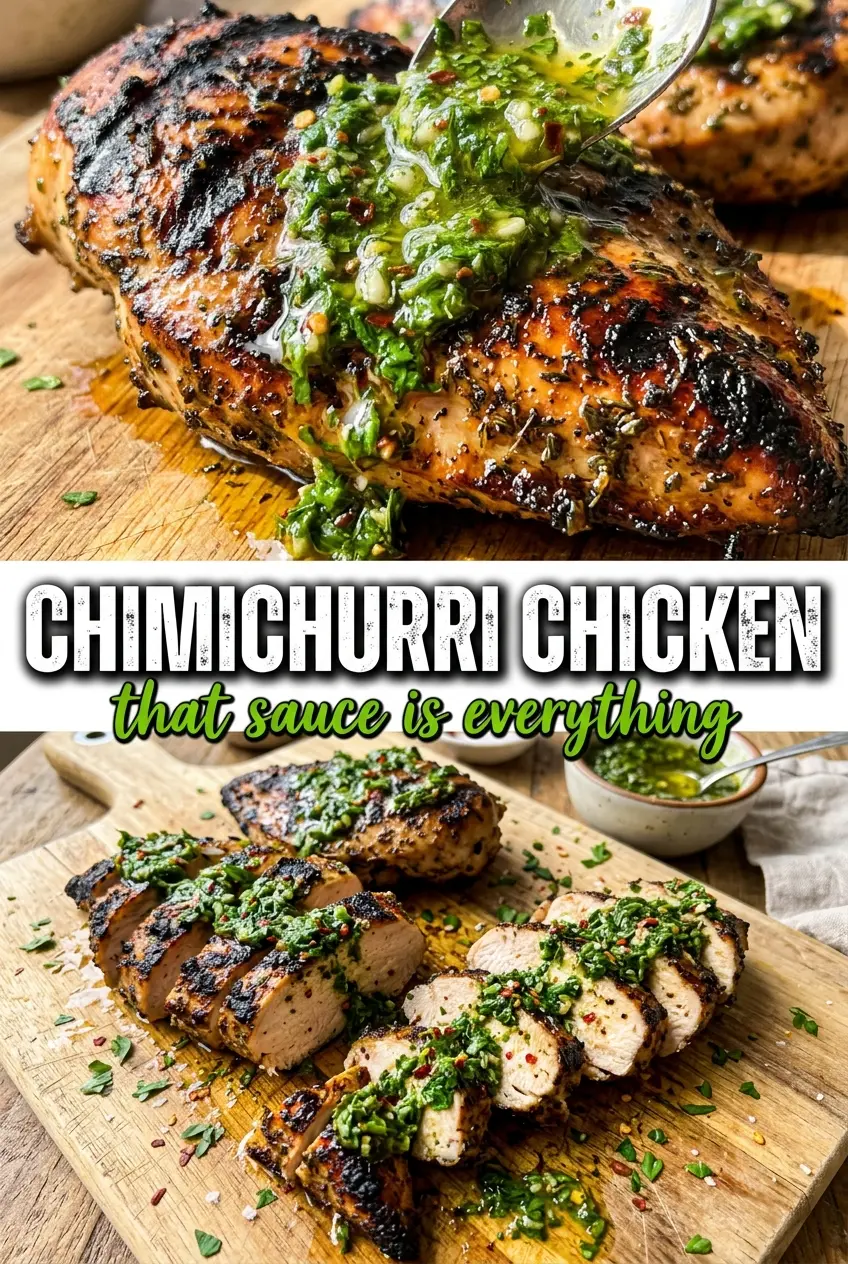
Char-marked chimichurri chicken brings a lot of payoff for a short ingredient list: juicy chicken, a punchy green sauce, and enough brightness from vinegar and herbs to keep each bite lively. The trick is that the sauce isn’t just a topping. It does double duty as the marinade, then gets spooned on at the end for fresh, sharp flavor that still tastes clean after grilling.
That balance matters. Parsley gives the sauce its body, garlic adds bite, and red wine vinegar keeps the oil from turning flat or heavy. If you blend the chimichurri, it turns a little more vivid and saucy; if you chop it by hand, it stays more rustic and loose. Either way, the chicken needs a short rest after marinating and another rest after grilling so the juices stay where they belong.
Below you’ll find the detail that makes this work on a weeknight, plus the small changes I make when I want it spicier, dairy-free by default, or easy to serve with leftovers the next day.
The chimichurri stayed bright after marinating and the chicken picked up just enough flavor without getting mushy. Grilling it for 6 minutes per side gave me those great char marks and the sauce tasted even better spooned on at the end.
Save this chimichurri chicken for the nights when you want crisp grill marks, a bright herb sauce, and dinner on the table fast.
The Marinade Timing That Keeps Chimichurri Chicken Bright
Chimichurri is strong enough to carry the dish, but it can also overpower chicken if it sits too long. Thirty minutes is the sweet spot here. That gives the garlic, vinegar, and herbs time to season the meat without turning the surface soft or aggressively acidic.
The other thing people miss is that chimichurri needs two jobs in this recipe, and those jobs are not the same. The first batch is for marinating the chicken. The second batch stays fresh and raw for serving, which is what gives you that vivid green finish instead of a muted, cooked-down sauce.
- Parsley — Flat-leaf parsley gives chimichurri its body and clean herbal taste. Curly parsley works in a pinch, but it tastes a little less focused.
- Olive oil — This carries the herbs and helps the chicken brown without drying out. Use a decent everyday olive oil here; save the fancy finishing oil for the table.
- Red wine vinegar — This is what keeps the sauce sharp and alive. Lemon juice can work, but it changes the profile and tastes brighter, less classic.
- Garlic — Fresh garlic is worth using because the sauce stays raw. If you grate it instead of chopping, the flavor spreads more evenly and feels a little less harsh.
- Chicken breasts or thighs — Breasts cook quickly and slice cleanly; thighs stay juicier and forgive a little overcooking. Both work, but thighs are the safer choice if your grill runs hot.
What Each Ingredient Is Actually Doing in This Chicken Dish

- Chicken (pat dry for browning) — Room temperature cooks more evenly. Even pieces ensure uniform doneness.
- Oil or butter (the browning medium) — High-heat oil essential for proper searing. Creates pan flavor.
- Seasonings (salt, pepper, spices) — Apply generously. Chicken carries the entire flavor profile.
- Aromatics (garlic, ginger, herbs) — Cook with fat to bloom flavors. Become the foundation.
- Sauce or braising liquid (if using) — This keeps chicken moist. Balance richness with acid.
- Vegetables (if using) — Layer by cooking time so everything finishes together.
- Acid (vinegar, wine, lime, or pineapple) — This brightens and prevents one-dimensional flavor.
- Proper doneness (165°F internal temperature) — Use thermometer for accuracy. Overcooked is dry.
Grilling the Chicken Without Losing the Sauce
Building the Chimichurri
Blend or chop the parsley, garlic, oregano, vinegar, olive oil, red pepper flakes, salt, and black pepper until the sauce is loose and spoonable, not a paste. If it looks dry, add a splash more oil. Taste it before it touches the chicken; chimichurri should taste a little too sharp on its own because the chicken will round it out. If the garlic tastes harsh, let the sauce sit for 10 minutes before using it.
Marinating the Chicken
Rub the chicken with olive oil, salt, and pepper, then spread on just enough chimichurri to coat it. Don’t drown it in sauce, because too much wet marinade can keep the surface from browning well. Thirty minutes is enough for flavor to penetrate without changing the texture. If the chicken starts looking pale or soft at the edges, it sat too long.
Getting the Grill Marks
Preheat the grill or grill pan over medium-high heat until it’s hot enough that the chicken sizzles the moment it lands. Lay the pieces down and leave them alone for the first few minutes so the surface can sear and release cleanly. If you move them too early, they’ll stick and smear instead of marking. Cook until the chicken reaches 165°F in the thickest part and the juices run clear.
Finishing With Fresh Sauce
Let the chicken rest for 5 minutes after grilling, then top it with the reserved chimichurri. That rest matters because it keeps the juices in the meat instead of spilling onto the plate. Spoon the sauce on generously right before serving so the herbs stay bright and the garlic stays punchy. If you add the sauce too soon, the heat dulls the color and mutes the flavor.
How to Adapt Chimichurri Chicken for the Pan, the Oven, or Extra Heat
Thighs Instead of Breasts
Swap in boneless skinless thighs if you want a juicier, more forgiving result. They can handle a little extra time on the grill without drying out, and they taste especially good with the sharp chimichurri. Just expect a slightly richer bite and a less neat slice when serving.
Oven-Broiled Chimichurri Chicken
If you don’t have a grill, broil the chicken on a lined sheet pan a few inches from the heat source. You’ll get good browning and faster cooking, though the grill marks will be less dramatic. Watch closely near the end because broilers go from golden to scorched fast.
Dairy-Free and Naturally Gluten-Free
This recipe is already both dairy-free and gluten-free as written, which makes it easy to serve a crowd. Keep an eye on bottled vinegar and spice blends if you’re cooking for someone with strict sensitivities, and stick with simple, single-ingredient versions when you can.
Make It Hotter
Increase the red pepper flakes or add a small fresh chile to the chimichurri. Heat works best in the sauce, not the chicken seasoning, because it lets everyone control their own bite at the table. Add more gradually than you think; garlic and chile can take over fast once the sauce rests.
Storage and Reheating
- Refrigerator: Store cooked chicken and chimichurri separately for up to 4 days. The sauce may darken a little, but it still tastes sharp and herby.
- Freezer: Freeze the cooked chicken, not the chimichurri. The sauce loses its fresh texture after thawing, while the chicken freezes well for up to 2 months.
- Reheating: Warm the chicken gently in a skillet over low heat or in a 300°F oven until just heated through. High heat dries it out fast, so don’t blast it in the microwave unless you’re willing to sacrifice texture.
Questions I Get Asked About This Recipe
Chimichurri Chicken
Ingredients
Equipment
Method
- Blend or finely chop all chimichurri ingredients until uniformly chopped and fairly smooth. Taste and adjust seasoning, then set aside.
- Rub chicken with 2 tablespoons olive oil, then season with salt and pepper until evenly coated. Spread 2 tablespoons of chimichurri over the chicken and let it marinate for 30 minutes.
- Preheat a grill pan to medium-high heat until hot. Grill the chicken for 6-7 minutes per side until cooked through to 165°F, with prominent grill marks.
- Rest the chicken for 5 minutes off the heat. Top generously with the remaining chimichurri and serve immediately.