Slow cooker chicken cacciatore comes out with the kind of rich, tomato-simmered sauce that tastes like it cooked all afternoon because it did. The chicken turns tender enough to fall apart with a spoon, the peppers and mushrooms soften into the sauce, and the olives add that briny edge that keeps the whole dish from tasting flat. It’s the sort of dinner that feels slow and old-fashioned in the best way, but the crockpot does most of the work.
What makes this version worth making is the order of the ingredients. The vegetables go in first so they can release moisture and flavor into the sauce, and the chicken sits on top where it can braise without getting buried and overcooked. A little red wine gives the tomato base depth, and the olives go in near the end so they keep their shape and sharpness instead of disappearing into the pot.
Below, I’ve included the timing detail that matters most for keeping the chicken tender instead of stringy, plus a few swaps that still keep the dish balanced and hearty.
The sauce was thick and rich, and the chicken thighs stayed juicy all the way through. I loved that the olives were added at the end because they kept their bite instead of turning mushy.
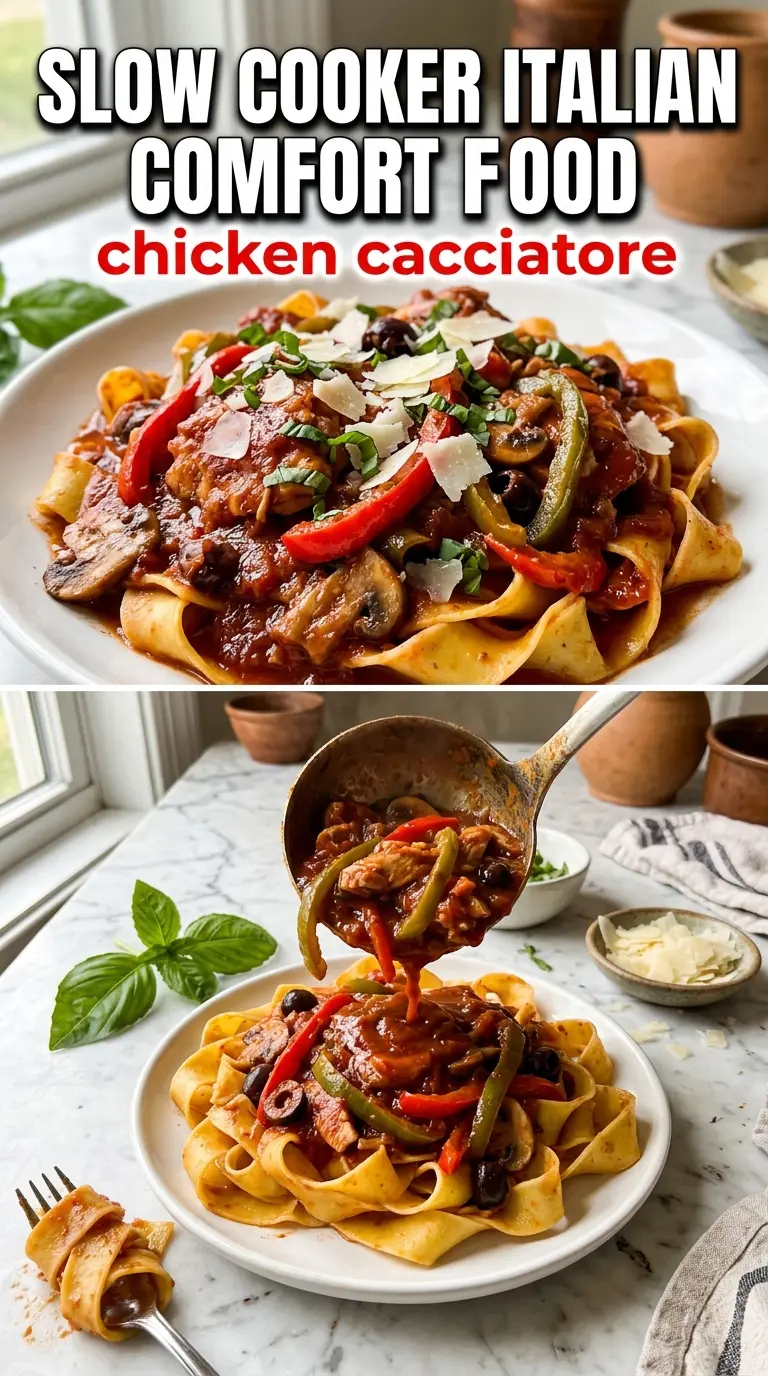
Slow cooker chicken cacciatore with tender thighs, olives, and a rich tomato sauce is the kind of dinner worth pinning for pasta night.
The Part That Keeps the Sauce from Tasting Flat
Slow cooker chicken cacciatore can turn watery if everything goes in the pot without a little structure. The vegetables need to sit under the chicken so they can soften into the sauce, and the wine gives the tomatoes something to lean on besides acidity. If you dump in extra liquid, the crockpot can’t cook it off the way a stovetop pan would, so the flavors stay thin instead of concentrated.
Bone-in thighs matter here because they stay juicy over a long cook. Boneless thighs work, but they’re easier to overcook and can lose that silky texture that makes cacciatore worth making in the first place. The olives should go in late, not from the beginning, because they’re there for a salty pop at the end.
- Bone-in chicken thighs — These hold up better than breasts in the slow cooker and give the sauce more body. Skin-on is fine, but it won’t stay crisp, so don’t count on that texture.
- Crushed tomatoes — They make a smoother, thicker sauce than diced tomatoes. If you only have diced, pulse them a few times with a spoon or mash them a bit before adding.
- Dry red wine — It adds depth and helps the tomato sauce taste cooked instead of canned. If you don’t want to use wine, swap in chicken broth plus 1 teaspoon red wine vinegar for some of the same lift.
- Mushrooms and bell peppers — They soften into the sauce and give it the classic cacciatore character. Slice the mushrooms thick enough that they don’t disappear completely after hours of cooking.
What Each Ingredient Is Actually Doing in This Chicken Dish
- Chicken (pat dry for browning) — Room temperature cooks more evenly. Even pieces ensure uniform doneness.
- Oil or butter (the browning medium) — High-heat oil essential for proper searing. Creates pan flavor.
- Seasonings (salt, pepper, spices) — Apply generously. Chicken carries the entire flavor profile.
- Aromatics (garlic, ginger, herbs) — Cook with fat to bloom flavors. Become the foundation.
- Sauce or braising liquid (if using) — This keeps chicken moist. Balance richness with acid.
- Vegetables (if using) — Layer by cooking time so everything finishes together.
- Acid (vinegar, wine, lime, or pineapple) — This brightens and prevents one-dimensional flavor.
- Proper doneness (165°F internal temperature) — Use thermometer for accuracy. Overcooked is dry.
Layering the Crockpot So Nothing Turns Mushy
Start with the vegetables
Scatter the onion, garlic, bell peppers, and mushrooms across the bottom of the slow cooker. This creates a bed that keeps the chicken lifted a little and lets the vegetables release their moisture into the sauce as they cook. If the garlic is minced too finely, it can disappear into the tomatoes, so keep it chopped small but not paste-like.
Season the chicken before it goes in
Rub the thighs with salt, pepper, and Italian seasoning so the meat itself tastes seasoned, not just the sauce around it. Lay the chicken on top of the vegetables in a single layer if you can. Crowding the pot can make the pieces steam unevenly, and that’s how you end up with some thighs tender and others still stubborn.
Pour the tomatoes over everything
Mix the crushed tomatoes, wine, oregano, and red pepper flakes, then pour it over the chicken. Don’t stir hard at this point; the chicken should stay mostly on top so it braises gently instead of sinking and losing its shape. If the sauce looks too thick before cooking, it’ll loosen as the vegetables release liquid.
Add the olives near the finish
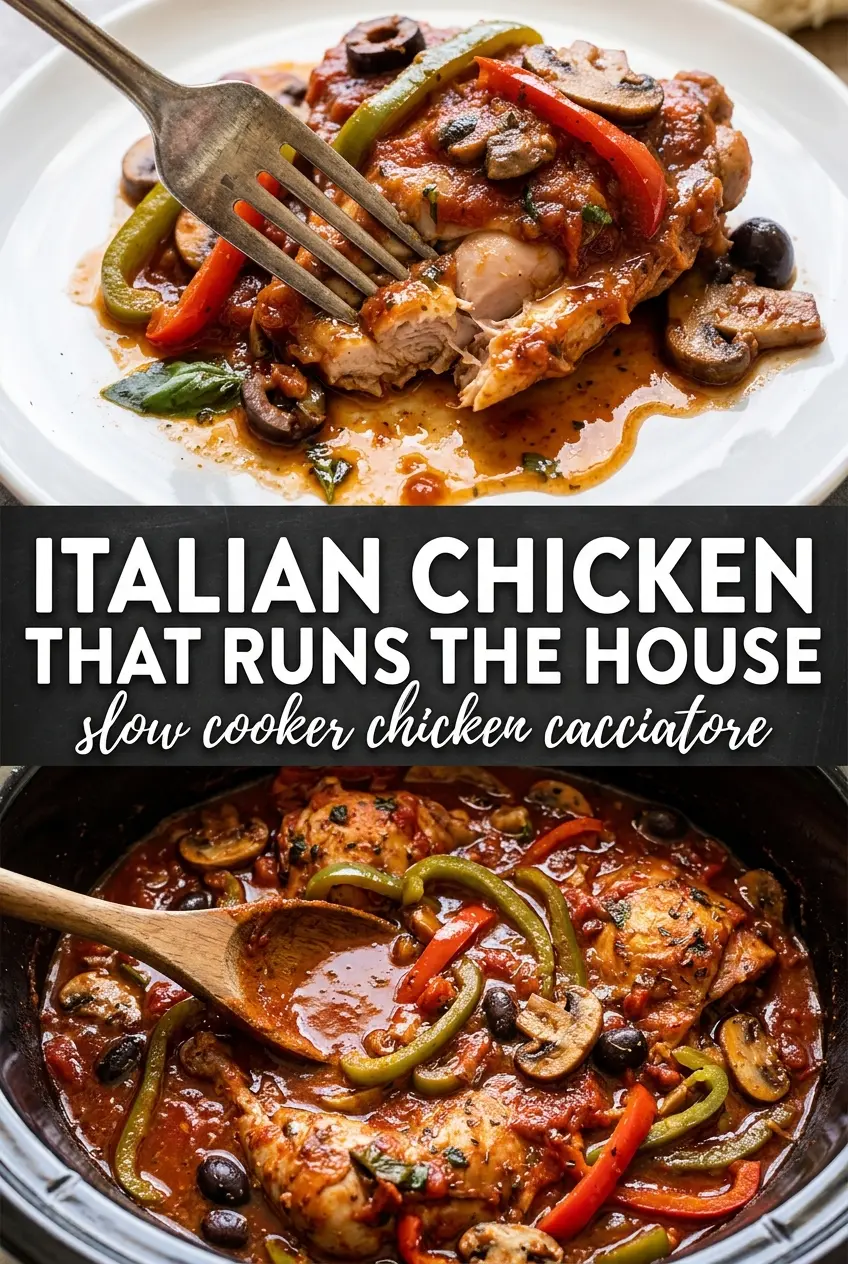
Stir in the olives during the last 30 minutes. That keeps them briny and distinct instead of dull and soft. When the chicken is done, it should shred with light pressure and the sauce should look glossy, not separated or greasy.
Make it without wine
Use chicken broth instead of wine, then add 1 teaspoon red wine vinegar or balsamic at the end to bring back the brightness. You’ll lose a little depth, but the sauce will still taste balanced.
Use chicken breasts if that’s what you have
Boneless breasts work, but cut the cook time down and check early so they don’t dry out. They won’t give the sauce the same richness as thighs, so the final dish will be a little leaner and less silky.
Make it dairy-free or skip the cheese
The recipe is naturally dairy-free as written if you leave off the parmesan. Serve it with basil and a drizzle of olive oil instead. You’ll still get plenty of richness from the tomatoes, chicken, and olives.
Serve it over polenta instead of pasta
Polenta catches the sauce beautifully and makes the dish feel a little more rustic. Keep it soft and spoonable so the tomato sauce can soak in instead of sitting on top like a separate layer.
Storage and Reheating
- Refrigerator: Store for up to 4 days. The sauce thickens as it sits, and the flavor gets even better.
- Freezer: It freezes well for up to 3 months. Cool it completely, then freeze the chicken and sauce together in a freezer-safe container.
- Reheating: Warm gently on the stove over low heat or in the microwave at medium power. A hard boil can dry out the chicken and make the sauce separate.
Answers to the Questions Worth Asking
Slow Cooker Chicken Cacciatore
Ingredients
Equipment
Method
- Pat the chicken thighs dry, then season all over with salt, pepper, and Italian seasoning.
- Layer the onion, garlic, red bell pepper, green bell pepper, and sliced mushrooms in the bottom of the slow cooker.
- Place the chicken thighs on top of the vegetables in a single layer as much as possible.
- Pour the crushed tomatoes and dry red wine over everything, then sprinkle in the dried oregano and red pepper flakes.
- Cover and cook on Low for 6 to 8 hours, or on High for 3 to 4 hours, until the chicken is tender and pulls easily with a fork; visual cue: the sauce should be bubbling at the edges.
- Stir in the kalamata olives and cook for 30 minutes on Low or until heated through; visual cue: olives look glossy in the sauce.
- Serve the chicken cacciatore over pasta or polenta, then top with fresh basil and parmesan.