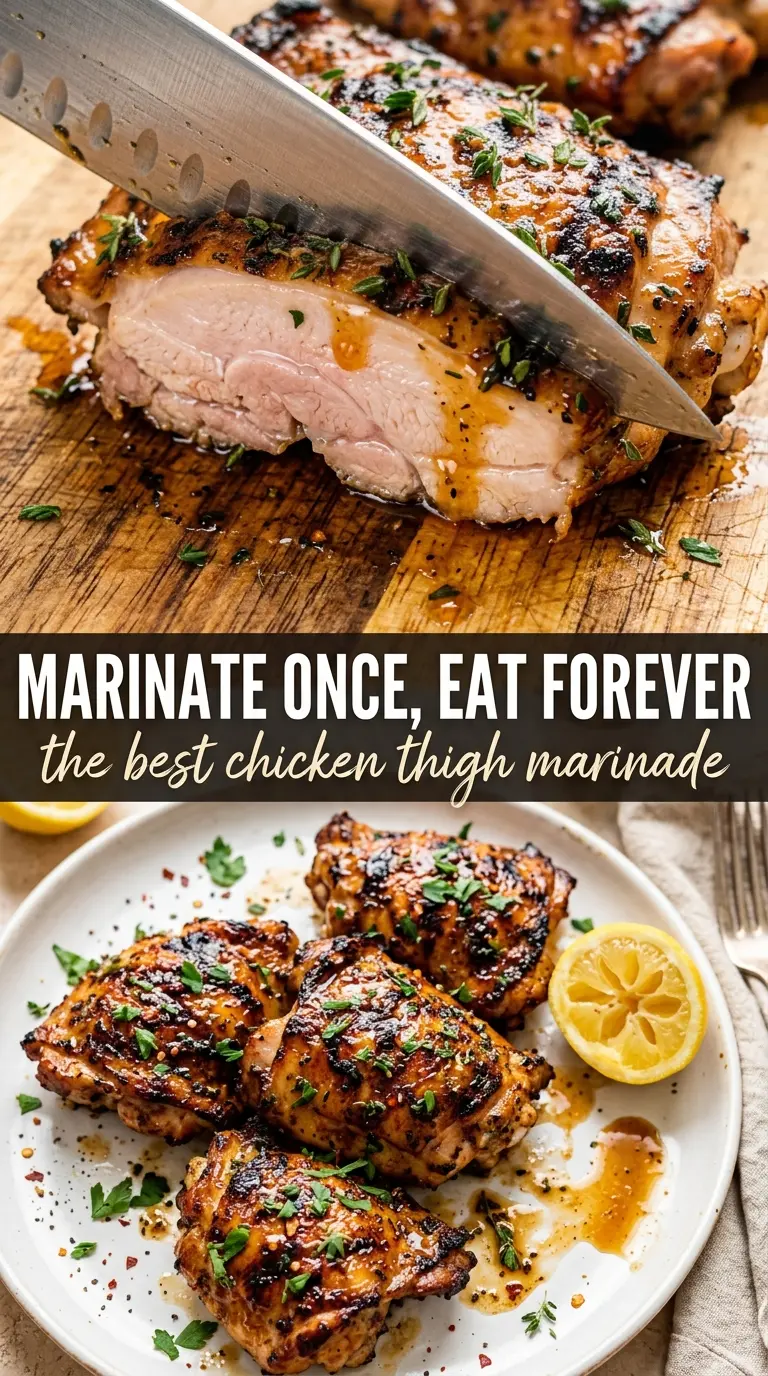
Chicken thighs take on marinade better than almost any other cut. They stay juicy, pick up flavor fast, and handle high heat without drying out, which means you get a deeply seasoned, golden crust instead of bland meat with seasoning sitting on the surface. This version leans bright and savory: lemon, garlic, Dijon, and herbs work together to give the chicken real backbone, while a little honey helps the outside caramelize instead of going dull in the pan or on the grill.
The trick is balance. Too much acid and the chicken can turn tight or mushy if it sits all day. Too little oil and the herbs and spices won’t cling well enough to brown evenly. The marinade here has enough fat to carry flavor, enough lemon to wake everything up, and enough salt to season the meat all the way through without making it taste cured.
Below, I’ll walk you through the small details that matter most, including how long to marinate, what changes if you’re grilling versus searing, and the best swaps if you need to work with what’s already in your kitchen.
The marinade coated the thighs evenly and the chicken came off the grill with those dark, sticky edges I always try to get. I left it for about 4 hours and the flavor went all the way through.
Pin these lemon herb chicken thighs for the nights when you want juicy meat and a caramelized crust without a fussy sauce.
The Marinade Formula That Keeps Chicken Thighs Juicy Instead of Mushy
Chicken thighs can handle a little more boldness than chicken breast, but they still need balance. The mistake most people make is loading up on acid and letting the meat sit too long, which can leave the surface soft and the flavor oddly flat instead of bright. This marinade keeps the lemon in the supporting role, not the lead role, so the chicken tastes fresh without turning stringy.
Oil matters here because it helps the garlic, herbs, and paprika cling to the meat and brown properly. Dijon also earns its keep, not just for flavor but because it helps the marinade emulsify, which means the seasonings stay suspended instead of separating into an oily layer and a watery layer in the bowl. That gives you more even coating and better color on the chicken.
- Olive oil — This carries the herbs and helps the chicken brown. Use a decent one, but it doesn’t need to be your fanciest bottle.
- Lemon juice and zest — The juice brings brightness; the zest brings the stronger lemon aroma without extra acidity. If you only use juice, the flavor can taste sharp instead of layered.
- Dijon mustard — This is what helps the marinade cling. Yellow mustard will work in a pinch, but Dijon has a cleaner, more savory edge.
- Honey — You don’t need much. It softens the sharp edges and helps the surface caramelize instead of drying out under high heat.
What Each Ingredient Is Actually Doing in This Chicken Thigh Recipe
- Chicken thighs (pat dry for browning) — Thighs are more forgiving than breasts. Pat dry so they brown properly instead of steam.
- Oil or butter (the browning medium) — High-heat oil essential for proper searing. Creates deep pan flavor through browning.
- Seasonings (salt, pepper, spices) — Build flavor boldly. Thighs carry flavor better than white meat.
- Aromatics (garlic, onion, ginger, herbs) — Cook with oil to bloom flavors. These become the foundation of the dish.
- Sauce or braising liquid (soy, honey, wine, or broth) — This keeps thighs moist and adds flavor. Thighs stay juicy even if slightly overcooked.
- Vegetables (if using potatoes, carrots, or others) — Layer by cooking time so everything finishes together.
- Acid (vinegar, wine, citrus, or soy) — This brightens sauce and prevents heavy thigh flavor from becoming monotone.
- Proper doneness (165°F internal temperature) — Thighs stay juicy at this temp. Thermometer ensures accuracy without guessing.
Whisking, Marinating, and Getting the Heat Right
Building the Marinade
Start by whisking the olive oil, lemon juice, zest, garlic, Dijon, honey, oregano, thyme, smoked paprika, salt, pepper, and red pepper flakes until the mixture looks thick and cloudy. That cloudy look means the oil and lemon have emulsified enough to coat the chicken evenly. If you dump everything in and barely stir, the herbs sink and the chicken marinates unevenly.
Coating the Chicken Thoroughly
Add the chicken thighs and toss until every piece is slicked all over. The marinade should cling in a thin layer, not pool at the bottom of the bowl. If the chicken is crowded into a tight container, turn it once or twice while it rests so the top pieces don’t stay dry while the bottom ones soak.
Letting the Flavor Settle
Refrigerate for at least 2 hours so the salt can season the meat and the lemon can brighten the surface. Up to 24 hours is fine, but don’t push far beyond that or the acid starts working against the texture. If you’re in a rush, even 30 to 45 minutes gives you more flavor than seasoning the chicken right before cooking.
Cooking to Deep Color, Not Just Doneness
Grill or pan-sear over medium-high heat until the outside turns golden with browned herb specks and a little char in the best spots. The goal is active browning, not pale steaming. If the pan is overcrowded or the grill is too cool, the chicken will turn gray before it colors, so cook in batches if needed and let the heat do its job.
Make It Dairy-Free Without Losing the Coating
This recipe already fits naturally into a dairy-free meal, which is part of why I like it for weeknights. The oil and Dijon do the work that butter or yogurt might do in other marinades, so nothing gets lost when you skip dairy entirely.
Swap in Boneless Chicken Breasts
Breasts will work, but they need less time on the heat and a closer eye. They dry out faster than thighs, so pull them as soon as they hit temperature and let them rest before slicing or you’ll lose the juices you just worked to keep in the meat.
Use Fresh Herbs When You Have Them
A handful of chopped parsley, thyme, or oregano at the end makes the finished chicken taste fresher and a little brighter. Dried herbs are better in the marinade itself because they hold up to the acid and heat; fresh herbs are best saved for serving.
Dial Down the Heat
If you want a milder finish, leave out the red pepper flakes and reduce the smoked paprika to 1/2 teaspoon. You’ll still get a warm, savory crust, just without the faint burn that hangs at the back of the throat.
Storage and Reheating
- Refrigerator: Store cooked chicken thighs for up to 4 days in an airtight container. The crust softens a little in the fridge, but the flavor holds up well.
- Freezer: Cooked chicken freezes well for up to 2 months. Wrap portions tightly and thaw in the refrigerator overnight so they reheat evenly instead of drying at the edges.
- Reheating: Warm gently in a covered skillet over low heat with a splash of water or broth, or in a 300F oven until just heated through. The biggest mistake is blasting it in the microwave until the juices tighten and the meat goes stringy.
Questions I Get Asked About This Recipe

Chicken Thigh Marinade
Ingredients
Equipment
Method
- Whisk olive oil, lemon juice, lemon zest, minced garlic, Dijon mustard, and honey until the mixture looks emulsified and slightly thick.
- Whisk in dried oregano, dried thyme, smoked paprika, salt, black pepper, and red pepper flakes until evenly distributed and speckled throughout.
- Add boneless skinless chicken thighs to the marinade and toss until each piece is fully coated.
- Refrigerate the marinated chicken for at least 2 hours or up to 24 hours, keeping it tightly covered so the flavor penetrates.
- Grill the chicken over medium-high heat for 5-6 minutes per side until grill marks appear and the exterior turns golden-browned.
- Pan-sear in a hot oiled skillet for 5-6 minutes per side if you prefer indoors, until char marks and a deep golden crust form.
- Check for doneness; cook until the internal temperature reaches 165F and the surface shows caramelized char marks.
- Rest the chicken for 5 minutes before serving so the juices settle and the crust stays intact.