Lacquered chicken thighs with a deep, sticky glaze are the kind of dinner that gets attention before it even hits the table. The skin turns burnished and crisp at the edges while the soy-brown sugar marinade cooks down into a glossy coating that clings to every bite. It’s savory first, then sweet, with just enough garlic and ginger to keep the glaze from tasting flat.
Bone-in, skin-on thighs are the right cut here because they stay juicy through the high oven heat and give the glaze something rich to coat. The brown sugar needs the soy sauce and vinegar to balance it out; without that acidity, the glaze can lean syrupy instead of deep and savory. A short marinate is enough to season the meat, but a quick baste halfway through is what builds that shiny, caramelized finish.
Below, I’ve included the timing cue that keeps the glaze from burning, plus a few swaps that still give you that sticky, takeout-style finish without turning the chicken dry.
The glaze reduced into this sticky mahogany coating and the chicken stayed juicy all the way through. I broiled it for 2 minutes at the end and the skin came out caramelized, not burned.
Pinned for the sticky soy-brown sugar glaze and the crisp-skinned chicken thighs that stay juicy in the oven.
The Step That Keeps the Glaze Sticky Instead of Burnt
Brown sugar chicken can go from glossy to bitter fast if the oven runs too hot for too long with the sauce already on the meat. That’s why the chicken bakes first, then gets basted with the reserved marinade once the thighs are mostly cooked. The first stretch of baking sets the skin and renders some fat; the second stretch reduces the glaze into that dark, clingy coating without scorching the sugars.
The other thing that matters here is where the chicken sits in the pan. Skin-side up gives the glaze a chance to settle on top instead of pooling underneath, and bone-in thighs have enough fat and structure to handle the heat. If the pan looks dry toward the end, that’s a good sign — the marinade is doing its job on the chicken, not floating around like a sauce.
What Each Ingredient Is Actually Doing in This Dish

- Chicken thighs — Bone-in, skin-on thighs are the best choice because they stay tender through the bake and give you enough rendered fat for the glaze to cling to. Boneless thighs work in a pinch, but they cook faster and won’t give you the same rich, lacquered finish.
- Soy sauce — This is the savory backbone. Use a regular all-purpose soy sauce here; low-sodium works if that’s what you keep on hand, but the glaze will taste a little lighter and may need a touch more reduction to get that deep color.
- Brown sugar — Packed brown sugar gives the glaze its sticky shine and that caramel note that makes the chicken taste like it was cooked longer than it was. Don’t swap in white sugar unless you add a little honey or molasses, or the glaze will taste thinner and less round.
- Olive oil — The oil helps the marinade coat the chicken evenly and keeps the garlic and ginger from sticking in one clump. Any neutral oil works if that’s what you have.
- Apple cider vinegar — This is what keeps the sweetness in check and helps the glaze taste balanced instead of candy-like. Rice vinegar works too, but use the same amount and keep the rest of the marinade unchanged.
- Garlic and ginger — These are strongest when freshly minced or grated. Garlic powder and ground ginger will work in an emergency, but the flavor will be flatter and less fragrant once baked.
Building the Glaze Without Losing the Skin
Mixing the Marinade
Whisk the soy sauce, brown sugar, oil, garlic, vinegar, ginger, and red pepper flakes until the sugar looks mostly dissolved. A few granules are fine, but a thick gritty paste will stick unevenly to the chicken and can scorch in patches. The marinade should smell punchy and balanced, not sharply salty or overly sweet.
Marinating the Thighs
Coat the chicken well and let it sit for at least 30 minutes. That’s enough time for the surface to pick up flavor and for the salt in the soy sauce to start seasoning the meat. If you go much past 24 hours, the texture can turn a little firm on the outside because of the salt and acid.
Baking, Basting, and Broiling
Arrange the thighs skin-side up in the baking dish and bake until the skin looks set and opaque. Reserve the marinade before it touches the raw chicken, then baste after the first 20 minutes so the sauce can reduce instead of sitting in a raw puddle. If you want extra color, broil for 2 to 3 minutes at the end, but stay close — the sugar in the glaze goes from caramelized to burned in a blink.
How to Adapt This for a Different Pantry or a Smaller Night
Gluten-Free Version
Use a gluten-free soy sauce or tamari in the same amount. Tamari tends to taste a little rounder and less sharp, so the glaze can seem slightly deeper without any other changes.
Less Sweet, More Savory
Cut the brown sugar back to 3 tablespoons and add an extra teaspoon of vinegar. You’ll lose a little of the sticky, candy-like shine, but the glaze will taste deeper and less dessert-like.
Boneless Thighs
Boneless thighs cook faster, so start checking them earlier and pull them as soon as they’re cooked through and nicely glazed. They won’t have quite the same rich texture as bone-in thighs, but they still take the marinade beautifully.
Storage and Reheating
- Refrigerator: Keep leftovers in an airtight container for up to 4 days. The glaze will thicken and the skin will soften, but the flavor stays strong.
- Freezer: This freezes well for up to 2 months. Wrap the thighs tightly and freeze with a little extra sauce if you have it, since the glaze helps protect the meat from drying out.
- Reheating: Reheat in a 350°F oven, covered loosely with foil, until the chicken is hot. Skip the microwave if you want to keep the texture; it turns the skin rubbery and can make the glaze separate at the edges.
Answers to the Questions Worth Asking
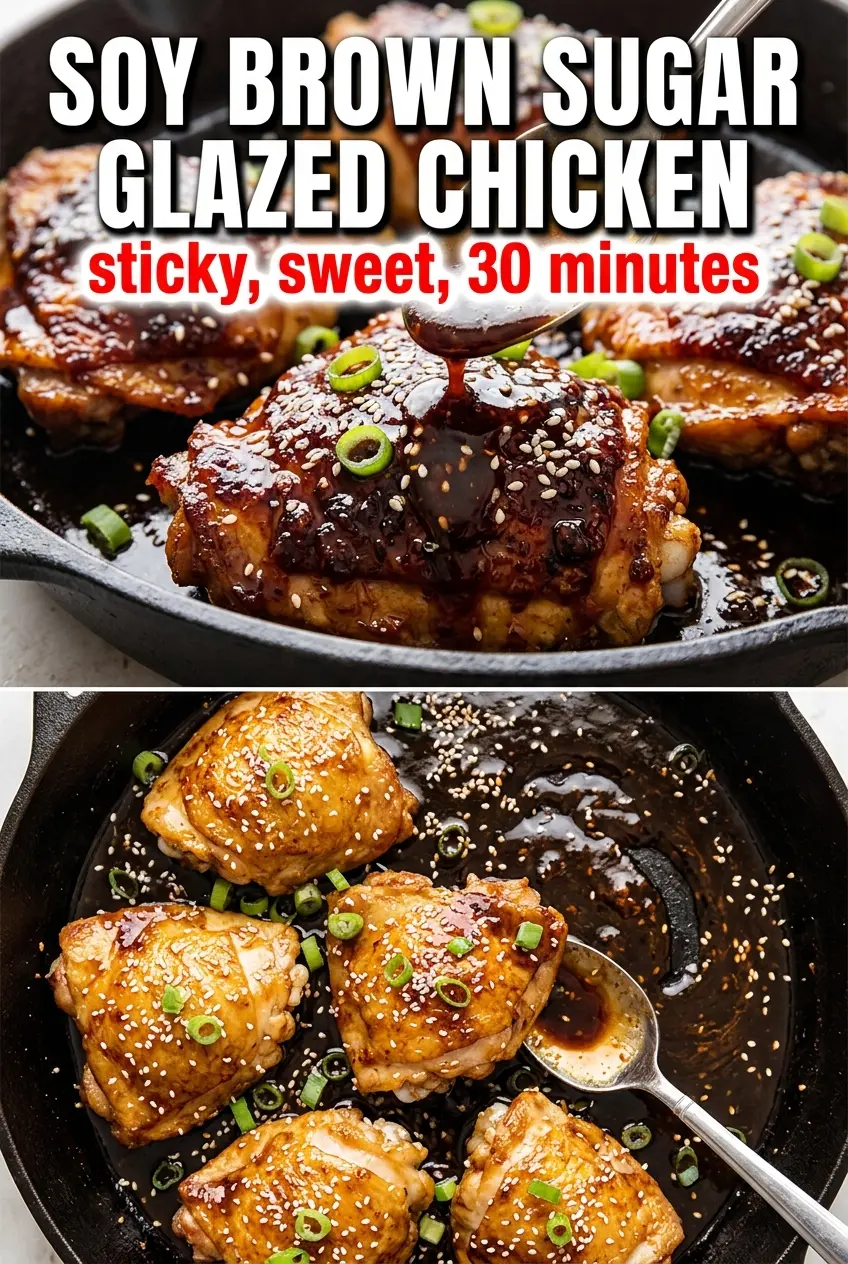
Glazed Soy Sauce Brown Sugar Chicken Thighs
Ingredients
Equipment
Method
- Whisk soy sauce, brown sugar, olive oil, garlic, apple cider vinegar, ginger, and red pepper flakes until the brown sugar dissolves and the mixture looks glossy.
- Marinate the bone-in skin-on chicken thighs in the mixture for at least 30 minutes or up to 24 hours, covered in the refrigerator, so the surface turns tacky with flavor.
- Preheat the oven to 425F, then place the chicken skin-side up in a baking dish and reserve the marinade.
- Bake for 20 minutes, then baste with the reserved marinade and return to the oven.
- Bake 10–15 more minutes until the glaze is caramelized, the chicken is cooked through, and the skin looks lacquered and mahogany.
- Broil for 2–3 minutes if desired, watching closely until the glaze darkens and becomes more sticky and glossy at the edges.
- Top with sesame seeds and sliced green onions so the finished chicken has a fresh, aromatic crunch over the sticky glaze.