Golden chicken thighs over fluffy, seasoned rice are one of those dinners that disappear fast because the pot does all the work and every spoonful tastes like it came from the best part of the pan. The chicken stays juicy while the rice catches the drippings, broth, and spices underneath it, which is what turns a simple chicken-and-rice skillet into something people go back for seconds on without hesitation.
The key here is building flavor in layers instead of dumping everything together at once. Browning the chicken first gives you those caramelized bits on the bottom of the pot, and toasting the rice with turmeric and cumin helps the grains stay separate while pulling flavor through the whole dish. Using bone-in thighs matters too; they hold up during the simmer and keep the rice rich without drying out.
Below, I’ll walk through the part that keeps the rice from going mushy, plus the ingredient choices and a few practical swaps if you want to stretch this into a different kind of dinner.
The rice came out fluffy, not mushy, and the chicken skin stayed crisp enough even after the simmer. I loved how the broth and spices soaked into every bite.
Save this one-pot chicken and rice for the nights when you want golden chicken, fluffy herb rice, and one pot to wash.
The Trick to Keeping the Rice Tender Under the Chicken
The rice cooks best when it’s rinsed, briefly toasted, and then left alone under a tightly covered lid. That sequence keeps the grains from clumping and helps them absorb the broth evenly instead of turning wet on top and undercooked at the bottom. The common mistake is lifting the lid too often to check on it; every peek lets out steam, and steam is what finishes the rice.
Another thing that matters here is the chicken’s position. Nestle the thighs skin-side up so they rest above the rice while still helping flavor the pot, but don’t bury them completely. If the skin sits under liquid for the whole cook, it softens and you lose the contrast between the crisp browned top and the tender rice underneath.
- Rinsed long-grain rice — This washes off the surface starch that makes rice gummy. Long-grain holds its shape better than short-grain in a one-pot dish like this.
- Bone-in chicken thighs — They stay moist through the simmer and leave more flavor behind than boneless chicken. Skin-on thighs are best here because the skin protects the meat during browning.
- Heavy-bottomed pot or Dutch oven — Even heat matters. A thin pot is more likely to scorch the rice on the bottom before the top is fully tender.
- Chicken broth — This is the cooking liquid and the seasoning base. Water will work in a pinch, but the rice tastes flatter and needs more salt to come alive.
What Each Ingredient Is Actually Doing in the Pot
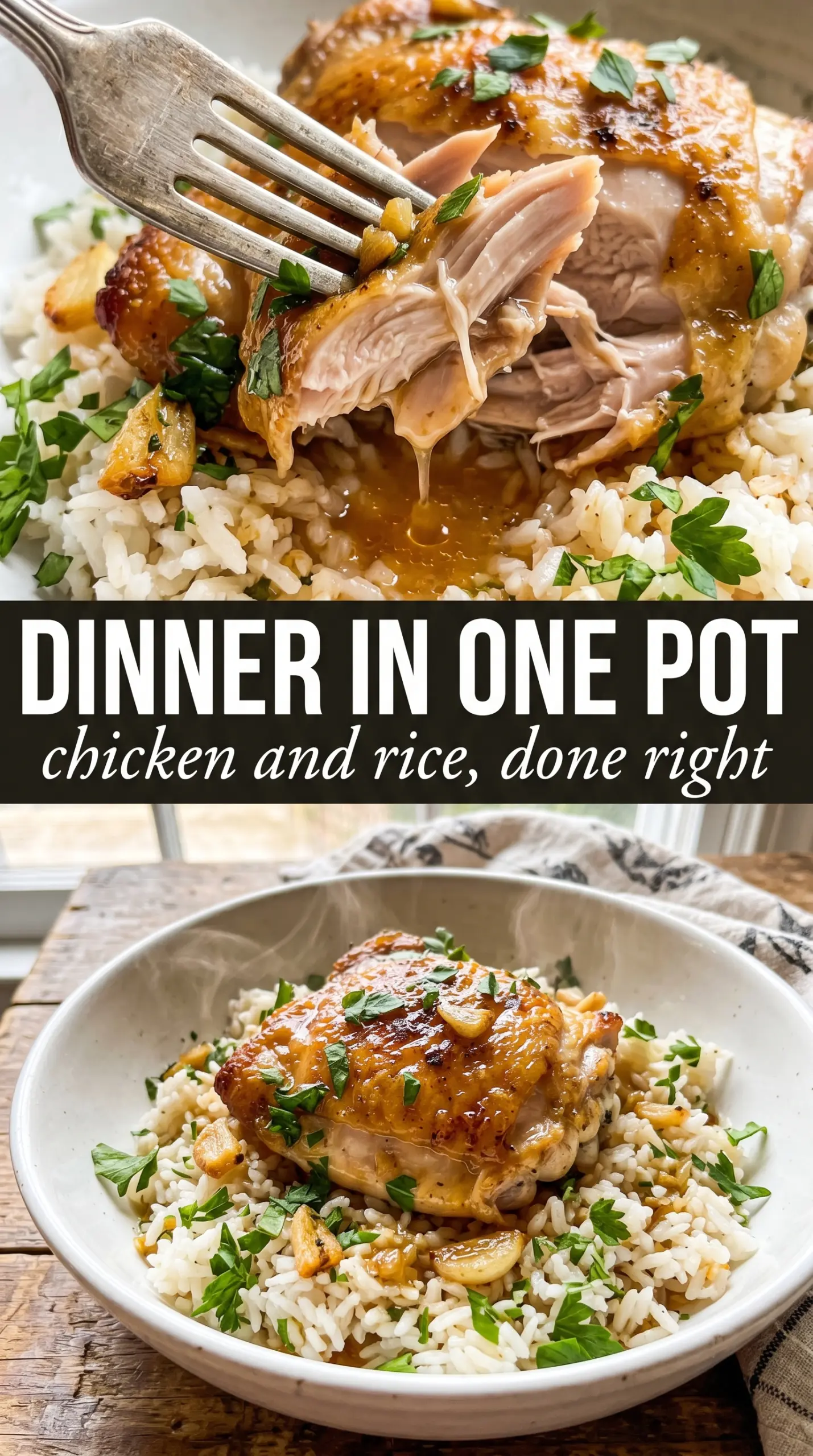
- Chicken thighs — These are the backbone of the dish. They tolerate the longer covered cook and keep the rice rich with their drippings. If you use chicken breasts, they need a shorter cook and can dry out before the rice finishes.
- Turmeric, paprika, cumin, and garlic powder — This is the seasoning layer that gives the rice its color and warmth. Turmeric turns the grains golden, paprika deepens the color on the chicken, and cumin adds a savory note that keeps the whole pot from tasting flat.
- Onion, garlic, and carrot — These build the base flavor and give the rice a little body. Dice the carrot small so it softens in the cooking time instead of staying crunchy while the rice is done.
- Frozen peas — They go in at the end because they only need a few minutes to heat through. Add them earlier and they lose color and turn dull.
- Parsley — This is the fresh finish the dish needs. It cuts through the richness of the chicken and keeps the bowl from feeling heavy.
How to Build the Pot So the Rice Cooks Cleanly and the Chicken Stays Juicy
Season and Brown the Chicken First
Rub the thighs with paprika, garlic powder, salt, and pepper before they hit the pot. Lay them skin-side down in hot olive oil and leave them alone until the skin is deep golden and releases without sticking, about 5 to 6 minutes. If the heat is too high, the skin burns before the fat renders; if it’s too low, you lose the crisping and end up steaming the chicken.
Sweat the Vegetables in the Same Pot
After the chicken comes out, add the onion, carrot, and garlic to the same pot and stir them through the fat and browned bits. You want the onion softened and translucent, not browned hard, because this is about building a sweet base for the rice. If the garlic starts to darken before the onion softens, lower the heat right away so it doesn’t turn bitter.
Toast the Rice Before the Liquid Goes In
Stir the rinsed rice with turmeric and cumin for about a minute, just until the grains look glossy and smell nutty. That quick toast helps the rice keep a better texture during the simmer and pulls the spices into every bite. Once the broth goes in, stir once to loosen any stuck bits, then stop stirring so the rice can cook evenly underneath the lid.
Steam, Rest, and Finish With Peas
Bring the pot to a boil, cover tightly, then turn it down to low and let it cook undisturbed until the liquid is absorbed and the rice is tender. When it’s done, the top will look set and the pot will sound quieter, not aggressively bubbling. Stir in the peas, cover again for 5 minutes, and then fluff gently with a fork so the grains stay separate instead of collapsing into a mash.
How to Adapt This for a Different Pantry or a Different Table
Make It Dairy-Free Without Changing the Texture
This recipe already fits a dairy-free dinner as written, which is one reason it works so well for weeknights. Keep the broth and olive oil as the fat and liquid base, and you still get a rich, savory pot without needing any cream or butter.
Swap the Chicken Thighs for Boneless Chicken
Boneless thighs will work with the same method and give you a similar juicy result. Boneless breasts can also work, but they need a gentler finish; add them back in only for the last 10 to 12 minutes so they don’t dry out before the rice is done.
Turn It Into a Veggie-Heavy Skillet
You can add extra diced carrot, celery, or small florets of broccoli, but keep the total add-ins modest so the rice still has enough liquid to cook through. Green beans and peas work best near the end because they stay bright and don’t crowd the pan.
Use Brown Rice Only With a Longer Cook
Brown rice needs more broth and a much longer simmer, so it’s not a direct swap in this exact version. If you want to use it, expect a different cooking time and check the liquid midway so the bottom doesn’t dry out before the grains soften.
Storage and Reheating
- Refrigerator: Store for up to 4 days in a sealed container. The rice tightens up a bit as it sits, but the flavor gets even better.
- Freezer: It freezes well in portions for up to 2 months. Cool it fully first, then pack it airtight so the rice doesn’t pick up freezer burn.
- Reheating: Reheat covered with a splash of broth or water over low heat on the stove, or in the microwave at 50% power. The mistake most people make is blasting it on high, which dries out the chicken before the rice is heated through.
Answers to the Questions Worth Asking

One-Pot Chicken and Rice
Ingredients
Equipment
Method
- Season the bone-in chicken thighs with paprika, garlic powder, salt, and pepper. Make sure both sides are evenly coated.
- Heat olive oil in a large heavy-bottomed pot or Dutch oven over medium-high heat and place chicken skin-side down. Sear for 5-6 minutes until golden, then remove to a plate.
- In the same pot, sauté the diced onion, carrot, and minced garlic until softened, about 3-4 minutes. Stir so the garlic doesn’t brown.
- Stir in the rinsed long grain white rice, turmeric, and cumin and toast briefly. Cook for about 1 minute, just until the rice looks lightly coated.
- Pour in the chicken broth and bring the mixture to a boil. Scrape up any browned bits from the bottom.
- Nestle the chicken thighs into the rice and keep them skin-side up. Cover tightly and reduce heat to low.
- Cook on low heat for 20-25 minutes until the rice is tender and the liquid is absorbed. Avoid lifting the lid during this time.
- Stir in the frozen peas, then cover again and let the dish rest for 5 minutes. The peas will heat through while the rice settles.
- Fluff the rice and garnish with fresh parsley. Serve with the chicken resting on top of the fluffy rice.