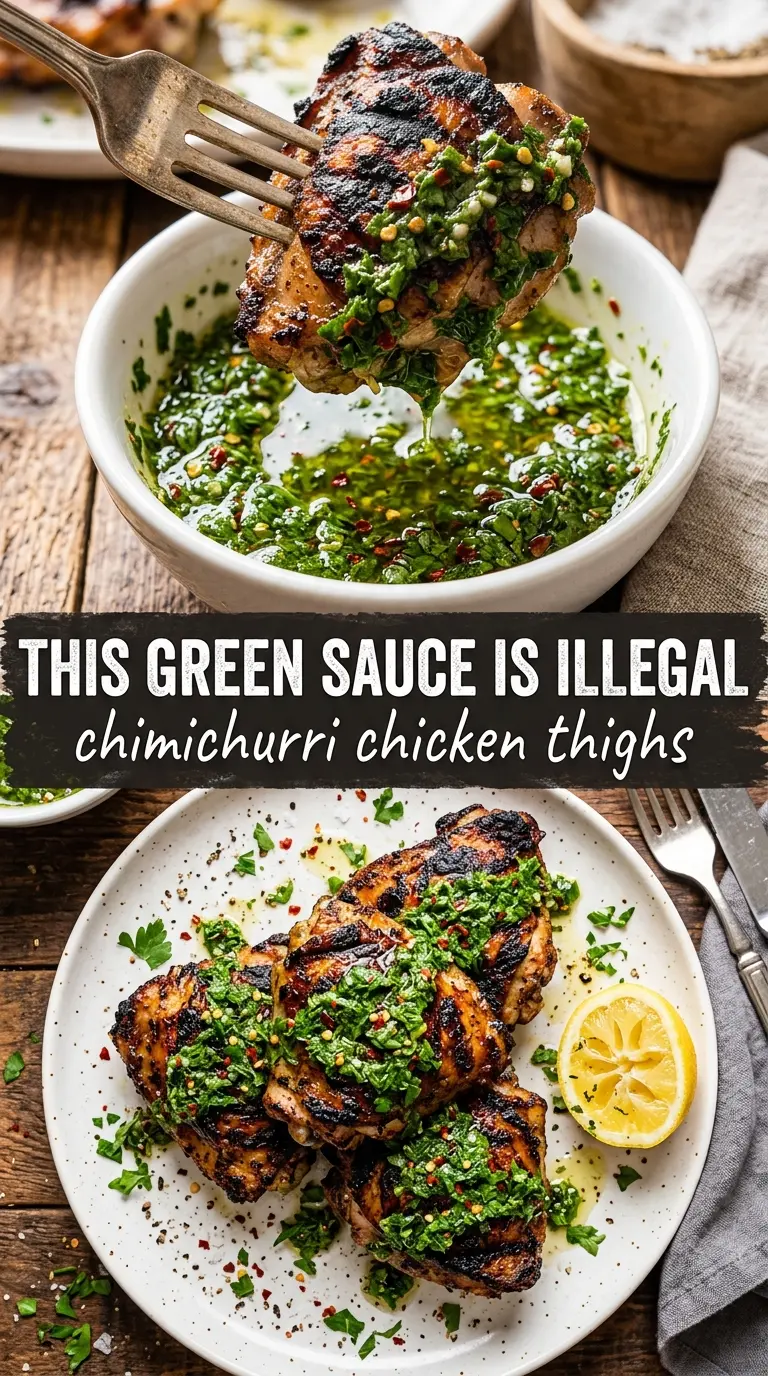
Chicken thighs pick up chimichurri better than almost any other cut. The skin turns crisp and smoky on the grill, and the bright herb sauce cuts right through the richness instead of sitting on top of it. When the thighs are cooked to 175°F, they stay juicy enough to handle the heat of the fire without drying out.
This version leans on bone-in, skin-on thighs because they give you both flavor and forgiveness. A short marinade with a little of the chimichurri seasons the meat all the way through, while the rest stays fresh and punchy for serving at the table. That split matters. If you put all the sauce on raw chicken, it loses its lift. If you save all of it for the end, the chicken never gets the depth it needs.
Below, I’ve included the small details that make the difference between decent grilled chicken and the kind with charred skin, a clean herb bite, and enough sauce to want to swipe up every last drop.
The chimichurri stayed bright even after grilling, and the thighs came off with crisp skin and no burnt garlic flavor. I loved that the sauce thickened just enough to cling to the chicken without turning greasy.
Save these grilled chimichurri chicken thighs for the night you want charred skin, bold herb sauce, and dinner on the table fast.
The Part Where Chimichurri Stays Bright Instead of Going Flat
The biggest mistake with chimichurri chicken is letting the sauce do everything too early. Once the herbs and garlic sit on raw chicken for too long, the vinegar can dull the parsley and the garlic can turn harsh on the grill. A short marinate seasons the meat, but the fresh finish still needs to happen after cooking if you want that sharp, clean bite.
Chicken thighs are the right cut here because they can take direct heat without drying out. The skin is another advantage: if you start skin-side down over medium-high heat, the fat renders and the surface turns crisp before the meat overcooks. If the grill is too cool, the skin just steams. If it’s scorching hot, the chimichurri bits can burn before the chicken is ready.
- Bone-in, skin-on chicken thighs — These stay juicy on the grill and give you the best skin texture. Boneless thighs will cook faster, but you lose that crisp skin and a little of the margin for error.
- Fresh flat-leaf parsley — This is the backbone of the sauce. Curly parsley works in a pinch, but the flavor is less clean and the sauce looks less vivid.
- Red wine vinegar — The vinegar keeps the chimichurri sharp and lively. Lemon juice works if that’s what you have, but it changes the sauce from tangy and savory to more citrus-forward.
- Garlic — Use fresh cloves, not jarred garlic. Jarred garlic can taste flat after blending and can go bitter when it hits the grill.
What Each Ingredient Is Actually Doing in This Chicken Thigh Recipe
- Chicken thighs (pat dry for browning) — Thighs are more forgiving than breasts. Pat dry so they brown properly instead of steam.
- Oil or butter (the browning medium) — High-heat oil essential for proper searing. Creates deep pan flavor through browning.
- Seasonings (salt, pepper, spices) — Build flavor boldly. Thighs carry flavor better than white meat.
- Aromatics (garlic, onion, ginger, herbs) — Cook with oil to bloom flavors. These become the foundation of the dish.
- Sauce or braising liquid (soy, honey, wine, or broth) — This keeps thighs moist and adds flavor. Thighs stay juicy even if slightly overcooked.
- Vegetables (if using potatoes, carrots, or others) — Layer by cooking time so everything finishes together.
- Acid (vinegar, wine, citrus, or soy) — This brightens sauce and prevents heavy thigh flavor from becoming monotone.
- Proper doneness (165°F internal temperature) — Thighs stay juicy at this temp. Thermometer ensures accuracy without guessing.
How to Grill the Thighs Without Burning the Sauce
Building the Chimichurri First
Pulse the parsley, cilantro if you’re using it, and garlic just until they’re finely chopped, then drizzle in the olive oil and vinegar with the processor running. Stop while the sauce still looks chunky and loose. If you blend it until smooth, it loses the texture that makes chimichurri worth serving. Taste it before it touches the chicken; the salt should wake up the herbs, not bury them.
Seasoning and Short Marinating
Rub the chicken with olive oil, salt, and pepper, then coat it with just 2 tablespoons of the chimichurri. Thirty minutes is enough to season the meat without softening the skin too much. Longer than that, and the acid starts working against the texture you want on the grill. Save the rest of the sauce for serving so it stays fresh and vibrant.
Getting the Skin Crisp on the Grill
Preheat the grill to medium-high and lay the thighs skin-side down first. You should hear a steady sizzle, not a furious spit. If the skin sticks when you try to move it, it needs another minute to render. The goal is deep char in spots and a mostly crisp surface, not blackened herbs clinging to wet skin.
Finishing at the Right Temperature
Flip the thighs and cook until they reach 175°F, which gives the connective tissue time to relax and the meat time to stay tender. Thighs can handle that temperature better than breasts, so don’t pull them too early. Let them rest for 5 minutes before spooning on the remaining chimichurri. If you sauce them while they’re still blazing hot, the herbs wilt and the oil spreads out instead of sitting in a glossy layer.
How to Adapt This for Different Grills and Diets
Oven-Broiled Version
If you don’t have a grill, broil the thighs skin-side up on a foil-lined sheet pan after marinating. Start close to the heat to get the skin crisp, then move the pan down a rack if the top is browning too quickly. You won’t get the same smoky edge, but the chicken will still pick up the herb sauce beautifully.
Cilantro-Free Chimichurri
Skip the cilantro and use all parsley if that’s your preference. The sauce will taste cleaner and more classic, with a greener, slightly grassy edge instead of a brighter citrus-like note. The texture stays the same, so you don’t need to change anything else.
Dairy-Free, Gluten-Free, and Naturally Low-Carb
This recipe already fits dairy-free, gluten-free, and low-carb eating without any special swaps. The only thing to watch is what you serve with it. Keep the focus on the chicken and sauce, and it works cleanly with vegetables, salad, or grilled potatoes.
Storage and Reheating
- Refrigerator: Store the chicken and extra chimichurri separately for up to 3 days. The sauce may darken a little, but it still tastes bright.
- Freezer: The cooked chicken freezes well for up to 2 months, but the chimichurri doesn’t hold its fresh texture as well once thawed. Freeze the chicken alone and make a fresh batch of sauce when you’re ready to serve.
- Reheating: Reheat the chicken gently in a covered skillet over low heat or in a 300°F oven until just warmed through. High heat dries out the thighs and softens the skin, which is the opposite of what you want here.
Answers to the Questions Worth Asking

Chimichurri Chicken Thighs
Ingredients
Equipment
Method
- Pulse parsley, cilantro, and garlic in a food processor until finely chopped, then drizzle in olive oil while pulsing. Blend in red wine vinegar, red pepper flakes, salt, and pepper until the mixture is a chunky sauce with visible herbs.
- Rub chicken thighs with olive oil, salt, and black pepper, then coat with 2 tablespoons of chimichurri. Marinate for 30 minutes to help flavor soak in.
- Preheat the grill to medium-high heat and clean the grates if needed. Place thighs skin-side down on the grill.
- Grill skin-side down for 8-10 minutes until the skin is crispy and deeply charred. Flip the thighs and continue grilling.
- Grill the second side for 8-10 minutes until the thickest part reaches 175°F. Pull the thighs off the grill and keep them warm.
- Rest for 5 minutes, then spoon fresh chimichurri generously over the top and around the chicken on the plate. Serve while the skin stays crisp.