Deeply spiced chicken with burnished, mahogany skin and a cool, creamy green sauce is the kind of dinner that disappears fast. The marinade reaches past the surface and seasons the meat all the way through, while the heat of the grill turns the skin dark and fragrant without drying out the chicken. Then the aji verde lands at the table and changes the whole plate — bright cilantro, lime, garlic, and jalapeño cutting through the richness in the best way.
The trick with this recipe is balance. The marinade leans on soy sauce, lime, cumin, oregano, paprika, and just a little cinnamon, which sounds unusual until you taste the finished chicken and realize why it works: savory, smoky, tangy, and faintly warm all at once. The green sauce uses both mayonnaise and sour cream for body, so it stays spoonable instead of turning thin and grassy. A blender does most of the work, but the timing matters — the chicken needs a real marinate, and the sauce needs a chill so the flavors settle down and sharpen up.
Below, I’ve broken down the parts that matter most, including the one detail that keeps the chicken juicy on the grill and the swap I use when I want to roast it instead.
The chicken came off the grill with that dark, crisp skin I never get on chicken at home, and the green sauce was thick enough to cling without running everywhere. My husband kept going back for “just one more piece.”
Save this Peruvian grilled chicken for the night you want charred, juicy chicken with a creamy aji verde that brings the whole plate to life.
The Reason the Marinade Needs Time to Work Under the Skin
A grilled chicken recipe like this lives or dies on what happens before the heat hits it. The soy sauce and lime do more than add flavor; they season the meat and help the surface brown, while the oil carries the garlic, cumin, oregano, paprika, and cinnamon across the whole bird. If you rush the marinating time, you’ll still get tasty chicken, but it won’t have that deep, even seasoning that makes Peruvian grilled chicken stand out.
The other mistake people make is grilling over heat that’s too aggressive from the start. Chicken with a sugary, spice-heavy marinade can scorch before the inside catches up. Medium heat and regular turning give you a dark crust without bitter burnt spots, and starting bone-side down protects the meat while the skin begins to render.
What Each Part of the Sauce Is Doing in the Bowl
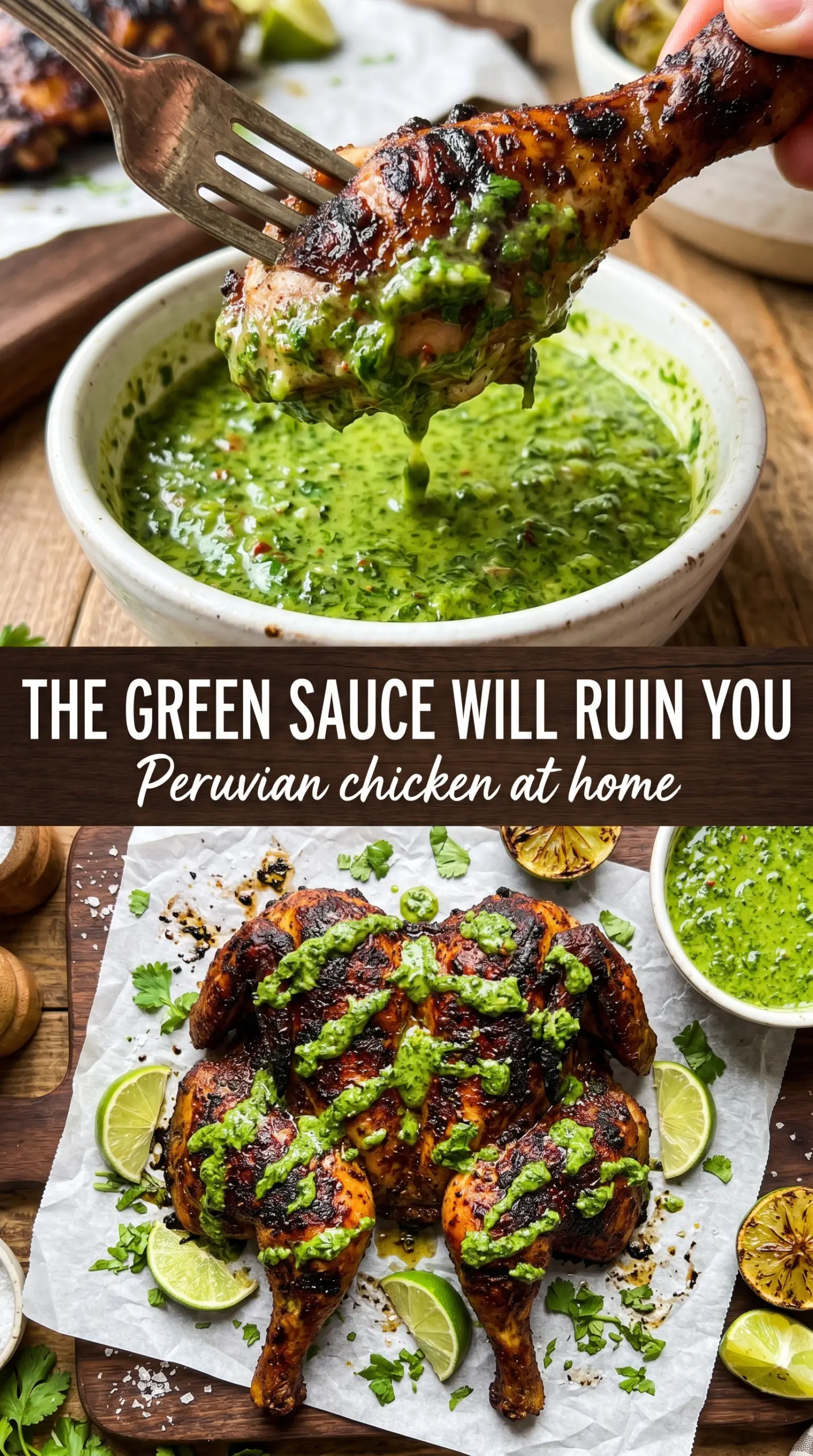
- Chicken pieces — Bone-in pieces stay juicier on the grill than boneless breasts, and a whole chicken gives you the fullest range of textures. If you use a whole bird, spatchcocking helps it cook evenly; if you use pieces, keep them similar in size so they finish together.
- Olive oil — This helps the marinade cling and keeps the spices from drying out on the surface. Any neutral oil works in a pinch, but olive oil adds a roundness that fits the garlic and cumin.
- Soy sauce — This is the salt backbone. It seasons fast and also encourages better browning, which matters here because the skin should end up deeply colored, not pale.
- Lime juice — Lime brings the bright edge that keeps the chicken from tasting heavy. Don’t add much more than called for or the surface can get a little mushy if it sits too long.
- Jalapeños for the green sauce — Use them raw for a clean, sharp heat. If you want a milder sauce, remove the seeds and ribs; if you want more kick, leave them in.
- Mayonnaise and sour cream — Together they make the sauce creamy without turning gluey. Mayo gives body, sour cream adds tang, and neither one can be swapped out for yogurt without changing the texture and flavor a lot.
- Cilantro and garlic — These are what make aji verde taste alive. Blend them fully so the sauce turns smooth and pale green instead of chunky and bitter.
Building the Char on the Chicken Without Drying It Out
Coat the Chicken Completely
Blend the marinade until the garlic is broken down and the spices are evenly distributed, then coat every side of the chicken. The marinade should look glossy and cling to the skin instead of pooling in the bowl. If it sits in a puddle of liquid, the seasoning stays patchy and the chicken won’t brown evenly.
Let the Grill Do the Work Slowly
Set the chicken bone-side down first and leave it long enough to pick up color before the first turn. Turn every 10 minutes or so, keeping the heat at medium rather than hot. If the skin starts blackening fast, move the chicken to a cooler spot on the grill; that’s the difference between a deep char and a burnt crust.
Use Temperature, Not Guesswork
Pull the chicken when the thickest part hits 165°F and the juices run clear. Bone-in pieces can look done on the outside while still being undercooked near the bone, so a thermometer keeps you honest. Let it rest for 10 minutes before serving or the juices will run onto the cutting board instead of staying in the meat.
Blend the Sauce Until Silky
Start with the jalapeños, cilantro, garlic, lime juice, olive oil, mayo, sour cream, and salt, then blend until the sauce turns smooth and spoonable. If it looks thin at first, give it a minute; the mayonnaise and sour cream thicken as the blades pull air through the mixture. Chill it after blending so the garlic mellows and the heat settles into the herbs instead of tasting sharp.
How to Adapt the Chicken and Sauce Without Losing What Makes Them Work
Roasting Instead of Grilling
Roast the chicken at 425°F when the grill isn’t an option. You won’t get the same smoky edge, but you’ll still get a well-browned skin if the pieces are patted dry before they go into the oven. For extra color, finish under the broiler for a minute or two, watching closely so the spices don’t burn.
Dairy-Free Green Sauce
Use a good dairy-free mayo and replace the sour cream with a plain unsweetened dairy-free yogurt or more mayo for a thicker result. The sauce will taste a little sharper and less rich, but it still keeps the cilantro-jalapeño character that makes aji verde worth serving.
Boneless Chicken Thighs
Boneless thighs cook faster and stay tender, which makes them a good weeknight swap. They won’t give you quite the same dramatic carve-and-serve look, but they soak up the marinade well and are much harder to overcook than breasts.
Storage and Reheating
- Refrigerator: Store the chicken and sauce separately for up to 4 days. The sauce stays creamy, though the cilantro flavor softens a bit after the first day.
- Freezer: The chicken freezes well for up to 2 months. The sauce doesn’t freeze well because the dairy can separate, so make that fresh when you’re ready to eat.
- Reheating: Reheat the chicken covered in a 325°F oven until warmed through, or use a skillet over low heat with a splash of water. Don’t blast it in the microwave or the skin turns rubbery and the meat tightens up.
Answers to the Questions Worth Asking
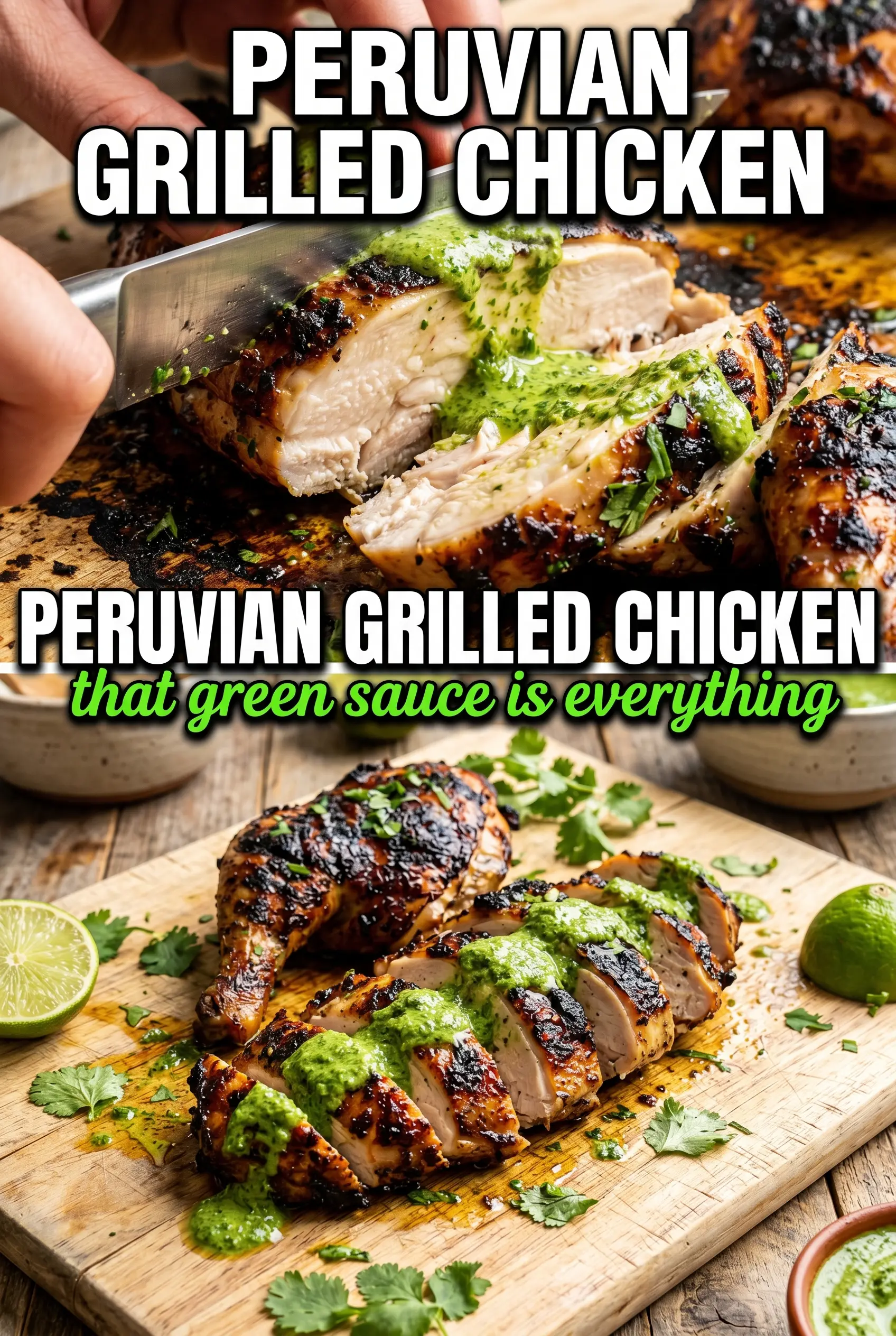
Peruvian Grilled Chicken with Creamy Green Sauce (Pollo Asado)
Ingredients
Equipment
Method
- Blend olive oil, garlic, soy sauce, lime juice, cumin, smoked paprika, dried oregano, black pepper, and cinnamon until combined. Coat the chicken thoroughly in the marinade.
- Marinate the coated chicken for 2 hours or overnight. Keep refrigerated while marinating.
- Blend mayonnaise, sour cream, jalapeños, fresh cilantro, garlic, lime juice, olive oil, and salt until smooth and creamy. Refrigerate until ready to serve.
- Preheat the grill to medium heat and place the chicken on it starting bone-side down. Grill with steady heat, keeping the lid closed when possible.
- Turn the chicken every 10 minutes to develop evenly charred, burnished skin. Continue grilling until deeply charred.
- Cook until the internal temperature reaches 165F, about 35-40 minutes total. Use a thermometer inserted into the thickest part without touching bone.
- Alternatively, preheat the oven to 425F and roast the marinated chicken for 35-45 minutes. Roast until deeply cooked and reach 165F internal temperature.
- Rest the chicken for 10 minutes after grilling or roasting. Serve with the creamy green sauce pooled beside it.