Golden chicken thighs and tender potato cubes turn into a proper one-pan dinner here, with a garlic Parmesan cream sauce that clings to every bite instead of pooling at the bottom of the skillet. The chicken stays savory and crisp at the edges, the potatoes soak up all that seasoned cream, and the whole pan finishes with the kind of rich, spoon-coating sauce that makes people hover around the stove waiting for dinner.
What makes this version work is the order. The chicken gets a hard sear first, which leaves flavorful browned bits behind for the sauce, and the potatoes cook in the same pan so they pick up both butter and drippings. The cream and broth are added together with Parmesan over gentle heat, which helps the sauce thicken without turning grainy or splitting. Bone-in thighs hold up best here because they stay juicy through the bake, while Yukon golds keep their shape and turn creamy inside without falling apart.
If you’ve ever had a skillet dinner where the sauce looked perfect at the start and then broke in the oven, the process notes below will help. I’ve also included a few practical swaps and the reheating method that keeps the sauce from turning greasy the next day.
The sauce thickened up perfectly in the oven and coated the potatoes instead of sliding off. I used thighs like suggested, and they stayed juicy while the edges got that nice seared flavor.
Save this chicken and potatoes with garlic Parmesan cream sauce for a skillet dinner with crisp seared chicken, creamy potatoes, and a sauce that actually stays silky.
The Sear-and-Bake Order That Keeps the Sauce Creamy
The biggest mistake with skillet chicken and potatoes is rushing everything into the pan at once. The chicken needs to sear first so the skin renders and browns, and that browned layer becomes the backbone of the sauce. If you skip that step or crowd the skillet, you lose both flavor and the crisp edges that make the final dish feel substantial instead of soft and one-note.
The other detail that matters is keeping the sauce in the right place in the timeline. The potatoes need a head start before the chicken goes back in, but the sauce should only be thickened enough to coat before the skillet goes into the oven. If it’s reduced too far on the stove, it can turn overly salty after baking and tighten into a heavy paste instead of staying lush.
- Chicken thighs hold up to the bake better than breasts. They stay juicy even after a good sear and 30 minutes in the oven, while breast meat can dry out before the potatoes are tender.
- Yukon gold potatoes are the right choice because they keep their shape and turn creamy inside. Russets can fall apart more easily and make the sauce starchy.
- Heavy cream and broth work together here. The broth loosens the sauce enough to move around the skillet, and the cream gives it body. Using milk instead of cream usually leaves the sauce thinner and more likely to split.
- Freshly grated Parmesan melts cleaner than the canned stuff. Pre-shredded cheese often has anti-caking agents that can make the sauce grainy.
What Each Ingredient Is Actually Doing in This Skillet
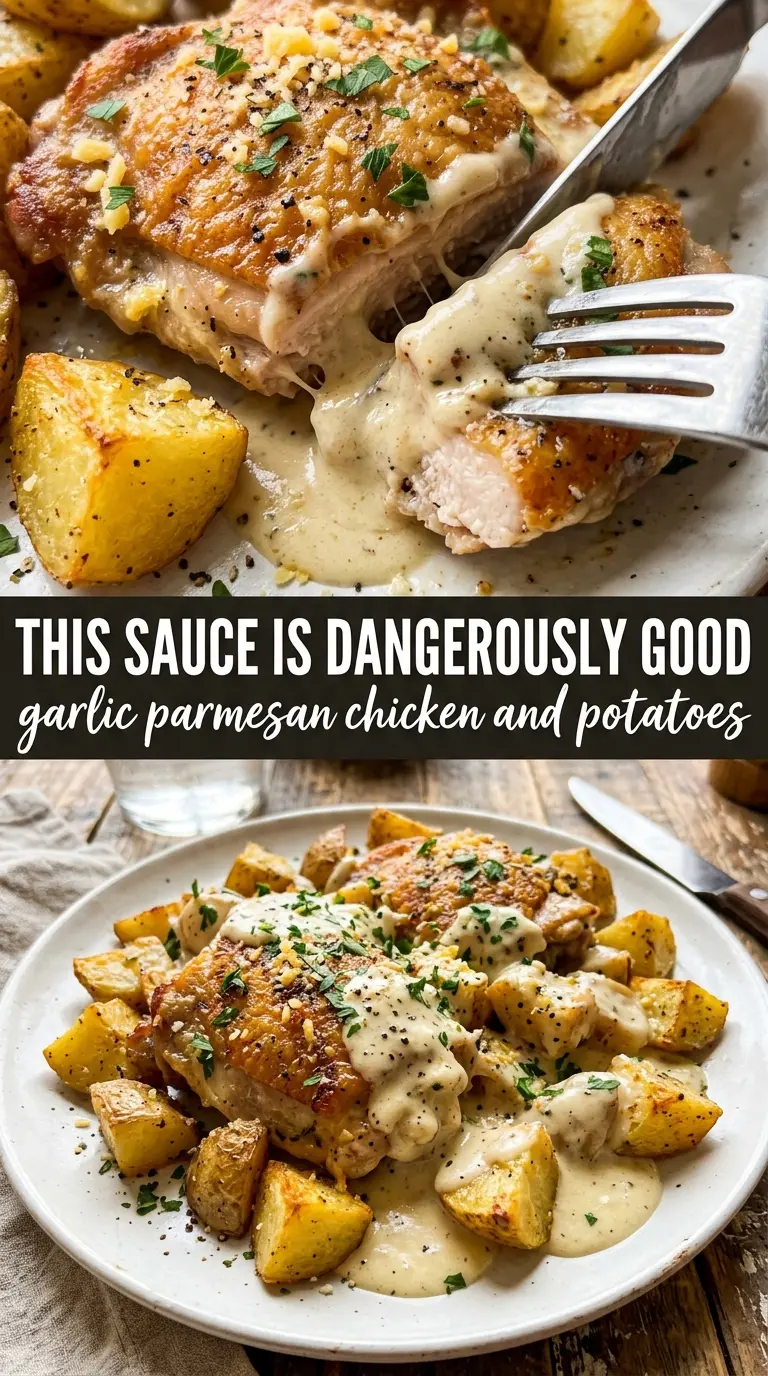
- Bone-in chicken thighs bring flavor and stay moist through the bake. If you only have boneless thighs, reduce the oven time and check them earlier because they cook faster.
- Yukon gold potatoes give you soft centers and edges that still hold up in the sauce. Cut them into even cubes so they finish at the same time.
- Garlic gets sautéed briefly in butter, just long enough to bloom without browning. If it goes deep gold, it turns bitter in a sauce this mild.
- Heavy cream is what keeps the sauce rich and stable. Half-and-half can work in a pinch, but it won’t thicken as firmly and may look looser after baking.
- Chicken broth carries the seasoning through the pan and helps the potatoes cook through in the oven. Use a low-sodium broth if your Parmesan is salty.
- Parmesan is the ingredient that turns this from a cream sauce into a Parmesan cream sauce. Grate it yourself for the smoothest melt.
- Italian seasoning and garlic powder add depth without making the sauce taste overloaded. They fill in the background so the chicken and potatoes taste seasoned all the way through.
Building the Skillet So Nothing Breaks or Burns
Getting the Chicken Skin Golden
Heat the oil until it shimmers, then lay the chicken in skin-side down and leave it alone for the full sear. If you move it too soon, the skin sticks and tears instead of browning cleanly. You’re looking for a deep golden crust that releases from the pan with little resistance. Remove the chicken once the skin is well-colored, even if it isn’t cooked through yet; it finishes in the oven.
Softening the Potatoes Without Turning Them Mushy
Once the chicken comes out, add the butter and potatoes to the same skillet and let them pick up the flavor left behind. Stir them often enough to keep from scorching, but not so often that they lose contact with the pan. The goal is lightly browned edges and a little softening before the sauce goes in. If your cubes are larger than about 3/4 inch, they may need a few extra minutes on the stove or a longer oven finish.
Finishing the Sauce at the Right Heat
Pour in the broth and cream, then stir in the Parmesan and seasonings while the heat stays at medium or a touch lower. If the pan is too hot when the cheese goes in, the sauce can turn grainy fast. Stir until it looks slightly thickened and glossy, then nestle the chicken back into the skillet with the skin facing up. The oven does the rest, and the sauce will tighten into a coat rather than a puddle.
Make It with Boneless Thighs
Boneless thighs work well if you want faster cooking, but they won’t give you the same deep seared skin. Brown them well on both sides, then shorten the bake so they stay juicy. The sauce and potatoes stay the same, though the dish ends up a little less rustic and a little easier to serve.
Dairy-Free Version
Use full-fat canned coconut milk in place of the cream and a dairy-free Parmesan-style alternative that melts well. The sauce won’t taste exactly the same, but it still gets rich and savory. Keep the heat gentle because coconut milk can separate if it boils hard.
Add Mushrooms or Spinach
Sauté sliced mushrooms with the potatoes so they can brown before the liquid goes in, or stir in a few big handfuls of spinach during the last few minutes of baking. Mushrooms deepen the savory flavor, while spinach softens into the sauce without changing the texture much.
Storage and Reheating
- Refrigerator: Store leftovers in an airtight container for up to 3 days. The sauce will thicken as it chills.
- Freezer: It freezes, but the cream sauce may separate a little after thawing. If you do freeze it, cool it completely first and thaw overnight in the fridge.
- Reheating: Reheat gently on the stove over low heat with a splash of broth or cream. High heat is the fastest way to turn the sauce oily and make the chicken dry.
Questions I Get Asked About This Recipe

Chicken And Potatoes With Garlic Parmesan Cream Sauce
Ingredients
Equipment
Method
- Preheat oven to 400F, then season bone-in chicken thighs with salt, pepper, and garlic powder. Make sure seasoning is evenly distributed over the surfaces, including the skin.
- Heat olive oil in a large oven-safe skillet over medium-high heat, then sear chicken skin-side down for 6 minutes until golden. Move nothing for the first minutes so the skin browns and crisps.
- Remove the chicken to a plate, then sauté Yukon gold potatoes in unsalted butter over medium heat for 5 minutes until the cubes start to turn golden. Stir occasionally so the edges develop color.
- Add garlic to the potatoes and cook for 1 minute. Stir until fragrant and slightly softened without browning too dark.
- Pour in chicken broth and heavy cream, then stir in parmesan and Italian seasoning. Keep stirring until the sauce begins to thicken and coats the back of a spoon.
- Nestle bone-in chicken thighs skin-side up into the potatoes and sauce. Press gently so the chicken sits securely in the creamy base.
- Bake for 30-35 minutes at 400F until the chicken is cooked through and the potatoes are tender. Look for bubbling sauce around the edges and clear juices from the thickest part.
- Garnish with Fresh parsley and extra parmesan before serving. Finish with a light sprinkle for visible flecks on top.