Sticky, deeply browned baked chicken thighs are what happen when a simple pantry glaze meets high oven heat at exactly the right moment. The skin turns lacquered and caramelized, the sauce clings in a glossy layer, and the pan juices pick up enough garlic, ginger, and soy to spoon over rice without needing anything else on the plate.
What makes this version work is the balance in the marinade. Honey gives you the shine and caramelization, soy sauce brings salt and depth, and a little rice vinegar keeps the sweetness from going flat. I also like a touch of sesame oil and ginger here because they make the chicken taste more finished, not just sweet.
Below, I’ll show you how to get the glaze to reduce without burning, which ingredient matters most if you want that sticky finish, and how to adjust the recipe if you’re cooking for different diets or making it ahead.
The glaze thickened up in the oven and the chicken came out with that sticky, caramelized skin I always try to get. I used the broiler for just 2 minutes and it was perfect over rice.
Save these honey soy chicken thighs for nights when you want sticky oven-baked chicken with a glossy glaze and almost no cleanup.
The Secret to Sticky Skin Without Burning the Honey
The biggest mistake with honey-based chicken is rushing the glaze too early. Honey browns fast, and if the oven is too hot for too long, you get bitter spots before the chicken has finished cooking through. The trick here is to let the thighs roast first so the skin can render and the marinade can tighten up, then finish with a short broil only at the end.
Bone-in, skin-on thighs are the right cut for this because they stay juicy under high heat and give you enough fat for the skin to crisp. A baking dish works better than a sheet pan here because the sauce pools underneath the chicken and turns into a glossy pan glaze instead of evaporating off the pan.
- Chicken thighs — Bone-in, skin-on thighs are worth using here. Boneless thighs cook faster, but they don’t give you the same caramelized skin or the same built-in richness in the pan sauce.
- Honey — This is what gives the chicken its sticky finish. If you swap in a thinner sweetener, the sauce won’t cling the same way, and it won’t lacquer in the oven as well.
- Soy sauce — Use a regular soy sauce unless you need low-sodium. Tamari works well for gluten-free cooking and gives the same savory backbone without changing the method.
- Rice vinegar and ginger — These keep the glaze from tasting one-note. Fresh ginger is best because it cuts through the sweetness with a clean bite.
- Sesame oil — A small amount goes a long way. It’s there for aroma, not for volume, so don’t overpour or it can take over the whole dish.
What Each Ingredient Is Actually Doing in This Chicken Thigh Recipe

- Chicken thighs (pat dry for browning) — Thighs are more forgiving than breasts. Pat dry so they brown properly instead of steam.
- Oil or butter (the browning medium) — High-heat oil essential for proper searing. Creates deep pan flavor through browning.
- Seasonings (salt, pepper, spices) — Build flavor boldly. Thighs carry flavor better than white meat.
- Aromatics (garlic, onion, ginger, herbs) — Cook with oil to bloom flavors. These become the foundation of the dish.
- Sauce or braising liquid (soy, honey, wine, or broth) — This keeps thighs moist and adds flavor. Thighs stay juicy even if slightly overcooked.
- Vegetables (if using potatoes, carrots, or others) — Layer by cooking time so everything finishes together.
- Acid (vinegar, wine, citrus, or soy) — This brightens sauce and prevents heavy thigh flavor from becoming monotone.
- Proper doneness (165°F internal temperature) — Thighs stay juicy at this temp. Thermometer ensures accuracy without guessing.
How to Roast the Chicken So the Glaze Tightens Instead of Smearing
Whisking the Marinade
Mix the honey, soy sauce, olive oil, garlic, rice vinegar, sesame oil, ginger, and red pepper flakes until the honey disappears into the liquid. If the honey sits in streaks, it won’t coat the chicken evenly, and the bottom of the baking dish will get cloying while the top stays underseasoned. The marinade should smell sharp, salty, and a little sweet before the chicken goes in.
Marinating for the Right Amount of Time
Thirty minutes is enough to season the surface and start building flavor. Up to 24 hours is fine if you want a deeper soy-garlic note, but don’t push it much longer or the texture can get a little too firm around the edges. If you’re short on time, even a brief rest while the oven heats will still help.
Baking Skin-Side Up
Arrange the thighs skin-side up in the baking dish and pour the marinade around and over them. Keeping the skin exposed is what helps it brown instead of steaming in the sauce. Bake at 425°F until the chicken is nearly done and the skin is beginning to look browned and taut, with the sauce bubbling around the edges.
Basting and Finishing Under the Broiler
Spoon the pan sauce over the chicken after the first bake, then return it to the oven until the glaze looks darker and more concentrated. If you want that sticky, lacquered finish, give it 2 to 3 minutes under the broiler at the end, but watch it closely because the line between glossy and scorched is short. Let the chicken rest a few minutes before serving so the juices stay in the meat instead of running into the pan.
How to Adapt These Chicken Thighs for Different Tables
Gluten-Free Version
Swap the soy sauce for tamari in a 1:1 amount. The flavor stays deep and savory, and the glaze still reduces the same way, so you don’t lose the sticky finish.
Lower-Sugar Version
Cut the honey back slightly and lean on the broiler less aggressively. You’ll still get a glossy chicken, but the glaze will be a little less sticky and a little more savory.
Boneless Thighs Instead
Boneless thighs cook faster, so start checking them early. You’ll lose some of the crispy skin effect, but you gain a faster weeknight dinner with the same sweet-salty glaze.
Storage and Reheating
- Refrigerator: Store in an airtight container for up to 4 days. The skin softens a bit in the fridge, but the flavor deepens.
- Freezer: These freeze well for up to 2 months. Cool completely, then freeze with a little of the pan sauce so the chicken doesn’t dry out.
- Reheating: Reheat in a 350°F oven, covered loosely at first, then uncover for the last few minutes to bring back some of the glaze. The mistake to avoid is blasting it in the microwave, which turns the skin rubbery and makes the sauce separate.
Questions I Get Asked About This Recipe
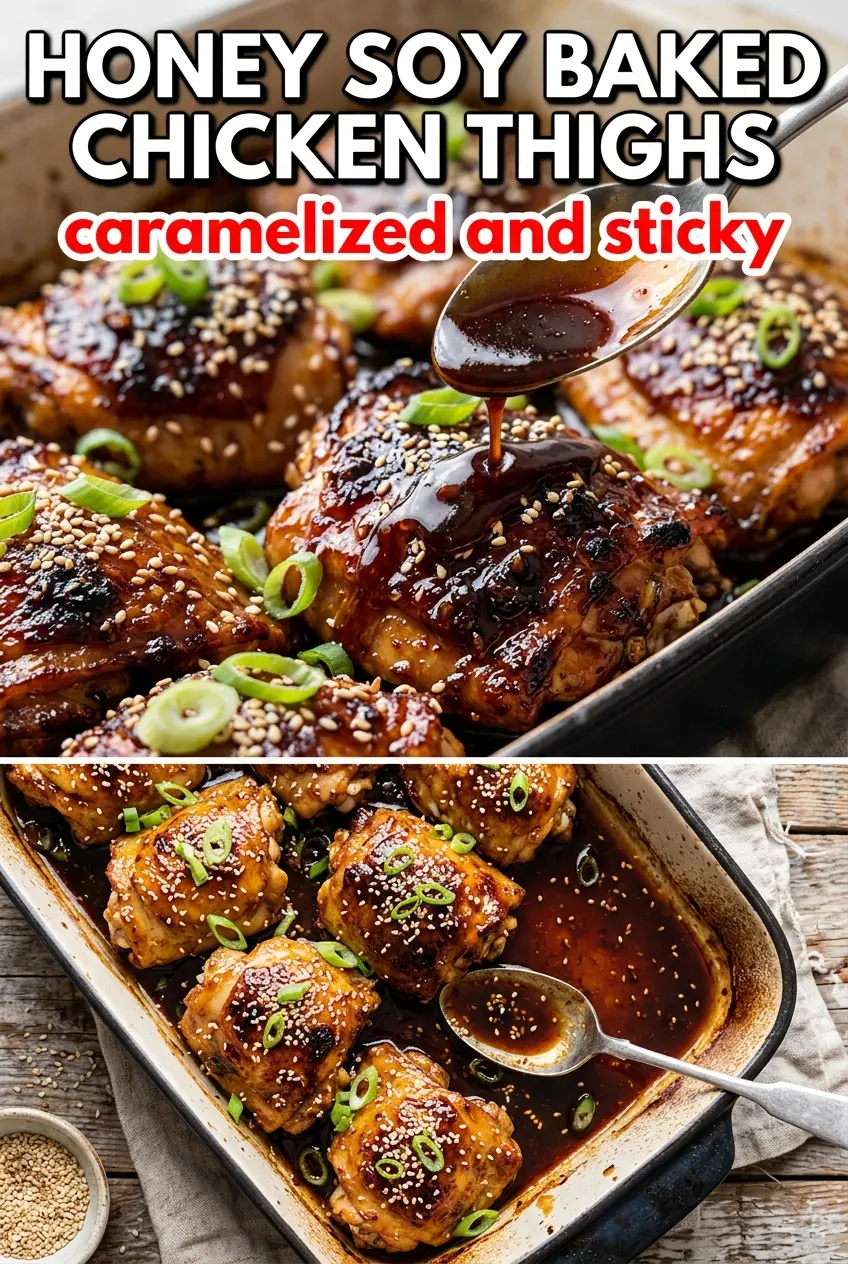
Baked Chicken Thighs in Honey Soy Sauce
Ingredients
Equipment
Method
- Whisk honey, soy sauce, olive oil, garlic, rice vinegar, sesame oil, grated ginger, and red pepper flakes until smooth and glossy.
- Marinate the chicken thighs for 30 minutes, or refrigerate up to 24 hours, turning once if you can to coat evenly.
- Preheat the oven to 425°F and arrange the chicken skin-side up in a baking dish, then pour the marinade over the chicken.
- Bake for 25 minutes, then baste with the pan sauce and continue baking for 10 more minutes until the skin is deeply caramelized and glossy.
- Broil for 2-3 minutes until the glaze tightens and looks extra sticky, watching closely to avoid burning.
- Sprinkle sesame seeds and sliced green onions over the hot chicken, letting the garnish sit for 1-2 minutes to lightly toast.