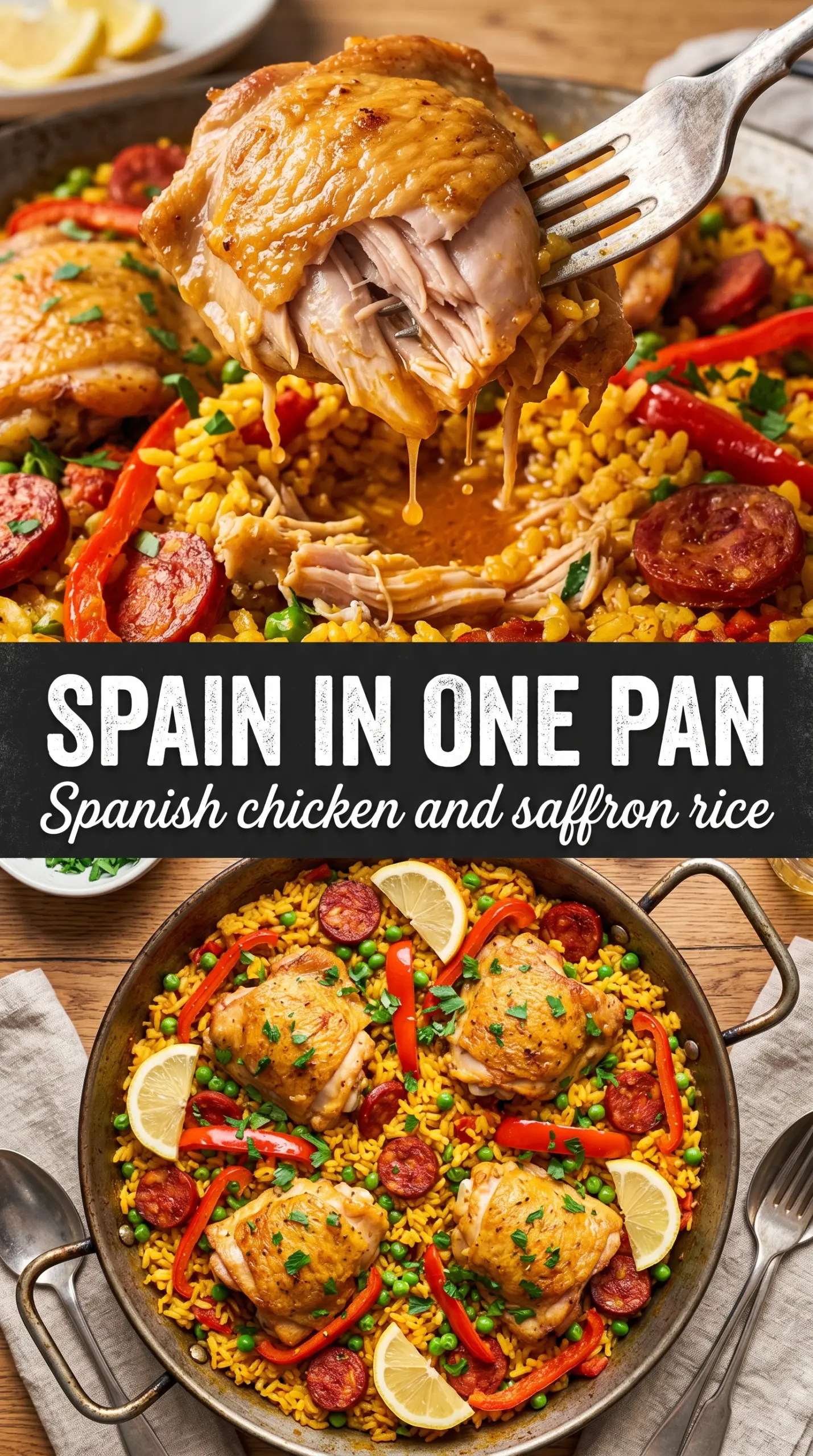
Golden chicken thighs over saffron-tinged rice is the kind of skillet dinner that earns repeat status fast. The rice cooks in the same pan as the chicken, so every grain picks up the smoky paprika, tomato, wine, and drippings left behind from the sear. What you end up with is tender chicken, deeply seasoned rice, and those little sweet pops from peas and peppers that keep each bite interesting.
The key here is building flavor in layers instead of dumping everything together at once. Browning the chicken first gives you a base that plain simmering can’t match, and toasting the rice for a minute or two helps it hold its shape instead of turning soft and sticky. The saffron gets bloomed in warm liquid so its color and aroma spread through the whole pan instead of disappearing in the background.
Below, I’ll walk you through the sear that sets the whole dish up, the ingredient swaps that still keep the rice rich and savory, and the spots where people usually rush and end up with undercooked rice or bland chicken.
The rice cooked up fluffy with just enough bite, and the saffron and smoked paprika made the whole pan taste like it had simmered for hours. I loved that the chicken stayed juicy while the bottom of the pan picked up all that flavor.
Save this one-pan Spanish chicken and rice for the nights when you want saffron rice, juicy chicken thighs, and one skillet doing all the work.
The Sear Comes First, or the Rice Never Tastes as Good
The biggest mistake with this kind of one-pan rice dish is treating the chicken like an afterthought. If you skip a proper sear, you lose the browned bits that season the rice from the inside out. Those little stuck-on spots at the bottom of the pan are what keep the finished dish tasting rich instead of like chicken mixed with rice.
The second place people go wrong is adding the liquid before the rice has had a chance to toast. A brief toast coats the grains in fat and helps them cook up separate and tender. It also keeps the rice from collapsing into a soft, wet layer once the broth and tomatoes go in.
- Chicken thighs — Bone-in thighs stay juicy through the full cook time and leave behind more flavor than boneless pieces. If you swap in breasts, add them later and watch closely so they don’t dry out.
- Saffron — This is the ingredient that gives the dish its signature color and aroma. Bloom it in warm water first so the threads open up and distribute evenly through the rice.
- Smoked paprika — It adds warmth and depth that plain paprika won’t give you. Use a good Spanish-style smoked paprika if you can; it matters here.
- White wine — The wine sharpens the base and lifts the tomato and saffron. If you don’t cook with wine, use extra broth plus a small squeeze of lemon at the end.
What Each Ingredient Is Actually Doing in the Pan
- Long grain rice — This is the right choice because it stays separate and fluffy after simmering. Short-grain rice can turn softer and denser, which changes the whole texture of the dish.
- Diced tomatoes — They add acidity and body to the cooking liquid. Don’t drain them; the juice helps season the rice and keeps the pan from tasting flat.
- Red bell pepper and onion — These build sweetness into the base before the rice goes in. Dice them evenly so they soften at the same pace and don’t leave crunchy bits in the finished pan.
- Frozen peas — Add them at the end so they stay bright and sweet. If they go in too early, they lose their color and turn dull and mushy.
- Olive oil — It helps the chicken brown and carries the paprika into the pan. You don’t need an expensive bottle here, just one with a clean taste.
How to Build the Pan So the Rice Cooks Tender and Separate
Getting the Chicken Skin Properly Golden
Season the thighs well before they hit the pan, then lay them skin-side down in the hot oil and leave them alone until the skin releases and turns deep golden. If you try to move them too early, the skin sticks and tears instead of crisping. You don’t need to cook them through at this stage; you just want color and rendered fat for the rice.
Cooking the Aromatics Without Burning the Garlic
Once the chicken comes out, the onion and bell pepper go into the same pan so they soak up what the chicken left behind. Cook them until the onion turns translucent and the pepper softens at the edges, then add the garlic for just a minute. If the garlic browns hard, it turns bitter and that bitterness carries through the whole dish.
Letting the Rice Absorb the Base Before the Simmer
Stir the rice into the vegetables and let it toast for a short moment before adding wine, tomatoes, broth, saffron liquid, and turmeric. That quick toast gives the rice a better texture and helps it hold up during the simmer. Once the liquid goes in, bring it to a gentle simmer before nesting the chicken on top so the grains start cooking evenly from the bottom up.
The Final Covered Cook
Cover the pan and keep the heat on medium-low. You want a steady, quiet simmer, not a hard boil; aggressive bubbling can leave the top undercooked while the bottom turns mushy. When the rice is tender and the liquid is absorbed, scatter the peas over the top, cover again, and let the pan rest so the grains finish steaming and the chicken settles back into its juices.
How to Adapt This for a Different Pantry or a Bigger Crowd
Gluten-Free Without Changing the Dish
This recipe is naturally gluten-free as written, as long as your broth is certified gluten-free. That small label check matters because broth is the one ingredient that can quietly introduce wheat into a pan dinner like this.
No Wine, Still Plenty of Depth
Swap the wine for more chicken broth and finish with a small squeeze of lemon. You’ll lose a little of the sharp edge wine adds, but the tomato, paprika, and saffron still carry the dish nicely.
Using Chicken Breasts Instead of Thighs
Chicken breasts work, but they don’t give you the same richness or forgiveness. Sear them lightly, then add them later in the simmer so they finish without turning dry, and expect a cleaner, leaner result.
Scaling Up for More People
You can double this in a wider pan or a Dutch oven, but don’t cram the chicken too tightly. Crowding traps steam during the sear, which means weaker browning and a less flavorful rice base.
Storage and Reheating
- Refrigerator: Store in an airtight container for up to 4 days. The rice will tighten as it chills, but the flavor deepens overnight.
- Freezer: It freezes well for up to 2 months. Cool it completely, portion it into containers, and freeze it flat so it reheats more evenly.
- Reheating: Reheat gently on the stove or in the microwave with a splash of broth or water. The common mistake is blasting it on high heat, which dries out the chicken and makes the rice chewy before the center warms through.
Questions I Get Asked About This Recipe
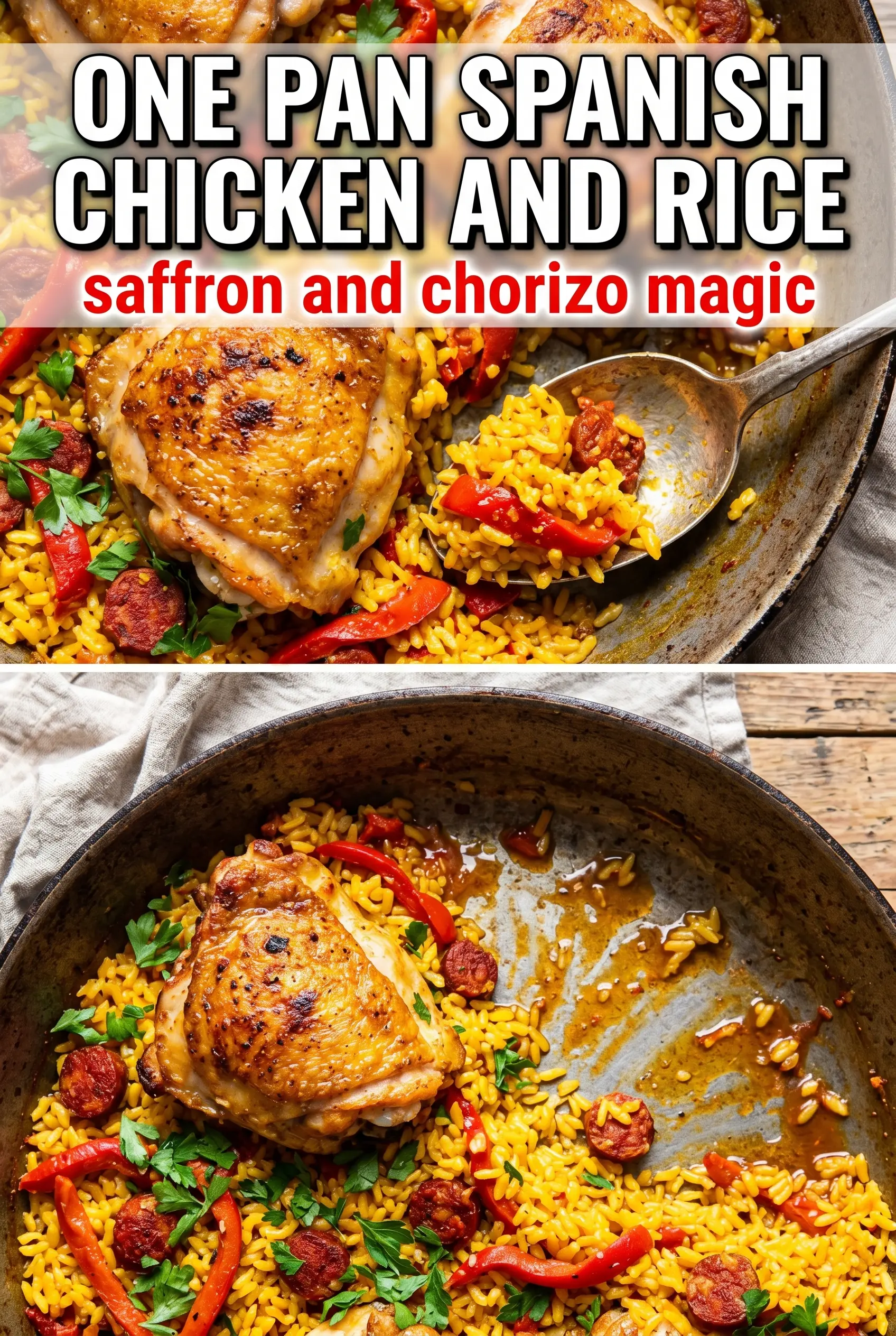
One Pan Spanish Chicken And Rice
Ingredients
Equipment
Method
- Season bone-in chicken thighs with smoked paprika, salt, and pepper. Heat olive oil in a wide Dutch oven and sear skin-side down for 6 minutes, until golden, then remove.
- Add diced onion and diced red bell pepper to the Dutch oven and sauté for 4 minutes. Add minced garlic and cook for 1 minute.
- Add long grain rice and toast briefly, then pour in white wine. Stir in diced tomatoes, chicken broth, saffron liquid, and turmeric.
- Bring the mixture to a simmer, then nestle the chicken skin-side up into the rice. Cover and cook on medium-low for 25–30 minutes, until the rice is tender.
- Scatter frozen peas over the top, cover again, and rest for 5 minutes. Garnish with fresh parsley and lemon before serving.