Blackstone chicken thighs come off the griddle with the kind of crust that makes people hover near the stove waiting for the first piece. The outside turns deeply golden and just a little crisp at the edges, while the inside stays juicy enough to slice cleanly without drying out. That garlic butter at the end isn’t decoration — it catches on the hot chicken and turns into a glossy finish that tastes like you spent a lot more time than you did.
The key here is simple: hot griddle, dry chicken, and enough space for the thighs to sear instead of steam. Boneless thighs forgive a little more than chicken breasts, but they still need that first uninterrupted stretch on the heat so the surface can brown properly. The seasoning is built from pantry staples, which means the chicken tastes like itself, just better, with smoked paprika and garlic doing the heavy lifting.
Below you’ll find the timing cues that matter most, plus a few small changes you can use if you want to shift the flavor or make the dish work with what’s already in your kitchen.
The thighs got that perfect seared crust on the Blackstone and the garlic butter coated every bite without burning. I watched the temp closely and they stayed juicy at 165, which never happens for me on the griddle.
Save these Blackstone chicken thighs for the nights when you want a fast griddle dinner with a crisp sear and garlic butter finish.
The Griddle Trap: Why Chicken Sticks Before It Browns
Most flat-top chicken goes wrong for one of two reasons: the surface isn’t hot enough, or the chicken gets moved too early. If the griddle is only warm, the thighs will leak moisture, sit in it, and turn pale instead of developing that deep crust you want. A little oil helps, but oil can’t replace heat. The chicken needs that first undisturbed contact with the surface so the proteins set and release on their own.
Boneless skinless thighs are forgiving, but they still brown best when they’re patted dry and seasoned before they hit the griddle. The spices won’t burn in the 6–7 minute sear as long as the heat is medium-high and not blasting. If the chicken fights you when you try to flip it, give it another minute. When it’s ready, it lifts cleanly.
What the Seasoning and Butter Are Doing Here
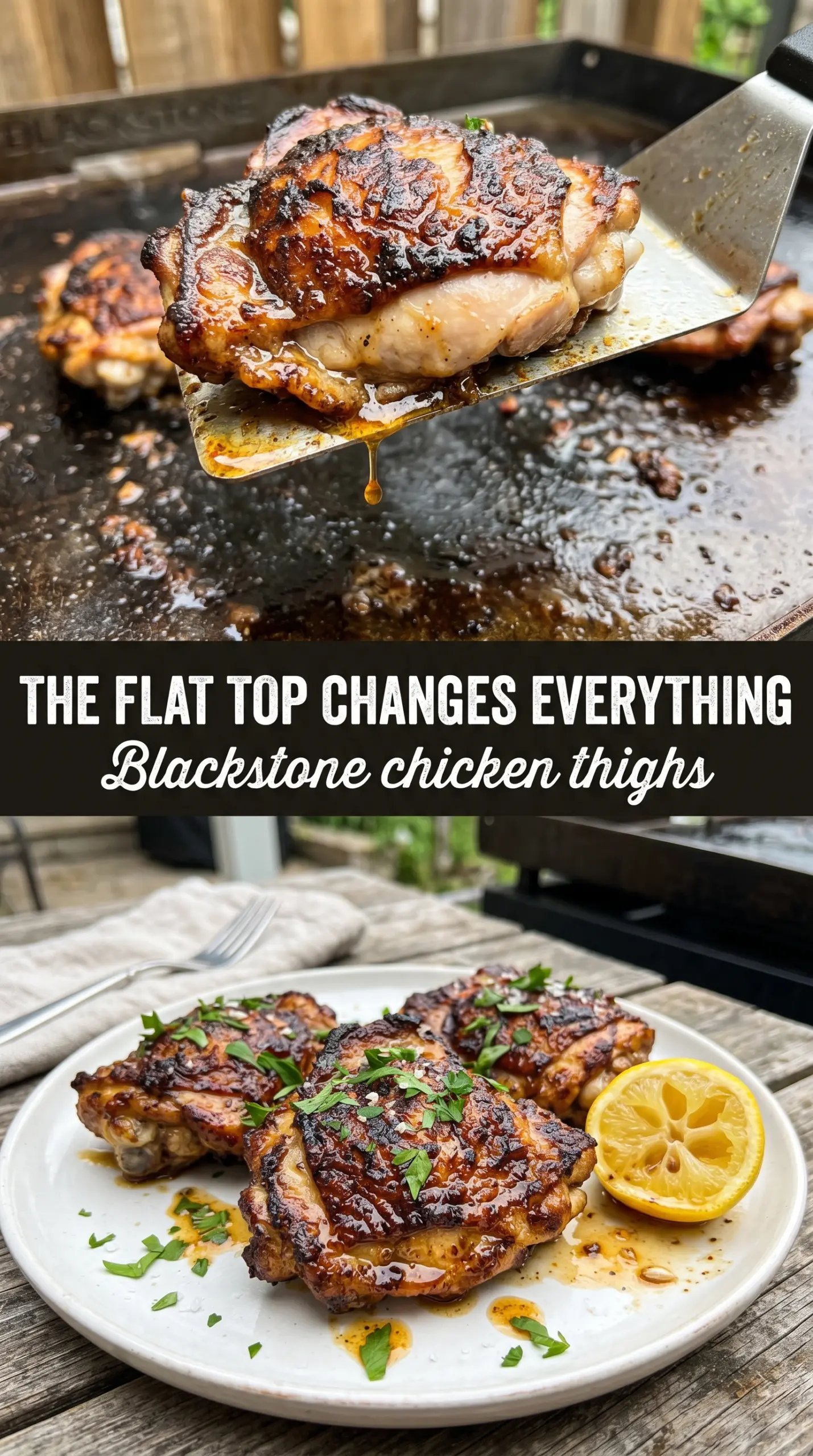
- Chicken thighs — Boneless, skinless thighs stay juicy on the griddle and hold up to high heat better than breasts. You can swap in chicken breast cutlets, but they’ll need a shorter cook and a little more attention because they dry out faster.
- Vegetable oil — This gives you a steady, neutral base for searing. Any neutral high-heat oil works here, but skip olive oil if your griddle runs hot; it can smoke before the chicken gets the color you want.
- Smoked paprika — This adds a little depth that reads like you cooked over fire, even though the griddle is doing the work. Regular paprika works, but the smoked version gives the chicken more character without adding extra effort.
- Butter and garlic — Add them after the chicken is cooked through. If garlic goes on too early, it can burn and turn bitter before the thighs finish. The butter loosens all the browned bits on the griddle and turns them into a quick pan sauce right on the surface.
- Lemon wedges and parsley — The lemon cuts through the butter and wakes up the seasoning at the end. Parsley adds freshness and keeps the finished dish from tasting heavy.
Getting the Sear Right, Then Finishing in Garlic Butter
Season the chicken evenly
Mix the garlic powder, smoked paprika, onion powder, Italian seasoning, salt, and pepper together first, then coat the chicken on all sides. Press the seasoning onto the thighs so it clings instead of falling off onto the griddle. If the chicken seems wet on the outside, pat it dry before seasoning or the spices will slide and the browning will suffer. Let it sit while the griddle heats so the surface can start to lose a little moisture.
Heat the griddle until it’s ready to sear
Preheat the Blackstone to medium-high and add the oil in a thin, even layer. The oil should shimmer, not smoke aggressively. That’s the cue that the surface is hot enough to brown the chicken instead of soaking it in fat. If the griddle is crowded or unevenly hot, the thighs will cook patchy and you’ll lose the crust.
Leave the first side alone
Place the thighs down and don’t touch them for 6–7 minutes. You’re listening for a steady sizzle, not a fierce crackle that scorches the seasoning. When the underside is deeply golden and the chicken releases without resistance, flip it. If it tears, it was moved too soon.
Cook through, then finish with butter and garlic
After the flip, cook the second side for another 6–7 minutes until the thickest part reaches 165°F. Add the butter and garlic beside the chicken near the end, not at the start, and let the garlic bloom for about a minute until fragrant. Toss the chicken through the butter just long enough to coat it. Finish with parsley and lemon, which keeps the rich finish from tasting flat.
How to Adapt These Blackstone Chicken Thighs Without Losing the Crust
Use chicken breasts instead of thighs
Slice breasts into cutlets or pound them to an even thickness so they cook at the same rate as the thighs. They’ll brown nicely, but they won’t stay as juicy, so pull them as soon as they hit 165°F and don’t let them sit on the griddle longer than needed.
Make it dairy-free
Skip the butter and finish the chicken with an extra drizzle of oil plus a squeeze of lemon. You’ll lose the glossy garlic-butter coating, but the seared spice crust and the bright finish still carry the dish.
Turn up the heat without changing the method
Add a pinch of cayenne or crushed red pepper to the seasoning mix if you want a little burn. Keep the amount modest, because too much heat can overpower the garlic butter and make the finish taste harsh instead of balanced.
Storage and Reheating
- Refrigerator: Store leftovers in an airtight container for up to 4 days. The crust softens a bit, but the flavor holds.
- Freezer: Freeze cooked thighs for up to 2 months. Wrap them well and thaw overnight in the refrigerator before reheating so the texture stays as even as possible.
- Reheating: Warm them in a skillet over medium-low heat with a splash of water or extra butter and cover briefly so they heat through without drying out. Microwaving works in a pinch, but it dulls the crust and can make the edges rubbery.
Answers to the Questions Worth Asking

Blackstone Chicken Thighs
Ingredients
Equipment
Method
- Season the chicken thighs with garlic powder, smoked paprika, onion powder, Italian seasoning, salt, and black pepper. Refrigerate for 30 minutes to marinate.
- Preheat the Blackstone griddle to medium-high heat, then add the vegetable oil and spread it evenly across the surface.
- Place the chicken thighs on the griddle and cook undisturbed for 6-7 minutes until the bottom is deeply golden and caramelized.
- Flip the chicken thighs and cook for 6-7 more minutes until cooked through, reaching 165F.
- Add the unsalted butter and minced garlic to the griddle beside the chicken and cook for 1 minute until fragrant.
- Toss the chicken in the garlic butter and cook for 1 more minute to coat thoroughly.
- Garnish with fresh parsley and serve with lemon wedges.