French-style double chocolate ice cream lands with a dense, glossy richness that tastes closer to frozen ganache than a light scoop from the grocery store. The dark chocolate gives it that deep, almost bitter edge, while the custard base keeps the texture smooth and plush instead of icy. It’s the kind of dessert that feels a little extra the moment you taste it, but it still behaves like a proper home recipe.
What makes this version work is the way the chocolate is layered. Cocoa gets whisked into the dairy before heating, which builds flavor all the way through the base, then melted dark chocolate goes in at the end for body and that intense fudge-like finish. The egg yolks do the quiet work here, giving the ice cream enough richness to freeze creamy instead of hard.
Below, I’ll walk through the part that matters most: how to cook the custard without scrambling it, how to keep the chocolate smooth, and what to expect if you want to make it a day ahead. This is one of those recipes that rewards patience, and the payoff is a scoop that tastes as dark and silky as it looks.
The custard came out smooth and the chocolate flavor was incredible without tasting overly sweet. I churned it just until thick, and after a night in the freezer it scooped like a dream.
Save this French-Style Double Chocolate Ice Cream for the nights when you want a deeply fudgy custard base and a scoop that freezes up thick, glossy, and intensely chocolatey.
The Mistake That Makes Chocolate Ice Cream Taste Thin
The biggest problem with chocolate ice cream isn’t usually the churn. It’s the base. If you rely on cocoa alone, the flavor can taste flat and dusty after freezing, and if you push the custard too hard on the stove, you end up with a grainy texture that never turns silky again. This recipe avoids both problems by using cocoa for depth, melted dark chocolate for richness, and egg yolks for body.
The other detail that matters is heat control. The custard should reach 175°F, not boil, and the chocolate goes in after the pan comes off the heat. That keeps the emulsion smooth and glossy instead of split. If the base looks slightly thinner than you expect before chilling, that’s fine; it thickens as it cools and churns.
- Egg yolks — These are what give French-style ice cream its custard texture. Whole eggs won’t behave the same way here; yolks make the base richer and help it freeze with a softer scoop.
- Dark chocolate — Use a good 70–72% bar if you can. Chips work in a pinch, but they often contain stabilizers that dull the finish and make the melt less smooth.
- Dutch process cocoa — This deepens the chocolate flavor without adding extra sweetness or acidity. Natural cocoa can work, but the finished ice cream will taste sharper and a little less round.
- Heavy cream and whole milk — The balance matters. All cream makes the base heavy; all milk makes it thin and icy. This mix gives you richness without turning the ice cream greasy.
How to Build the Custard Without Scrambling the Yolks
Melting the Chocolate First
Start by melting the chopped dark chocolate with the butter over a double boiler until it looks smooth and glossy. The butter helps the chocolate stay fluid and gives the finished ice cream a softer, more fudgy feel. Set it aside before you heat the dairy so it’s ready when the custard comes off the stove. If the chocolate overheats, it can seize and turn stiff, so keep the heat gentle.
Heating the Dairy and Whisking in the Cocoa
Whisk the cocoa into the cream and milk before you warm it. That step matters because dry cocoa clumps if you add it to hot liquid too quickly. Heat the mixture until it’s steaming around the edges, with small bubbles forming at the rim, but don’t let it boil. Boiling can make the dairy taste cooked and gives you less control when you temper the yolks.
Tempering the Yolks
Whisk the sugar and egg yolks together until they look lighter and a little thickened, then pour in the hot dairy slowly while whisking constantly. This is the moment that prevents scrambled eggs. Add the hot liquid in a thin stream at first, especially for the first half cup, so the yolks warm gradually instead of setting. If you rush this part, the custard turns lumpy and you’ll have to strain more aggressively, which can thin the base.
Cooking to the Right Thickness
Return the mixture to the saucepan and cook it over medium-low heat until it reaches 175°F and lightly coats the back of a spoon. It should look slightly thicker, not like pudding. Stir constantly and scrape the bottom of the pan so nothing sticks. Pull it off the heat as soon as it hits temperature; a few extra degrees is where custard goes from smooth to grainy.
Finishing and Chilling
Whisk in the melted chocolate immediately, then add the vanilla and salt. The base should turn dark, shiny, and completely smooth. Strain it through a fine mesh sieve to catch any tiny bits of cooked egg, then chill it over an ice bath before refrigerating for at least 4 hours. A cold base churns faster and freezes with a finer texture, while a warm base tends to make soft, uneven ice cream.
How to Adapt This Custard for Different Kitchens and Different Cravings
Dairy-Free Version with Coconut Cream
Swap the heavy cream and milk for full-fat coconut milk and coconut cream in equal amounts. The texture stays rich, but you’ll pick up a mild coconut note that works well with dark chocolate. The base may taste a little softer and less buttery than the original, which is the tradeoff for going dairy-free.
Extra Fudgy Add-In
Fold in chopped chocolate chunks or shaved chocolate after churning if you want a more intense chocolate hit in every bite. Add them at the end so they stay distinct instead of melting into the base. This keeps the ice cream from tasting one-note and gives you little bursts of texture.
Lower-Sugar Approach
You can reduce the sugar slightly, but don’t cut it too far or the ice cream will freeze harder and taste flatter. Sugar isn’t just sweetness here; it helps control texture. If you lower it by more than a few tablespoons, plan to let the finished ice cream sit at room temperature a few minutes before scooping.
Storage and Freezing
- Freezer: Store in a tightly covered container for up to 2 weeks. After that, the flavor stays good, but the texture starts to pick up ice crystals at the edges.
- Serving: Let it sit on the counter for 5 to 10 minutes before scooping. French-style ice cream freezes harder than store-bought, and a short rest makes the texture glossy instead of brittle.
- Make-ahead: This is a great make-ahead dessert. In fact, the flavor deepens after a full overnight freeze, as long as the container is sealed well.
Questions I Get Asked About This Recipe
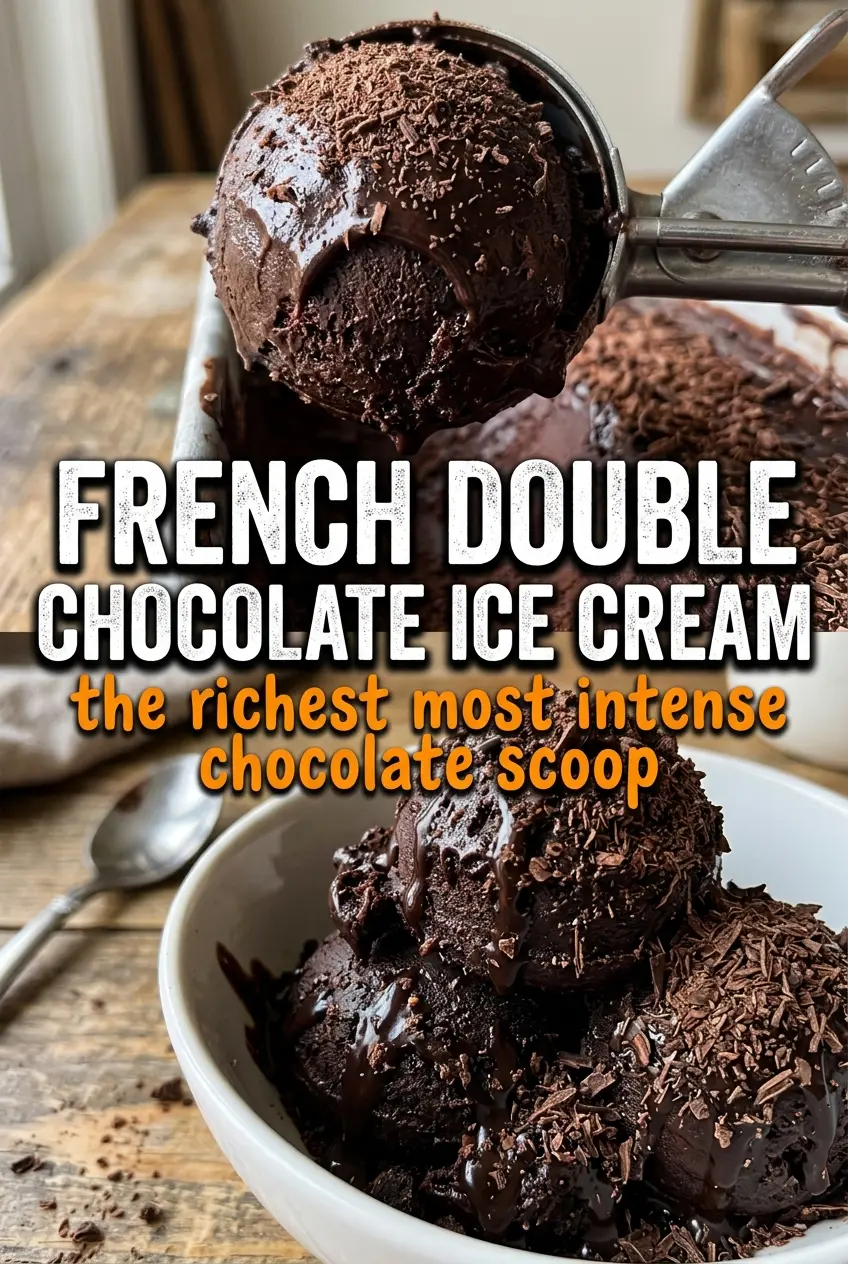
French-Style Double Chocolate Ice Cream
Ingredients
Equipment
Method
- Melt the dark chocolate with the unsalted butter over a double boiler, stirring until smooth, then set aside off the heat.
- Whisk the Dutch process cocoa powder into the heavy cream and whole milk, then heat until steaming, about 3–5 minutes.
- Whisk the hot cocoa-cream mixture slowly into the egg yolks beaten with the granulated sugar to temper, then return everything to a saucepan.
- Cook the custard over medium heat, stirring constantly, until it reaches 175°F on a thermometer.
- Remove from the heat and immediately whisk in the melted dark chocolate until glossy and smooth.
- Stir in the vanilla extract and salt, then strain the mixture through a fine mesh sieve.
- Cool completely over ice, then refrigerate for 4 hours.
- Churn the chilled custard in an ice cream maker until it has the texture of soft-serve.
- Transfer to a freezer-safe container and freeze until firm, about 2–4 hours, then serve.