Slow cooker chicken osso bucco turns out with the kind of deep, braised flavor that tastes like it simmered all afternoon without tying up the stove. The chicken comes out tender enough to pull apart with a spoon, and the sauce settles into that sweet spot between brothy and rich, with tomatoes, wine, and softened vegetables melting into one another.
What makes this version work is the layering. The vegetables go on the bottom so they can release moisture and build the sauce, while the chicken stays skin-side up so it doesn’t get completely submerged and lose all texture. A little tomato paste gets stirred into the vegetables first, which gives the sauce a darker, fuller base than dumping everything in together.
Below you’ll find the small details that matter here: how to keep the sauce balanced, when the chicken is actually done, and why the bright gremolata at the end changes the whole dish. If you’ve only had osso bucco made with veal, this chicken version is the one that wins on ease without giving up the comfort.
The chicken stayed incredibly tender and the sauce thickened into this rich, tomatoey gravy that was perfect over polenta. The gremolata on top made it taste fresh instead of heavy.
Slow Cooker Chicken Osso Bucco with tender thighs, a rich tomato-wine sauce, and that fresh gremolata finish.
The Part That Keeps the Sauce from Turning Thin and Flat
A lot of slow cooker braises end up tasting watery because the vegetables never get a chance to do their job before the meat goes in. Here, the carrots, celery, onion, and garlic sit under the chicken and slowly melt into the liquid, which gives the sauce body without needing flour or a separate reduction. The tomato paste matters too. Stirring it into the vegetables before adding the broth and wine wakes it up and keeps the tomato flavor from tasting raw or one-note.
The other detail that changes the result is keeping the chicken skin-side up. It won’t stay crisp in a slow cooker, but it will stay distinct instead of dissolving into the sauce. That small bit of structure helps the dish feel like braised chicken rather than shredded chicken in tomato broth.
- Bone-in chicken thighs — These hold up to long cooking better than breasts and bring enough fat and connective tissue to stay succulent. Skin-on thighs give you a little more richness, even though the skin softens during cooking.
- Dry white wine — This adds brightness and a subtle sharpness that keeps the sauce from tasting heavy. If you don’t want to use wine, replace it with more broth plus a small splash of lemon juice at the end.
- Tomato paste — A teaspoon seems small, but it deepens the sauce fast. Cook it briefly with the vegetables so it loses the tinny edge and blends into the braising liquid.
- Gremolata — Don’t skip this. The parsley, garlic, and lemon zest cut straight through the richness and make the whole dish taste finished, not just cooked.
Building the Braise in the Slow Cooker
Starting with the Vegetables
Scatter the diced carrots, celery, onion, and garlic across the bottom of the slow cooker. This creates a bed that lifts the chicken slightly and lets the vegetables soften in the liquid instead of burning or sticking. If the pieces are chopped too large, they’ll stay a little firm; if they’re minced too fine, they can disappear into the sauce before you get any texture from them.
Coating the Base with Tomato Paste
Stir the tomato paste into the vegetables before adding the tomatoes, broth, and wine. That step keeps the paste from clumping and helps it dissolve into the sauce evenly. Once the liquid goes in, the mixture should look loose and rustic, not thick like a stew. That’s what you want at this stage.
Letting the Chicken Braise Undisturbed
Set the seasoned chicken thighs on top, skin-side up, and tuck in the bay leaf. Resist the urge to stir once the chicken is in place. If you keep moving it around, the pieces can sink into the vegetables and lose the top layer of texture that makes the finished dish look and eat like osso bucco. Cook on Low for 6 to 8 hours until the chicken gives easily when pierced and the meat is almost falling off the bone.
Finishing with Gremolata and Serving
Mix the parsley, minced garlic, and lemon zest right before serving so the aromatics stay sharp. Discard the bay leaf, then spoon the chicken and sauce over polenta or risotto. Add the gremolata at the end, not before. If it cooks in the sauce, the lemon goes dull and the garlic gets muddy; sprinkled on top, it cuts through the richness exactly where you need it.
How to Adapt This Braise Without Losing the Good Part
Make It Dairy-Free and Gluten-Free as Written
This recipe already works for both as written, which is part of why I like it. Just serve it over polenta made with dairy-free butter or olive oil, or over plain risotto if that fits your table. The sauce gets its body from the vegetables and long cooking, not from flour or cream.
Skip the Wine and Keep the Balance
Use an equal amount of chicken broth in place of the wine, then add 1 to 2 teaspoons lemon juice after cooking to bring back the brightness the wine would have provided. Without that little hit of acid, the sauce can taste round but flat.
Use Bone-In Chicken Breasts Carefully
You can use bone-in breasts, but shorten the cooking time and start checking early, because they dry out faster than thighs. The result will be a little leaner and less rich, so the gremolata matters even more for contrast.
Storage and Reheating
- Refrigerator: Store leftovers in an airtight container for up to 4 days. The sauce thickens as it sits, which actually helps the flavor.
- Freezer: This freezes well for up to 2 months. Cool it completely first and freeze the chicken with plenty of sauce so it doesn’t dry out when thawed.
- Reheating: Reheat gently on the stove over low heat or in the oven covered at 300°F until hot. Don’t boil it hard, or the chicken will tighten up and the sauce can turn greasy.
Answers to the Questions Worth Asking
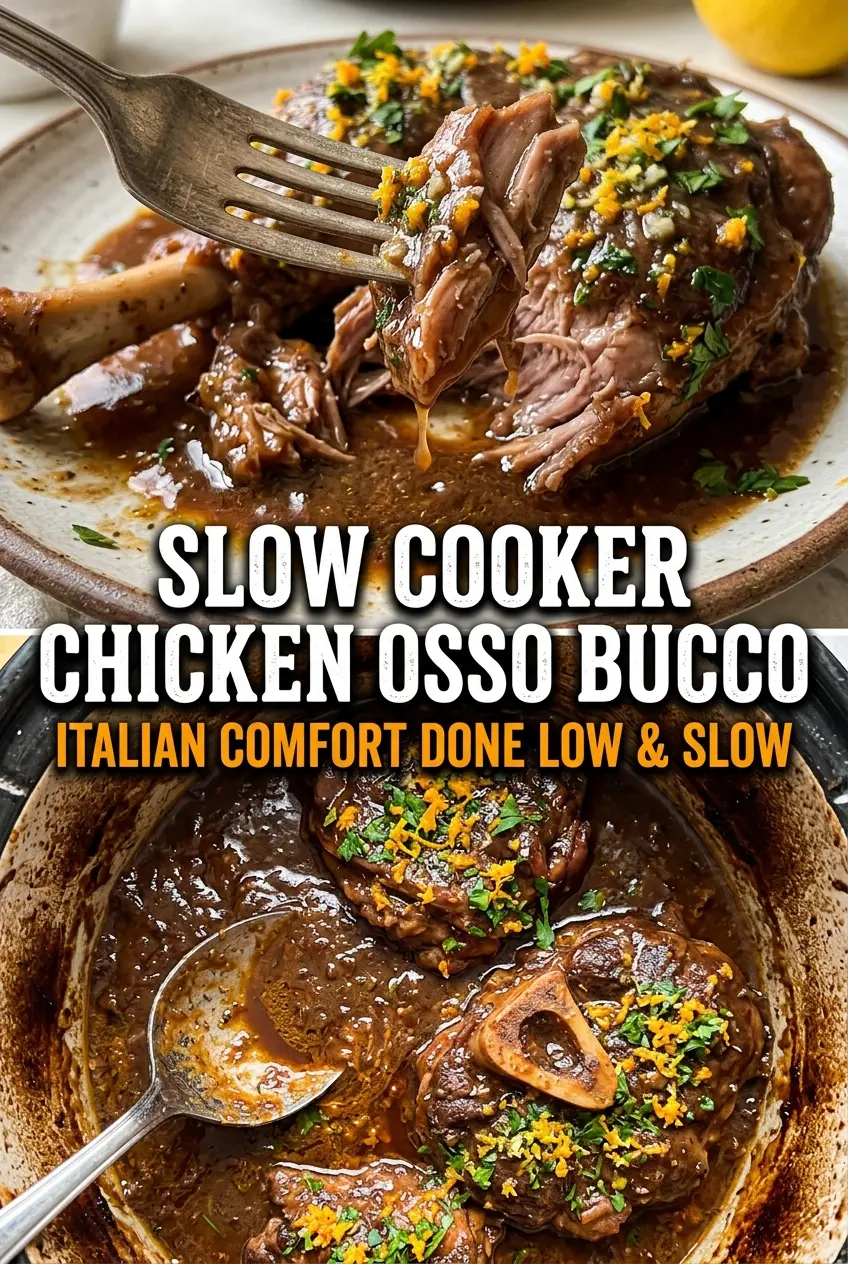
Slow Cooker Chicken Osso Bucco
Ingredients
Equipment
Method
- Season the bone-in chicken thighs with Italian seasoning, salt, and pepper so the flavors cling as they braise.
- Layer the diced carrots, celery, onion, and minced garlic on the bottom of the slow cooker for an even vegetable base.
- Stir the tomato paste into the vegetables, then add the diced tomatoes, chicken broth, and dry white wine to form a braising sauce.
- Nestle the chicken on top, skin-side up, and tuck the bay leaf into the sauce for added aroma.
- Cook on Low for 6-8 hours (or High for 3-4 hours) until the chicken thighs are very tender and easily pull apart.
- Make the gremolata by combining fresh parsley, minced garlic, and lemon zest to create a bright topping.
- Discard the bay leaf, then serve the chicken over polenta with sauce spooned over and gremolata scattered on top.