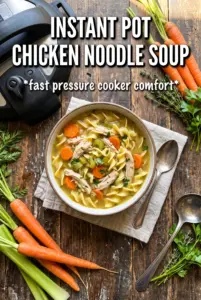
Deeply savory broth, tender shredded chicken, and egg noodles that stay pleasantly slurpy without turning mushy — that’s what makes Instant Pot chicken noodle soup worth putting on repeat. The pressure cooker pulls a lot of flavor out of the chicken and vegetables in a short amount of time, so the broth tastes like it simmered all afternoon even though dinner is on the table fast.
The trick is keeping the noodles out of the pressure cook cycle. They go in at the end on Sauté, where they absorb flavor from the broth without dissolving into starch. Starting with raw chicken breast also helps here; it turns tender under pressure and gives the broth a cleaner, fuller chicken flavor than pre-cooked meat usually does.
Below, I’ll walk through the timing that keeps the vegetables from turning to paste, the simple seasoning balance that makes the broth taste rounded instead of flat, and a few ways to adapt the pot if you want to swap noodles, use thighs, or plan ahead for leftovers.
The broth had that slow-simmered taste, and the noodles stayed perfectly tender because I added them at the end like you said. My husband went back for a second bowl before I even sat down.
Save this Instant Pot Chicken Noodle Soup for the nights when you want rich broth, tender chicken, and noodles that hold their shape.
Why the Noodles Go in After Pressure Cooking
The biggest mistake with Instant Pot chicken noodle soup is letting the noodles cook under pressure. Egg noodles break down fast, and in a sealed pot they keep absorbing liquid long after they look done, which leaves you with a cloudy, starchy broth and soft, bloated noodles. Cooking them on Sauté at the end gives you control over the texture and keeps the soup tasting brothy instead of thickened into mush.
There’s another benefit to this approach: the chicken stays juicier when it’s cooked on its own timeline, then shredded and returned to the pot. If you add the noodles too early, they can shield the chicken from the broth and make the whole pot uneven. This version keeps the vegetables, chicken, and noodles each at their best texture instead of forcing everything to finish at once.
What Each Ingredient Is Doing in the Pot
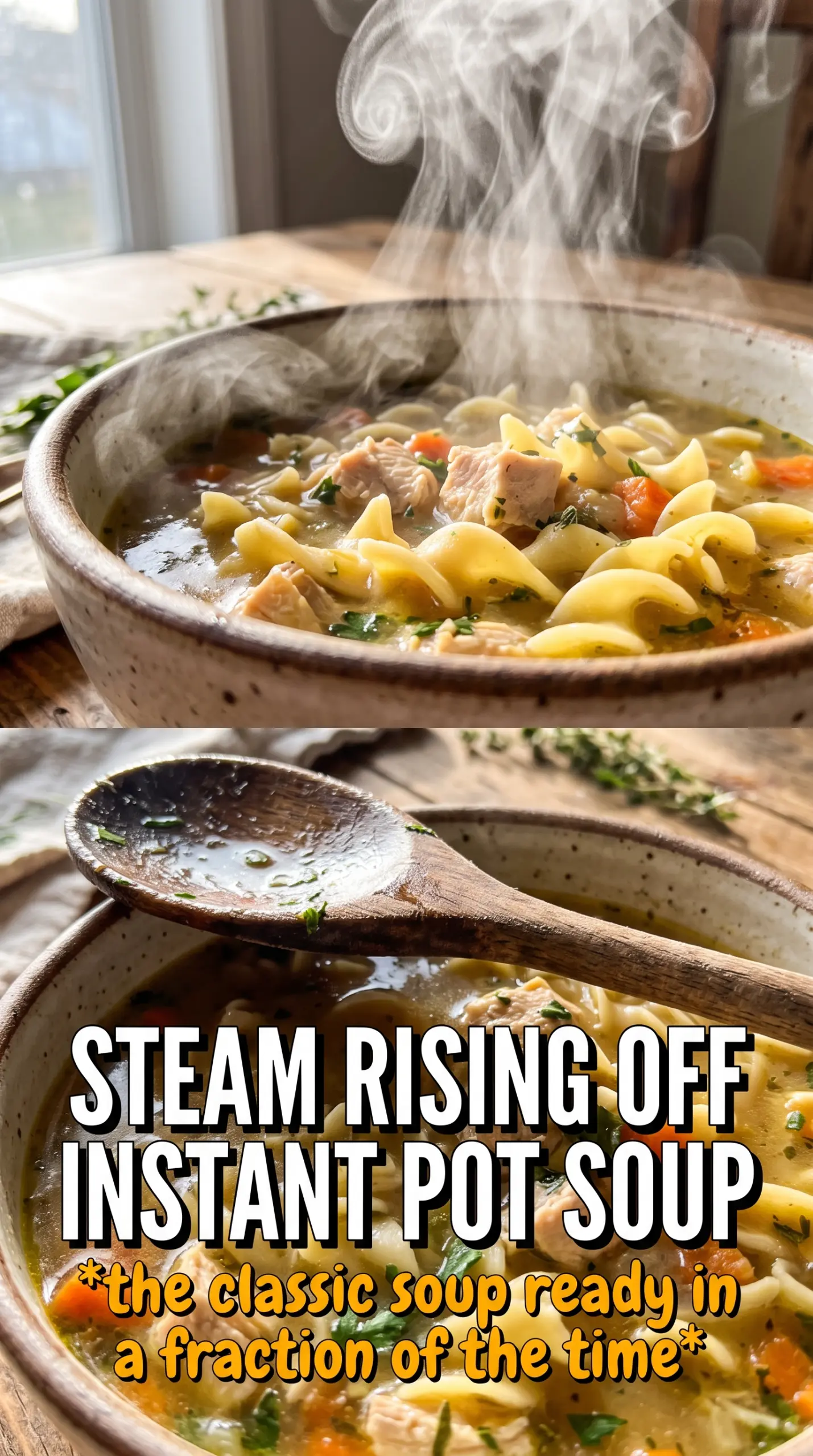
- Chicken breast — Raw chicken breast cooks gently under pressure and shreds cleanly. Thighs work too if you want a richer, softer bite, but breast keeps the broth a little cleaner and leaner.
- Chicken broth — This is the body of the soup, so use the best broth you have. A good boxed broth is fine; if yours tastes thin on its own, add a little extra salt at the end rather than trying to fix it with more seasoning upfront.
- Carrots, celery, and onion — This is the classic soup base, and the cut matters. Slice the carrots and celery evenly so they soften at the same pace, and dice the onion fine enough that it melts into the broth instead of staying chunky.
- Thyme, parsley, garlic powder, and bay leaves — Dried herbs hold up better than fresh herbs in pressure cooking and give the broth a steady, rounded flavor. Don’t skip the bay leaves; they add a background depth you’ll notice most when they’re missing.
- Egg noodles — These need to be added after pressure cooking. If you want to swap in another pasta, choose something small and sturdy, and shorten the Sauté time if it cooks faster than standard egg noodles.
- Fresh parsley — The garnish matters here because it wakes up the bowl right before serving. Stir a little into the pot too if you want a brighter finish.
Building the Soup Without Overcooking Anything
Loading the Pot in the Right Order
Add the chicken, vegetables, broth, and seasonings straight into the Instant Pot and give everything a quick stir so the herbs aren’t clumped on top. The liquid should cover the chicken and vegetables as much as possible, but this soup doesn’t need perfect submersion to work. If the pot looks overcrowded, don’t add more noodles now; the pressure cook stage is for the base only.
Pressure Cooking for Tender Chicken, Not Stringy Chicken
Cook on High Pressure for 15 minutes, then let it sit for a 5-minute natural release before you quick release the rest. That short natural release keeps the chicken from tightening up too fast, which is what makes it dry and stringy. If you skip that pause, the broth still tastes fine, but the chicken won’t shred as nicely.
Shredding and Finishing the Broth
Pull the chicken out, remove the bay leaves, and shred the meat with two forks. Return the chicken to the pot, switch to Sauté, and add the noodles only when the broth is bubbling gently. Stir often so the noodles don’t stick to the bottom or clump together, and stop cooking as soon as they’re tender with a little bite left in the center.
Use Chicken Thighs for a Richer Broth
Swap the chicken breast for boneless, skinless thighs if you want a deeper, silkier soup. Thighs stay juicy even if they sit a minute too long on Sauté, and they give the broth a little more body. The tradeoff is a slightly richer, less lean finish.
Make It Gluten-Free
Use gluten-free egg-style noodles or a short gluten-free pasta, but watch the texture closely because those noodles can go from tender to soft faster than wheat noodles. If you know your pasta cooks quickly, stir it in off heat and let residual warmth finish the job.
Skip the Noodles for a Lower-Carb Bowl
Leave out the egg noodles and serve the soup as a chicken-vegetable broth. It’s still hearty, just lighter, and the flavor from the chicken and herbs comes through even more clearly. You can also stir in zucchini noodles at the very end, but only for a minute or two so they don’t turn watery.
Storage and Reheating
- Refrigerator: Store for up to 4 days. The noodles will keep soaking up broth, so expect the soup to thicken as it sits.
- Freezer: Freeze the soup without the noodles for the best texture. Add freshly cooked noodles when you reheat if you want them to stay firm.
- Reheating: Warm gently on the stove over medium-low heat or in the microwave in short bursts. Add a splash of broth or water if needed, because the noodles and chicken will absorb liquid overnight.
Questions I Get Asked About This Recipe
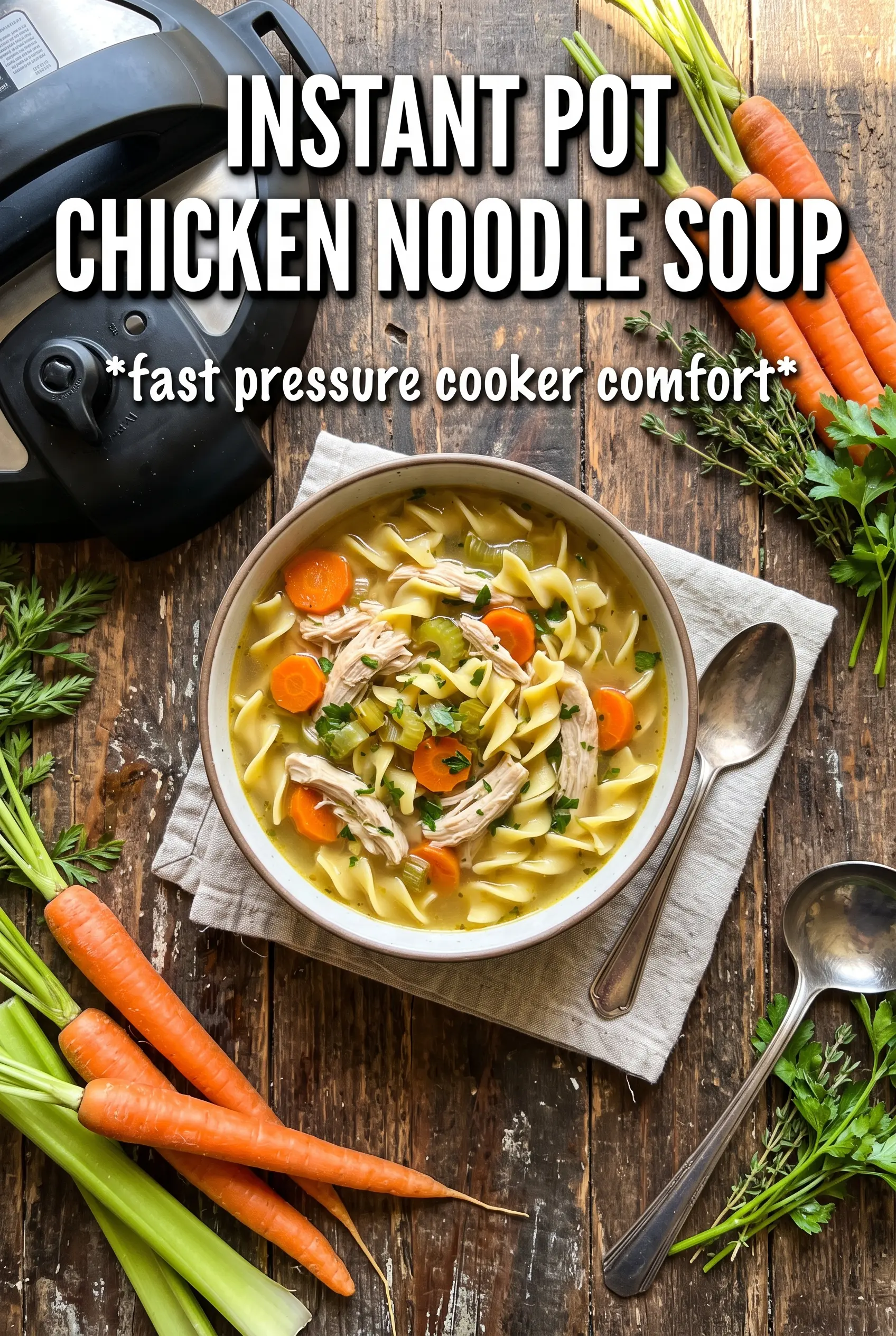
Instant Pot Chicken Noodle Soup
Ingredients
Equipment
Method
- Place the chicken, carrots, celery, onion, and garlic into the Instant Pot, then add the chicken broth, thyme, dried parsley, garlic powder, and bay leaves. Stir gently to help everything sit evenly.
- Seal the Instant Pot and pressure cook on High for 15 minutes. Use a natural release for 5 minutes, then quick release to finish.
- Open the lid and carefully remove the chicken to a plate to shred. Remove the bay leaves from the pot before returning the meat.
- Set the Instant Pot to Sauté and return the shredded chicken to the pot. Stir to combine with the hot broth.
- Add the egg noodles and cook on Sauté for 6–8 minutes until tender, stirring often. Keep an eye on the pot so the noodles cook evenly.
- Season with salt and pepper to taste, then garnish with fresh parsley. Serve hot while the noodles are at their best texture.