Moist pumpkin bread with cream cheese frosting is the kind of loaf that disappears one slice at a time and never seems to last through the day. The crumb stays soft and tender, the pumpkin flavor is warm without being heavy, and that thick layer of frosting gives each slice a cool, tangy finish that balances the spice instead of burying it.
What makes this version work is the way the batter stays simple and the frosting stays sturdy. Pumpkin puree brings moisture, brown sugar adds depth, and the oil keeps the loaf plush even after it cools. The spice blend leans into cinnamon and pumpkin pie spice, which gives the bread a fuller, rounder flavor than cinnamon alone.
Below, I’ll walk through the small details that matter most: how to keep the loaf from baking up dense, how to get the frosting thick enough to spread without sliding off, and how to store it so the slices stay soft for days.
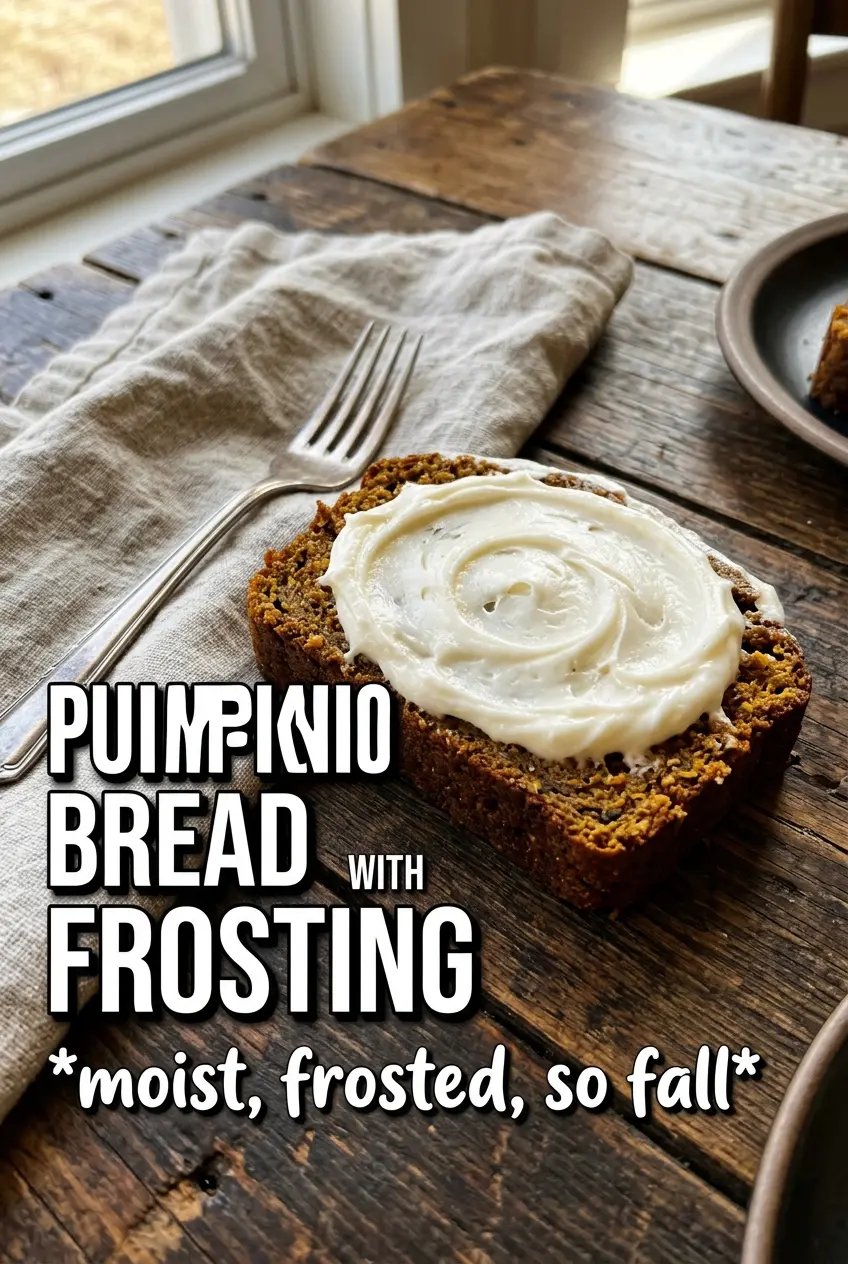
The loaf baked up with a soft, even crumb and the frosting was thick enough to stay put after slicing. I loved the cinnamon in the frosting — it made each piece taste like a bakery slice, not just plain sweet cream cheese.
Save this pumpkin bread with cream cheese frosting for a loaf that stays moist, slices cleanly, and finishes with a thick cinnamon-kissed topping.
The Trick to Keeping Pumpkin Bread Tender Instead of Heavy
Pumpkin bread goes wrong when the batter gets overmixed or the loaf stays in the oven too long. The flour only needs to disappear into the wet ingredients; if you keep stirring once the batter looks smooth, the loaf can bake up tight and gummy instead of soft and even. That same logic matters in the oven too. Pull it when a toothpick comes out clean or with a few moist crumbs, not when the top looks dry all the way through.
The other place people slip is with the pumpkin itself. Pure pumpkin puree gives moisture and body, but it also adds enough weight that the batter needs a little lift from baking soda and enough sugar to keep the crumb from turning dense. That balance is what gives you slices that hold together without feeling heavy.
- Don’t overmix the batter — stop as soon as the flour disappears. A few small streaks are better than a beaten-up loaf.
- Bake until just set — the center should spring back lightly, not feel wet and sloshy.
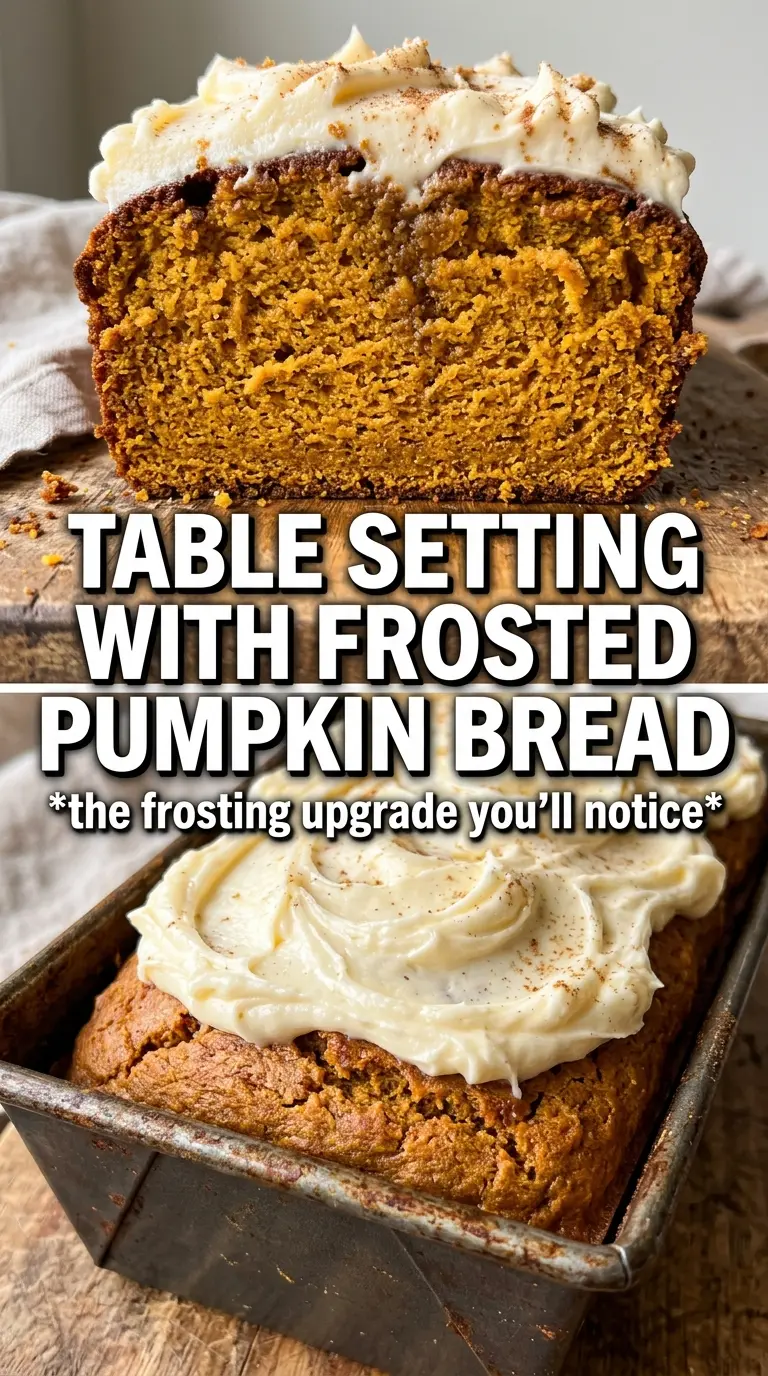
- Cool before frosting — warm bread melts the frosting into a slide, and the topping never sits thickly on the loaf.
What Each Ingredient Is Actually Doing in the Loaf and Frosting
- Pumpkin puree — this is the moisture and flavor base. Use canned puree, not pumpkin pie filling, because pie filling already has sugar and spices added and will throw off the texture.
- Oil — oil keeps the loaf soft even after it chills. Butter adds flavor, but oil gives a more tender crumb here and works better with the dense pumpkin batter.
- Brown sugar — this adds a deeper sweetness and a little molasses note that fits the spices. If you only have granulated sugar, the bread will still work, but the flavor will be flatter.
- Cream cheese — full-fat cream cheese gives the frosting its tang and structure. Low-fat versions tend to loosen up and can turn grainy when beaten with the sugar.
- Powdered sugar — this is what gives the frosting body. Add it gradually so it stays smooth and doesn’t puff into a sugar cloud before you get the texture right.
- Milk — only a little is needed. Add it one tablespoon at a time until the frosting is thick but spreadable; too much and it won’t sit nicely on the loaf.
Building the Loaf and Frosting Without Breaking the Texture
Mix the Dry and Wet Separately
Start by whisking the flour, baking soda, pumpkin pie spice, cinnamon, and salt in one bowl so the leavening and spice distribute evenly. In another bowl, whisk the pumpkin puree, sugars, oil, eggs, and vanilla until the mixture looks smooth and glossy. If the wet mixture still has streaks of egg white, keep whisking; uneven eggs can give the loaf little dense pockets.
Fold the Batter, Don’t Beat It
Pour the dry ingredients into the wet ingredients and fold just until the flour disappears. The batter will look thick, and that’s right. If you stir until it looks silky, you’re building gluten and the bread will lose that soft, sliceable crumb. Scrape the batter into a greased 9×5 loaf pan and smooth the top so it bakes evenly.
Bake Until the Center Springs Back
Bake at 350°F for about 60 to 65 minutes. The loaf is done when a toothpick inserted into the center comes out clean or with a few moist crumbs, and the top feels set when you press it lightly. If the top browns too fast before the center is finished, lay a loose piece of foil over it for the last 15 minutes.
Beat the Frosting Until It Spreads Cleanly
Soften the cream cheese and butter first, then beat them until the mixture is smooth with no lumps. Add the powdered sugar, vanilla, cinnamon, and enough milk to make a thick frosting that holds its shape on the spoon. If it gets loose, the loaf was probably still warm or the milk went in too quickly; chill the frosting for a few minutes before spreading if needed.
Finish Only After the Loaf Is Cool
Let the bread cool completely before you frost it. This isn’t a detail to skip — even a slightly warm loaf will melt the edges of the frosting and send it sliding into the pan. Spread it thickly over the top, then dust with a little cinnamon for a clean finish.
How to Adapt This Loaf for Different Tastes and Needs
Make it dairy-free
Skip the cream cheese frosting and top the cooled loaf with a simple glaze made from powdered sugar, a splash of plant milk, vanilla, and cinnamon. You’ll lose the tangy richness, but the loaf itself is naturally dairy-free as written and still bakes up soft.
Make it less sweet
Cut the granulated sugar slightly and keep the brown sugar as written, since that’s what supports the pumpkin flavor and texture. Don’t reduce the sugar too aggressively or the loaf can taste flat and bake up more dry.
Add chopped pecans or walnuts
Fold in about 1/2 cup of toasted nuts at the end for crunch. Toasting matters because raw nuts can taste dull against the warm spices, and the extra texture makes each slice feel more bakery-style.
Storage and Reheating
- Refrigerator: Store covered for up to 5 days. The frosting will firm up, and the loaf will actually slice more cleanly after a night in the fridge.
- Freezer: Freeze the unfrosted loaf tightly wrapped for up to 2 months. Frost after thawing for the best texture, since cream cheese frosting can get a little watery after freezing.
- Reheating: Let a chilled slice sit at room temperature for 15 to 20 minutes, or warm the unfrosted bread briefly. Don’t microwave frosted slices too long or the topping will melt and separate.
Answers to the Questions Worth Asking
Pumpkin Bread With Cream Cheese Frosting
Ingredients
Equipment
Method
- Preheat oven to 350F and grease a 9x5 loaf pan so the loaf releases cleanly.
- Whisk together the flour, baking soda, pumpkin pie spice, cinnamon, and salt to evenly distribute the spices.
- Whisk the pumpkin puree, sugar, brown sugar, oil, eggs, and vanilla until smooth.
- Fold the wet mixture into the dry mixture until just combined to keep the loaf tender, not tough.
- Pour the batter into the prepared loaf pan.
- Bake for 60-65 minutes, until a toothpick comes out clean, then cool completely before frosting.
- Beat the softened cream cheese and softened butter until smooth.
- Add powdered sugar, vanilla, and cinnamon, then mix in enough milk to make a thick but spreadable frosting.
- Spread the frosting generously over the cooled loaf.
- Dust with cinnamon and serve.