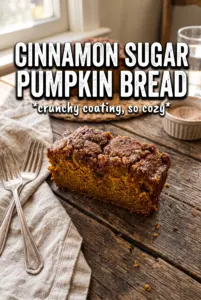
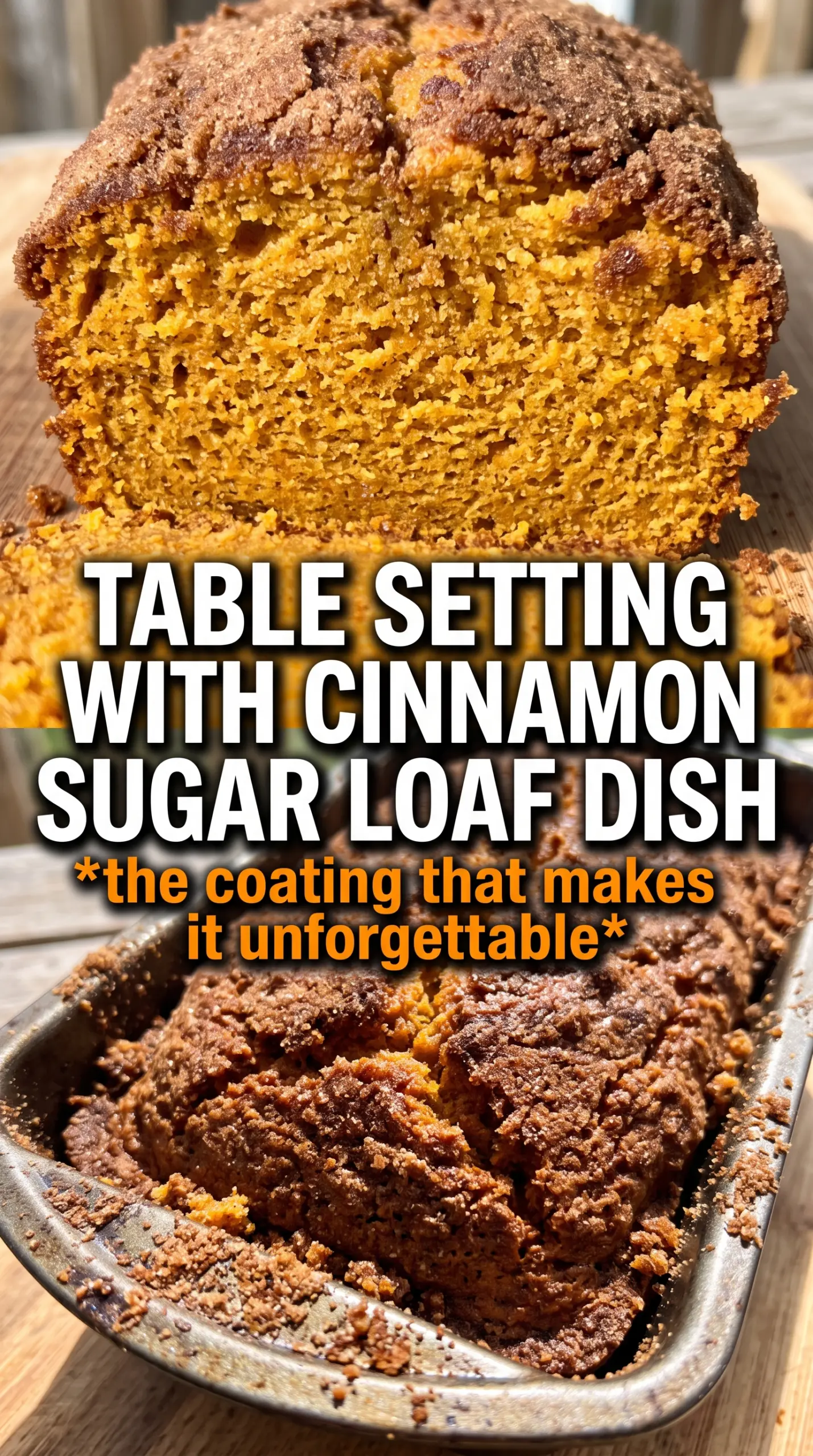
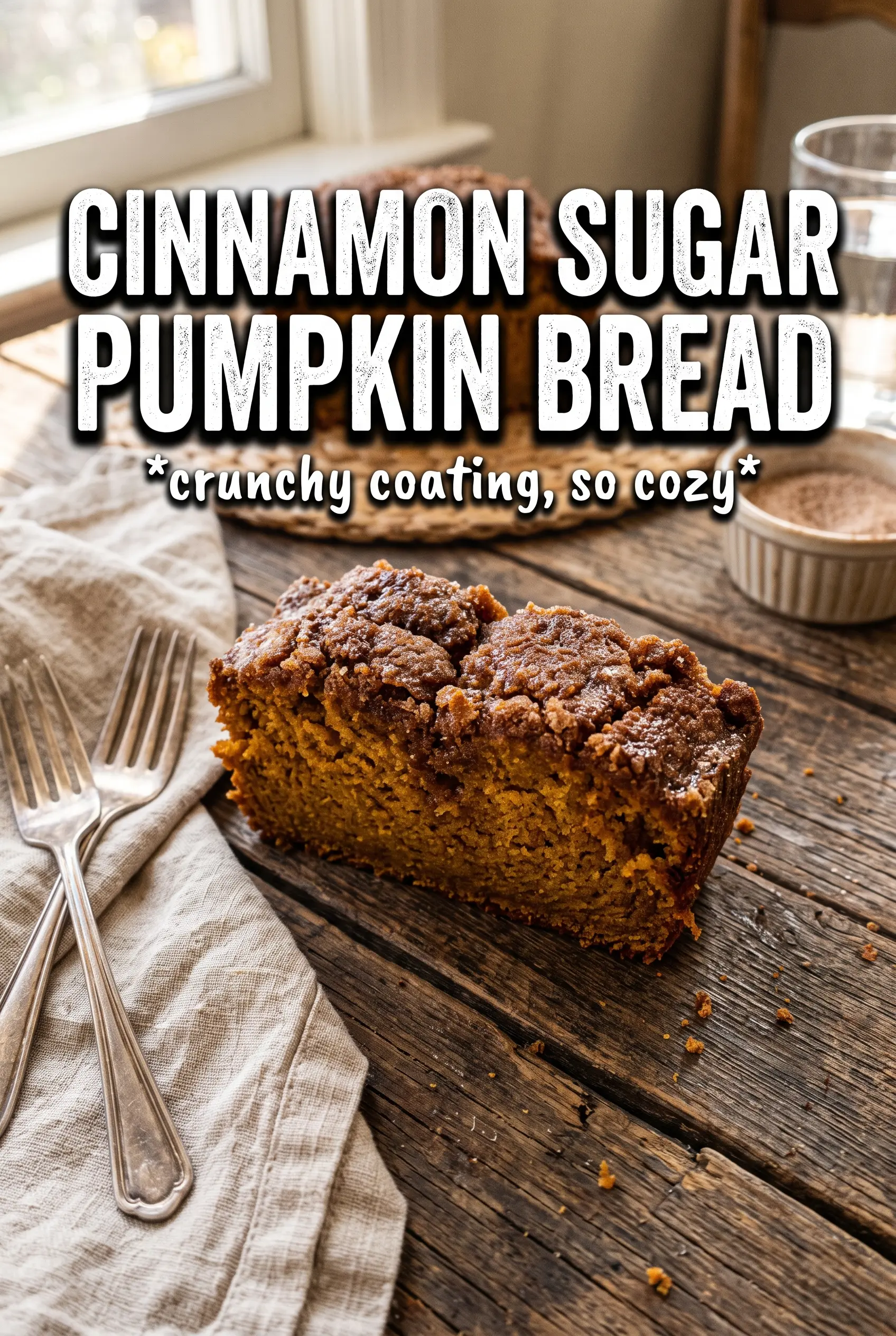
Cinnamon Sugar Pumpkin Bread bakes up with a deep golden crust that crackles under your knife and a tender, moist crumb that stays soft for days. The thick cinnamon sugar coating on the pan and the top does more than look pretty — it gives every slice a candied edge that tastes like the best part of a coffee shop loaf, only fresher and warmer from your own oven.
The trick here is using cinnamon sugar in three places: brushed onto the pan so the loaf releases with a caramelized shell, tucked through the middle for a little swirl, and showered on top for that crisp finish. Pumpkin brings moisture and body, but it can also make quick breads heavy if the batter gets overmixed. A gentle fold keeps the crumb tender instead of dense.
Below, I’m sharing the small details that keep the crust from sticking and the loaf from sinking in the center, plus a few easy swaps if you want to make it dairy-free or change up the spice.
The cinnamon sugar crust turned out crackly and caramelized, and the center stayed incredibly moist without being gummy. I sliced it while it was still barely warm and it held together perfectly.
Like this cinnamon sugar pumpkin bread? Save it for the loaf with the crackly top and moist pumpkin crumb.
The Cinnamon Sugar Crust Is What Keeps This Loaf from Feeling Plain
Most pumpkin bread leans soft all the way through, which is fine until the loaf tastes flat from top to bottom. The cinnamon sugar changes that. It caramelizes in the oven and gives you a thin, crisp shell around the edges and a sweet, slightly crunchy top that contrasts with the tender crumb underneath.
The other place quick breads get into trouble is the swirl. If you stir the cinnamon sugar too much, it disappears into the batter and you lose the contrast. If you over-swirl, the whole loaf turns muddy. A few lazy passes with a knife are enough to create those streaks without blending everything together.
What Each Ingredient Is Doing in the Loaf
- Pumpkin puree — This is the backbone of the loaf, bringing moisture, color, and that soft, almost custardy texture. Use plain pumpkin puree, not pumpkin pie filling, or the bread will be oversweetened and spiced out of balance.
- Oil — Oil keeps quick bread tender even after it cools. Butter tastes great, but it firms up as it sits, and this loaf is better when it stays plush for a few days.
- Brown sugar — Brown sugar deepens the flavor and helps the crust turn a little sticky in the oven. If you only have white sugar, the bread will still work, but it loses that caramel note.
- Buttermilk — Just a quarter cup loosens the batter and adds a light tang that keeps the sweetness in check. If you don’t have it, stir 1 teaspoon of lemon juice or vinegar into regular milk and let it sit for 5 minutes.
- Cinnamon sugar — This does double duty here: it flavors the pan, the filling swirl, and the top crust. That repeated layer is what gives the bread its signature texture, so don’t cut it back too much or the loaf will taste more like standard pumpkin bread.
Build the Loaf Gently, Then Let the Oven Do the Work
Coating the Pan First
Brush the loaf pan with melted butter and coat it generously with cinnamon sugar before the batter goes in. You want an even layer on the bottom and sides so the bread releases cleanly and picks up that caramelized edge. If you skimp here, the sugar can stick in spots and tear the crust when you turn the loaf out. A well-coated pan is part of the recipe, not just a cleanup step.
Mixing the Batter Without Toughening It
Whisk the dry ingredients in one bowl and the wet ingredients in another until the mixture looks smooth and uniform. When you combine them, fold just until you don’t see dry flour anymore. Overmixing builds gluten and gives you a tight, rubbery loaf instead of a soft one. The batter should look thick and scoopable, not whipped or glossy.
Layering the Swirl
Pour in half the batter, add a layer of cinnamon sugar, then top with the remaining batter. Use a knife to make a few gentle figure-eight swirls through the middle. Stop before the batters blur together; you want distinct pockets of cinnamon, not a fully mixed loaf. Finish with a generous sprinkle on top so the crust has enough sugar to caramelize.
Baking Until the Center Sets
Bake at 350°F until the top is deeply golden and the center springs back lightly when pressed. The sugar crust will look dark and a little crackly, and that’s exactly what you want. If the top is browning too fast before the center is done, tent it loosely with foil for the last 15 minutes. Pull the loaf when a tester comes out with only a few moist crumbs, not wet batter.
Cooling Enough to Release Cleanly
Let the loaf sit in the pan while it’s still slightly warm, then lift it out before the sugar hardens completely against the sides. That timing matters. Leave it too long and the caramelized edges can glue themselves to the pan. Cool it on a rack so the bottom doesn’t steam and soften the crust you worked for.
How to Adapt This Cinnamon Sugar Pumpkin Bread Without Losing the Good Part
Dairy-Free Version
Swap the buttermilk for unsweetened almond milk or oat milk mixed with 1 teaspoon lemon juice. The loaf still bakes up tender, but the flavor loses a little tang, so the cinnamon and pumpkin come through more directly.
Walnut or Pecan Addition
Fold in up to 3/4 cup chopped toasted walnuts or pecans with the dry ingredients. They add crunch and a nutty edge that plays nicely with the sugar crust, but too many nuts can crowd the batter and make slicing messy.
Gluten-Free Swap
Use a 1:1 gluten-free baking flour that includes xanthan gum. The loaf will still be moist, but it may need the full bake time and a longer cool in the pan so it doesn’t break when sliced.
Extra-Spiced Loaf
Add another 1/2 teaspoon cinnamon and a pinch of cloves if you want a stronger spice profile. That pushes the bread closer to a bakery-style pumpkin loaf, but don’t overdo the cloves or they can take over the whole pan.
Storage and Reheating
- Refrigerator: Store wrapped or in an airtight container for up to 4 days. The sugar crust softens a little in the fridge, but the crumb stays moist.
- Freezer: Freeze individual slices or the whole loaf tightly wrapped for up to 2 months. Thaw at room temperature while still wrapped so the bread doesn’t dry out.
- Reheating: Warm slices in a 300°F oven for 8 to 10 minutes or toast them lightly. Microwaving works in a pinch, but it softens the crust and takes away the best texture.
Questions I Get Asked About This Recipe
Cinnamon Sugar Pumpkin Bread
Ingredients
Equipment
Method
- Preheat oven to 350F. Brush a 9x5 loaf pan with melted butter and coat with a generous layer of cinnamon sugar.
- Whisk together flour, baking soda, pumpkin pie spice, cinnamon, and salt in a bowl until evenly combined.
- Whisk together pumpkin, sugar, brown sugar, oil, eggs, vanilla, and buttermilk until smooth.
- Fold the wet mixture into the dry mixture until just combined and no dry pockets remain.
- Pour half the batter into the prepared pan. Sprinkle a layer of cinnamon sugar over the batter.
- Add the remaining batter on top. Swirl gently with a knife to create a cinnamon-sugar streak pattern.
- Top generously with the remaining cinnamon sugar for a thick crust.
- Bake 60-65 minutes at 350F, until the cinnamon sugar forms a caramelized crust and the loaf looks set in the center.
- Remove from the pan while still slightly warm to prevent sticking.