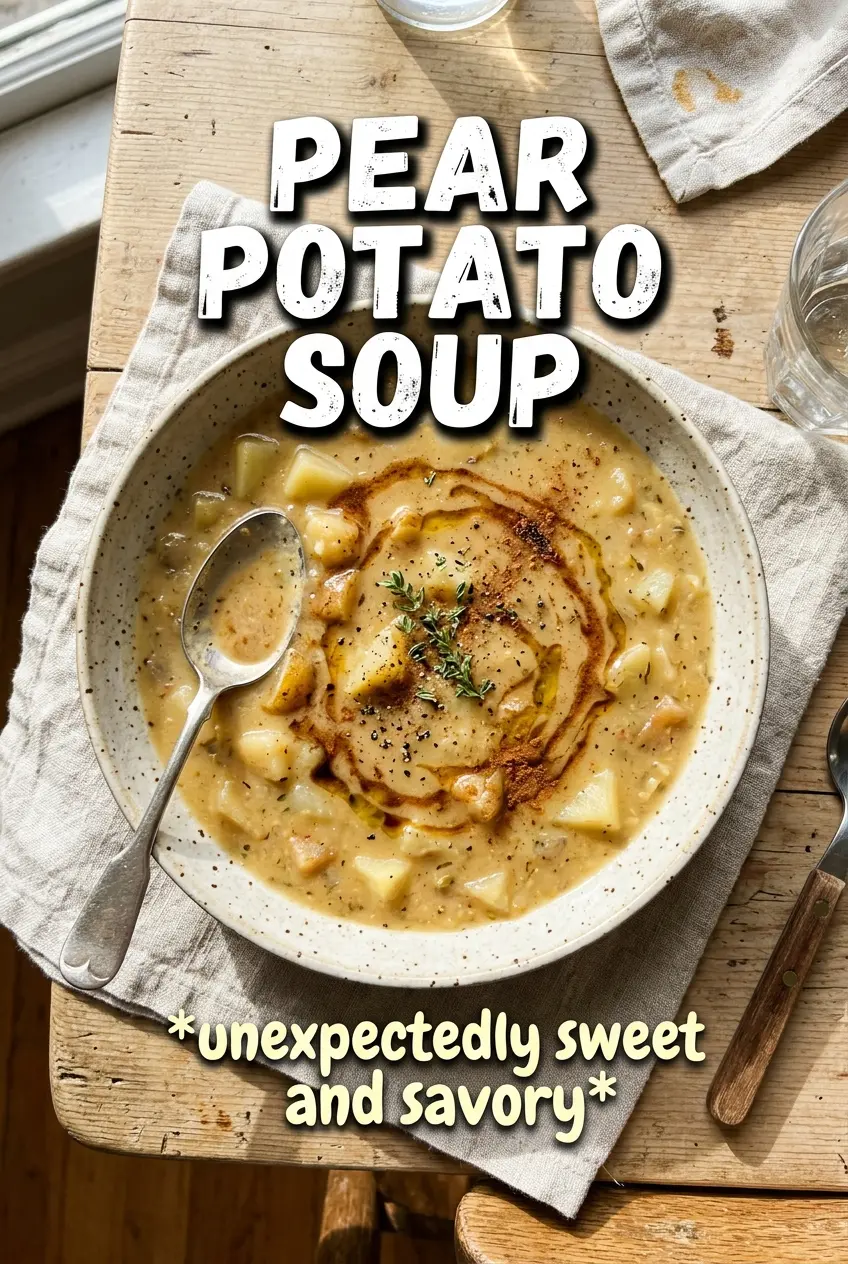
Pear potato soup lands in that sweet spot between comforting and unexpected. The potatoes give it body, the pears bring a soft floral sweetness, and the finish turns silky instead of heavy. What comes out of the pot is pale gold, smooth, and elegant enough for company, but still easy enough for a regular night when you want dinner to feel a little more special.
The key is balance. Yukon gold potatoes make a naturally creamy base without needing flour, and ripe pears melt into the soup during the simmer so the flavor feels woven through instead of obvious. I like to blend it completely smooth before the cream goes in, then season at the end with white pepper and nutmeg so the sweetness stays clean and the soup doesn’t taste muddled. The toppings matter here too: gorgonzola adds salt and bite, walnuts bring crunch, and a little honey ties the whole bowl together.
Below you’ll find the little details that keep the soup from tasting flat or chalky, plus a few smart swaps if you want to adjust the finish. The method is simple, but a couple of small choices make the difference between a pleasant soup and one people keep talking about.
The pears made the soup taste silky and a little sweet without turning it into dessert, and the gorgonzola on top kept every spoonful interesting. I served it with crusty bread and it was gone fast.
Save this pear potato soup for a silky, elegant bowl topped with gorgonzola, candied walnuts, and honey.
The Trick Is Keeping the Pears Gentle, Not Jammy
This soup works because the pears are cooked just long enough to soften and flavor the broth without turning sharp or overly sweet. If they go too long, they can taste dull and lose the clean fruit note that makes this bowl interesting. The potatoes are doing the heavy lifting for texture, so the pears only need to disappear into the background and leave behind fragrance and body.
The other thing that matters is blending at the right moment. Once the potatoes and pears are completely tender, blend until the soup is fully smooth before adding the cream. If you add the cream first and then blast it with high heat or aggressive blending, you can end up with a thinner texture and a less polished finish.
What Each Ingredient Is Actually Doing in This Recipe

- Primary ingredient (the star) — Quality matters most. Choose the best you can find.
- Cooking medium (oil, butter, or broth) — This carries flavors and prevents dryness.
- Seasonings (salt, pepper, spices, herbs) — Layer flavors so nothing overpowers. Build depth gradually.
- Aromatics (garlic, onion, herbs) — Cook with fat to bloom flavors. Become the foundation.
- Supporting ingredients — Complement the main ingredient without overpowering it.
- Sauce or liquid (if applicable) — Brings flavors together. Balance richness with acid.
- Acid (lemon, vinegar, wine, or other) — Brightens and prevents flat-tasting results.
- Final finish (garnish, glaze, or sauce) — Prevents one-dimensional taste and adds visual appeal.
What Each Ingredient Is Actually Doing in the Bowl
- Yukon gold potatoes — These are the backbone of the soup. Their natural starch gives you a velvety body without needing flour or a roux, and they stay creamy instead of grainy when blended.
- Ripe pears — Use pears that yield slightly at the stem. They should taste sweet and juicy, not mealy, because under-ripe pears can make the soup taste flat while overripe ones can get muddy.
- Vegetable or chicken broth — This is where the savory balance comes from. Chicken broth gives a rounder flavor, while vegetable broth keeps the soup lighter and lets the pear come through more clearly.
- Heavy cream — It softens the edges and gives the soup that satin finish. Half-and-half will work in a pinch, but the final bowl will be a little less rich and a touch thinner.
- Gorgonzola and candied walnuts — These toppings are not decoration. The cheese adds salt and bite, and the walnuts bring crunch so the soup doesn’t eat like baby food.
Building the Puree Without Losing the Silky Finish
Softening the Onion First
Melt the butter and cook the onion until it turns soft and lightly golden, not browned hard at the edges. That early sweetness gives the soup depth before the pears even go in. If the onion stays pale and raw-tasting, the finished soup can feel one-note no matter how much seasoning you add.
Simmering Until Everything Collapses Cleanly
Add the broth, potatoes, pears, and thyme, then simmer until the potatoes break apart with no resistance and the pears are completely tender. You’re not looking for barely cooked; you want full softness so the blender can make a smooth puree without little fibrous bits. If the potatoes are still firm in the middle, the soup will never feel truly creamy.
Blending Before the Cream Goes In
Blend the soup until it’s fully smooth and no lumps remain, then stir in the cream off the heat or over very low heat. That order keeps the texture glossy and prevents the cream from feeling cooked down or greasy. If you use a standard blender, work in batches and vent the lid so steam doesn’t push liquid everywhere.
Finishing With the Right Salt
Season with nutmeg, white pepper, and salt at the end, after the puree is smooth. Pears can mute seasoning, and cream can soften it even more, so tasting at the finish matters. The soup should taste savory first, with the pear showing up as a gentle sweetness in the background.
Three Ways to Adjust the Soup Without Losing What Makes It Work
Make It Dairy-Free
Swap the butter for olive oil and the cream for full-fat coconut milk or an unsweetened oat cream. Coconut milk gives the richest body but adds a faint coconut note, while oat cream stays more neutral. Keep the toppings savory so the soup doesn’t lean too sweet.
Use Cheddar Instead of Blue Cheese
If gorgonzola feels too assertive, use a sharp white cheddar and skip the honey or use just a few drops. You’ll lose the blue cheese bite, but the soup will feel more familiar and still get enough contrast from the walnuts and thyme.
Make It Vegetarian
Use vegetable broth and keep the rest of the recipe the same. That version tastes a little lighter and lets the pear flavor stand out more clearly, which is a good thing here. The soup still has plenty of depth as long as you let the onions cook until soft and golden.
Storage and Reheating
- Refrigerator: Store in an airtight container for up to 4 days. It may thicken as it chills, which is normal.
- Freezer: It freezes fairly well for up to 2 months, though the cream can separate slightly. Freeze before adding the cream if you want the smoothest result after reheating.
- Reheating: Warm it gently over low heat and stir often. Don’t let it boil, or the dairy can turn a little grainy and the pear flavor can flatten out.