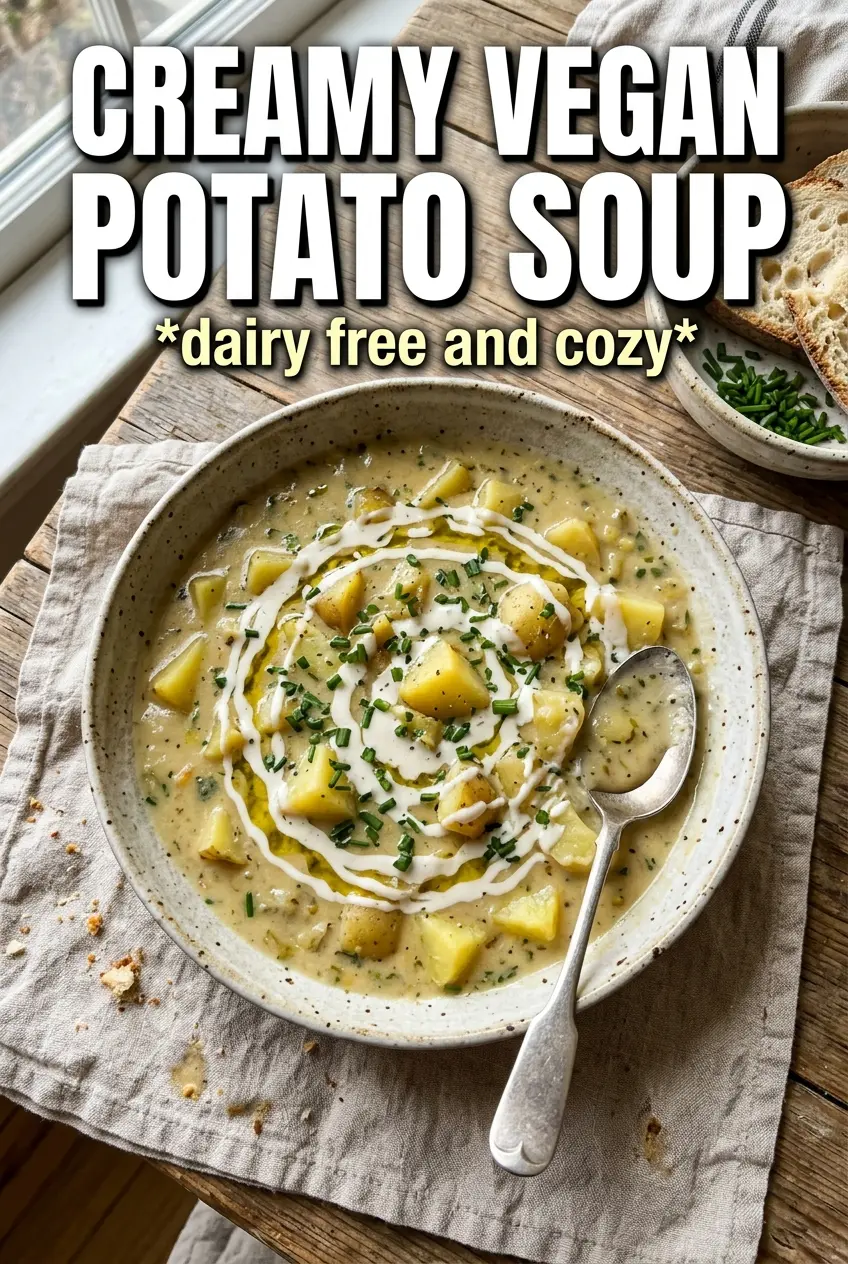
Creamy vegan potato soup lands in that sweet spot between comforting and light: silky enough to feel special, sturdy enough to eat as a main dish. The potatoes melt into the broth and give the soup its body, while coconut milk rounds everything out without making it taste heavy. A squeeze of lemon at the end keeps the whole pot from flattening into plain mashed-potato flavor.
Yukon gold potatoes are the right choice here because they blend into a smooth, velvety soup instead of turning gluey. The onion, celery, and garlic build a savory base, then the spices go in early enough to wake up in the oil before the broth is added. That little bit of toasting matters more than it sounds like it should.
Below, I’ve included the one blending detail that keeps the texture silky, plus a few smart swaps if you want to keep this soup fully pantry-based or make it a little richer. The toppings are worth paying attention to, too — they turn a good bowl into the kind of soup people go back to for seconds.
The soup turned out velvety smooth, and the lemon at the end kept it from tasting flat. I used the crispy chickpeas on top and my husband said it tasted like something from a cafe.
Creamy Vegan Potato Soup with coconut milk, crispy chickpeas, and that bright lemon finish belongs in your weeknight rotation.
The Reason This Soup Stays Silky Instead of Turning Dense
The biggest mistake with potato soup is treating it like mashed potatoes with extra liquid. If the potatoes are undercooked, the blender leaves tiny gritty bits behind. If they’re overworked before enough broth goes in, the starch can make the soup heavy instead of smooth. This version avoids both problems by simmering the potatoes until they collapse easily, then blending them completely before adding the coconut milk.
Another thing that matters here is when the coconut milk goes in. Add it after blending, not before. Coconut milk gives you a round, creamy finish, but if you cook it too hard with the potatoes for too long, it can taste flat and lose some of that clean richness.
What Each Ingredient Is Actually Doing In This Bowl

- Yukon gold potatoes — These are the backbone of the soup. They break down into a naturally creamy texture and give you body without needing flour or dairy. Russets work in a pinch, but they can lean a little fluffier and less buttery.
- Full-fat coconut milk — This is what makes the soup feel rich enough to eat as a main dish. Light coconut milk won’t give you the same body, and the soup will taste thinner. Stir it in at the end so it stays smooth.
- Nutritional yeast — It adds a savory, almost cheesy depth that helps the soup taste finished. If you leave it out, the soup still works, but it loses that extra roundness.
- Smoked paprika and turmeric — These don’t make the soup taste smoky or spiced in an obvious way. They add warmth and a golden color that makes the bowl look and taste fuller.
- Lemon juice — Don’t skip it. The soup needs acidity at the end to keep the potatoes and coconut milk from tasting dull. Add it after blending so the brightness stays clean.
- Crispy chickpeas and chives — The toppings matter for texture. Without them, the soup is soft all the way through. The chickpeas give crunch, and the chives cut through the richness.
Building The Soup In The Right Order
Sweating The Onion And Celery
Warm the olive oil in a large pot over medium heat, then cook the onion and celery until the onion turns translucent and the celery softens, about 5 minutes. You want them fragrant and sweet, not browned. If the pan starts to catch, lower the heat; browned vegetables will pull the soup in a different direction.
Waking Up The Spices
Stir in the garlic, garlic powder, onion powder, smoked paprika, and turmeric, then cook for about 1 minute. The spices should smell toasty and a little stronger, but not burnt. This is the small step that keeps the soup from tasting like plain boiled potatoes.
Simmering Until The Potatoes Collapse
Add the broth and potatoes, then simmer until the potatoes are very tender and falling apart at the edges, 20 to 25 minutes. A fork should slide through without resistance. If you stop too soon, the soup won’t blend smoothly and you’ll end up with a grainy texture.
Blending And Finishing The Cream
Blend the soup completely smooth with an immersion blender, then stir in the coconut milk and nutritional yeast. If you’re using a stand blender, work in batches and vent the lid so steam doesn’t build up. Finish with lemon juice, salt, and pepper after blending; once the soup is smooth, that final seasoning is easier to judge.
How To Adjust This Soup Without Losing The Creamy Texture
Make It Fully Pantry-Friendly
If you don’t have fresh celery, use an extra small onion or a spoonful of celery seed in the broth. The soup will still taste savory and balanced, though it won’t have quite the same fresh base note. This is the easiest adjustment when you’re working with what’s already in the kitchen.
Use Cashew Cream Instead Of Coconut Milk
For a more neutral finish, swap the coconut milk for 1 cup soaked cashews blended with 1 cup water. The result is just as creamy, but less sweet and less coconut-forward. This is the best swap if you want the soup to taste more like classic potato soup.
Keep It Gluten-Free And Naturally Vegan
This recipe is already both gluten-free and vegan as written, which makes it easy to serve to a mixed crowd. Just check your vegetable broth label, since that’s the one ingredient most likely to hide an odd additive. The texture doesn’t need any flour or dairy to work.
Storage and Reheating
- Refrigerator: Keeps for 4 days. It thickens as it sits because the potatoes continue to absorb liquid.
- Freezer: Freezes well for up to 2 months, though the texture may loosen a little after thawing. Cool it completely first, then freeze in airtight containers.
- Reheating: Warm it gently over low heat and add a splash of broth or water to bring back the original consistency. Don’t boil it hard, or the coconut milk can separate and the potatoes can take on a gummy texture.
Answers to the Questions Worth Asking
Creamy Vegan Potato Soup
Ingredients
Equipment
Method
- Heat olive oil in a large pot, then sauté onion and celery for 5 minutes until softened and fragrant (no browning needed).
- Add the garlic and cook for 1 minute, stirring so it smells aromatic but doesn’t burn.
- Stir in garlic powder, onion powder, smoked paprika, and turmeric and cook for 1 minute to bloom the spices (you should see a slight darkening and a warm aroma).
- Add vegetable broth and cubed potatoes, then bring to a simmer and cook for 20–25 minutes until the potatoes are very tender and break apart easily.
- Blend the soup completely smooth with an immersion blender, then stir until the texture looks silky and uniform.
- Stir in coconut milk and nutritional yeast until fully combined and the soup turns creamy in color.
- Add lemon juice and season generously with salt and pepper until the flavor is bright and balanced.
- Ladle the soup into bowls and top with crispy chickpeas and chives for crunch and fresh herb notes.