Chicken noodle soup from scratch tastes like real comfort because the broth carries the whole dish. It’s deeper, cleaner, and more layered than anything from a carton, and once the chicken has simmered long enough to give up its flavor, the noodles and vegetables taste like they belong there instead of floating in plain broth.
The trick is starting with a whole chicken in cold water and letting the pot come up slowly. That gives the broth time to pull out flavor before the meat tightens up. Skimming the foam early keeps the broth clear, and the second round of fresh vegetables stays bright instead of turning dull and exhausted.
Below, I’ll walk you through the part that matters most: how to keep the broth clean-tasting, how to know when the chicken is ready to shred, and when to add the noodles so they stay tender instead of bloated.
The broth came out so clear and rich, and the noodles stayed just tender even after I reheated it the next day. My husband said it tasted like the chicken noodle soup he remembers from growing up.
Save this chicken noodle soup from scratch for the nights when you want a deep homemade broth, tender shredded chicken, and noodles that still hold their texture.
The Broth Gets Weak When You Boil It Too Hard
The biggest mistake with homemade chicken noodle soup is rushing the broth. A hard boil turns the broth cloudy and can make the chicken stringy before it has enough time to give the pot any real flavor. A slow simmer pulls out the savory notes from the chicken, vegetables, and herbs without beating everything apart.
Starting with cold water matters here. The chicken and aromatics warm up together, which gives the broth a chance to build gradually instead of tasting flat. Skimming the foam in the first 15 minutes is worth the small effort because that’s what keeps the broth cleaner and less muddy-tasting.
What Each Ingredient Is Doing in the Pot
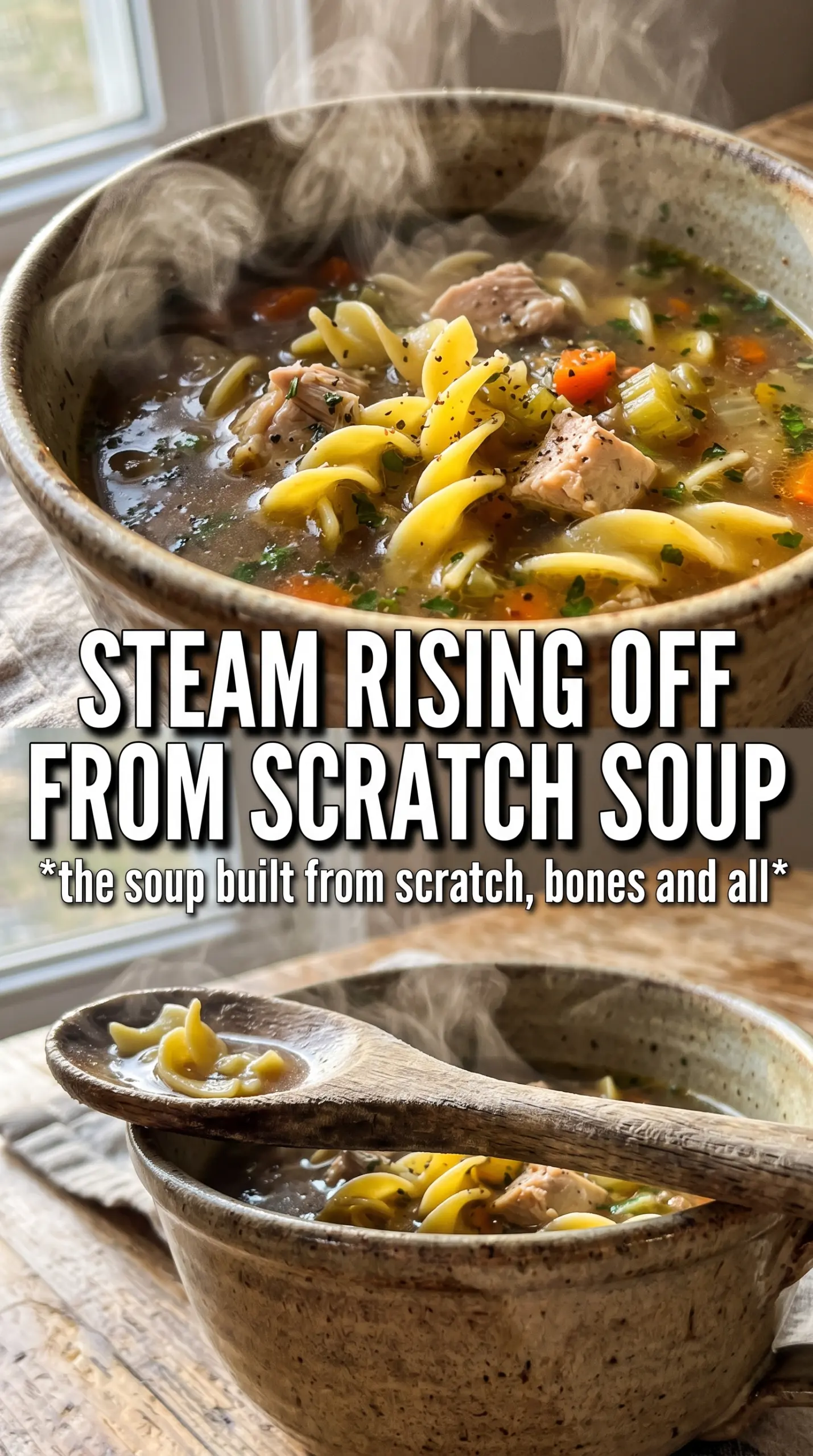
- Whole chicken — This gives you both the meat and the backbone for the broth. Bone-in chicken creates a fuller, rounder flavor than boneless pieces, and a 4-pound bird is enough to make the soup taste like it simmered all afternoon.
- Carrots, celery, onion, garlic — These are the base notes of the broth, and they matter more than they look. The broth vegetables can be cut large because they’re there to flavor the liquid, while the fresh vegetables added later should be sliced smaller so they cook evenly and stay pleasant in the spoon.
- Bay leaves, peppercorns, thyme, parsley stems — This is where the broth gets depth instead of just tasting like boiled chicken. Parsley stems are worth using because they add fresh herbal flavor without turning the broth grassy, and whole peppercorns give a gentler heat than ground pepper.
- Wide egg noodles — These hold up better than thin noodles in a long-simmered soup. If you only have another noodle shape, cook it just until tender and expect the soup to thicken more as it sits.
Building the Soup in Two Stages Keeps It From Tasting Flat
Simmering the Chicken for the Broth
Put the whole chicken and all broth ingredients into the pot with cold water, then bring it up to a boil before lowering it to a gentle simmer. As the chicken cooks, the surface will foam; skim that off so the broth stays clean. After about 1.5 hours, the chicken should be very tender and the broth should taste rich when you spoon some out. If the pot is boiling hard the whole time, the broth turns cloudy and the chicken can dry out before the flavor is fully extracted.
Straining and Shredding Without Losing the Good Stuff
Lift the chicken out carefully and strain the broth through a fine sieve. Discard the cooked vegetables from the broth stage; they’ve already given up what they had to give. Shred the chicken into bite-size pieces once it’s cool enough to handle, and remove any skin or bones that slipped free. Taste the broth before adding anything else, because this is the moment to salt it properly and get the base seasoning right.
Cooking the Fresh Vegetables and Noodles
Return the clear broth to the pot, bring it back to a simmer, and add the sliced carrots, celery, and diced onion. Cook them for about 10 minutes until the vegetables are tender but still hold their shape, then add the egg noodles. The noodles need just 6 to 8 minutes, and overcooking them is the fastest way to lose that classic chicken soup texture. Add the shredded chicken and parsley at the end so the meat stays tender and the herbs taste fresh instead of boiled.
The Final Seasoning Check
Once everything is in the pot, taste again and adjust with salt and pepper. Homemade broth usually needs more seasoning than people expect, especially after the noodles go in and absorb some of the salt. If the soup tastes a little shy, it usually doesn’t need more herbs — it needs salt in small additions until the broth suddenly tastes alive.
How to Make This Soup Work for Your Kitchen
Use chicken thighs instead of a whole bird
If you don’t want to break down a whole chicken, bone-in thighs are the next best choice. The broth will still be rich, though it won’t have quite the same depth as a whole chicken with bones and breast meat. Use enough thighs to give you about the same total weight, then shred the meat after simmering.
Make it gluten-free with a sturdy noodle swap
Use gluten-free egg-style noodles or a pasta shape that holds up in broth, and cook it separately if the package says it gets soft fast. Gluten-free noodles can break down quicker in soup, so cooking them apart keeps the broth from turning starchy and the texture from going mushy.
Add more vegetables without throwing off the broth
Mushrooms, parsnips, or chopped spinach all fit in this soup, but add them according to how fast they cook. Hearty vegetables can go in with the carrots and celery, while tender greens should be stirred in at the end so they stay bright instead of collapsing into the broth.
Storage and Reheating
- Refrigerator: Store for up to 4 days. The noodles will keep absorbing broth, so the soup gets thicker as it sits.
- Freezer: It freezes well if you leave out the noodles and add fresh ones after thawing. Freeze the broth and chicken in airtight containers for up to 3 months.
- Reheating: Warm gently over medium-low heat until steaming, not boiling. If the noodles are already in the soup, add a splash of water or broth because they’ll drink up liquid during storage.
Questions I Get Asked About This Recipe
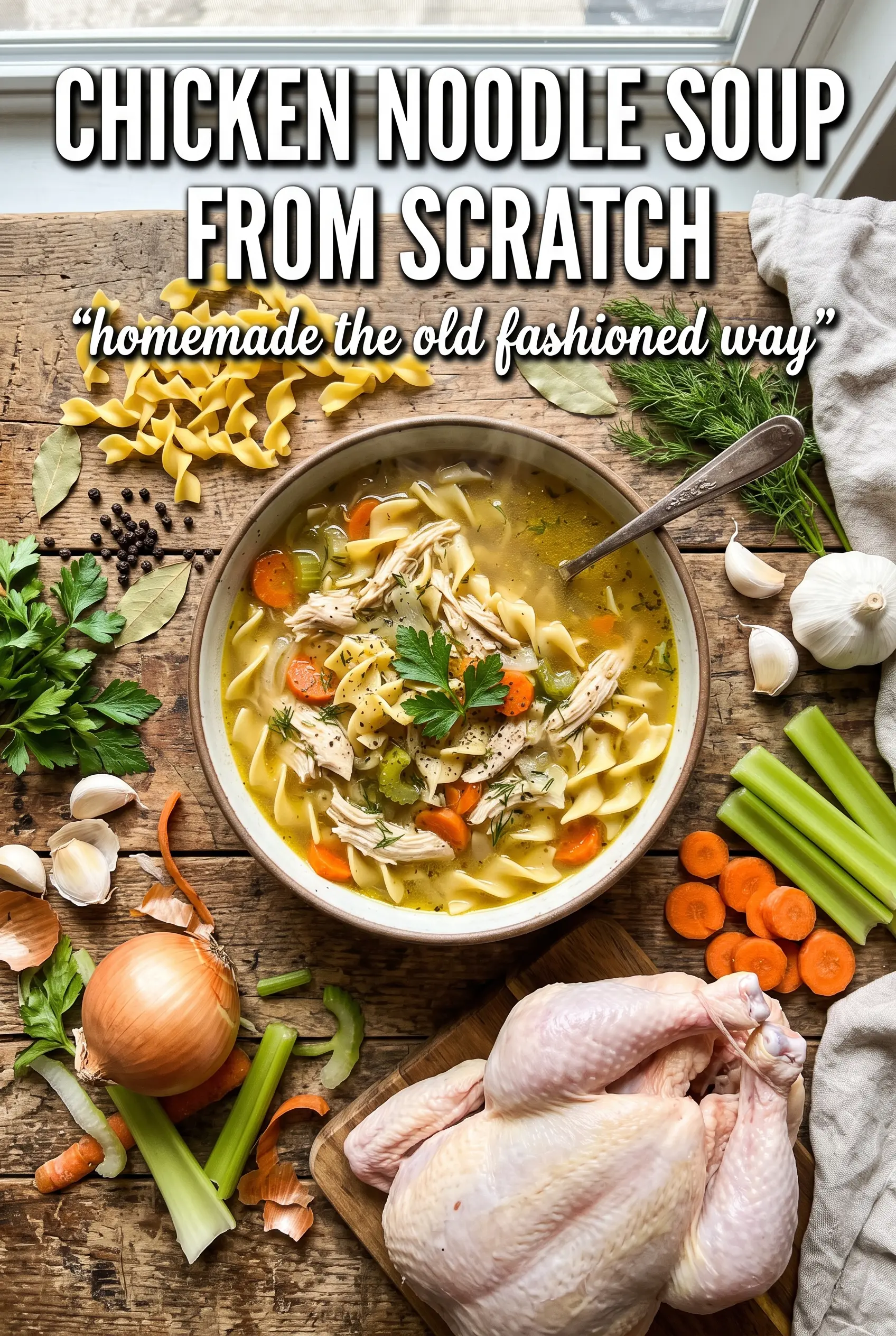
Chicken Noodle Soup From Scratch
Ingredients
Equipment
Method
- Place whole chicken, carrots, celery, onion, garlic, bay leaves, whole peppercorns, parsley stems, dried thyme, and cold water in a very large pot. Bring to a boil, skim foam at the start, then reduce heat to a gentle simmer.
- Simmer for 1.5 hours, keeping the broth at a steady low bubble until the chicken is very tender. Look for the broth to turn darkly golden and the meat to pull easily.
- Strain the broth and discard the used vegetables. Remove all meat from the chicken and shred into bite-size pieces.
- Return the clear broth to the pot, then taste and season with salt. Keep the heat medium so the broth is ready for the next simmer.
- Bring the seasoned broth to a simmer, then add sliced carrots, celery, and diced onion. Ensure the vegetables are fully submerged and the surface shows small bubbles.
- Cook for 10 minutes, until the vegetables are tender. You should be able to pierce the carrot and celery pieces with a fork.
- Add wide egg noodles and cook for 6-8 minutes. Watch for the noodles to soften and the broth to lightly thicken.
- Stir in shredded chicken and fresh parsley, then cook just until warmed through. The chicken should steam hot and the parsley should look bright green.
- Adjust seasoning with salt and pepper to taste. Serve hot with an even distribution of broth, noodles, chicken, and vegetables.