Deep, spoon-coating beef stew is what happens when a few humble ingredients get time on their side. The beef turns tender enough to pull apart with a spoon, the potatoes catch all that savory wine-rich broth, and the carrots soften just enough to keep a little bite. It’s the kind of pot that tastes even better on day two, when the broth has settled into something round and rich.
The key here is building flavor in layers instead of dumping everything in at once. Browning the floured beef gives you the base, then the tomato paste cooks long enough to lose its raw edge before the red wine goes in and scrapes up every browned bit from the pan. That short simmer matters; it takes the sharpness off the wine so the stew tastes deep and balanced instead of boozy.
Below, I’ll walk through the one step people rush most often and the tiny change that keeps the broth glossy instead of muddy. I’ve also included a few smart swaps for different cuts of beef and a make-ahead note for when you want dinner to wait on you.
The beef got unbelievably tender and the sauce reduced into this rich, glossy gravy without any extra thickener. I loved how the potatoes held their shape and soaked up the wine broth.
Save this red wine beef stew for the nights when you want fork-tender beef, buttery potatoes, and a deep braising broth.
The Browning Step That Keeps the Stew Rich Instead of Flat
The biggest mistake in beef stew is crowding the pot and rushing the sear. If the meat steams, you miss the dark crust that gives the broth depth later. Work in batches and leave space around each piece so the flour can toast instead of clumping into paste.
The red wine should not just be poured in and moved along. Let it simmer for a few minutes after scraping the pot, and you’ll taste the difference in the finished stew. That short reduction cooks off the harsh edge and turns the pan juices into something fuller and rounder.
What Each Ingredient Is Actually Doing in the Pot
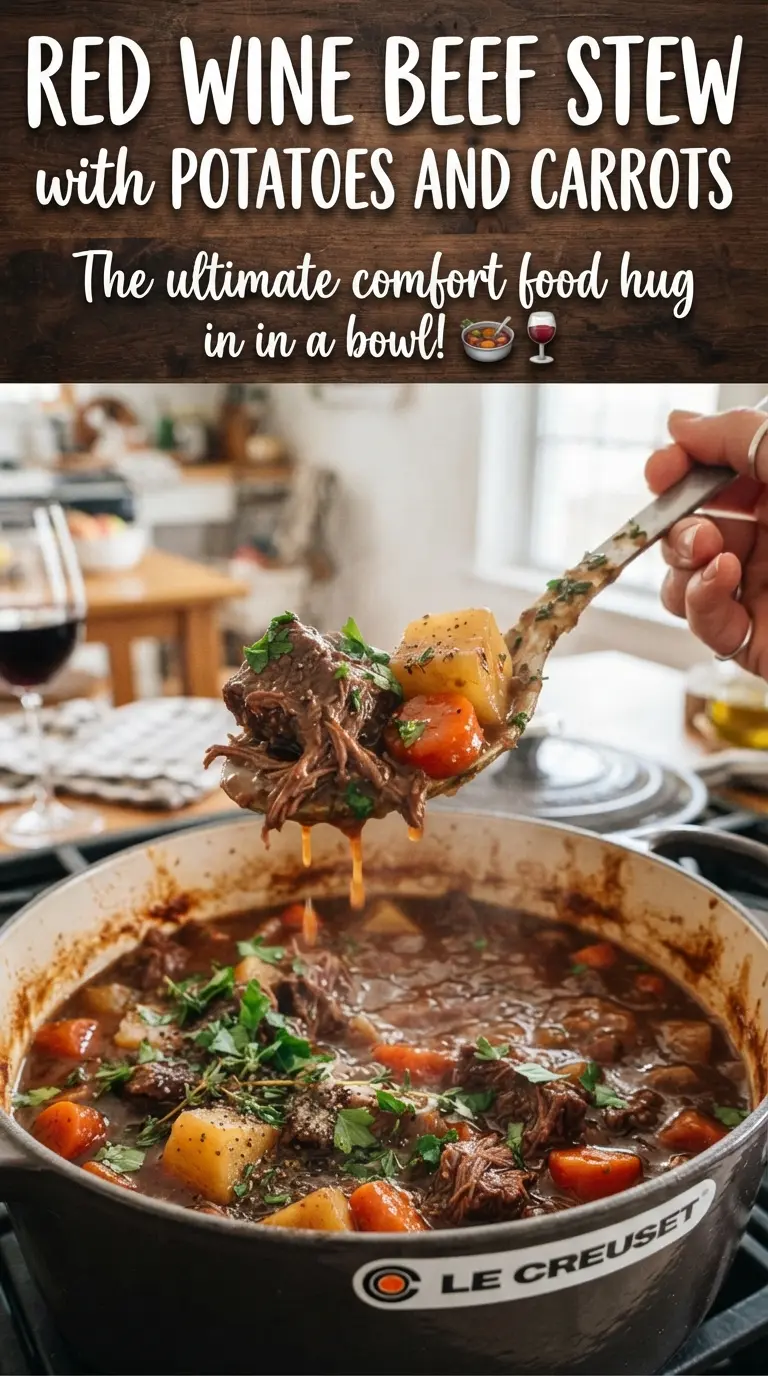
- Beef chuck — This is the cut that gets better with time. It has enough connective tissue to turn silky during a long braise, while leaner cuts stay dry and stringy. If you swap it, use another braising cut like brisket or stew meat from chuck.
- Dry red wine — Use a wine you’d actually drink. It brings acidity and depth, and the long simmer smooths out any roughness. A dry cabernet, merlot, or Côtes du Rhône works well; skip sweet wine or anything labeled cooking wine.
- Tomato paste — This is not there for tomato flavor alone. It deepens the color, adds savory sweetness, and helps the braising liquid taste more complete. Cook it for a minute with the onion and garlic so it loses its raw edge.
- Yukon gold potatoes — These hold their shape better than russets and give the stew a creamier feel without falling apart. Cut them into even chunks so they finish at the same time as the carrots.
- Balsamic vinegar — Just a spoonful wakes up the broth at the end of braising. It doesn’t make the stew taste sweet; it sharpens the wine and beef so the whole pot tastes brighter.
How to Braise It So the Beef Turns Spoon-Tender
Season and Sear in Batches
Pat the beef dry before seasoning it, then toss it with the flour so each piece has a light coating. That flour helps the broth thicken later, but only if the meat is dry enough to brown instead of clump. Sear in a hot Dutch oven until you get a deep brown crust on several sides; pale gray beef means less flavor in the final stew.
Build the Base in the Same Pot
After the beef comes out, cook the onion until it turns soft and translucent, then add the garlic and tomato paste. The tomato paste should darken slightly and smell sweet, not sharp. This is where the stew starts to taste like it has been simmering for hours, even though you’re only a few minutes in.
Reduce the Wine Before the Long Braise
Pour in the red wine and scrape the bottom well, then simmer until it reduces by about a third. If you skip this part, the finished stew can taste thin and the wine can read harsh. Once the broth, herbs, and beef go in, cover the pot tightly and let the oven do the slow work at 325F until the meat is starting to give way.
Add the Vegetables Late
Potatoes and carrots go in for the last hour so they stay intact. If they go in at the beginning, they’ll collapse into the broth before the beef is done. You want the potatoes tender at the center and the carrots soft enough to cut with a spoon, not waterlogged and faded.
Three Ways to Adjust the Stew Without Losing What Makes It Work
Gluten-Free Version
Skip the all-purpose flour and dredge the beef lightly with cornstarch instead, or leave the coating off and simmer the stew a little longer to let the broth thicken naturally. The texture will be slightly lighter, but the flavor stays the same if you keep the browning step.
Brisket or Short Rib Swap
Brisket gives you a very similar long-braise payoff, while short ribs make the stew richer and silkier. Short ribs release more fat, so skim the top before serving if the broth feels heavy.
Vegetable Variation With Mushrooms
For a more earthy pot, replace half the beef with thick-sliced cremini mushrooms and cut the broth slightly. Brown the mushrooms hard before they go in so they contribute real flavor instead of just extra liquid.
Storage and Reheating
- Refrigerator: Store covered for up to 4 days. The flavor deepens overnight and the broth thickens as it chills.
- Freezer: This freezes well for up to 3 months. Cool it completely first, then freeze in airtight containers with a little headspace.
- Reheating: Warm gently on the stove over medium-low heat until steaming. Don’t boil it hard or the beef can tighten up and the potatoes can start to break apart.
Questions I Get Asked About This Recipe
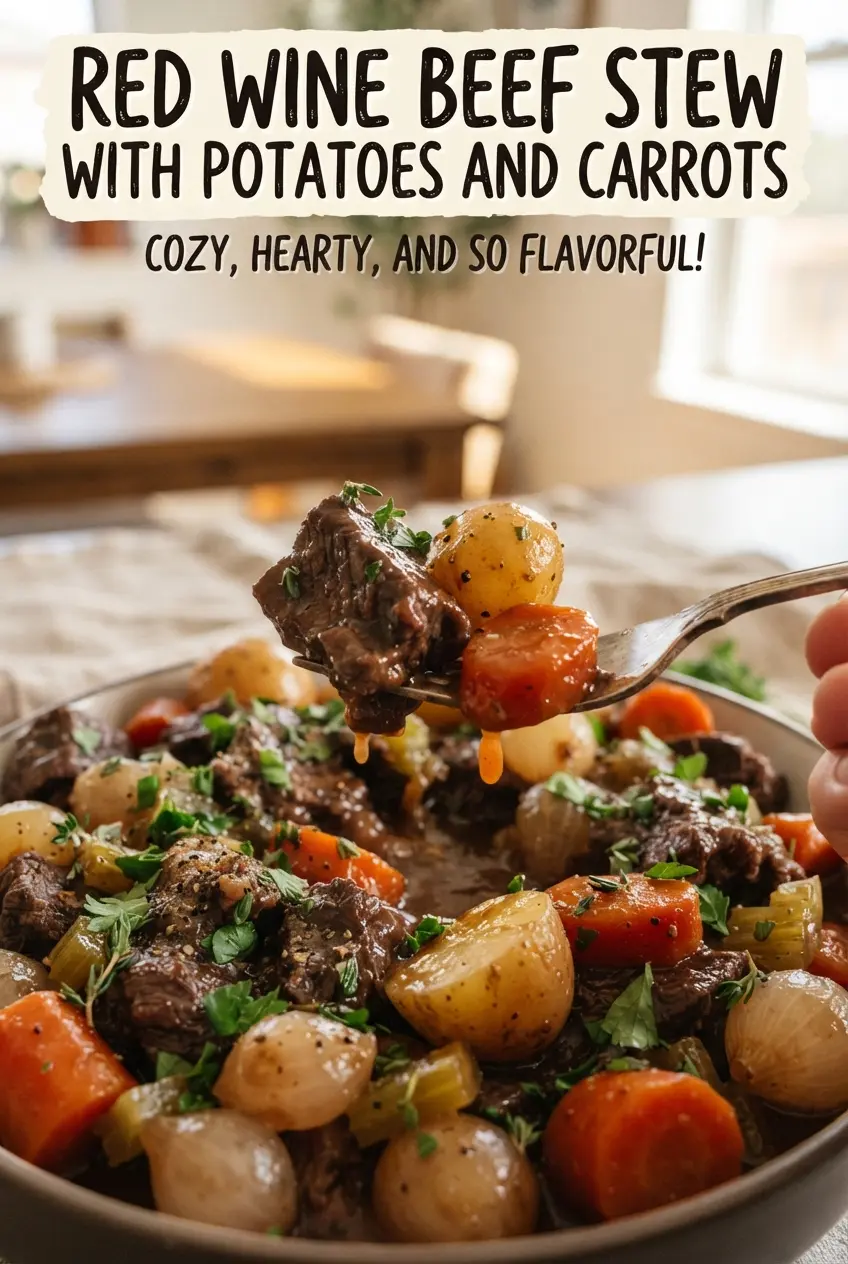
Red Wine Beef Stew with Potatoes and Carrots
Ingredients
Equipment
Method
- Preheat the oven to 325F. Season the beef cubes with salt and black pepper, toss with the flour, then brown in batches in a Dutch oven with the olive oil until well browned on all sides, adding more oil only if needed.
- Cook the diced onion for 5 minutes in the Dutch oven until softened. Add the minced garlic and tomato paste and cook for 1 minute, stirring to coat and darken slightly.
- Pour in the dry red wine and simmer for 5 minutes, scraping the bottom, until the wine reduces by about a third and the fond loosens.
- Add the beef broth, balsamic vinegar, fresh thyme sprigs, bay leaves, and the browned beef to the Dutch oven. Cover and braise in the oven at 325F for 2 hours, until the beef is nearly tender.
- Add the Yukon gold potato chunks and carrot pieces, then cover and braise for 1 hour more at 325F until everything is tender and the stew looks thick.
- Remove the thyme sprigs and bay leaves, then top the stew with chopped parsley for a fresh green cue before serving.