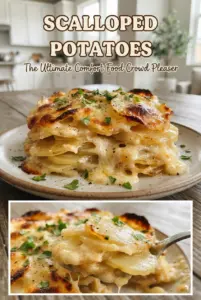
Scalloped potatoes earn their place on the table because they turn a few plain ingredients into layers that cut cleanly, spoon softly, and come out with a browned top that tastes like it took all afternoon. The best version has tender potatoes all the way through, a sauce that stays creamy instead of turning thin or grainy, and just enough onion to keep every bite from tasting flat.
The trick is building the sauce before it ever touches the pan. A short flour-and-butter base gives the milk and cream enough body to cling to the potatoes, and gradual whisking keeps the sauce smooth. Russet potatoes work especially well here because their starch helps thicken the dish as it bakes, while the Parmesan on top adds salt and a sharper finish than the cream alone can give.
Below, I’ve included the part that matters most: how to layer the potatoes so they cook evenly, what to look for when the sauce thickens, and the one resting step that keeps the whole dish from collapsing the second you scoop into it.
The sauce stayed creamy all the way through baking and the potatoes were tender without falling apart. I also loved that the top got golden before the middle overcooked.
Save these scalloped potatoes for the dinners when you want a creamy, golden side with tender layers and a crisp Parmesan top.
The Reason Scalloped Potatoes Turn Watery Instead of Creamy
The problem with many scalloped potato recipes is that the sauce is too thin before it even goes into the oven. Potatoes release moisture as they bake, and if the sauce doesn’t have enough body from the start, you end up with a baking dish full of milk at the bottom and potatoes that taste boiled instead of baked. This version avoids that by cooking the flour in butter long enough to lose the raw taste, then simmering the dairy until it lightly coats a spoon.
Another thing that matters is slicing the potatoes evenly. If the slices vary too much, the thin ones collapse before the thick ones turn tender. Russets are the right choice here because they soften beautifully and help the sauce thicken naturally as the dish bakes.
- The sauce should look slightly thickened, not pudding-like, before it goes over the potatoes.
- Potato slices need to be close to the same thickness so the dish bakes evenly.
- Covering the dish for most of the bake traps steam, which helps the potatoes turn tender before the top browns.
- The final uncovered bake is where the Parmesan and exposed edges develop that deep golden color.
What the Potatoes, Dairy, and Cheese Are Doing Here
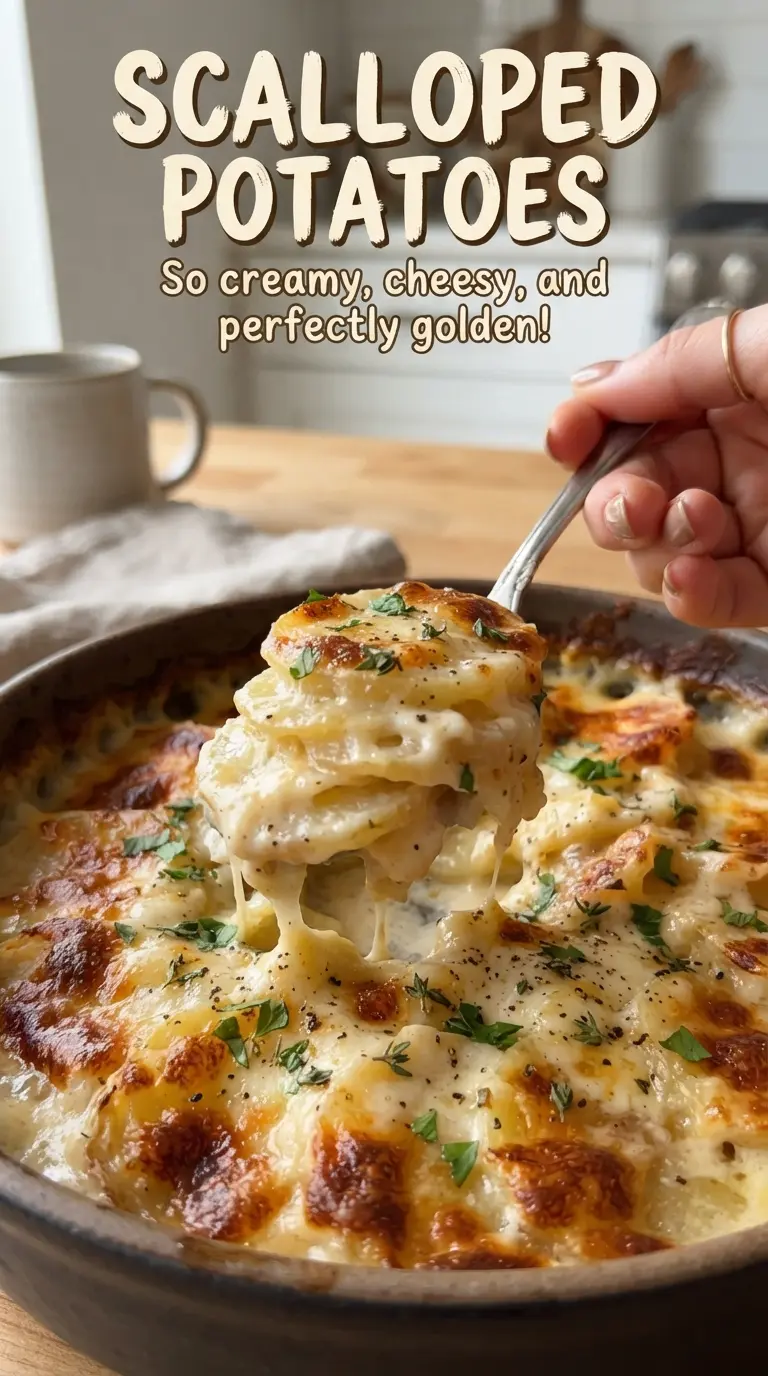
- Russet potatoes — These are starchy enough to soften into tender layers and help thicken the sauce. Yukon Golds will work if that’s what you have, but the texture stays a little richer and less fluffy.
- Whole milk and heavy cream — The milk keeps the sauce from becoming cloying, while the cream gives it body and a lush finish. You can swap in half-and-half for part of the dairy, but the sauce will be a little lighter and less velvety.
- Butter and flour — This is the base that keeps the sauce stable. Don’t rush the flour; one full minute in the butter takes away the raw taste and helps the sauce thicken smoothly.
- Parmesan — It adds salt, nutty depth, and a browned top that plain cream can’t give you. Grate it fresh if you can; pre-grated cheese doesn’t melt as evenly.
- Fresh thyme — Just enough herbal lift to keep the dish from tasting one-note. Dried thyme can stand in, but use less because it reads stronger and can take over fast.
How to Build the Layers So the Center Cooks Through
Start the sauce before the potatoes go in
Melt the butter, cook the garlic briefly, then whisk in the flour until it smells a little nutty and looks like a smooth paste. When you add the milk and cream, pour slowly and whisk constantly so the mixture stays silkier than lumpy. It should come to a gentle simmer and thicken enough to coat the back of a spoon, but it should still pour easily over the potatoes.
Layer with the potatoes in mind
Spread a little sauce in the bottom of the baking dish, then build the potatoes and onion in three even layers, seasoning as you go. Don’t pile the potatoes in loosely; settle them into the sauce so the liquid gets between the slices. If the top layer sits too dry, those edges can turn tough before the center finishes.
Cover first, brown later
The foil-covered bake is where the potatoes turn tender. This part traps heat and steam, which matters more than color right now. Once a fork slides through the middle without resistance, uncover the dish, add the Parmesan, and bake until the top is deeply golden and the sauce bubbles around the edges. Let it rest for 15 minutes before serving or the layers will slump the moment you cut in.
How to Adapt These Scalloped Potatoes Without Losing the Texture
Make It Gluten-Free
Swap the all-purpose flour for a good 1:1 gluten-free flour blend. The sauce will still thicken, but it may need an extra minute or two on the stove to lose any chalky taste. Don’t use cornstarch here unless you’re comfortable making a separate slurry, since this sauce works best as a classic roux.
Use All Milk Instead of Milk and Cream
You can replace the cream with more whole milk if you want a lighter dish. The texture will still be creamy, but the finished casserole won’t feel as rich and the sauce may bake a little looser. If you go this route, keep the sauce on the stove until it’s clearly thickened before it goes into the pan.
Add Ham for a Main-Dish Version
Fold in diced cooked ham between the potato layers if you want this to eat more like a full meal. The salty ham plays well with the cream sauce, but it does make the dish richer, so hold back a little on the salt in the sauce. Use fully cooked ham so it only needs warming through.
Swap the Onion for a Milder Finish
If you want the onion flavor softer, use sweet onion or shallot instead of a small yellow onion. Shallot melts more into the sauce, while sweet onion gives a rounder flavor without the sharper bite. Slice it thin so it softens fully during the covered bake.
Storage and Reheating
- Refrigerator: Store covered for up to 4 days. The sauce thickens as it chills, so the leftovers will set up more firmly than the fresh dish.
- Freezer: It freezes, but the sauce can turn a little grainy after thawing. If you need to freeze it, cool it completely, wrap it tightly, and thaw overnight in the fridge before reheating.
- Reheating: Reheat covered at 325F until hot through, then uncover for a few minutes if you want to bring back some color on top. Microwave reheating works in a pinch, but use short bursts or the potatoes can turn mealy and the sauce can separate at the edges.
Answers to the Questions Worth Asking
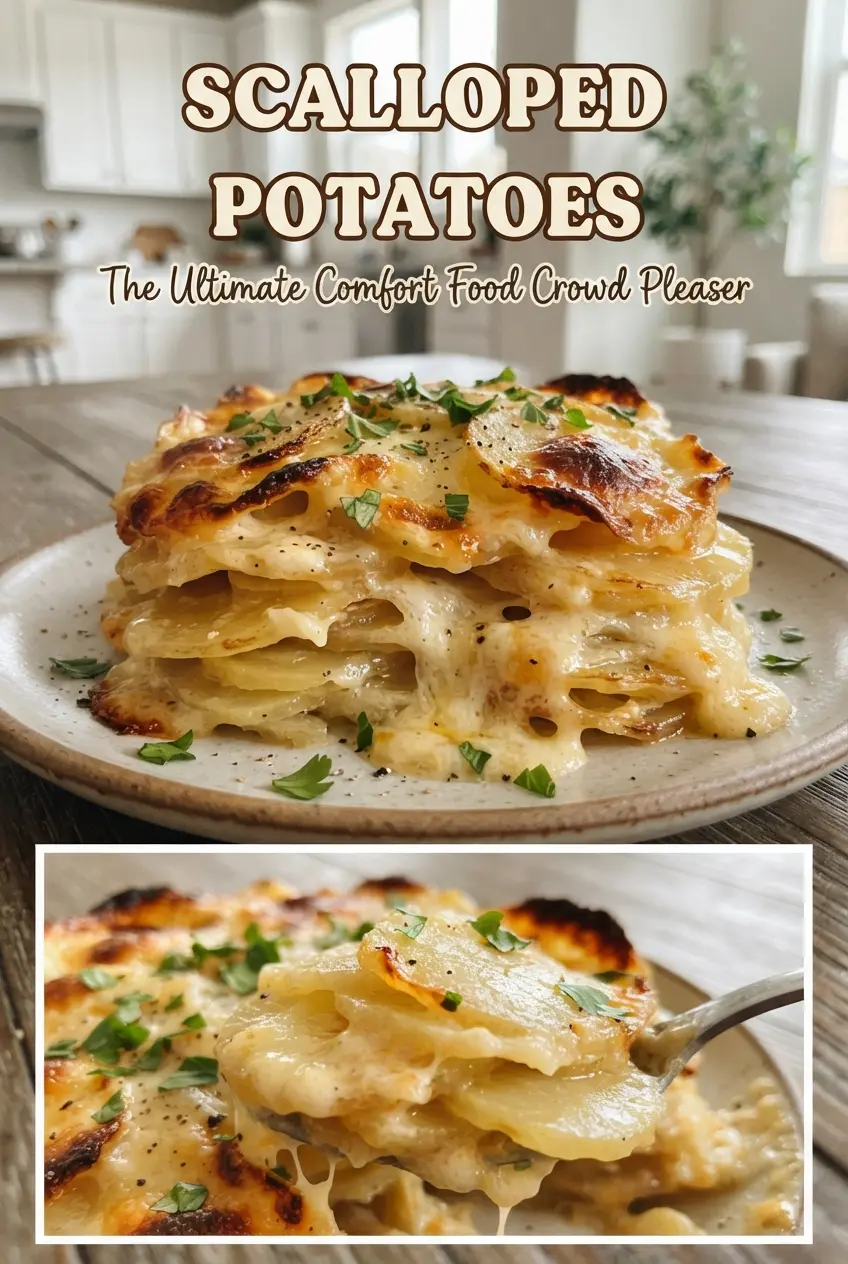
Scalloped Potatoes
Ingredients
Equipment
Method
- Preheat oven to 375F, then butter a 9x13-inch baking dish.
- Arrange the sliced potatoes and onion so they’re ready to layer.
- Melt butter, then cook minced garlic for 30 seconds.
- Whisk in all-purpose flour and cook for 1 minute.
- Gradually whisk in whole milk and heavy cream, then simmer until slightly thickened.
- Season the sauce with salt, black pepper, and fresh thyme leaves, then keep it warm.
- Layer potatoes and onion in the dish in three layers, pouring sauce over each layer.
- Cover with foil, then bake for 1 hour at 375F.
- Uncover, sprinkle evenly with grated Parmesan, then bake 25-30 minutes at 375F until golden and fork-tender.
- Rest for 15 minutes before serving so the layers set and slice cleanly.