Golden, flaky baked brie is one of those appetizers that disappears fast because the center turns molten while the pastry bakes up crisp and deeply browned. The contrast is what makes it work: buttery crust on the outside, soft cheese and jam inside, with just enough crunch from the pecans to keep each bite interesting.
The trick is giving the brie a chance to warm through without overbaking the pastry. Puff pastry needs a hot oven so the layers lift instead of turning greasy, and the jam helps protect the cheese from drying out while adding a glossy, fruit-forward layer that keeps the whole thing balanced. A short rest after baking matters too; cut it too soon and the cheese runs everywhere before anyone gets that perfect scoop.
Below, you’ll find the few details that make this version reliable every time, plus a couple of smart swaps if you’re working with what you have on hand.
The pastry came out shatteringly crisp and the brie stayed perfectly oozy after a 10-minute rest. The raspberry jam and pecans were such a good combination that nobody even asked for extra bread.
Save this baked brie for the nights when you want molten cheese, flaky pastry, and a sweet-savory finish that feels a little special.
The part that keeps the puff pastry crisp instead of soggy
The biggest mistake with baked brie is treating it like a sealed casserole. If the pastry sits around too long after filling, the jam and the brie start leaking moisture into the dough before it even hits the oven. That’s how you end up with pale, damp pastry instead of crisp layers. Move quickly once the brie is wrapped, and bake it seam-side down so the package holds together while it sets.
The other thing that matters is the oven heat. Puff pastry needs that 400F burst to lift fast. If the oven runs cool, the butter in the pastry melts before the layers expand, and you lose the flaky shell that makes this worth serving. A short rest after baking gives the cheese just enough structure to spoon instead of pour.
What each layer is doing in this baked brie

- Puff pastry — This is what gives you the crisp shell. Thawed pastry that’s still cold handles better and bakes flakier, so don’t leave it sitting on the counter once it’s pliable. If you only have one sheet from a standard package, that’s enough for one wheel.
- Brie — A small wheel around 8 ounces is the sweet spot here. You want the rind on; it helps the cheese hold its shape while baking. Very ripe brie will melt faster and run more, which is fine as long as you give it that rest time before cutting.
- Raspberry or fig jam — This adds sweetness and keeps the cheese from tasting flat. Raspberry is brighter and a little sharper, while fig leans deeper and earthier. Thick jam works best because it stays in place instead of turning watery inside the pastry.
- Pecans and brown sugar — The pecans bring crunch, and the brown sugar nudges the filling toward caramelized, toasty territory. Chop the nuts fairly fine so the pastry seals more easily. If you skip the sugar, the result is less rich but still good.
- Egg wash — This is what gives the outside that deep golden color. Brush lightly; too much egg can pool in the seams and make the pastry look patchy instead of glossy.
How to wrap, bake, and cut it at the right moment
Roll and fill the pastry
Roll the pastry just enough to smooth out the folds, then center the brie and top it with jam, pecans, and brown sugar. Don’t overfill the middle; if the jam piles too high, it will leak out before the pastry has time to seal. Keep the edges clean so you can fold them neatly over the cheese.
Seal it tight and turn it over
Bring the pastry up and over the brie, trimming away excess dough if needed. Press the seams together firmly so the package stays shut, then flip it seam-side down onto the lined baking sheet. That flip does two jobs at once: it locks the folds underneath and gives you a smoother top for browning.
Bake until the outside is deeply golden
Brush the pastry with egg wash and bake until it turns a deep golden brown, not just pale gold. You’re looking for crisp, visibly laminated layers and a shell that feels set when you tap it lightly. If the top browns too fast, your oven is running hot; tent it loosely with foil for the last few minutes.
Rest before slicing
Let it sit for 10 minutes after baking. That pause keeps the filling from pouring out the second you cut in, and it gives the brie enough body to serve with crackers and apple slices instead of flooding the plate. Add the rosemary right before serving so it stays fragrant and bright.
Three ways to adjust this without losing the point of the recipe
Swap the jam for a more savory finish
Fig jam gives the brie a deeper, less tart flavor than raspberry and works especially well if you’re serving it with cider or wine. Apricot jam is another good choice if you want something lighter and a little brighter. Keep the amount the same so the filling doesn’t seep out.
Make it gluten-free
Use a gluten-free puff pastry if you can find one, but work with it while it’s cold because it’s usually a little more fragile than standard dough. Bake on parchment so it lifts cleanly, and expect a slightly less dramatic rise. The filling stays the same.
Skip the nuts for a smoother texture
Leave out the pecans if you want a cleaner, softer center with no crunch. The brie and jam still hold up beautifully, and the pastry does most of the textural work. If you’re replacing the nuts, add a little extra rosemary or a pinch of flaky salt after baking for balance.
Storage and Reheating
- Refrigerator: Store leftovers in an airtight container for up to 3 days. The pastry softens, but it still reheats well.
- Freezer: Freeze before baking for the best result. Wrap the assembled brie tightly and bake from frozen, adding a few extra minutes; baked leftovers don’t freeze as nicely.
- Reheating: Warm in a 325F oven until the center is soft and the pastry crisps back up, usually 10 to 15 minutes. Skip the microwave, which makes the crust rubbery and pushes the cheese out too fast.
Answers to the questions worth asking
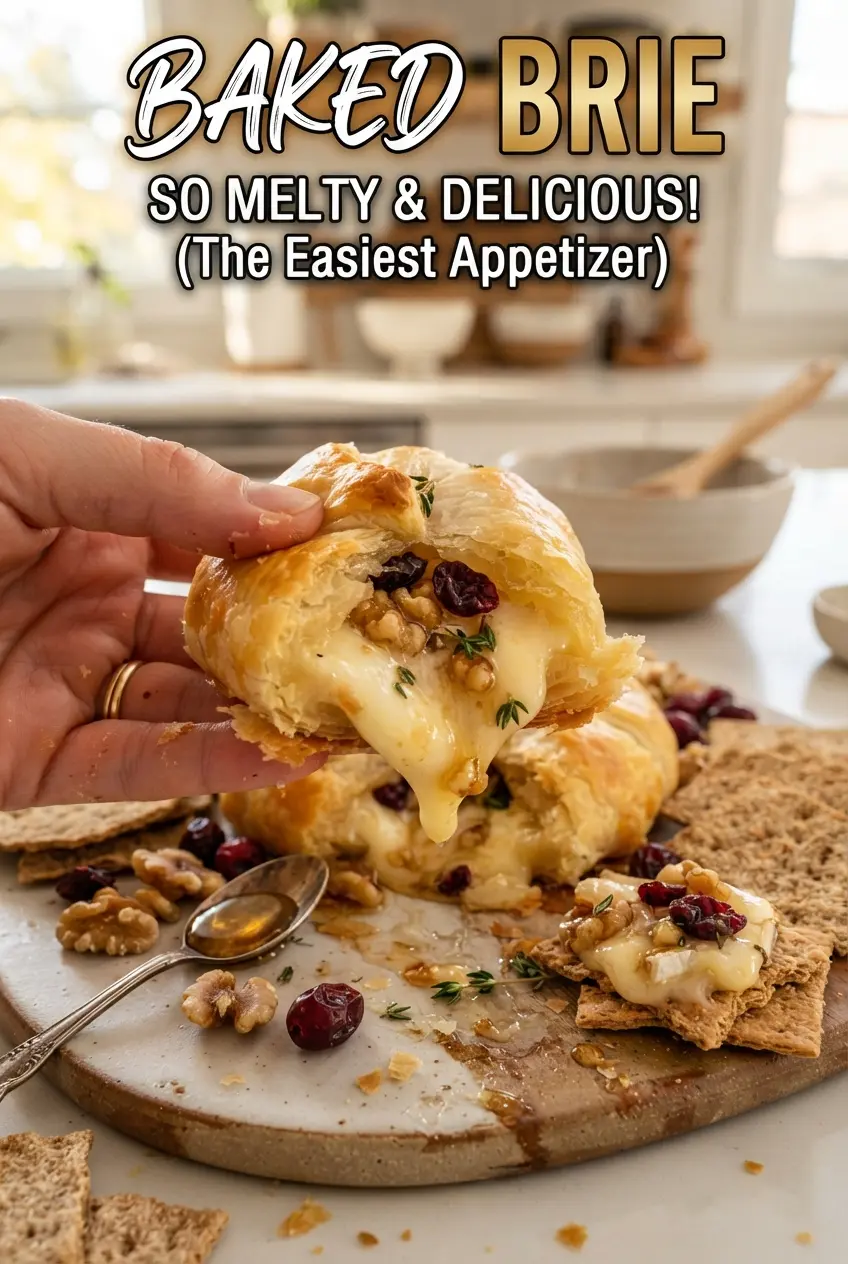
Baked Brie in Puff Pastry
Ingredients
Equipment
Method
- Preheat the oven to 400F and line a baking sheet with parchment for easy release.
- Roll the puff pastry slightly, then place the brie in the center of the pastry.
- Spread the jam over the brie, then sprinkle with chopped pecans and brown sugar.
- Fold the pastry up over the brie, trim excess, and press the seams to seal so the filling stays inside.
- Flip the brie seam-side down onto the baking sheet, then brush the pastry with the egg wash for a glossy finish.
- Bake at 400F for 22-25 minutes until the pastry is deep golden brown and looks puffed.
- Rest for 10 minutes so the cheese sets slightly before cutting, making it less likely to run.
- Garnish with fresh rosemary and serve with crackers and apple slices.