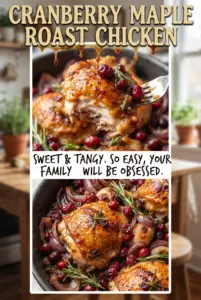
Bronzed roast chicken with cranberry-maple pan sauce has a way of disappearing fast because the skin turns deeply lacquered while the meat stays juicy underneath. The cranberries burst right in the roasting pan and mingle with Dijon, broth, and chicken drippings, so every slice gets spooned with a sharp-sweet sauce that tastes like it took more effort than it did.
The trick is starting hot enough to build color before the glaze goes on, then finishing with the maple mixture late in the roast so it thickens instead of burning. Rubbing butter with rosemary under and over the skin gives the chicken more flavor and helps the skin crisp, while the orange and garlic inside the cavity perfume the meat from the inside out.
Below, I’ll walk through the small timing details that keep the glaze glossy instead of sticky and the chicken from drying out. There’s also a good substitution note if you’re working with a smaller bird or need to use dried herbs in a pinch.
The skin came out beautifully crisp and the cranberry maple sauce thickened right in the pan. I kept expecting it to be too sweet, but the Dijon and rosemary balanced it perfectly.
Cranberry Maple Roast Chicken brings crisp skin, juicy meat, and a glossy pan sauce that tastes balanced, not sugary.
The Glaze Stays Glossy When You Add It Late
The biggest mistake with maple-glazed roast chicken is brushing the sweet part on too early. Maple syrup darkens fast, and at 425°F it can go from glossy to bitter before the bird is cooked through. Roasting the chicken plain first builds the skin and gives the fat time to render, so the glaze has something crisp to cling to instead of soaking into pale, soft skin.
The other thing that matters here is the pan itself. The red onion and cranberries aren’t garnish; they catch the chicken fat, soften in the heat, and turn into the base of the sauce. Once the broth goes in, those browned bits loosen into something worth spooning over every carved piece.
What the Butter, Citrus, and Cranberries Each Bring to the Pan
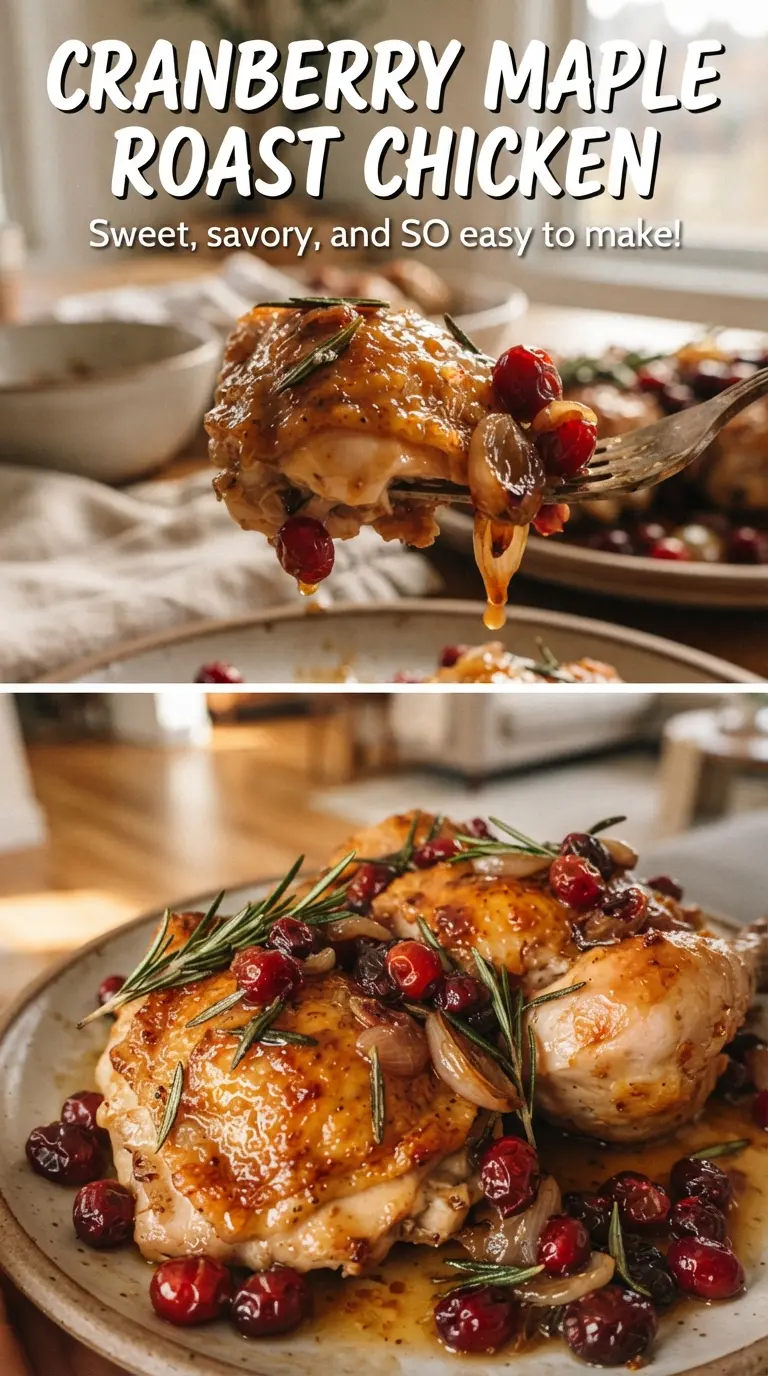
- Butter — Softened butter is what helps the skin take on that burnished look without drying out. It also carries the rosemary under the skin, where the flavor actually has a chance to season the meat. If you need a dairy-free swap, use olive oil, but expect a thinner, less plush finish.
- Fresh rosemary — Fresh rosemary stands up to the maple and cranberry without getting lost. Dried rosemary works in a pinch, but use half as much and crush it between your fingers first so it doesn’t taste woody. Chopping it fine keeps it from burning on the skin.
- Orange and garlic — The orange perfumes the bird and keeps the cavity from feeling heavy or one-note. The garlic softens as it roasts and rounds out the sweetness in the glaze. Don’t swap in bottled orange juice here; the whole fruit gives aroma without adding extra liquid to the pan.
- Cranberries — Fresh cranberries are what make the sauce taste bright instead of syrupy. They burst at the end and thicken the pan juices naturally. Frozen cranberries work too, straight from the freezer, and they’ll release a little more liquid before they break down.
- Dijon mustard — Dijon is the balance point in the glaze. It cuts the sweetness and helps the maple coat the skin in a thin, even layer. Yellow mustard won’t give the same depth, so use Dijon if you can.
How to Roast the Bird So the Skin Browns Before the Sauce Burns
Seasoning Under the Skin
Pat the chicken dry before anything else. Moisture on the surface keeps the skin from crisping, and it makes the butter slide off instead of staying put. Work the rosemary butter under the skin over the breast and thighs, then rub what’s left over the outside. If the skin tears a little, don’t worry; it still roasts beautifully as long as the bird is dry and the oven is hot.
Building Flavor in the Pan
Set the onion wedges around the chicken and tuck the orange halves and garlic into the cavity. That’s where a lot of the flavor comes from, because the steam inside the bird perfumes the meat while the pan ingredients roast into the sauce base. Keep the chicken breast side up so the breast meat doesn’t dry out while the thighs finish. If the bird looks crowded, choose a larger roasting pan rather than a tight baking dish; the vegetables need space to caramelize instead of steam.
Glazing at the End
Roast the chicken first until it has real color, then brush on half the maple-Dijon mixture and add the cranberries and broth. This is the turning point: the glaze should cling in a thin coat, not puddle on the skin. Brush on the rest near the end of roasting so it stays shiny. The chicken is done when the thigh reads 165°F and the juices run clear at the joint; if the glaze looks perfect before the meat is done, cover the breast loosely with foil and keep going.
Resting Before You Carve
Let the chicken rest for 15 minutes before carving. That pause keeps the juices in the meat instead of spilling onto the cutting board, and it gives the sauce one last chance to settle in the pan. Spoon the cranberry mixture over the carved pieces rather than drowning the bird before slicing. You’ll get a cleaner presentation and a better balance of crisp skin and sauce.
Three Smart Ways to Adapt This Roast Chicken
Use a Smaller Chicken
A 3 1/2- to 4-pound chicken works fine, but it will cook faster, so start checking the thigh earlier. The glaze still works the same way; just brush it on once the skin has started to color. Smaller birds can dry out quicker, so don’t skip the rest time.
Make It Dairy-Free
Swap the butter for olive oil or softened plant-based butter. Olive oil gives you crisp skin and keeps the rosemary moving easily under the skin, though the finished flavor is a little less rich. Use the same amount either way.
Swap in Dried Rosemary
If fresh rosemary isn’t available, use 1 teaspoon dried rosemary and crush it well before mixing it into the butter. Dried herbs are more concentrated and can taste sharp if left in big needles, so breaking them up helps. The flavor will be a little quieter, but it still reads clearly against the maple and cranberries.
Storage and Reheating
- Refrigerator: Store carved chicken and sauce in an airtight container for up to 4 days. The skin will soften, but the flavor stays good.
- Freezer: Freeze the carved meat and sauce separately for up to 2 months. The cranberries and sauce freeze well, though the texture softens a bit after thawing.
- Reheating: Reheat covered in a 325°F oven with a splash of broth so the meat doesn’t dry out. Avoid blasting it in the microwave for too long, or the breast meat will turn stringy before the sauce warms through.
Questions I Get Asked About This Recipe
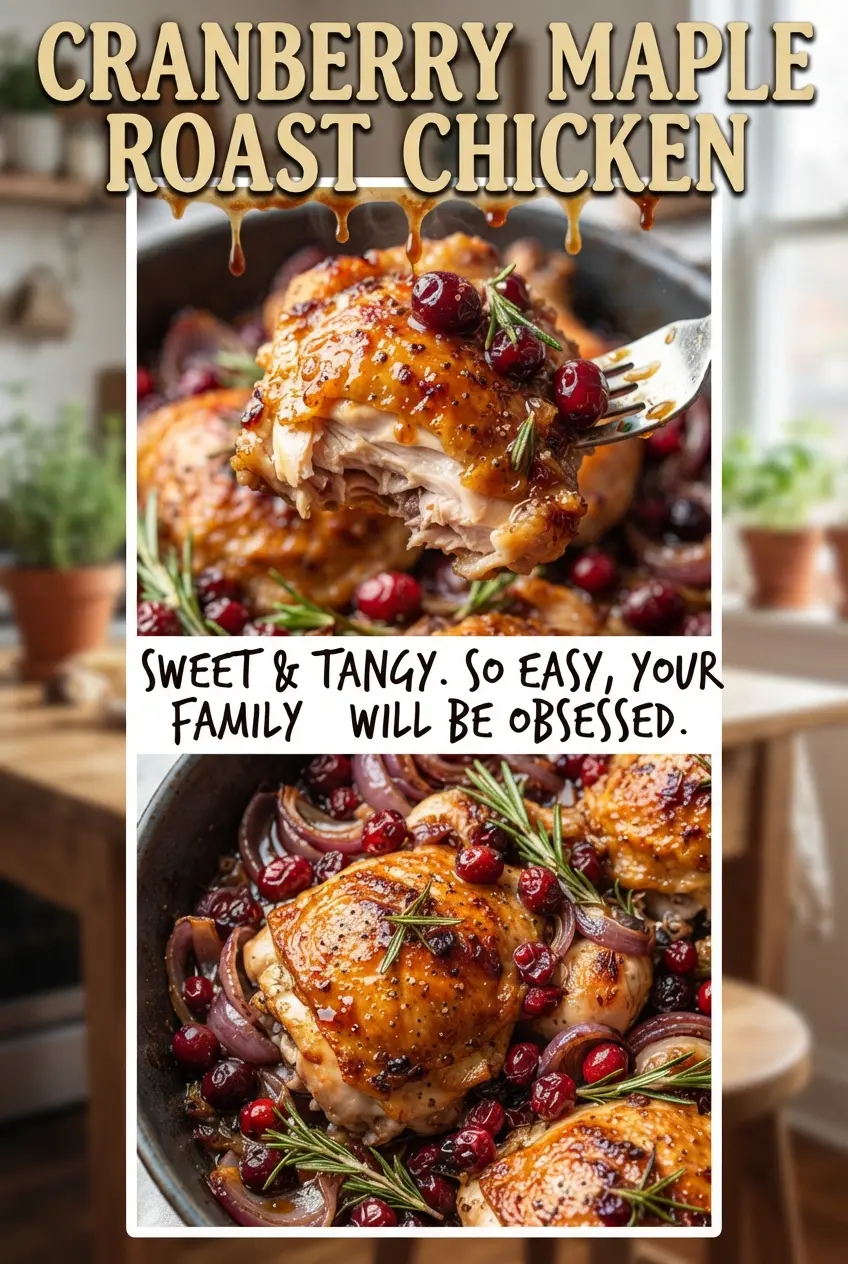
Cranberry Maple Roast Chicken
Ingredients
Equipment
Method
- Preheat oven to 425°F. Set up a roasting pan/sheet pan so the bird can go in as soon as it’s ready.
- Season the chicken inside and out with salt and black pepper, then rub the softened butter mixed with chopped rosemary under and over the skin. Look for even coverage so the skin browns uniformly.
- Stuff the cavity with orange halves and halved garlic, then set the chicken in a roasting pan with red onion wedges around it. Ensure the cavity aromatics stay centered inside the bird.
- Roast the chicken for 50 minutes at 425°F. It should look deeply golden while the breast is starting to firm up.
- Whisk maple syrup and Dijon mustard, then brush half over the chicken. Spread the glaze over the skin so it lacquered-browns during the finish.
- Add cranberries and chicken broth to the pan, keeping them around the chicken (not covering the skin). You should see cranberries begin to bob around as juices start to pool.
- Roast 25-30 minutes more at 425°F, brushing with the remaining glaze once during the last part. Roast until the thigh reaches 165°F when checked with an instant-read thermometer.
- Rest the chicken for 15 minutes, then carve and spoon the cranberry pan sauce over the top. The resting period helps the juices settle so slices stay moist.