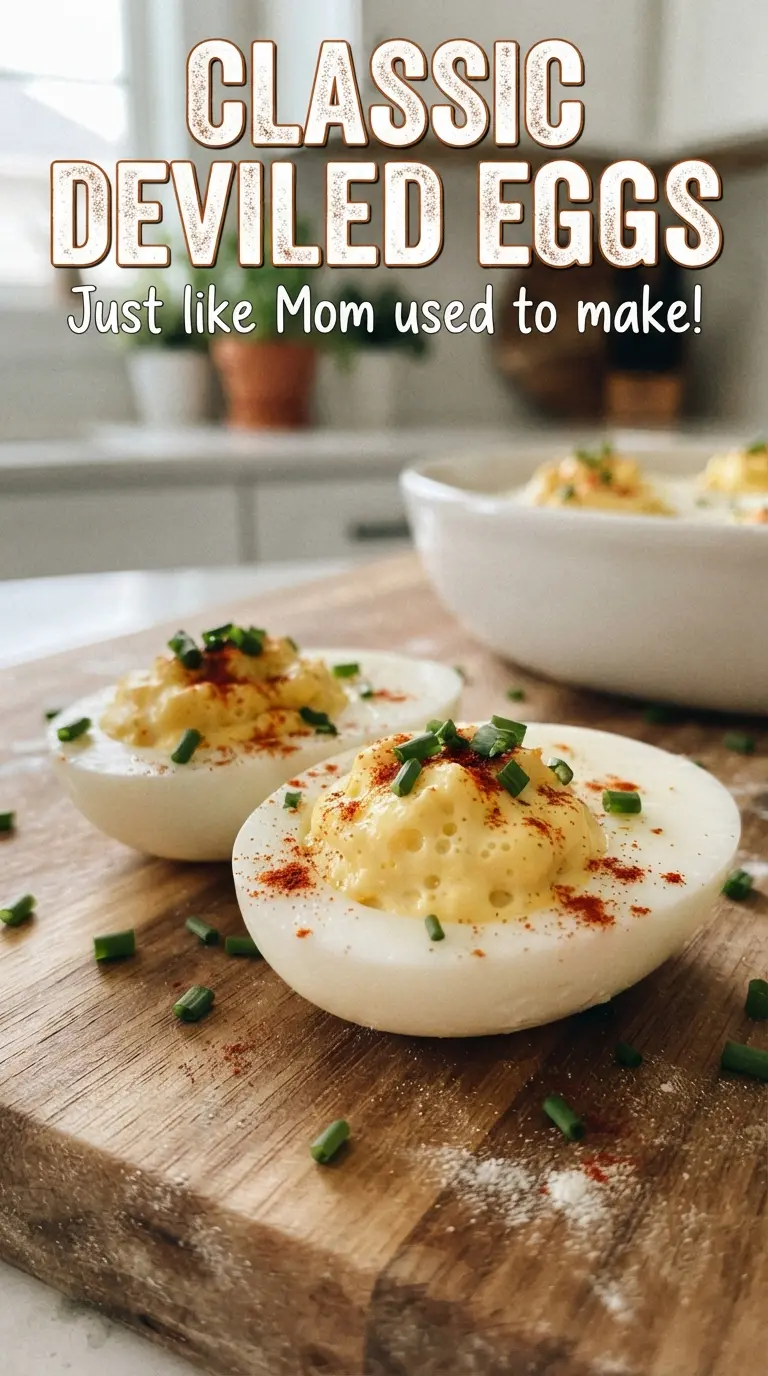
Classic deviled eggs earn their place on the table because they disappear fast: cool, creamy filling, tender whites, and that little hit of tang that keeps you reaching for another one. When they’re done well, the filling is smooth enough to pipe cleanly but still rich enough to hold its shape, and the tops get just enough paprika for color without turning muddy.
The trick is in the yolk texture and the balance of the filling. The yolks need to be mashed fine before the mayo goes in, or you end up with a grainy center that never fully smooths out. Dijon adds depth, white vinegar sharpens the richness, and a touch of salt and pepper keeps the filling from tasting flat. A quick chill after piping helps the eggs set up and makes them easier to serve cleanly.
Below, you’ll find the small details that make a batch of deviled eggs look neat, taste balanced, and hold up on a party platter without sliding around or weeping.
The filling turned out silky and held its shape beautifully in the egg whites. I chilled them for an hour before serving, and the paprika stayed bright instead of sinking in.
Save these classic deviled eggs for the appetizer tray when you want a smooth, tangy filling and a clean piped finish.
The Trick to Deviled Eggs That Pipe Cleanly and Taste Balanced
Most deviled eggs go wrong in one of two places: the yolks stay a little lumpy, or the filling gets overloaded with mayonnaise and turns heavy. The fix starts before mixing. The yolks need to be mashed until they look dry and fine, almost sandy, because any big pieces will show up in the finished filling no matter how long you stir. After that, mayonnaise should loosen the yolks just enough to make them silky, not sloppy.
Dijon and vinegar do different jobs here. Dijon gives the filling depth and a faint sharpness that plain mustard doesn’t, while vinegar wakes up the yolks so the eggs taste seasoned instead of just creamy. If the mixture tastes flat, it usually needs a little more salt, not more mayo. That extra spoonful of mayo often masks the problem instead of fixing it.
What Each Ingredient Is Doing in the Filling
- Egg yolks — These are the structure and body of the filling. Fresh eggs are fine, but eggs that are a few days old usually peel more cleanly, which matters more than brand or price.
- Mayonnaise — This gives the filling its creamy texture and helps it pipe smoothly. Use a mayo you actually like, because its flavor comes through. Start with a little less if your yolks are smaller, then add only enough to make the mixture plush.
- Dijon mustard — Dijon adds sharpness and depth without making the filling taste aggressively mustardy. Regular yellow mustard works in a pinch, but the flavor is brighter and less rounded.
- White vinegar — A small amount cuts through the richness and keeps the filling from tasting dull. Lemon juice can work if that’s what you have, but it brings a different kind of acidity and a slightly more noticeable citrus note.
- Paprika and chives — These are more than garnish. Paprika adds color and a gentle smoky sweetness, while chives give the top a fresh onion finish that keeps each bite from feeling one-note.
Peeling, Mashing, and Piping Without Fuss
Starting with an Easy Peel
Place the eggs in cold water, bring them to a boil, then cover and remove them from the heat for the full 12 minutes. That gentle finish cooks the yolks through without giving them a chalky ring. The ice bath matters just as much, because it stops the cooking and helps the whites pull away from the shell. If the eggs are stubborn to peel, they usually need a longer chill after the ice bath, not more force.
Getting the Filling Smooth
Once the yolks are out, mash them with a fork until there are no visible chunks left. The texture should look crumbly and uniform before the mayo goes in, or the final filling will never feel polished. Stir in the mayonnaise, Dijon, vinegar, salt, and pepper until the mixture turns creamy and thick enough to hold a ridge when you drag a spoon through it. If it seems too loose, stop adding mayo and chill it for 10 minutes before deciding whether it needs anything else.
Piping for a Clean Finish
Spoon the filling into a piping bag fitted with a star tip, or use a zip-top bag with the corner snipped if that’s what you’ve got. Pipe in a steady swirl so the filling sits neatly above the egg white instead of smearing across the edges. Chilling the filled eggs before serving helps the swirls set and keeps the paprika from disappearing into the top.
Add a little relish for a sweeter version
Stir in 1 to 2 teaspoons of sweet pickle relish after the yolks are fully mixed. It softens the sharpness and gives you a more classic picnic-style filling, but it also loosens the mixture, so add it sparingly if you want clean piping.
Make them dairy-free without changing the method
This recipe is already dairy-free as written, which makes it an easy appetizer for mixed crowds. Just check your mayonnaise label if you’re serving someone who avoids specific oils or egg-free mayo substitutes, since those will change the texture and the richness of the filling.
Turn them into a lighter, higher-protein appetizer
Swap half the mayonnaise for plain Greek yogurt if you want a sharper, leaner filling. The flavor gets tangier and the texture turns a little looser, so this version is best if you’re serving them soon after piping rather than letting them sit for hours.
Make them for a crowd without last-minute scrambling
Boil, peel, and halve the eggs up to one day ahead, then keep the whites and yolks separate in airtight containers. Mix the filling the day of serving so it stays bright and pipeable. If the filling thickens in the fridge, let it sit at room temperature for 10 minutes and stir it again before piping.
Storage and Reheating
- Refrigerator: Store deviled eggs in a covered container for up to 2 days. The whites stay best on the first day, while the filling may soften slightly after chilling.
- Freezer: Don’t freeze deviled eggs. The egg whites turn rubbery and watery once thawed, and the filling separates.
- Reheating: These are meant to be served cold. If they’ve been refrigerated, let them sit out for 10 to 15 minutes before serving so the filling loses its chill and tastes fuller.
Answers to the Questions Worth Asking

Classic Deviled Eggs
Ingredients
Equipment
Method
- Place large eggs in a pot, cover with cold water, and bring to a boil. Cover, remove from heat, and let stand 12 minutes.
- Chill the eggs in an ice bath for 10 minutes. Peel and halve lengthwise.
- Mash the yolks with a fork until fine and crumbly. Keep mashing until no large chunks remain.
- Stir in mayonnaise, Dijon mustard, white vinegar, salt, and black pepper until smooth. Mix until the filling looks thick, glossy, and uniform.
- Pipe the filling into the egg whites with a star tip. Fill each half all the way to the top for neat ridges.
- Sprinkle with paprika and chives, then chill until serving. Arrange on a platter and serve cold.