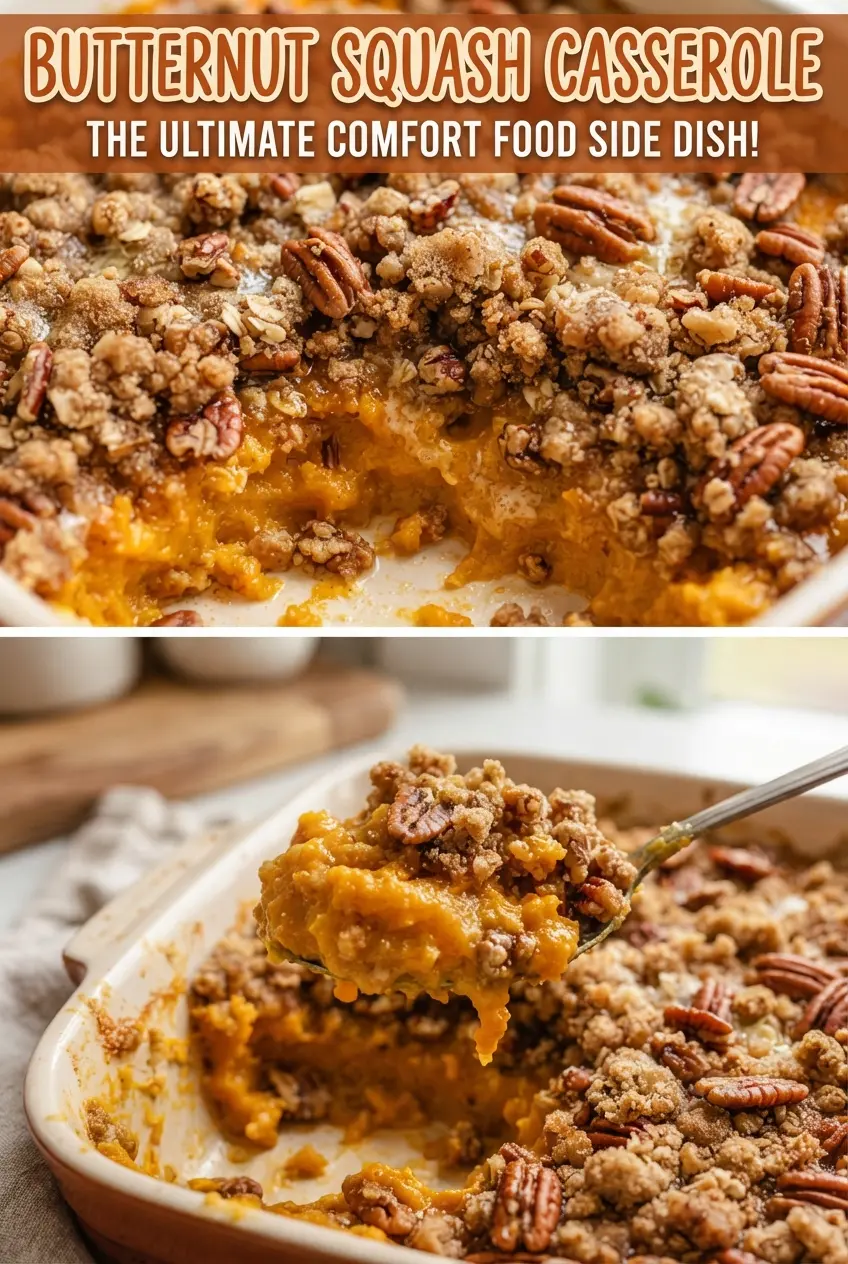
Butternut squash casserole lands on the table with a soft, spoonable center and a pecan top that cracks lightly under your fork. It’s rich without being heavy, sweet without turning into dessert, and the kind of side dish that disappears fast because it fits just about any meal that needs something comforting and a little special.
What makes this version work is the balance. The squash gets boiled until fully tender, then drained well so the casserole doesn’t turn loose or watery in the oven. Butter, brown sugar, eggs, and milk build a smooth base that bakes up creamy, while the flour-pecan topping gives you that crisp, golden finish that keeps each bite interesting.
The small details matter here: drain the squash thoroughly, mix the filling until it’s smooth, and keep the topping crumbly instead of pasty. Below, you’ll find a few smart ways to adjust the casserole for your table, plus the storage notes I rely on when I want to make it ahead.
The squash baked up creamy and held its shape, and that pecan topping stayed crisp even after dinner. I drained it like you said and it came out perfect, not watery at all.
Save this butternut squash casserole for the holiday side dish with the creamy center and crisp pecan streusel.
The Part That Keeps the Casserole Creamy Instead of Loose
The biggest mistake with squash casserole is carrying too much water into the oven. Butternut squash holds a surprising amount after boiling, and if you rush the draining step, the filling loosens as it bakes and the topping sinks instead of staying crisp. Give the squash a minute in the colander, then mash it while it’s still warm so the butter melts in evenly and the mixture turns smooth instead of grainy.
The other thing that matters is balance. Eggs set the filling, milk softens it, and brown sugar adds enough sweetness to round out the squash without making the dish cloying. Cinnamon belongs here, but only in a supporting role; it should warm the squash, not take it over.
What Each Ingredient Is Really Doing in This Casserole

- Butternut squash — This is the body of the dish, so start with squash that feels heavy for its size and has firm skin. Fresh is worth it here because the flavor is cleaner and sweeter than canned puree, which tends to be too wet for this bake.
- Butter — Butter carries the sweetness and helps the filling bake up rich. Dividing it matters: some goes into the filling, and the rest holds the streusel together.
- Brown sugar — This gives the casserole its gentle caramel note. If you cut it much more, the dish starts tasting flat; if you swap in white sugar, you lose that molasses depth.
- Eggs — These set the center so the casserole slices or scoops cleanly. Without them, the filling stays too soft and puddly.
- Pecans — They bring the crunch that makes every bite feel complete. Chop them evenly so the topping bakes at the same pace and doesn’t burn in scattered hot spots.
- Flour — This is what turns the topping from sweet nut butter into a crumbly streusel. You need the starch here; almond flour won’t give the same crisp finish.
Building the Filling and Streusel So They Bake at the Same Speed
Cooking the Squash Down Fully
Boil the cubed squash until it’s completely tender and a fork slides in with no resistance. If it still has bite, the casserole will bake unevenly and the mash will stay a little lumpy no matter how long you stir. Drain it well and let the steam escape for a minute before mashing, because trapped moisture is what turns this dish soupy.
Making the Base Smooth
Mash the warm squash with the melted butter, brown sugar, eggs, milk, vanilla, cinnamon, and salt until the mixture looks uniform and creamy. A few tiny squash flecks are fine, but large chunks mean the filling won’t bake with that custardy texture. The eggs should disappear into the mash before it goes into the pan, or you’ll end up with little streaks of set egg in the finished casserole.
Keeping the Topping Crumbly
Mix the flour, pecans, remaining butter, and remaining brown sugar just until clumps form. You’re looking for damp crumbs, not a paste. If the topping looks wet, add a little more flour; if it looks sandy and dry, work in a teaspoon of melted butter at a time until it holds together in rough bits.
Baking Until the Edges Bubble
Spread the filling into the greased dish and sprinkle the topping evenly over the surface. Bake until the top is deep golden and the edges are bubbling, which tells you the eggs have set and the casserole is cooked through. If the topping browns before the center is done, lay a loose sheet of foil over the dish for the last part of baking.
Three Smart Ways to Adapt This Butternut Squash Casserole
Dairy-Free Version
Use a neutral plant-based butter and unsweetened oat milk in place of the dairy. The casserole still sets well because the eggs do the structural work, but the flavor will be a little less rich and a little more delicate.
Less-Sweet Southern Side Dish
Cut each amount of brown sugar back by 2 to 3 tablespoons if you want the squash to read more savory than dessert-like. The casserole will still be creamy, but the squash and pecans come through more clearly.
Gluten-Free Topping
Swap the all-purpose flour for a 1:1 gluten-free blend with a little starch in it. The topping won’t be quite as crisp as the original, but it still bakes into a crumbly layer that protects the creamy filling underneath.
Storage and Reheating
- Refrigerator: Keeps for 4 days covered in the fridge. The topping softens a bit, but the flavor stays good.
- Freezer: Freezes well after baking. Cool completely, wrap tightly, and freeze for up to 2 months; thaw overnight in the refrigerator before reheating.
- Reheating: Reheat in a 325F oven, covered loosely with foil, until warmed through. The biggest mistake is microwaving it straight from the fridge, which makes the topping soggy and the filling uneven.
Questions I Get Asked About This Butternut Squash Casserole
Butternut Squash Casserole
Ingredients
Equipment
Method
- Boil the butternut squash for 15 minutes, until very tender. Drain well so the casserole stays creamy instead of watery.
- Preheat the oven to 350F and grease a 9x13-inch baking dish. This ensures the dish is ready for baking right after mixing.
- Mash the squash with 1/4 cup melted butter, 1/4 cup brown sugar, eggs, milk, vanilla extract, cinnamon, and salt until smooth. Stop when no lumps remain so the texture bakes up silky.
- Spread the filling into the greased baking dish in an even layer. Use gentle pressure to level the surface.
- Mix the all-purpose flour, chopped pecans, remaining butter, and remaining brown sugar into a crumbly topping. Pinch it between your fingers—if it clumps, it will bake into a golden streusel.
- Sprinkle the crumbly pecan topping over the squash filling. Cover the surface evenly so every bite gets crunch.
- Bake for 35 to 40 minutes at 350F, until the topping is golden and the edges bubble. Let it rest briefly before serving so the casserole sets for clean scoops.