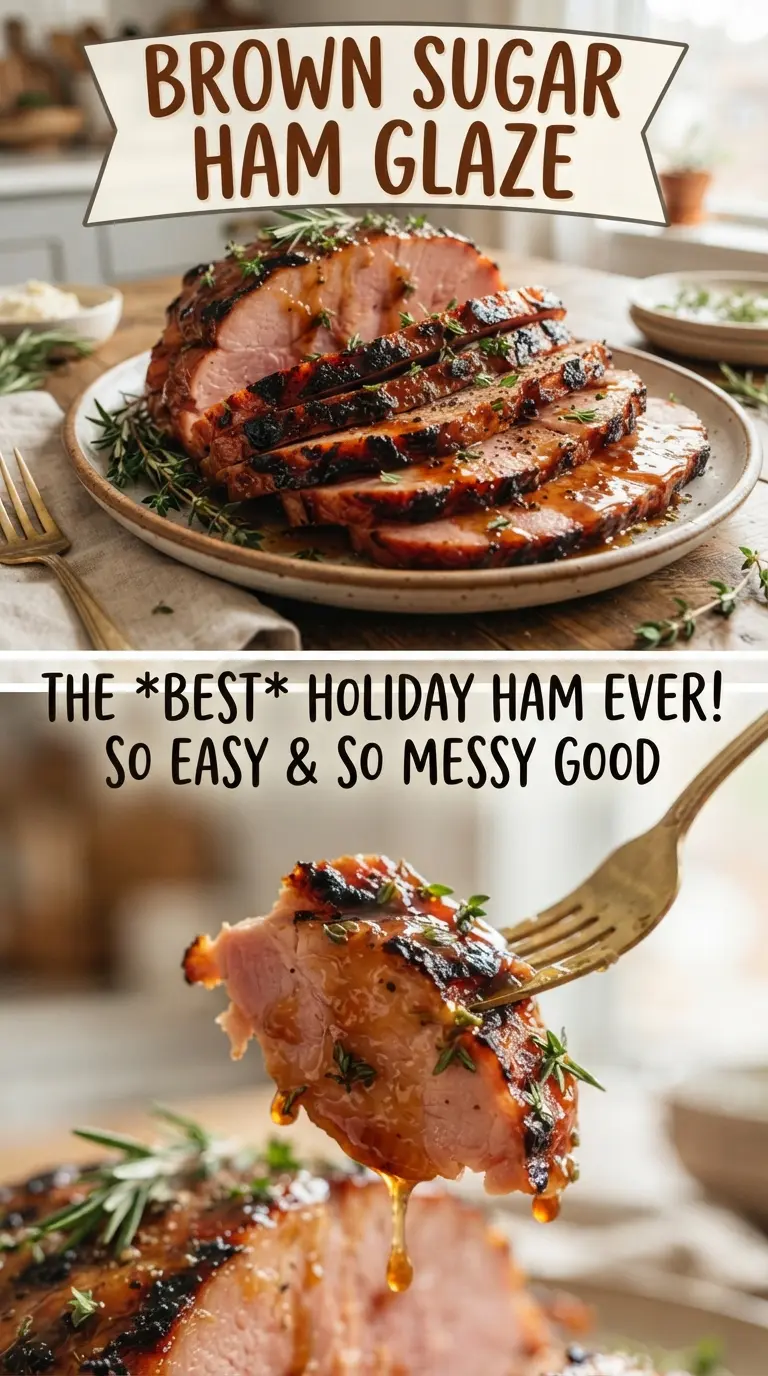
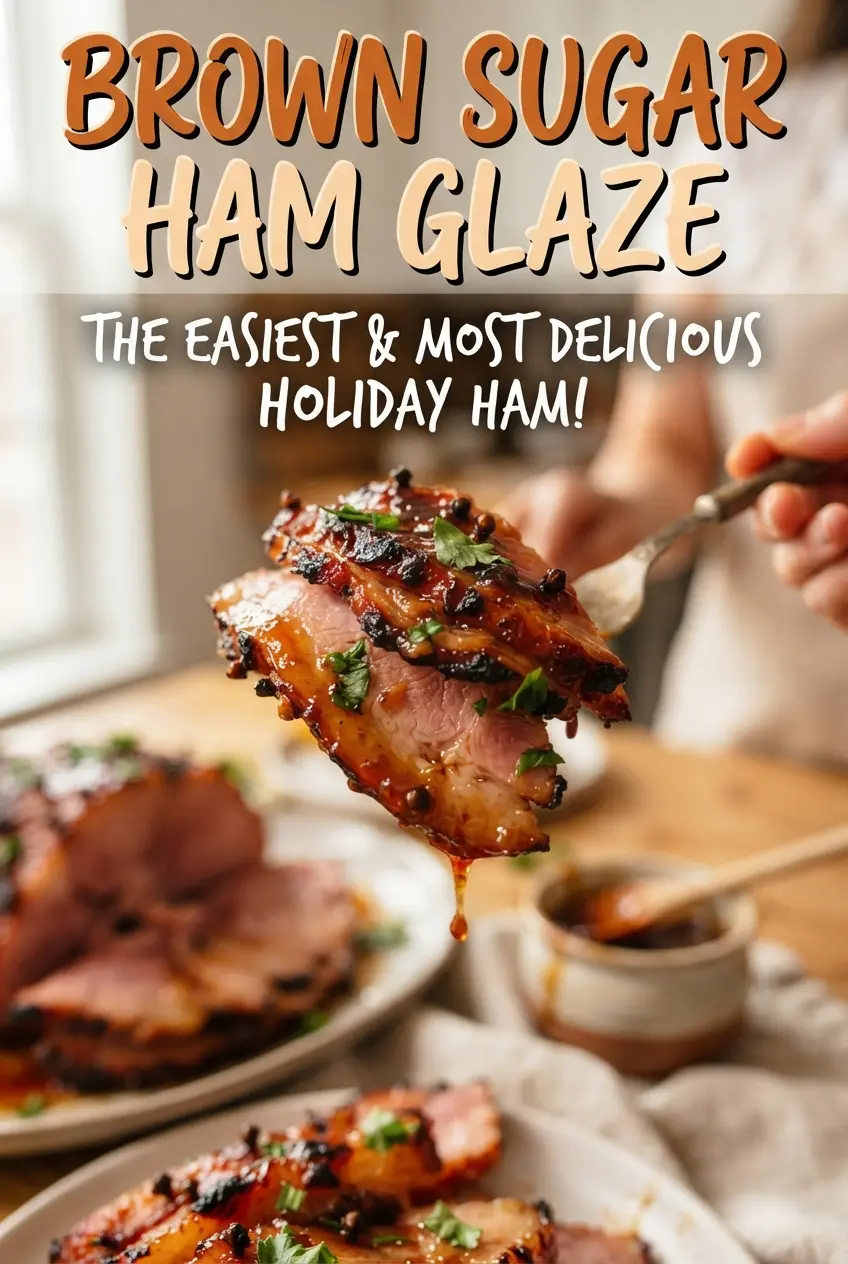
Glossy, sticky, and deeply caramelized, this brown sugar ham glaze clings to every cut edge and bakes into a lacquer that tastes equal parts sweet, tangy, and warm-spiced. It doesn’t just sit on top of the ham; it drapes over the surface, settles into the scored lines, and turns the outside into the part everyone reaches for first.
What makes this version work is the balance. Brown sugar and honey give body and shine, while Dijon and apple cider vinegar keep the glaze from turning flat or cloying. A little juice loosens everything just enough to brush on smoothly, and the butter helps it finish with a soft sheen instead of a brittle crust. Cinnamon and cloves bring that classic holiday-ham flavor without overpowering the meat.
You’ll find a few practical notes below on how to keep the glaze glossy, when to start brushing it on, and what to do if you want a version that leans a little more citrusy or a little less sweet.
The glaze thickened in just a few minutes and brushed on like silk. I loved how the Dijon kept it from tasting too sweet, and it set up into that sticky finish I was hoping for on the sliced ham.
Brush this brown sugar ham glaze on every 10 minutes for a shiny, sticky finish that builds real depth instead of just sweetness.
The Trick to a Ham Glaze That Stays Glossy Instead of Burning
The main mistake with ham glaze is rushing it. If the sugar goes in and the heat stays too high, the mixture tightens up, turns grainy, and starts to darken before the ham has time to finish baking. This glaze works because it starts as a loose syrup, then cooks just long enough to coat the back of a spoon without becoming candy. That gives you a glaze that brushes on cleanly and bakes into a shiny layer instead of a sticky crust that scorches at the edges.
Another thing that matters here is timing. A fully cooked ham only needs the glaze in the last stretch of baking, and repeated brushing builds layers better than one heavy coat. The surface should look lacquered, not flooded. If the glaze starts looking too thick in the pan, it’s gone too far for easy brushing; add a splash of juice and stir it back into a pourable texture before it hardens.
What Each Ingredient Is Doing in This Glaze
- Brown sugar — This is the backbone of the glaze. Packed brown sugar melts into a thick, caramel note that plain white sugar can’t match, and the molasses in it gives the glaze that deep amber color. Light or dark brown sugar both work; dark brown sugar tastes a little richer.
- Honey — Honey adds shine and a softer sweetness that helps the glaze stay smooth. It also keeps the texture from becoming harsh as it cools. Maple syrup can step in if needed, but the flavor will shift toward maple and the glaze won’t taste as classic.
- Pineapple or orange juice — The juice loosens the glaze and brings acidity and fruitiness so the final result doesn’t taste one-note. Pineapple gives a brighter, tangier edge; orange is softer and a little more aromatic. Use whatever you have, but don’t skip the liquid or the glaze will be too tight to brush.
- Dijon mustard — Dijon is the quiet ingredient that keeps the glaze from tasting like dessert. It adds sharpness and depth, and it melts right into the mixture without leaving a noticeable mustard flavor. Yellow mustard won’t give the same clean bite.
- Butter — Butter rounds out the glaze and helps it cling to the ham. It gives the surface a polished look and softens the edges of the sweetness. If you need a dairy-free version, use a neutral plant-based butter; the glaze will still thicken well.
- Apple cider vinegar — This is what wakes everything up. Just a tablespoon sharpens the sweetness and helps the glaze taste balanced once it’s baked. White vinegar works in a pinch, but it will taste less rounded.
How to Build the Glaze So It Brushes Cleanly
Melting the Sweet Base
Combine the brown sugar, honey, juice, Dijon, butter, vinegar, cinnamon, and cloves in a saucepan before you turn the heat up too high. Medium heat is enough. Stir as the butter melts and the sugar starts dissolving, and watch for the mixture to turn smooth instead of sandy. If you see sugar crystals stuck to the sides of the pan, brush them down with a little water or they can seed graininess later.
Simmering to the Right Thickness
Once the glaze starts to bubble gently, let it simmer for 3 to 4 minutes. You want it glossy and slightly thickened, not reduced into a sticky paste. It should coat a spoon and drip in a slow ribbon. If it boils hard, pull it back; aggressive heat burns the sugar before the flavor has time to come together.
Brushing the Ham in Layers
Brush the glaze over a fully cooked ham during the last 30 minutes of baking, then repeat every 10 minutes. Each coat deepens the color and builds that shiny finish you can see from across the table. The ham should come out lacquered and caramelized, with some of the glaze pooling in the scored lines. Spoon the leftover warm glaze over sliced ham at the table so every serving gets that fresh, sticky edge.
How to Adapt It for Different Hams and Different Crowds
Dairy-Free Version
Swap the butter for a dairy-free butter stick or omit it entirely if needed. The glaze will still be glossy from the sugar and honey, but the finished texture will be a little less rich and plush. Use the same simmering time so it still reduces enough to cling to the ham.
Citrus-Forward Glaze
Use orange juice instead of pineapple juice and add a little extra orange zest at the end if you want a brighter finish. This version tastes less tropical and a little more classic holiday table, with a cleaner sweetness that works well on smoked ham.
Less Sweet, More Savory
Cut the brown sugar back by 1/4 cup and bump the Dijon up by an extra tablespoon. That gives the glaze more bite and less candy-like sweetness while still keeping enough sugar to caramelize properly in the oven.
Storage and Reheating
- Refrigerator: Store leftover glaze in an airtight container for up to 5 days. It will thicken as it chills.
- Freezer: This glaze freezes well for up to 2 months. Thaw it overnight in the fridge before reheating.
- Reheating: Warm it gently in a small saucepan over low heat or in short microwave bursts, stirring often. If it gets too thick, loosen it with a teaspoon or two of juice; high heat can make the sugars seize and scorch.
Questions I Get Asked About This Recipe
Brown Sugar Ham Glaze
Ingredients
Equipment
Method
- Combine brown sugar, honey, pineapple or orange juice, Dijon mustard, butter, apple cider vinegar, ground cinnamon, and ground cloves in a saucepan.
- Bring to a simmer over medium heat, stirring until the sugar dissolves, about 1-2 minutes.
- Simmer 3-4 minutes until slightly thickened and glossy, stirring occasionally and watching for a smooth amber sheen.
- Brush the warm glaze over a fully cooked ham during the last 30 minutes of baking, applying a new coat every 10 minutes while the surface is still hot.
- Spoon the remaining warm glaze over sliced ham at the table for extra shine.