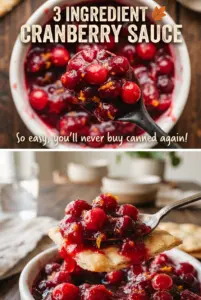
Ruby cranberry sauce turns glossy and jammy with almost no effort, and the payoff is bigger than the ingredient list suggests. When it’s done right, you get tart berries suspended in a thick spoonable syrup, with just enough whole fruit left behind to keep every bite bright and lively. It belongs next to roast turkey, yes, but it also earns its place on sandwiches, with sharp cheeses, and alongside anything rich that needs a little lift.
The trick is simple: dissolve the sugar fully before the cranberries go in, then let the fruit simmer just until most of the berries have burst. That first boil matters because it gives you a smooth base instead of grainy syrup, and the cooling time matters just as much because the sauce thickens as it chills. If you judge it by how it looks in the pan, it’ll seem loose. Judge it after it’s cold.
Below, I’ll walk you through the one stage people usually rush, plus the small adjustments that help if you want it a little thicker, a little brighter, or made ahead without any stress.
The syrup looked a little thin at first, but after chilling it turned into that perfect jammy cranberry sauce with whole berries still bursting through. I made it the night before and it set up beautifully.
Save this jammy 3 Ingredient Cranberry Sauce for the holidays, sandwiches, and any meal that needs a bright tart-sweet side.
The Part That Makes Cranberry Sauce Set Up Instead of Staying Watery
The biggest mistake with cranberry sauce is pulling it off the heat when the berries have just started to soften. At that point, the liquid still needs time to concentrate, and the sauce won’t thicken properly until it cools. Cranberries carry enough natural pectin to set into that glossy, spoonable texture, but only if you give the mixture a full simmer and then let it chill undisturbed.
The other detail that matters is the sugar-water base. If the sugar doesn’t fully dissolve before the cranberries go in, you can end up with a grainy finish or an uneven sweetness. A clean boil at the start gives you a smooth foundation, and stirring occasionally during the simmer keeps the berries from scorching on the bottom of the pan.
What the Three Ingredients Are Each Doing Here
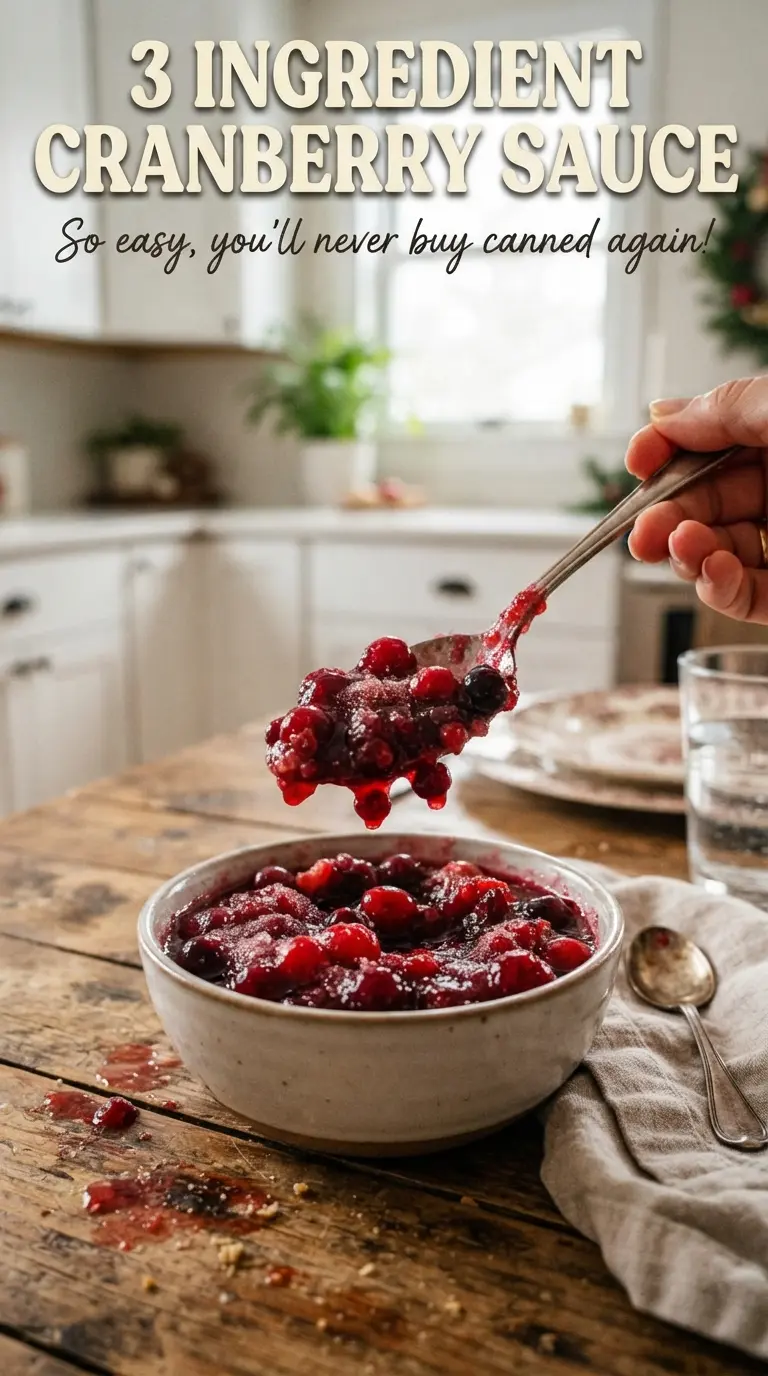
- Fresh cranberries — These do the heavy lifting. They burst as they cook and bring both tartness and natural pectin, which is what gives the sauce its set. Frozen cranberries also work straight from the freezer, so there’s no need to thaw them first.
- Granulated sugar — Sugar balances the tart berries and helps the syrup thicken into that shiny finish. You can cut it slightly if you like a sharper sauce, but don’t reduce it too much or the sauce can turn thin and aggressively tart.
- Water — The water is just enough to dissolve the sugar and start the cook without burning the berries. Using juice instead of water adds flavor, but it also changes the sweetness level and can make the sauce taste heavier, so water is the cleanest choice here.
The 20 Minutes That Turn Berries Into Sauce
Dissolving the syrup base
Start by bringing the sugar and water to a full boil in a saucepan, stirring until the grains disappear completely. The liquid should look clear, not cloudy or sandy. If you add the cranberries too early, the sugar can cling to the fruit unevenly and the finished sauce can taste sharp in spots and flat in others.
Cooking until the berries burst
Add the cranberries and bring the pot back to a boil, then lower the heat and let it simmer for about 10 minutes. You’ll hear the berries start to pop and see the liquid deepen to a jewel-toned red. Stir occasionally so the bottom doesn’t catch, but don’t mash the berries unless you want a smoother sauce.
Cooling and setting
Take the pan off the heat as soon as most of the berries have burst and the sauce looks slightly looser than you want. It will thicken a lot as it cools, then tighten again in the refrigerator. If it seems thin while warm, that’s normal; the mistake is cooking it down until it looks finished in the pan, because it can turn too dense once chilled.
How to Adjust It When You Want a Different Kind of Cranberry Sauce
Make it less sweet and more tart
Use 3/4 cup sugar instead of a full cup. The sauce will taste brighter and sharper, but it will still set because the cranberries are doing the thickening work. Go lower than that and the balance gets harsh, especially after chilling.
Use frozen cranberries
Frozen cranberries go straight into the pot with no thawing needed. Add them exactly the way you would fresh berries, and expect the mixture to take a minute or two longer to come back to a boil. The texture and flavor stay right on target.
Make it ahead for a holiday meal
This sauce is one of the easiest sides to make early. Cook it, cool it completely, and refrigerate it until you’re ready to serve. The flavor gets even better after a day in the fridge, and the texture settles into that ideal jammy consistency.
Storage and Reheating
- Refrigerator: Store in an airtight container for up to 10 days. It thickens as it sits, so don’t panic if it looks firmer the next day.
- Freezer: It freezes well for up to 2 months. Thaw it overnight in the refrigerator and stir after thawing to bring the texture back together.
- Reheating: Cranberry sauce is usually best served cold or at room temperature. If you want it warm, heat it gently over low heat just until loosened. High heat can make it reduce too far and taste sticky instead of bright.
Answers to the Questions Worth Asking
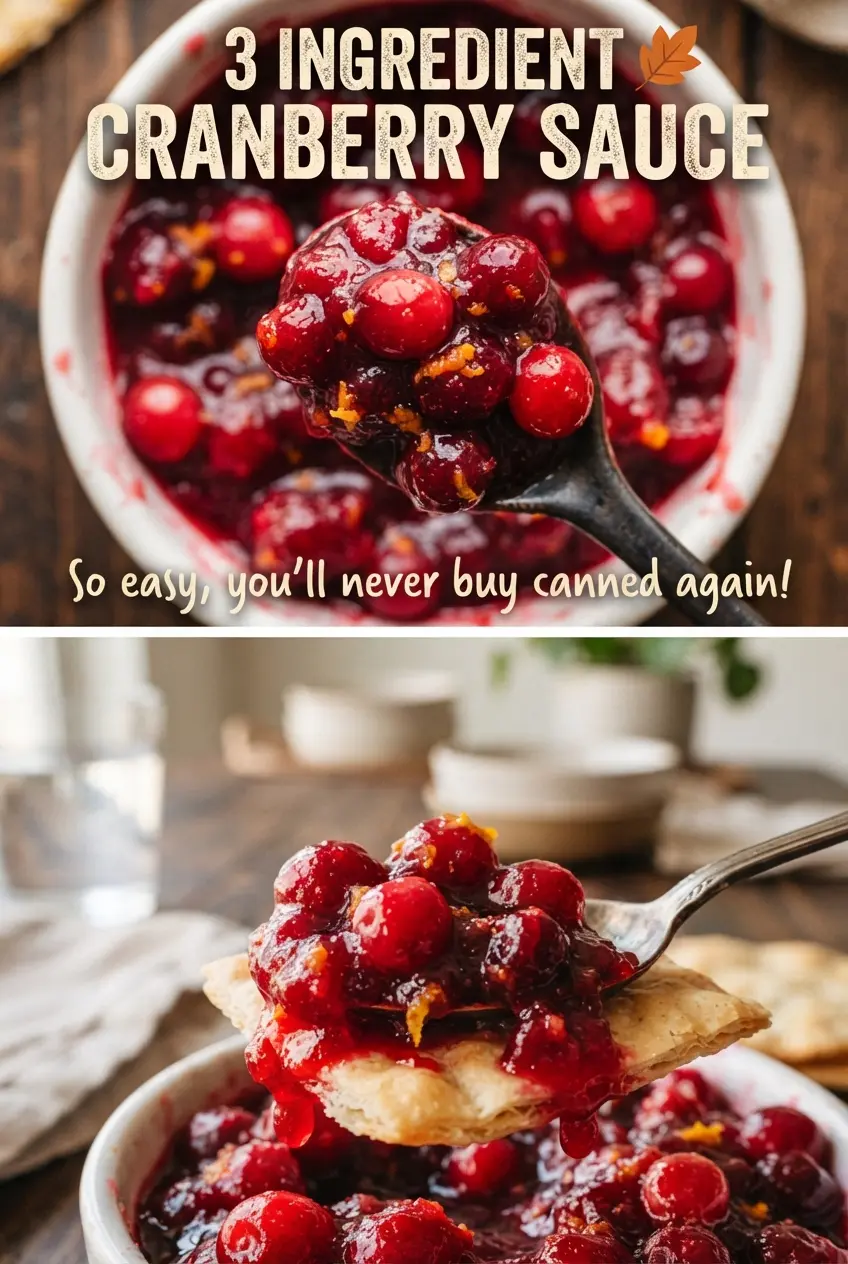
3 Ingredient Cranberry Sauce
Ingredients
Equipment
Method
- In a saucepan, bring the water and granulated sugar to a boil over medium-high heat, stirring until the sugar dissolves and the mixture looks clear.
- Add the fresh cranberries and return to a boil, stirring to coat the berries as steam builds.
- Reduce heat to maintain a gentle simmer and simmer for 10 minutes, stirring occasionally, until the berries burst and the sauce thickens slightly.
- Remove the saucepan from the heat and cool completely at room temperature until the sauce is no longer hot.
- Chill until serving; as it cools and rests in the refrigerator, the cranberry sauce will set to a thick, spoonable texture.