Well-seasoned taco meat should taste bold, a little saucy, and meaty enough to hold its own in a shell without turning greasy or dry. The best version clings to the beef in small crumbles, with just enough moisture left to keep every bite tender. That balance is what makes it work for tacos, burritos, nachos, and any night when dinner needs to move fast.
The trick is building flavor in layers instead of dumping seasoning on at the end. A little tomato paste deepens the color and gives the sauce something to cling to, while cumin and garlic powder round out the sharp edges of the taco seasoning. A short simmer is what turns seasoned beef into taco meat that tastes finished instead of just browned.
Below, you’ll find the timing that keeps the beef from drying out, plus a few smart swaps that help this recipe fit whatever you’ve got in the fridge.
The sauce thickened up perfectly and coated the beef instead of pooling at the bottom of the pan. I used it for tacos one night and quesadillas the next, and it held up great both times.
Save this taco meat for fast tacos, burritos, and quesadillas when you need a skillet sauce that clings to every bite.
The Part Most Taco Meat Gets Wrong: Too Wet or Too Dry
Ground beef taco meat falls apart when the pan is crowded, the fat never gets drained, or the seasoning gets added before the meat has a chance to brown. You want the beef to cook first, then season it after the surface has some color. That browning gives you the savory base that makes the final dish taste like more than spiced hamburger.
The sauce also needs a little structure. Tomato paste and a short simmer keep the seasoning from tasting dusty, and the water gives the spices time to bloom and coat the crumbles instead of sitting in a puddle. If the pan still looks soupy after a few minutes, keep simmering; if it looks dry before the meat tastes seasoned, add a splash of water and let it reduce again.
- Browned beef — This is where the flavor starts. If you stir constantly, the meat steams instead of browns, so let it sit for a minute between breaks as you crumble it.
- Tomato paste — It adds body and a deeper, cooked-in flavor. A teaspoon or two is enough to round out the seasoning without making the meat taste like chili.
- Cumin — Cumin gives the taco meat its warm, earthy backbone. Fresh cumin matters more here than in a dish with a long braise, because it has a short window to bloom in the pan.
- Cayenne — This brings heat without changing the texture. Skip it if you’re serving kids or use just a pinch if you want the taco meat mild but not flat.
How to Build the Sauce So It Clings to the Beef
Getting the Browning Right
Cook the ground beef over medium-high heat until it loses its pink color and starts to pick up some browned edges. Break it into small crumbles as it cooks, but don’t mash it into a paste; a little texture gives the taco meat a better bite. Drain off the excess fat, leaving just enough in the pan to carry the spices.
Coating the Meat in Seasoning
Stir in the water, taco seasoning, tomato paste, cumin, garlic powder, and cayenne while the pan is still hot. The mixture should look loose at first, then turn glossy as the tomato paste dissolves and the seasoning spreads through the beef. If the mixture seems grainy, keep stirring over medium-low heat until the paste fully melts into the sauce.
Letting the Sauce Tighten Up
Simmer for 3 to 5 minutes until the liquid reduces and the meat looks coated instead of wet. You want a spoon to leave a clean trail through the pan for a second before the sauce settles back in. If you cook it too long, the beef dries out fast, so pull it off the heat as soon as the sauce clings.
Final Seasoning
Taste and add salt and pepper at the end. Store-bought taco seasoning is often salty enough on its own, so the final adjustment should sharpen the flavor, not make it briny. Serve it right away while the sauce is still loose enough to spoon into shells or over rice.
What to Change When You Want It Milder, Leaner, or Stretched Further
Use ground turkey or chicken for a lighter version
Swap in lean ground turkey or chicken and add an extra tablespoon of oil if the pan looks dry. These meats don’t bring as much built-in flavor as beef, so the seasoning matters even more, and the final texture will be a little softer and less rich.
Make it gluten-free with a verified seasoning blend
Use a taco seasoning labeled gluten-free, since some blends rely on flour or anti-caking additives. The rest of the recipe stays the same, and the sauce should still reduce into a thick coating as long as the spice mix is balanced.
Stretch it with beans or cooked rice
Stir in drained black beans or a scoop of cooked rice near the end if you need the filling to feed more people. The beef flavor gets a little softer, but the mixture becomes more substantial and works well for burritos or taco bowls.
Storage and Reheating
- Refrigerator: Store in an airtight container for up to 4 days. The sauce will thicken as it chills, which is normal.
- Freezer: It freezes well for up to 3 months. Cool it fully, pack it flat in a freezer bag or freezer-safe container, and thaw in the refrigerator before reheating.
- Reheating: Warm it in a skillet over medium-low heat with a splash of water to loosen the sauce. The most common mistake is blasting it on high heat, which dries out the beef before the center is hot.
Questions I Get Asked About This Recipe
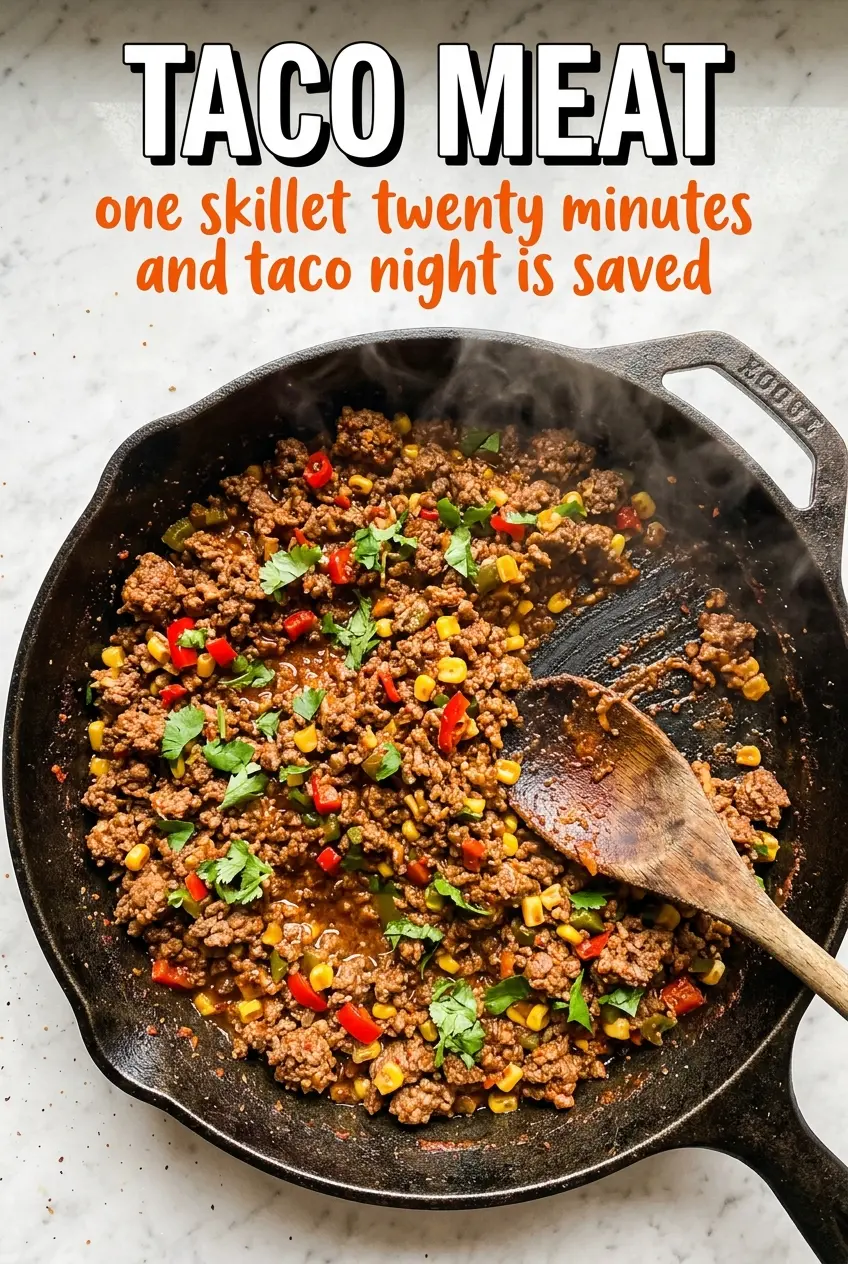
Taco Meat
Ingredients
Equipment
Method
- Brown the ground beef in a large skillet over medium-high heat, breaking it into small crumbles as it cooks, about 5-7 minutes, until no pink remains (visual cue: browned crumbles).
- Drain excess fat, leaving about 1-2 tablespoons in the skillet (visual cue: beef stays glossy but not greasy).
- Add water, taco seasoning, tomato paste, cumin, garlic powder, and cayenne pepper, then stir well to combine (visual cue: dark, thick spice mixture coats the beef).
- Simmer over medium heat for 3-5 minutes, stirring occasionally, until the sauce thickens and coats the meat (visual cue: mixture clings to the crumbles instead of looking watery).
- Season with additional salt and pepper to taste (visual cue: taste-balanced and savory, with no need for extra spices unless desired).
- Serve immediately in tacos, burritos, quesadillas, or other Mexican dishes (visual cue: sauce stays thick and coats each bite).
- Store leftovers in an airtight container in the refrigerator for up to 4 days (visual cue: beef cools to an even, spiced layer in the container).