Hobo dinner foil packets give you a full, hot meal with almost no cleanup, and the best part is how everything finishes together in its own little steam chamber. The potatoes turn tender, the carrots pick up the beef drippings, and the onions soften into the butter and seasoning so every bite tastes like it came off the same pan, even though it all cooked wrapped in foil.
The trick is slicing the potatoes and carrots thin enough that they cook in the same window as the beef. Heavy-duty foil matters here because thin foil can tear when you flip the packets or move them over the fire. I also like shaping the beef into thin patties instead of loose crumbles; that keeps the packets easy to open and gives the meat a better texture at the end.
Below you’ll find the small details that keep these packets from drying out or coming back undercooked, plus a few smart swaps if you’re cooking over a grill, at a campsite, or in the oven.
The potatoes were tender all the way through and the butter kept everything from drying out. I flipped the packets halfway like you said and the beef cooked evenly without turning the veggies mushy.
Save these campfire hobo dinner foil packets for the nights when you want a full beef-and-vegetable dinner with almost no cleanup.
The Packet Error That Leaves the Potatoes Hard and the Beef Overcooked
The biggest mistake with foil packet dinners is building them like a casserole and hoping the fire sorts it out. It doesn’t. Potatoes take the longest, so if they’re cut too thick they’ll still be firm when the beef is finished, and if the beef is packed into a thick mound it can dry out before the vegetables catch up. Thin, even layers are what keep the whole packet on the same schedule.
Butter does more than add flavor here. It gives the vegetables a little fat to steam in, and that matters because foil packets cook by trapping heat and moisture. If your packets leak, the vegetables can go dry and the meat can stick to the foil, so crimp the seams tightly and leave a little air space inside for steam to circulate.
- Potatoes — Slice them about 1/4-inch thick so they soften in time. Waxy potatoes hold their shape better, but any medium potato works as long as the slices are even.
- Ground beef — A standard 80/20 blend gives you enough fat to keep the packet juicy. Leaner beef can work, but the filling will be drier and the vegetables won’t get as much flavor from the drippings.
- Heavy-duty foil — This isn’t optional for campfire cooking. Regular foil tears too easily when you flip the packets or move them from the grate.
What Each Ingredient Is Actually Doing in These Foil Packets
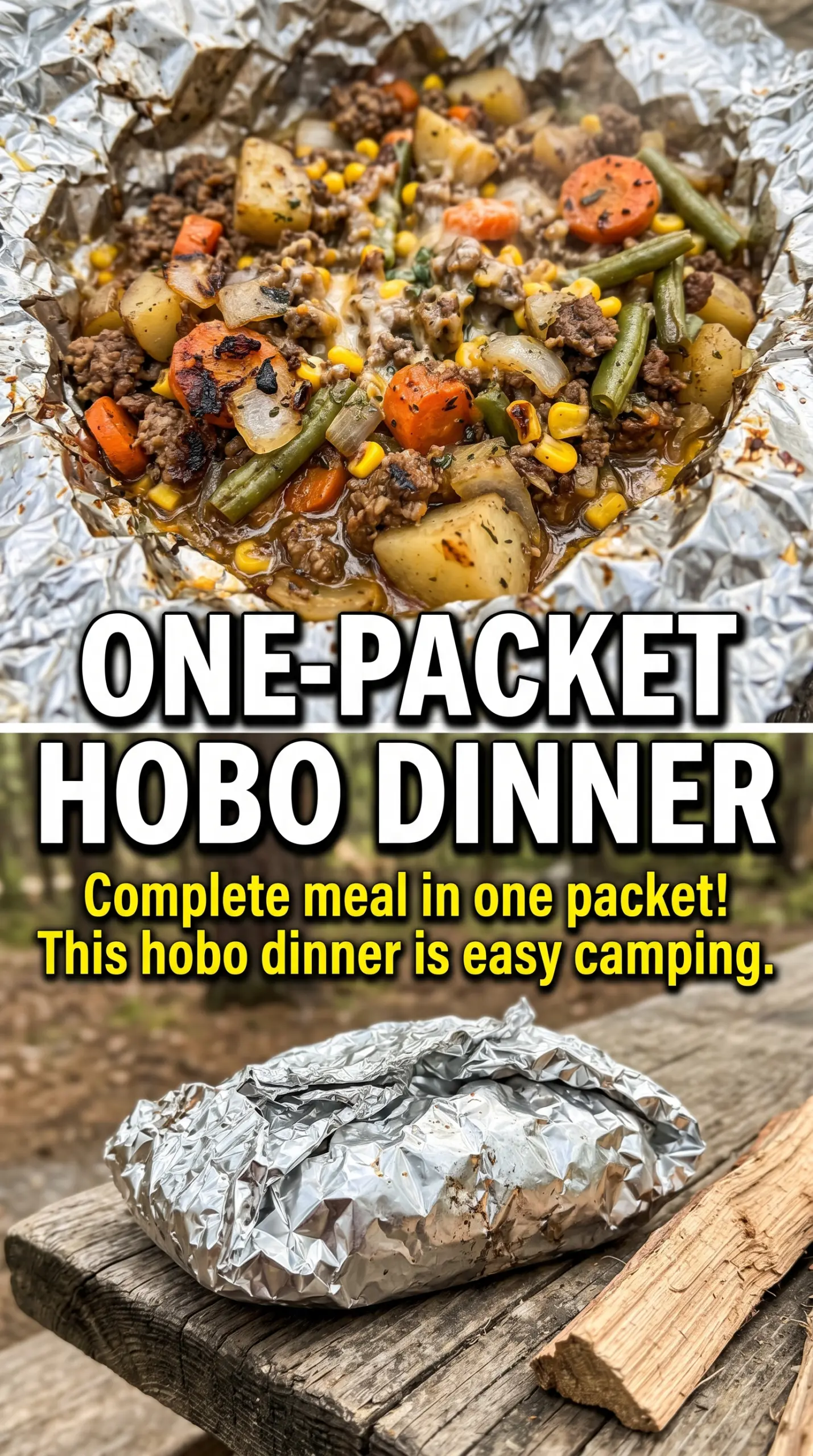
- Ground beef — Forms the main protein and seasons the vegetables as it cooks. Shape it thin so it cooks through at the same rate as the potatoes and carrots.
- Potatoes — These carry the meal and give it substance. Slice them evenly so they don’t lag behind the other ingredients.
- Carrots — Add sweetness that balances the beef and onion. Thin slices work best; thick chunks stay firm.
- Onion — Softens into the butter and adds savory depth. If you want a milder result, slice it a little thicker so it doesn’t melt away completely.
- Butter — Helps conduct heat and keeps the packet from tasting flat. If you use less, the vegetables will still cook, but the finished packet will feel leaner and less rich.
Building the Packet So Everything Finishes at the Same Time
Lay Out the Vegetables First
Start each packet with the potatoes, then carrots, then onions. That order puts the densest vegetables closest to the heat and gives the onions a chance to perfume the whole packet as they soften. Keep the pile centered so there’s room to fold the foil over without crushing the contents flat.
Shape the Beef Into Thin Patties
Press each portion of beef into a thin patty instead of dropping it in loose. Thin patties cook more evenly and are easier to check for doneness without tearing the packet apart. If the patties are thick, the outside can overcook before the center is no longer pink.
Seal, Flip, and Watch the Steam
Fold the foil tightly and crimp the edges well, but don’t wrap the packets so tightly that the foil presses directly into the food. A little space lets steam move around and cook the vegetables. Flip the packets halfway through cooking so the heat distribution stays even, then open them carefully because the burst of steam is strong when they come off the fire.
Rest Before Opening Fully
Let the packets sit for about 5 minutes before serving. That short rest lets the juices settle and keeps the potatoes from falling apart when you open the foil. If the beef needs another minute or two, close the packet back up and return it to the heat instead of trying to rescue it after it’s already torn open.
How to Adapt These Foil Packets for the Grill, Oven, or a Different Diet
Grill Instead of Campfire
Set the packets over medium heat on a grill and cook them the same way, flipping once halfway through. You get a steadier heat source than open coals, which makes this the easiest option if you want the same result at home. Keep the packets off direct blazing flames or the foil can scorch before the vegetables soften.
Oven-Baked Version
Bake the sealed packets on a sheet pan at 400°F until the potatoes are tender and the beef is cooked through. This version is great when the weather doesn’t cooperate, and it gives you almost the same steam-cooked texture without babysitting a fire.
Dairy-Free Packet
Swap the butter for olive oil or a plant-based butter. You lose a little of that classic campfire richness, but the vegetables still soften nicely and the packets stay moist. Olive oil gives a cleaner, lighter finish; plant-based butter keeps the familiar buttery taste.
Make It with Ground Turkey
Ground turkey works, but it needs the butter more than beef does because it doesn’t bring much fat of its own. Add a little extra seasoning, since turkey is milder and can taste flat without it. The texture will be a touch leaner, but the packet still cooks up neatly.
Storage and Reheating
- Refrigerator: Store leftovers in an airtight container for up to 3 days. The potatoes soften a little more as they sit, but the flavor holds up well.
- Freezer: You can freeze the cooked filling, but the potatoes may turn grainy after thawing. If you’re making these ahead, it’s better to freeze the raw assembled packets and cook them straight from frozen with extra time.
- Reheating: Reheat covered in a 350°F oven or in a skillet with a splash of water until hot. The biggest mistake is blasting them in the microwave, which can make the beef rubbery and the potatoes dry at the edges.
Answers to the Questions Worth Asking
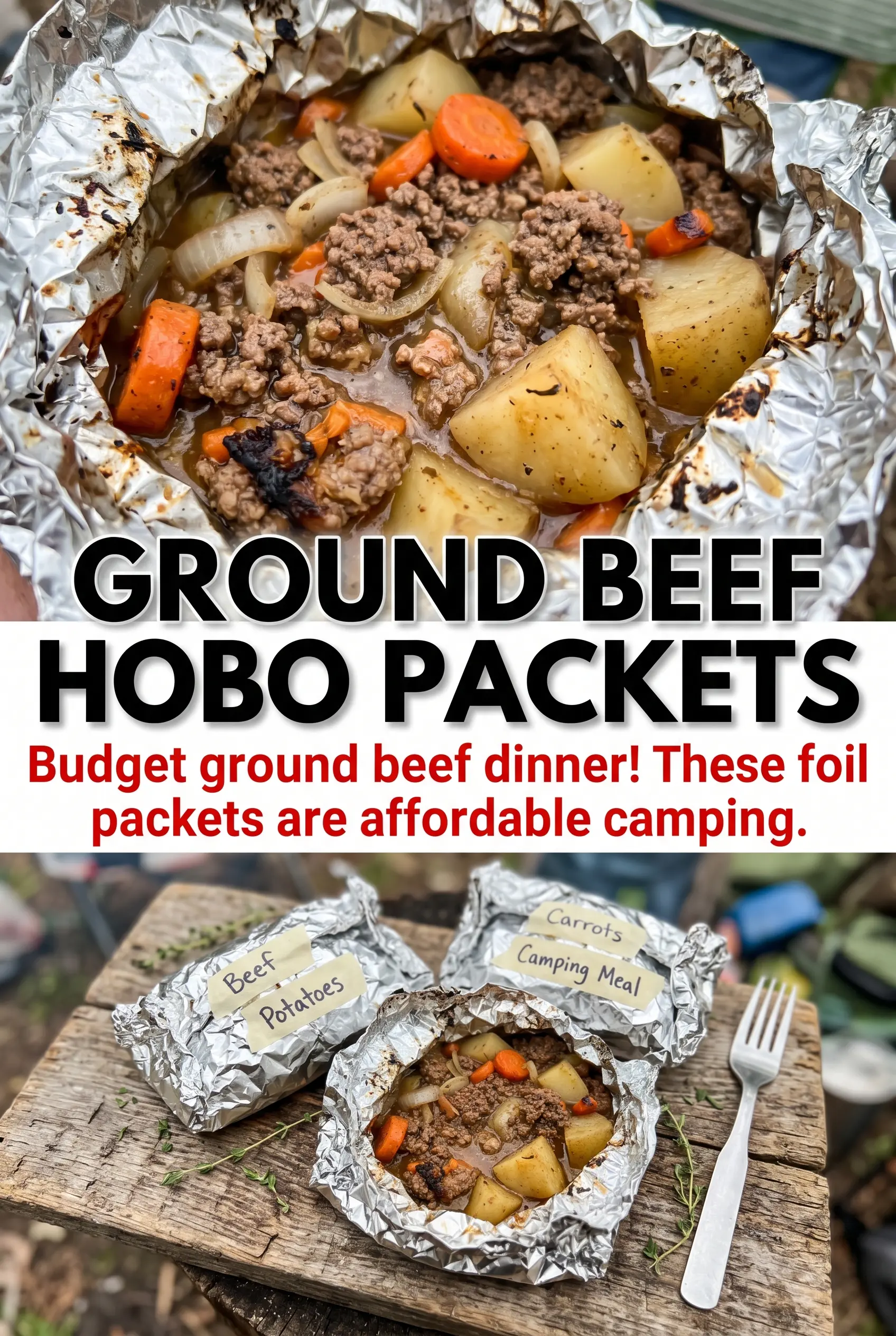
Hobo Dinner Foil Packets
Ingredients
Equipment
Method
- Divide the ground beef into 4 portions and shape each into a thin patty.
- Lay out 4 sheets of heavy-duty aluminum foil and layer sliced potatoes, then carrots, then onions on each sheet.
- Place one beef patty on top of the vegetables in each packet and season with salt, pepper, and garlic powder.
- Add 1 tablespoon butter on top of each packet.
- Fold the foil into sealed packets, crimping the edges tightly so no steam escapes.
- Place packets on a campfire grate over medium heat and cook for 25-30 minutes, with a flip halfway through.
- Look for a lively steam release when you open one packet at the end of cooking time and check that the beef is cooked through and the vegetables are tender.
- Carefully open the packets (watch for steam) and serve directly from the foil after letting them cool for 5 minutes.