These campfire baked beans come out smoky, sweet, and thick enough to cling to a spoon. The bacon gives them a salty backbone, the barbecue sauce pulls everything toward that deep, sticky finish, and the onions soften into the pot until the whole thing tastes like it’s been simmering all day, not just half an hour.
What makes this version work is the balance. Canned baked beans give you the right base texture without starting from scratch, while a little brown sugar, ketchup, mustard, and Worcestershire build that classic backyard bean flavor fast. Cooking them uncovered matters here. That’s how the sauce reduces instead of staying thin and soupy.
Below, I’ve included the one simmering cue that tells you the beans are done, plus a few easy swaps if you’re making these at a campsite, on a grill, or alongside a backyard barbecue.
The beans thickened up beautifully over the fire and the bacon stayed crisp enough to taste in every bite. I kept sneaking spoonfuls before dinner because the sauce was that good.
Campfire baked beans with bacon are sticky, smoky, and built for the next backyard cookout.
The Part That Keeps Campfire Beans Thick Instead of Soupy
The biggest mistake with baked beans over a fire is rushing the simmer. A campfire throws heat unevenly, so the beans may look done at the edges while the center is still thin. Keep them uncovered and stir often enough to keep the sugars from catching on the bottom of the Dutch oven. That slow reduction is what turns the sauce glossy and spoon-coating.
Bacon matters here for more than flavor. The rendered fat helps carry the onion and barbecue sauce through the beans, and the salty smoke keeps the final dish from tasting one-note sweet. If your fire is hot, move the pot to a cooler spot on the grate once it starts bubbling. A hard boil will tighten the sauce too fast and can scorch the sugars before the beans have time to thicken evenly.
What Each Ingredient Is Actually Doing in the Pot
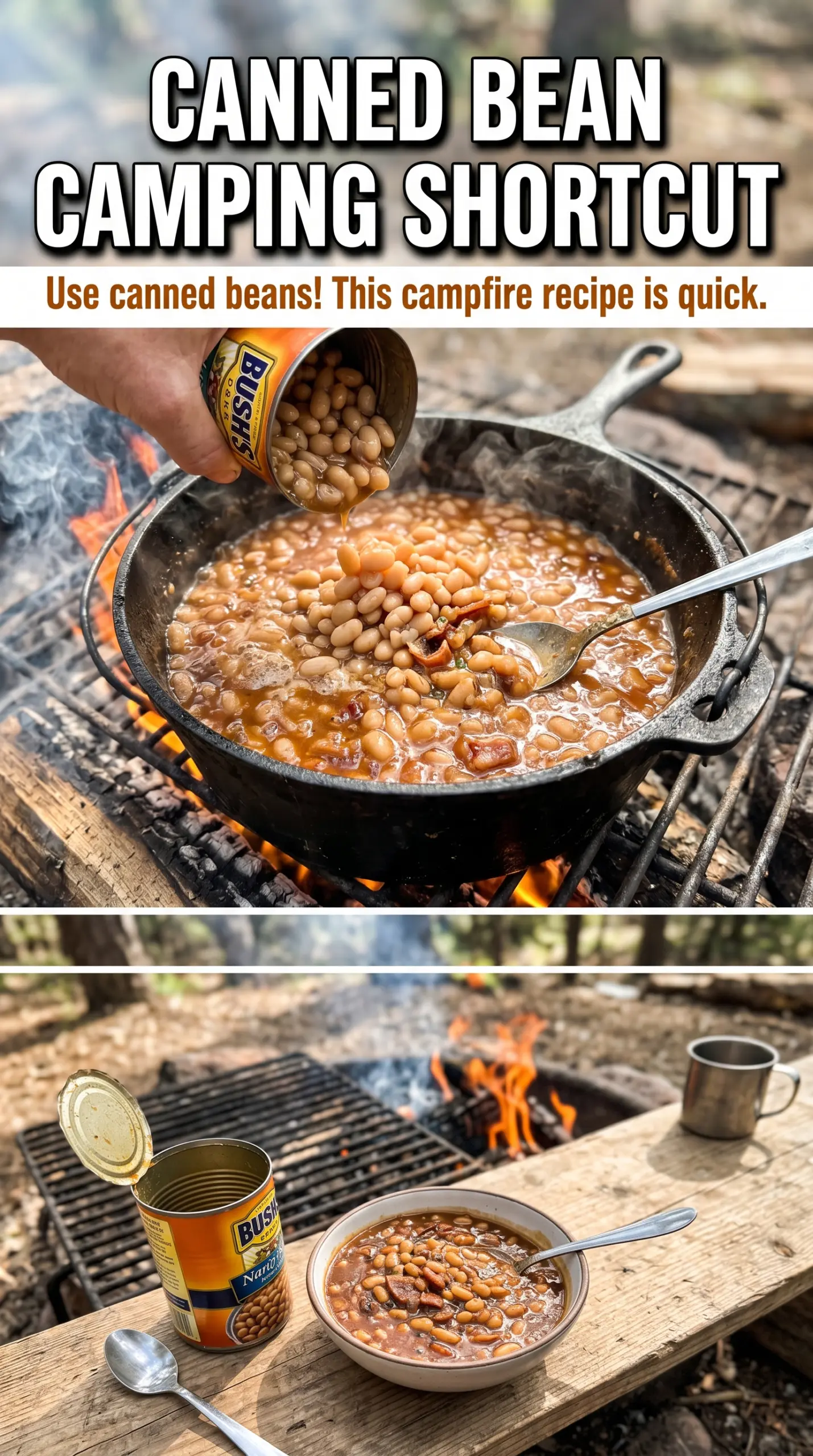
- Baked beans — Canned baked beans give you the right soft texture and built-in sauce base. They save time and hold up well over heat, which makes them ideal for campfire cooking.
- Bacon — Cook it first and crumble it before it goes in. If you add raw bacon straight to the pot, it can leave the beans greasy and won’t give you those crisp little salty bites scattered through the dish.
- BBQ sauce — This is where the smoky, molasses-rich depth comes from. Use a sauce you like on its own, because its flavor stays front and center after the beans reduce.
- Brown sugar — It deepens the sweetness and helps the sauce thicken as it cooks. Dark brown sugar gives a heavier molasses note; light brown sugar keeps the flavor a little cleaner.
- Mustard and Worcestershire sauce — These are the balancing ingredients. They cut through the sweetness and make the beans taste more like a finished side dish than just warmed canned beans.
- Onion — Diced onion softens into the sauce and gives the beans a little bite. Dice it small so it cooks through in the short simmer time.
Getting the Beans Bubbling Without Burning the Bottom
Building the Pot Base
Start by combining everything in a Dutch oven or heavy pot, then stir until the sugar is mostly dissolved and the beans are evenly coated. A thin, lightweight pan heats too fast over fire and makes scorching more likely, especially once the sugars start concentrating. The mixture should look loose at first; it tightens as it heats.
Working the Campfire Heat
Bring the pot to a simmer over steady heat, not a rolling boil. You want lazy bubbles breaking across the surface, not aggressive bubbling around the edges only. If the fire is roaring, move the pot higher or off to the side. Uneven heat is the fastest way to end up with burnt spots and undercooked onion.
Reducing Until Glossy
Let the beans cook uncovered for 25 to 30 minutes, stirring occasionally and scraping the bottom as you go. The sauce should go from loose and shiny to thicker and syrupy, with bubbles that pop slowly instead of quickly. If it still looks watery at the end, give it a few more minutes. Pulling them too early leaves you with canned beans in flavored liquid instead of a proper side dish.
Serving Hot From the Pot
Take the beans off the heat and let them settle for a few minutes before serving. They thicken a little as they cool, which is exactly what you want. Spoon them while they’re still hot so the sauce stays glossy and the bacon flavor comes through in every bite.
How to Adjust These Beans for the Grill, the Pantry, or a Crowd
Make Them Smokier on the Grill
Set the Dutch oven on indirect heat or the cooler side of the grill. You’ll get a slower reduction and a deeper smoky finish without scorching the sugars, which can happen if the pot sits directly over high flames.
Skip the Bacon for a Vegetarian Version
Leave out the bacon and add a pinch of smoked paprika plus a little extra salt. You lose the salty meatiness, but you keep the smoky profile and the sauce still thickens the same way.
Use Turkey Bacon or No Pork at All
Turkey bacon works if that’s what you have, but it won’t render as much fat or bring the same smoky depth. Add a spoonful of oil when you combine the ingredients so the onions and seasonings still have something to bloom in.
Stretch It for a Bigger Crowd
Double the recipe in a larger Dutch oven, but keep the simmer gentle and add a few extra minutes at the end. A fuller pot takes longer to reduce, and crowded beans can look done on top while the liquid underneath is still thin.
Storage and Reheating
- Refrigerator: Store leftovers in a covered container for up to 4 days. The sauce will thicken as it chills.
- Freezer: These freeze well for up to 2 months. Cool completely first and freeze in a sealed container with a little headspace.
- Reheating: Warm gently on the stove over low heat with a splash of water if needed. High heat can make the sugars stick and scorch before the beans loosen back up.
Answers to the Questions Worth Asking

Campfire Baked Beans
Ingredients
Equipment
Method
- Add the baked beans, bacon, BBQ sauce, brown sugar, ketchup, onion, mustard, and Worcestershire sauce to a Dutch oven or large pot and stir to combine until evenly coated.
- Place the Dutch oven over the campfire and bring to a simmer, keeping it at a steady bubbling level; use a wooden spoon to stir occasionally.
- Cook uncovered for 25-30 minutes at a gentle simmer, stirring occasionally, until the beans are thickened and visibly bubbly around the edges.
- Serve hot as a side dish once the sauce looks thick and glossy with active bubbling.