Citrus-marinated chicken like this earns a permanent spot in the dinner rotation because it hits that sweet spot between bright, smoky, and just a little sticky at the edges. The grill gives it char, the marinade keeps the meat juicy, and the final garnish of lime and cilantro wakes everything up right at the end.
What makes this version work is the balance in the marinade. Key lime brings the sharp, floral tang, orange juice softens it, honey helps the surface caramelize, and garlic plus cumin keep it from tasting one-note. That mix gives you chicken that tastes layered instead of just lemony or sweet.
Below, I’m walking through the part that matters most: how long to marinate, what heat to use on the grill, and how to avoid drying out the chicken before the outside has a chance to pick up color. If you’ve ever had grilled chicken turn out bland or stringy, this is the version that fixes that.
The chicken stayed incredibly juicy, and the citrus marinade gave it a clean, bright flavor that didn’t burn on the grill. I loved the little bit of char with the Key lime glaze at the end.
Save this Key West Grilled Chicken for the nights when you want citrusy grilled chicken with real char and a bright Key lime finish.
The Marinade Needs Time, But Not Forever
The biggest mistake with citrus-marinated chicken is leaving it in the marinade too long and expecting better flavor. Acid works fast. After a few hours, it seasons the meat and starts to change the texture in a good way; push it much farther and the surface can get mealy instead of tender. For this recipe, 2 to 6 hours is the sweet spot.
Grill heat matters just as much. You want medium-high heat so the sugars in the honey can caramelize and the chicken can pick up char without burning the outside before the center cooks through. If the grill is too hot, the marinade will darken before the chicken is done, and that bitter edge shows up fast.
What Each Ingredient Is Actually Doing In This Dish

- Key lime juice — This is the bright, signature note. It’s sharper and more floral than bottled lime juice, but regular lime works well if that’s what you have. Fresh juice matters here because the marinade is built on citrus, not hidden under a pile of spices.
- Orange juice — This softens the lime and helps the marinade taste round instead of aggressively tart. Fresh-squeezed orange juice is best, but a good-quality store-bought juice is fine as long as it isn’t loaded with pulp-heavy extras that muddy the glaze.
- Honey — Honey gives the chicken that lightly sticky finish and helps the grill marks deepen without needing a sauce later. Maple syrup can stand in, but it shifts the flavor away from the Florida-Caribbean feel and browns a little differently.
- Olive oil — This carries the garlic and spices across the chicken and helps the surface brown instead of drying out. You don’t need anything fancy, just a clean-tasting oil.
- Garlic and cumin — These keep the marinade from tasting like straight citrus. Garlic brings depth, and cumin adds a warm, earthy note that makes the chicken taste grilled even before it hits the flames.
Getting Char Without Drying Out the Chicken
Mix the Marinade Until the Honey Disappears
Whisk the lime juice, orange juice, olive oil, garlic, honey, cumin, salt, and pepper until the mixture looks smooth and the honey is fully dissolved. If the honey stays streaky, it tends to cling in one spot and unevenly brown on the grill. The marinade should smell bright first and savory second.
Let the Chicken Absorb Flavor, Not Sit Forever
Add the chicken pieces and turn them until every surface is coated. Cover and refrigerate for 2 to 6 hours. If you’re using boneless pieces, stay closer to the lower end; if you’re using bone-in chicken, the longer end gives the seasoning a little more time to work in.
Grill Hot Enough to Mark, Gentle Enough to Cook Through
Place the chicken over medium-high heat and leave it alone long enough to pick up good grill marks before turning. If it sticks hard, it’s not ready to flip yet. Cook until the thickest part reaches 165°F, then pull it off right away; overcooked chicken loses the juice that the marinade worked to protect.
Rest Before You Slice
Let the chicken rest for about 5 minutes before serving. That short pause keeps the juices from flooding out the second you cut into it. Finish with cilantro and lime wedges so the fresh citrus hits after the smoky grill flavor instead of getting cooked off early.
How to Adapt This for Different Chicken Cuts and Dietary Needs
Bone-in chicken pieces
Bone-in thighs or drumsticks work well if you want a little more flavor and a slightly juicier result. They need longer on the grill than boneless pieces, so cook by temperature, not by the clock, and give the skin or outside time to brown without rushing the heat.
Boneless, skinless chicken breasts
Breasts cook faster and dry out faster, so pound them to an even thickness before marinating. That one move keeps the thin end from drying out before the thick end catches up, and it gives you cleaner grill marks across the whole piece.
Dairy-free and gluten-free as written
This recipe already fits both diets without changes, which is one reason it’s so easy to serve a mixed group. Just check any packaged seasoning or honey substitute you might swap in, since that’s where hidden additives usually show up.
No Key limes on hand
Regular lime juice gives you almost the same structure, just a slightly less floral finish. If you want to mimic the sharper Key lime edge, add a little extra zest from the lime before marinating so the citrus aroma comes through more strongly.
Storage and Reheating
- Refrigerator: Store leftovers in an airtight container for up to 4 days. The citrus flavor stays bright, but the outside softens a little after chilling.
- Freezer: Cooked chicken freezes well for up to 2 months. Slice it first, then wrap tightly so it thaws evenly and doesn’t dry out in big frozen pieces.
- Reheating: Reheat gently in a covered skillet over low heat with a splash of water or chicken broth. High heat is the mistake here; it tightens the meat and wipes out the juiciness you worked for on the grill.
The Questions That Come Up Before This Hits the Grill
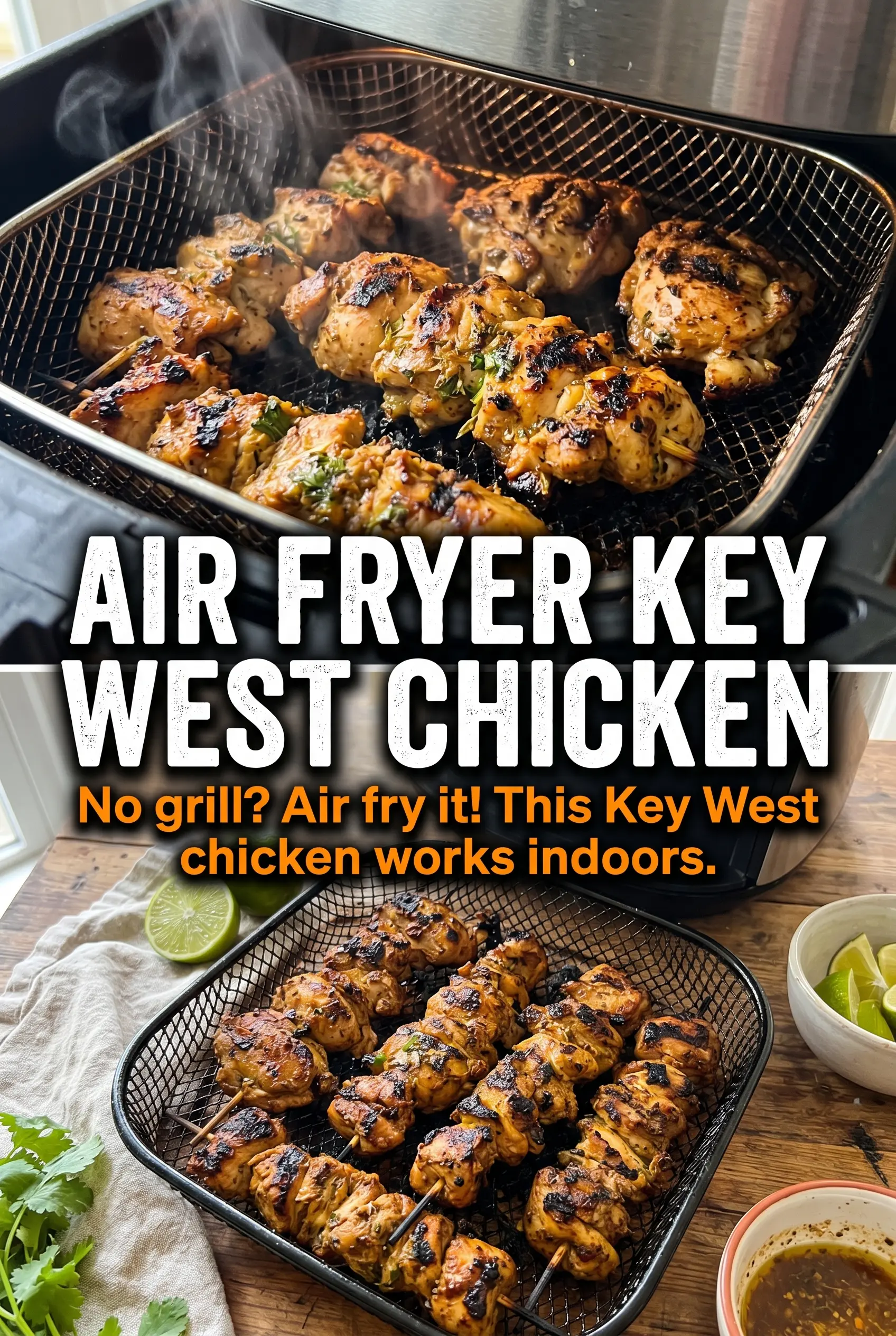
Key West Grilled Chicken
Ingredients
Equipment
Method
- Whisk together Key lime juice, orange juice, olive oil, garlic, honey, cumin, salt, and pepper until evenly combined and glossy.
- Check for seasoning and adjust salt and pepper to taste so the marinade is bright and well-balanced.
- Add chicken pieces to a sealable container and pour marinade over, coating all sides.
- Refrigerate to marinate for 2-6 hours, turning the chicken once halfway through, until the surface looks lightly glazed.
- Preheat the grill to medium-high heat, about 400–450°F, until you get steady heat across the grates.
- Place chicken on the grill and cook until internal temperature reaches 165°F, 8–12 minutes per side depending on thickness, with visible char developing.
- After reaching 165°F, move chicken to a clean platter and keep it loosely covered so it doesn’t dry out.
- Rest chicken for 5 minutes so juices redistribute, then slice or serve as pieces.
- Garnish with fresh cilantro and lime wedges, finishing with extra squeeze of citrus right before serving.