Crack Chicken Foil Packets come off the heat with tender chicken, smoky bacon, and a creamy ranch-cheddar sauce that melts right into every bite. The foil does the hard part here: it traps steam, keeps the chicken juicy, and turns a short campfire cook into something that tastes like it took much longer.
The trick is keeping the toppings layered instead of mixed together before they hit the foil. The cream cheese softens slowly, the cheddar melts into the bacon, and the ranch seasoning seasons the chicken from the top down as everything heats through. Heavy-duty foil matters here too, because thin foil tears easily when you’re turning packets over a grate or opening them at the table.
Below, I’ll show you how to keep the packets sealed, when to check for doneness, and a few smart swaps if you want to make these at home, at camp, or in the oven.
The chicken stayed juicy and the bacon-cheddar topping melted into this creamy sauce that coated everything. I opened the packets at the table and everyone went quiet for a second because it smelled that good.
Save these Crack Chicken Foil Packets for a campfire dinner with melty cheddar, ranch, and bacon in every bite.
The Part That Keeps the Chicken Juicy Instead of Drying Out
Foil packets sound simple, but the difference between juicy chicken and tough chicken usually comes down to two things: the seal and the heat. If steam can escape, the chicken dries out before the center finishes cooking. If the heat is too aggressive, the outside overcooks while the inside is still catching up. Medium heat gives the packet time to create its own little oven.
This recipe also works because the toppings act like built-in protection. The bacon and cheese sit over the chicken and help insulate the top while the cream cheese melts into the juices below. That keeps the breast meat from turning stringy, which is the biggest failure point in campfire chicken.
What Each Topping Is Doing in the Packet
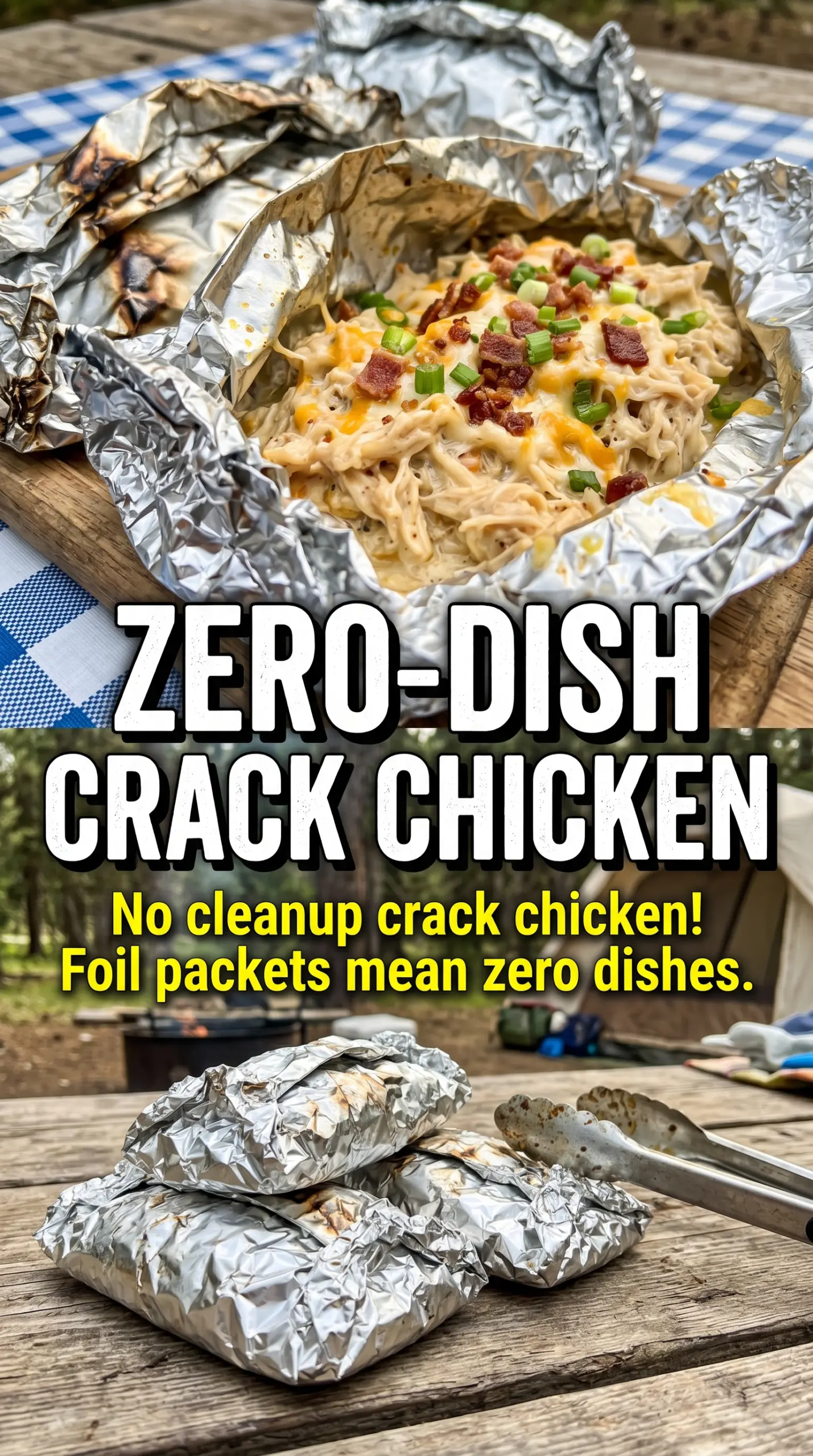
The ingredients here are doing more than just making the chicken taste good. Each one earns its place, and a good swap needs to mimic the same job, not just the same category.
- Ranch seasoning mix — This is the backbone of the flavor. It brings salt, herbs, and tang in one shot, which matters when the chicken is cooking in a sealed packet and can’t get much help from browning. If you need a homemade substitute, use a blend of dried dill, garlic powder, onion powder, parsley, and salt, but expect a slightly softer ranch flavor.
- Cream cheese — This gives the packets their creamy finish and keeps the sauce from feeling greasy. Full-fat cream cheese melts the smoothest; reduced-fat versions can separate a little more under heat. Cube it so it softens evenly instead of sitting in one cold block in the middle.
- Cheddar cheese — Sharp cheddar gives the best payoff because it stands up to the bacon and ranch. Pre-shredded cheese works fine, though freshly shredded cheese melts a little cleaner. If you swap in a milder cheese, the packet will taste richer but less punchy.
- Bacon — Cook it first. Raw bacon won’t render enough in the short cook time, and it can leave the chicken tasting flat. Crumbling it before it goes into the packet lets the fat and smoky flavor spread out instead of staying in clumps.
- Heavy-duty foil — This is one place where the better option matters. Thin foil can split when the packets are moved on and off the grate, which lets steam escape and leaves you with dry chicken. Heavy-duty foil holds the seal and makes the packets easier to handle with tongs.
How to Layer the Packets So the Cheese Melts Evenly
Building the Base
Lay each chicken breast in the center of its own foil sheet and season it evenly with ranch. The chicken should be in a single layer so it cooks at the same pace across the whole packet. If the breasts are very thick on one end, pound them lightly or split them into more even pieces before wrapping. Uneven thickness is what leaves you with one dry edge and one underdone middle.
Stacking the Toppings
Scatter the bacon, cheddar, cream cheese cubes, and green onions over the top of each breast. Keep the cream cheese pieces small and spaced apart so they melt instead of staying in cold pockets. Don’t press everything into a mashed pile; the layers need room to soften and combine as heat moves through the packet. The cheddar melts best when it sits on top of the cream cheese rather than buried under it.
Sealing and Cooking Over the Heat
Fold the foil into tight packets with the seams crimped well enough that steam can build inside without leaking out. Place them on a campfire grate over medium heat and cook for 20 to 25 minutes, then check the thickest breast for 165°F. If the fire is running hot, move the packets to a cooler edge of the grate so the bottom doesn’t scorch before the center is done. Open the packets carefully because the trapped steam is strong and will burn you fast.
How to Adapt These Foil Packets for the Oven, Dairy-Free Cooking, or a Bigger Crowd
Oven-Baked Crack Chicken Foil Packets
Bake the sealed packets on a sheet pan at 400°F for about 25 to 30 minutes, depending on thickness. The result is nearly the same as campfire cooking: juicy chicken with melted, creamy topping. Use a rimmed pan so any leaks stay contained and the packets don’t tip when you move them.
Dairy-Free Version
Use a dairy-free cream cheese and a meltable plant-based cheddar-style cheese. The texture will be a little less rich and the topping may not pool as thickly, but the ranch seasoning and bacon still carry the dish. Check the packets a few minutes early, since some dairy-free cheeses soften faster than they brown.
Making It for a Crowd
You can assemble the packets a few hours ahead and keep them chilled until cooking time. That saves a lot of mess at camp or at a cookout. Just add a few extra minutes to the cook time if the chicken goes onto the grate straight from the refrigerator.
Storage and Reheating
- Refrigerator: Store leftovers in an airtight container for up to 3 days. The sauce will thicken as it chills, which is normal.
- Freezer: These freeze, but the cream cheese texture gets a little grainy after thawing. For the best result, freeze only if you need to, and wrap the cooked chicken tightly before storing.
- Reheating: Reheat gently in a covered skillet over low heat or in a 325°F oven until hot. High heat is what splits the cheese and dries the chicken, so go slow and add a splash of water if the sauce looks tight.
Answers to the Questions Worth Asking
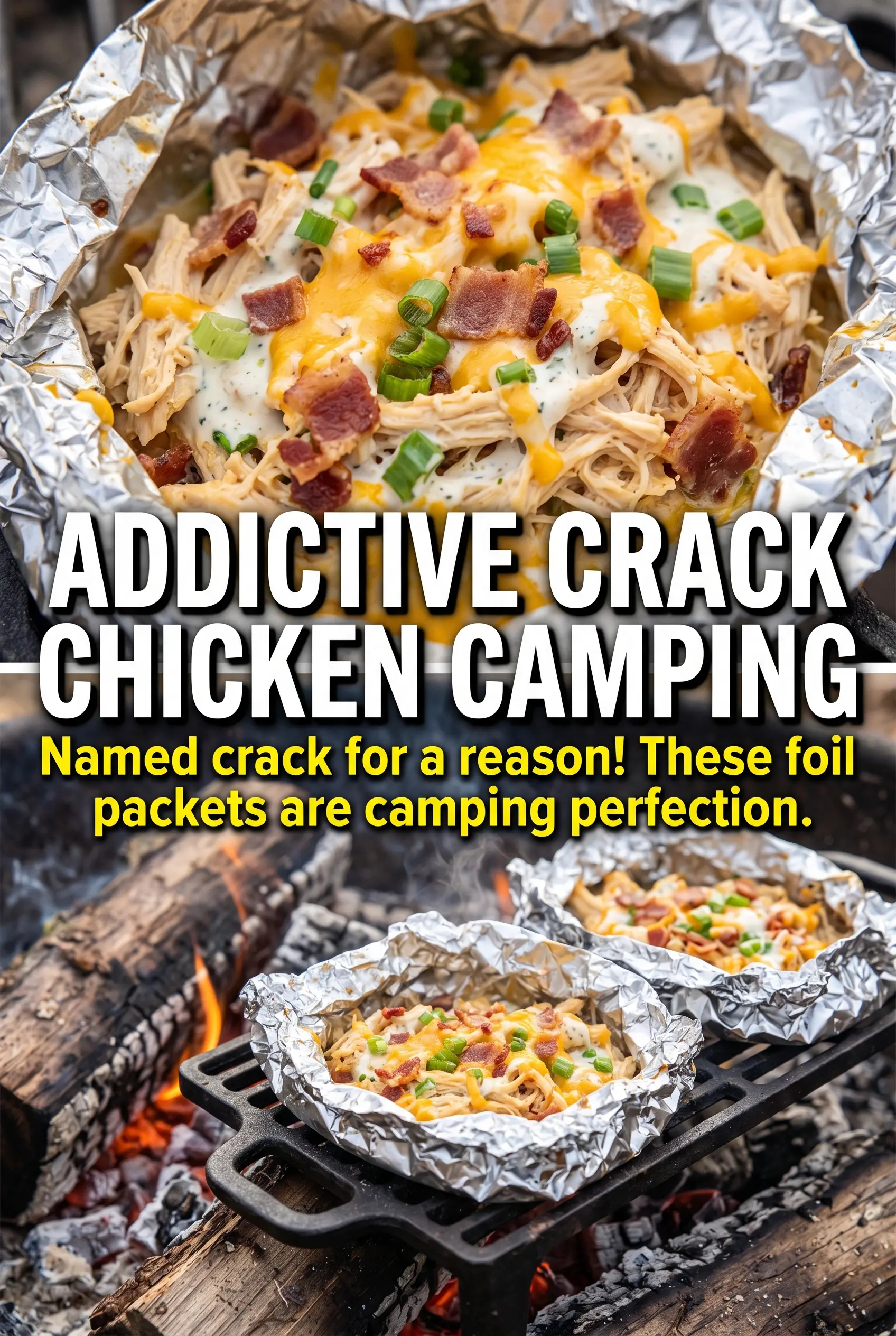
Crack Chicken Foil Packets
Ingredients
Equipment
Method
- Lay out 4 sheets of heavy-duty aluminum foil and place 1 boneless chicken breast on the center of each sheet.
- Sprinkle 1 packet ranch seasoning mix evenly over each chicken breast.
- Top each breast with crumbled bacon, shredded cheddar cheese, cubed cream cheese, and sliced green onions.
- Fold the foil up and over to make sealed packets, pressing seams closed so steam stays inside.
- Place the sealed packets on a campfire grate over medium heat for 20-25 minutes until the chicken reaches 165°F.
- Carefully open the packets and serve hot, letting the melted cheese and cream cheese coat the chicken and bacon.