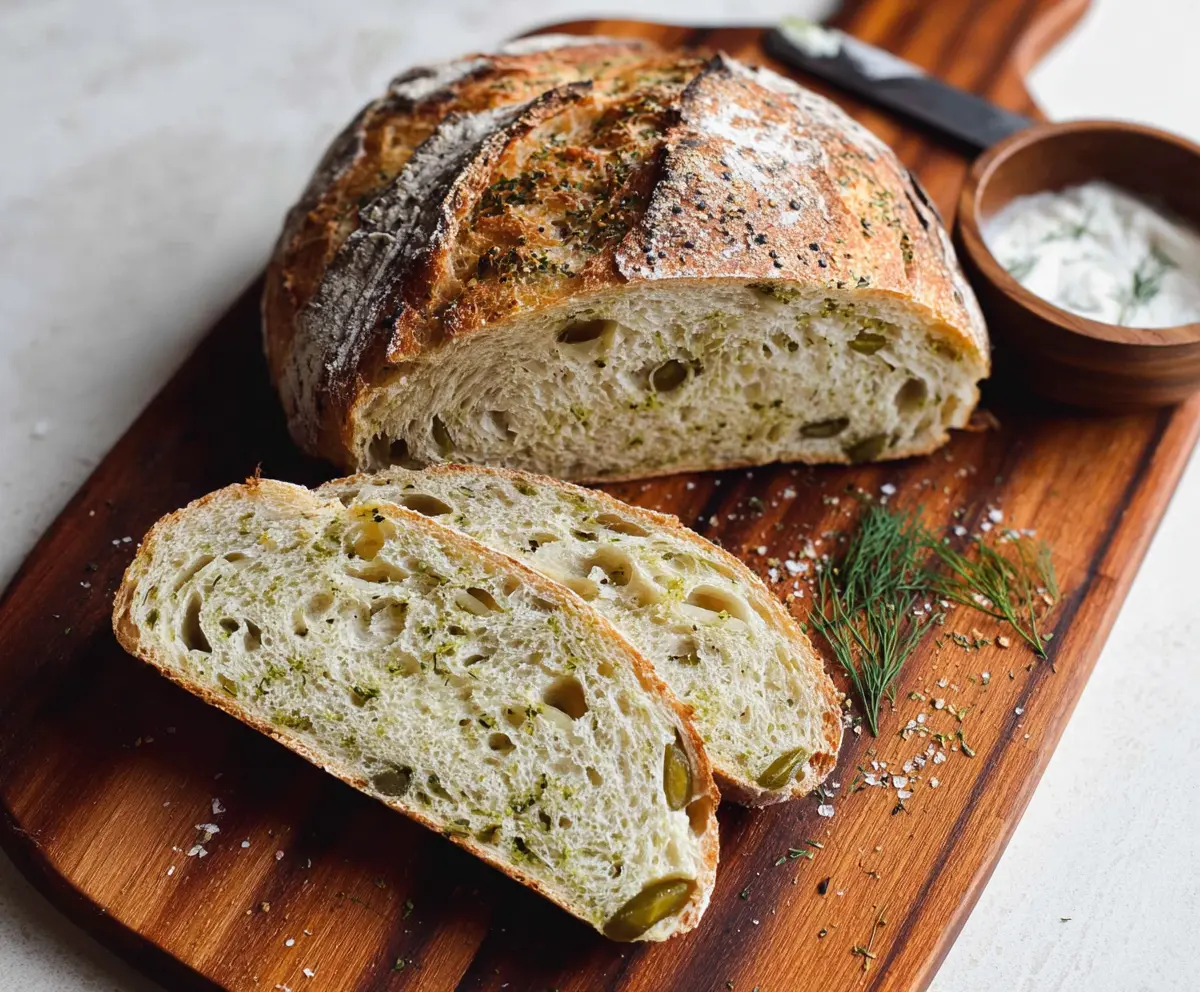
This Dill Pickle Sourdough Bread combines the tangy taste of dill pickles with soft, chewy bread. It’s a unique treat that makes perfect sandwiches or just to snack on. Yum!
I love how this bread adds a fun twist to my lunch! It’s like my pickles decided to join a bread party. I often toast it for a crunchy snack—so good!🥒🍞
Key Ingredients & Substitutions
Flour: Using all-purpose or bread flour works well here. Bread flour will give a chewier texture due to its higher protein content. If you’re looking for gluten-free options, a gluten-free all-purpose flour blend can also work, but the results may vary.
Sourdough Starter: An active and bubbly starter is key. If you don’t have one, you can use store-bought sourdough or even a small amount of yeast as a substitute, though it will change the flavor and texture a bit.
Dill Pickles: Any dill pickles you love can be used. If you’re not a fan of dill, you can substitute with sweet pickles or omit them entirely and replace them with olives for a different flavor.
Fresh Dill: Fresh dill adds brightness to the bread. If you don’t have fresh dill, dried dill works too—just use about 1 tablespoon instead of 2 tablespoons fresh.
Garlic Powder: This is optional but adds nice depth. You could use fresh minced garlic or even garlic salt (reduce regular salt if so) for a twist.
How Do You Master the Bulk Fermentation with Stretch and Folds?
Bulk fermentation is crucial for developing flavor and texture in sourdough. Here’s how you do it:
- After mixing, cover your bowl loosely to allow airflow for fermentation.
- Wait for 30 minutes before your first stretch and fold, then every 30 minutes for the first two hours.
- To stretch and fold: Wet your hand to prevent sticking, grab one side of the dough, stretch it up and fold it over to the opposite side. Do this for all four sides.
- After your 4-5 hours, the dough will become puffed and aerated. It should look smooth and feel elastic.
This technique helps develop the gluten structure, giving your bread the chewy bite and fluffy inside we all love!
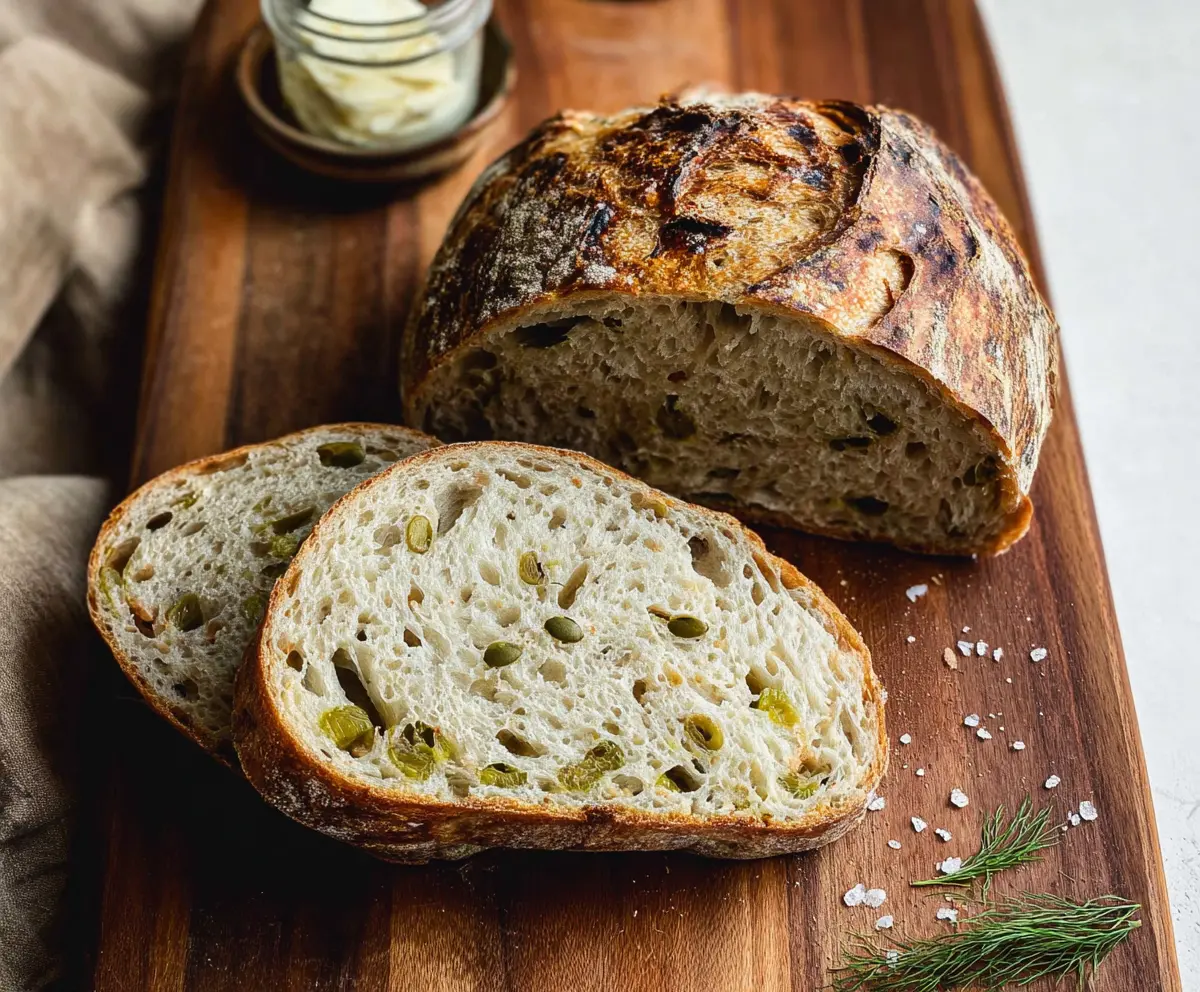
Flavorful Dill Pickle Sourdough Bread
Ingredients:
- 500g (about 4 cups) all-purpose flour or bread flour
- 350g (about 1 1/2 cups) water, lukewarm
- 100g (about 1/2 cup) active sourdough starter (fed and bubbly)
- 10g (about 2 tsp) kosher salt
- 1 cup dill pickles, chopped (drained well, reserve some pickle juice)
- 2 tbsp pickle juice (from the dill pickles)
- 2 tbsp fresh dill, chopped (or 1 tbsp dried dill)
- 1 tsp garlic powder (optional)
- Cornmeal or flour for dusting
How Much Time Will You Need?
This bread will take about 4-5 hours of hands-on time for the dough preparation and fermentation along with an overnight proof, so plan on around 12 hours total from start to finish. Enjoy the anticipation as the flavors develop overnight for a delicious homemade treat!
Step-by-Step Instructions:
1. Prepare the Dough:
In a large mixing bowl, mix the flour, lukewarm water, and your active sourdough starter. Stir everything until there are no dry bits left. Cover the bowl with a clean towel or plastic wrap and let it rest for 30 minutes. This step helps the flour absorb the water and start the fermentation process.
2. Add Salt and Flavorings:
After the dough has rested, sprinkle the salt over the top. Add the pickle juice, chopped dill pickles, fresh dill, and garlic powder if you’d like. Gently mix these ingredients into the dough until everything is evenly distributed. This is where your bread gets its flavorful kick!
3. Bulk Fermentation with Stretch and Folds:
Cover the bowl loosely and let the dough sit at room temperature for about 4-5 hours. During this time, perform 3-4 sets of stretch and folds every 30 minutes for the first two hours. To do this, wet your hand to prevent sticking, grab one side of the dough, stretch it up, and fold it over to the opposite side. Repeat this around the dough. This helps build gluten and gives your bread a nice structure!
4. Shape the Dough:
Once your bulk fermentation is finished, turn the dough out onto a lightly floured surface. Gently shape the dough into a round or oval loaf, taking care not to deflate it too much. Place it seam side up into a floured banneton or a bowl lined with a clean kitchen towel dusted with flour.
5. Proof the Dough:
Cover the dough and place it in the fridge for an overnight proof (8-12 hours). This slow fermentation enhances the flavor of the bread and makes it much easier to handle.
6. Preheat the Oven:
About 45 minutes before you plan to bake the bread, preheat your oven to 230°C (450°F). Place a Dutch oven or baking stone inside to heat up, which helps create a nice crust!
7. Score and Bake the Bread:
When you’re ready to bake, turn the dough out onto a piece of parchment paper. Use a sharp knife or a razor blade to score the top of the loaf (this allows it to expand while baking). Carefully transfer the dough (with the parchment) into the preheated Dutch oven or onto the baking stone. If using a Dutch oven, cover it with the lid.
8. Bake:
Bake the bread covered for 20 minutes. Then, remove the lid and continue baking for another 20-25 minutes until the loaf is deep golden and the crust is crisp.
9. Cool Down:
Once baked, carefully remove the bread and let it cool on a wire rack for at least 1 hour before slicing. This helps the crumb set properly!
10. Serve:
Slice the sourdough and spread with butter or cream cheese, or use it for delicious sandwiches. Enjoy the delightful combination of dill and pickles with every bite!
This Dill Pickle Sourdough Bread has a beautifully crunchy crust, a chewy inside, and tasty bits of dill pickles—perfect for sandwiches or just snacking!
Can I Use Store-Bought Sourdough Starter?
Absolutely! If you don’t have a homemade sourdough starter, store-bought options work just fine. Just make sure it’s active and bubbly for the best results.
How Do I Store Leftover Bread?
Once your bread has cooled completely, store it in a paper bag or wrapped in a clean kitchen towel at room temperature for up to 3 days. For longer storage, slice and freeze it in a resealable freezer bag to keep it fresh for up to 3 months.
Can I Substitute Different Herbs?
Yes! If dill isn’t your favorite, feel free to switch it out for other herbs like chives or thyme. Just remember to adjust the quantity based on the intensity of the flavors you prefer!
What If My Dough Is Too Sticky?
If your dough feels too sticky while shaping, sprinkle a bit of flour on your work surface and your hands to help manage it. However, be cautious not to add too much flour, as it can affect the dough’s texture.