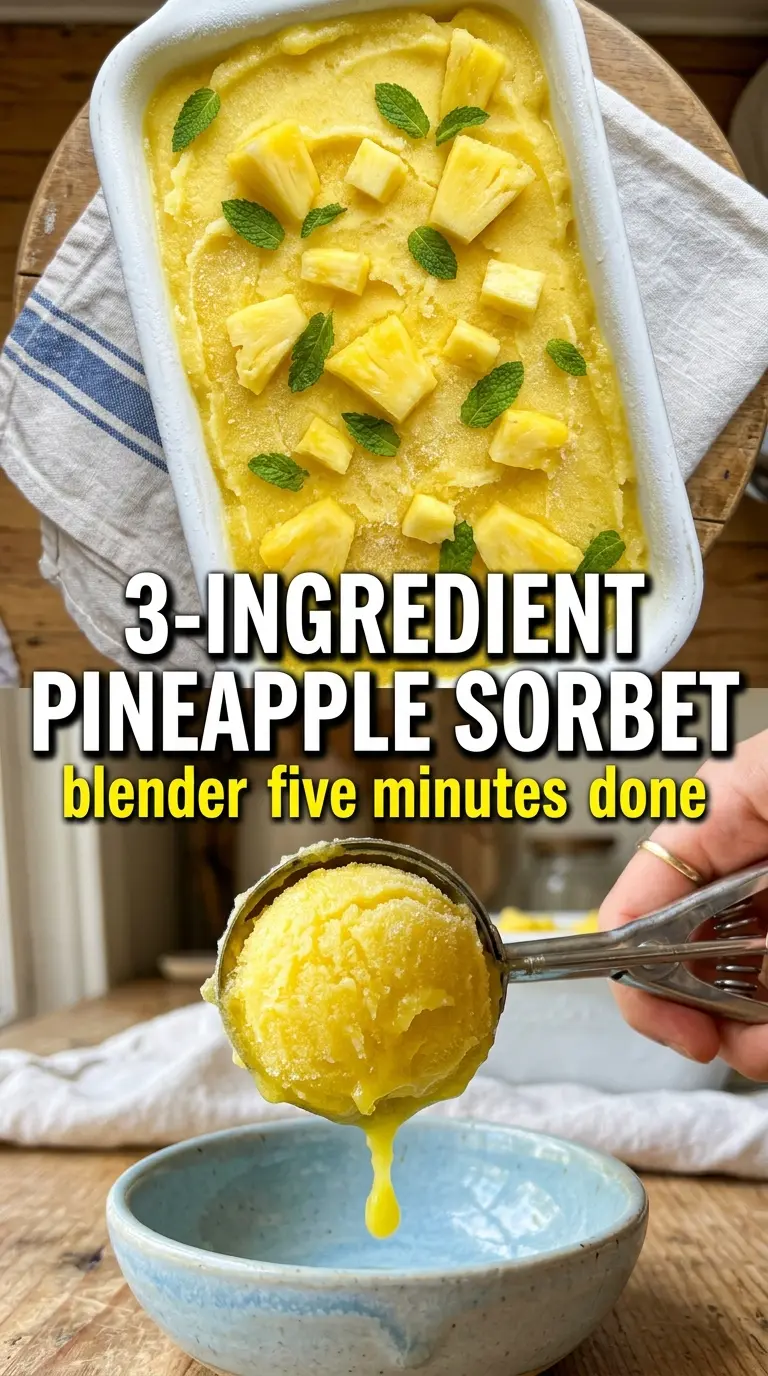
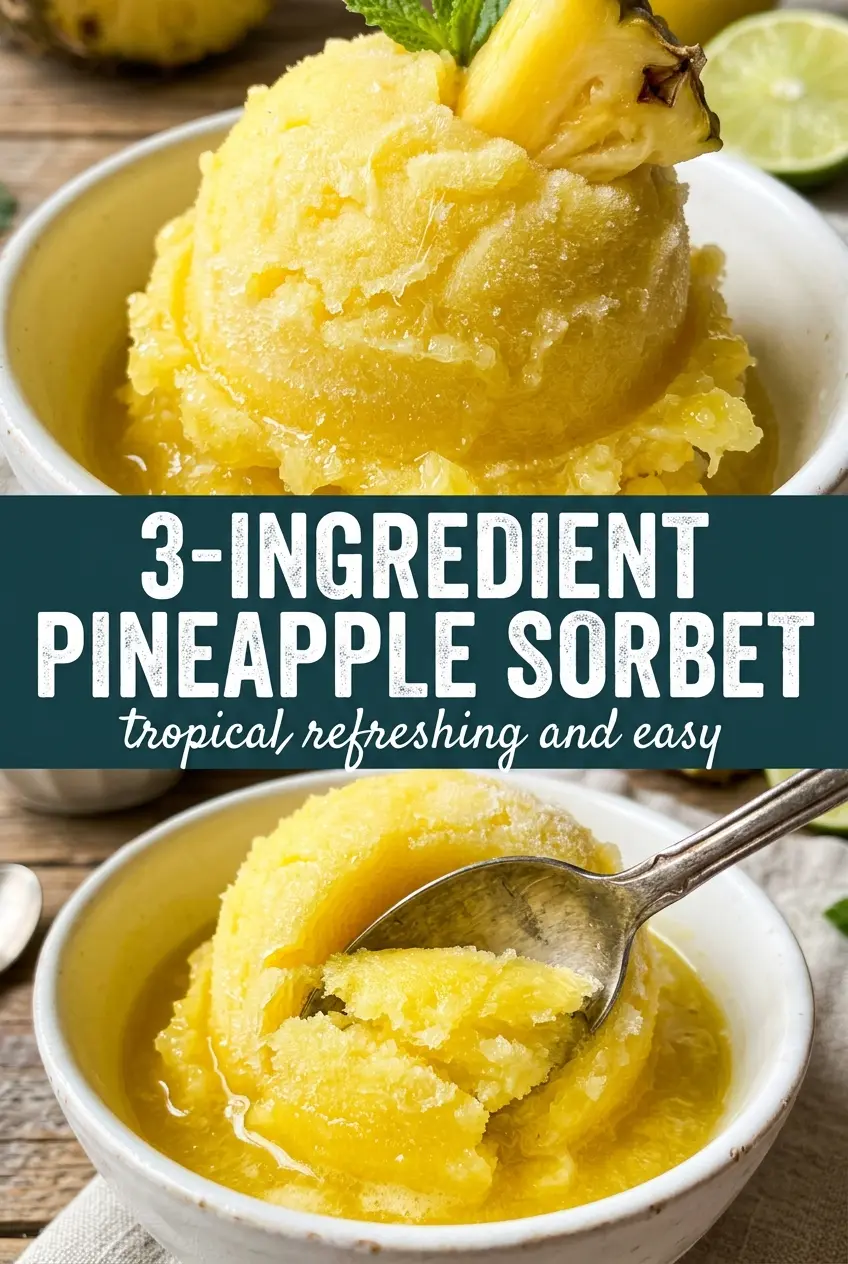
Bright pineapple sorbet hits with the kind of clean, icy sweetness that wakes up the whole palate. The texture lands somewhere between soft-serve and scoopable granite, depending on how long you freeze it, and the flavor stays sharp enough to taste like pineapple instead of just cold sugar. That balance is what makes this version worth keeping around.
Frozen pineapple does most of the work here, so the recipe stays simple without tasting thin. A little lime juice keeps the sweetness from flattening out, and honey or agave helps the mixture blend into a smoother, silkier base. The key is letting the fruit soften just enough before blending; if it goes straight from freezer to blender, you end up with a stalled machine and uneven chunks instead of a glossy puree.
Below, I’ll show you how to get the texture you want, whether you like it soft right out of the blender or firmer after a quick freeze. I’ve also included the best way to fix it if the sorbet tastes too sharp, too icy, or refuses to blend smoothly.
The blender turned the frozen pineapple into the smoothest sorbet in under a minute, and the lime kept it from tasting flat. I froze mine for two hours and it scooped beautifully.
Save this pineapple sorbet for the days when you want something icy, sunny, and made from just three ingredients.
The Frozen Fruit Has to Warm Up a Little Before the Blender Can Do Its Job
Frozen pineapple is the whole engine of this sorbet, but it still needs a short pause on the counter. Those few minutes soften the edges just enough for the blades to catch, which means you get a smooth, spoonable puree instead of a motor straining against a solid block of fruit. If the fruit is rock hard, the blender heats up fast and the texture gets patchy.
The other thing that matters here is balance. Pineapple can taste bright one minute and bluntly sweet the next, depending on how ripe it was before freezing. Lime keeps the sorbet awake, and the sweetener rounds off the sharp edges without turning it heavy. Taste after blending, not before; frozen fruit always changes how sweet a mixture seems.
What Each Ingredient Is Actually Doing in This Sorbet
- Frozen pineapple chunks — Use good pineapple here, because this is the flavor. Fresh pineapple has to be frozen first, and very underripe fruit can taste grassy, while overripe fruit can go mushy and dull. If you’re starting with fresh, cut it into small chunks and freeze them in a single layer so they blend evenly.
- Lime juice — This sharpens the pineapple and keeps the sorbet from tasting one-note. Bottled lime juice works in a pinch, but fresh juice gives a cleaner finish. If you don’t have lime, lemon can work, though it reads a little less tropical.
- Honey or agave — Either one helps the mixture glide through the blender and gives the sorbet a softer scoop after freezing. Honey brings a rounder, slightly floral note; agave stays quieter and keeps the pineapple front and center. If you want to reduce the sweetness, start with one tablespoon and blend before adding the rest.
How to Turn Frozen Pineapple Into a Smooth Sorbet
Let the Fruit Loosen Just Enough
Set the frozen pineapple out for about 5 minutes so the outside edges lose their hard shell. That tiny bit of give is what helps the blender catch the fruit early instead of spinning around air pockets. If the pieces are still locked together in one frozen clump, break them apart before blending.
Blend for Volume, Not Just Speed
Add the pineapple, lime juice, and honey or agave to a high-powered blender and start blending, stopping once or twice to scrape the sides. The mixture will look crumbly at first, then it suddenly turns glossy and thick. If it won’t move, add just a teaspoon of extra lime juice or let the fruit soften a minute longer rather than pouring in liquid and thinning the sorbet.
Freeze Only If You Want a Firmer Scoop
The sorbet is ready to eat straight from the blender as a soft, airy dessert. For a firmer texture, transfer it to a freezer-safe container and freeze for 2 to 4 hours. If it gets too solid, let it sit at room temperature for a few minutes, or scrape it with a fork for a more granular, granita-style texture.
How to Adapt This for Different Sweeteners, Textures, and Serving Styles
Make It Vegan with Agave
Use agave instead of honey and the sorbet stays fully plant-based. Agave blends in with a lighter, cleaner sweetness, while honey gives a little more depth. Either one works, but agave keeps the pineapple flavor a touch brighter.
Make It Sharper and Less Sweet
Add an extra teaspoon of lime juice and keep the sweetener on the low end. That makes the pineapple taste more vivid and less candy-like, especially if your fruit was very ripe. The texture stays the same, but the finish gets cleaner.
Turn It Into a Granita
Freeze the blended sorbet in a shallow container and scrape it with a fork every 30 to 45 minutes. That breaks up the ice crystals and gives you a fluffy, spoonable texture instead of a dense scoop. It’s a good fix if your blender isn’t strong enough to make a perfectly smooth puree.
Storage and Reheating
- Refrigerator: Don’t store this in the fridge; it melts fast and turns slushy.
- Freezer: Freeze in a covered container for up to 2 weeks, but expect it to get firmer and a little icier over time.
- Reheating: Not applicable. Let it sit at room temperature for 5 to 10 minutes before scooping, or pulse it briefly in the blender to bring back a smoother texture.
Answers to the Questions Worth Asking
3-Ingredient Pineapple Sorbet
Ingredients
Equipment
Method
- Let frozen pineapple sit at room temperature for 5 minutes to soften slightly, so it blends smoothly. The chunks should look a little less frosty around the edges.
- Add the softened frozen pineapple, lime juice, and honey or agave to a high-powered blender. Blend until completely smooth, scraping down once if needed for a thick, vivid yellow texture.
- Taste the mixture and adjust sweetness or acidity as desired. The sorbet should taste bright and balanced, not flat.
- Serve immediately as a soft sorbet for a spoonable, airy texture. Keep it cold by serving right away.
- For firmer scoops, transfer the sorbet to a freezer container and freeze for 2-4 hours. The surface should look set and scoopable.
- For granita texture, scrape the frozen sorbet with a fork after chilling. Continue scraping until you get icy, sparkling crystals.
- For a smoother sorbet after freezing, blend again after the 2-4 hour freeze. Blend just until uniform and re-smooth, then serve.