Orange Creamsicle Ice Cream hits that nostalgic sweet spot with a clean vanilla custard, bright orange swirl, and the kind of creamy finish that melts just slowly enough to keep every spoonful interesting. The best versions don’t taste like orange candy; they taste like real citrus folded into rich ice cream, with enough tang to keep the sweetness from going flat.
This version works because the orange is handled two ways. Fresh juice brings the flavor, but the zest carries the aroma, and simmering both with a little sugar concentrates the citrus without watering down the base. The vanilla stays separate until churning, which keeps the custard smooth and lets the orange swirl stay distinct instead of turning the whole batch muddy.
Below, I’m walking through the part that matters most: getting the custard cooked without scrambling it, then layering the orange syrup so you get visible ribbons instead of a uniform pale orange mixture. If you’ve ever made homemade ice cream that turned icy or bland, this one fixes both problems.
The custard turned out silky and the orange syrup stayed in pretty ribbons instead of disappearing into the base. It tasted exactly like a creamsicle, and the texture was scoopable straight from the freezer after about 10 minutes on the counter.
Love the orange-and-vanilla swirl? Save this creamsicle ice cream for the days when you want a frozen dessert that tastes bright, creamy, and homemade.
The Trick to Keeping the Orange Swirl Bright Instead of Murky
The biggest mistake with creamsicle ice cream is mixing the orange straight into the custard base. That sounds efficient, but it usually gives you one flat-colored batch and a duller flavor because the citrus gets spread too thin. Here, the custard and the orange syrup are cooked separately, which keeps the vanilla rich and the orange punchy.
The other thing that matters is concentration. A short simmer with sugar takes the edge off the juice and thickens it just enough to ripple through the churned ice cream. If the syrup is too thin, it sinks and disappears. If it’s too thick, it hardens into icy streaks. You want it glossy and spoonable, not jammy.
- Egg yolks — These give the base body and that smooth, scoopable texture you want in homemade ice cream. Whole eggs would make it more set and less silky, so stick with yolks here.
- Heavy cream and whole milk — The cream brings richness; the milk keeps the base from turning heavy. Using all cream makes the ice cream almost greasy on the tongue, while all milk tastes thin.
- Fresh orange juice and zest — The zest matters just as much as the juice, maybe more. Juice gives acidity and color, but zest is where the real orange aroma lives.
- Vanilla extract — This is what turns the orange from “citrus ice cream” into a true creamsicle. Use a good vanilla if you have it, since the flavor stays front and center.
- Orange food coloring — Optional, but useful if you want that classic creamsicle look. A tiny amount is enough; too much can make the color look artificial fast.
Cooking the Custard Without Scrambling the Yolks
Heating the Dairy Slowly
Warm the cream and milk until they’re steaming, not boiling. You want small wisps of steam and just a few bubbles around the edges. If the dairy boils, it can throw the custard off later and make the egg mixture more likely to curdle when you combine them.
Tempering the Yolks
Whisk the egg yolks with half the sugar until they look lighter and slightly thickened, then stream in the hot dairy while whisking constantly. This step keeps the yolks from turning into bits of cooked egg. If you dump the hot liquid in too fast, the eggs seize at the bottom of the bowl and you’ll feel it immediately as little soft curds.
Cooking to the Right Thickening Point
Return the mixture to the pan and cook over medium-low heat, stirring constantly, until it reaches 175°F. The custard should coat the back of a spoon and leave a clean line when you swipe a finger through it. Pull it off the heat before it gets much hotter, because that’s when the yolks start to overcook and the texture turns grainy.
Straining and Cooling Fully
Strain the custard into a clean bowl, then stir in the vanilla and salt. Cooling it completely before churning matters more than most people think; warm base takes longer to freeze and can give you a softer, icier result. Press plastic wrap directly on the surface if you want to prevent a skin from forming while it chills.
What the Orange Syrup Is Doing in This Ice Cream
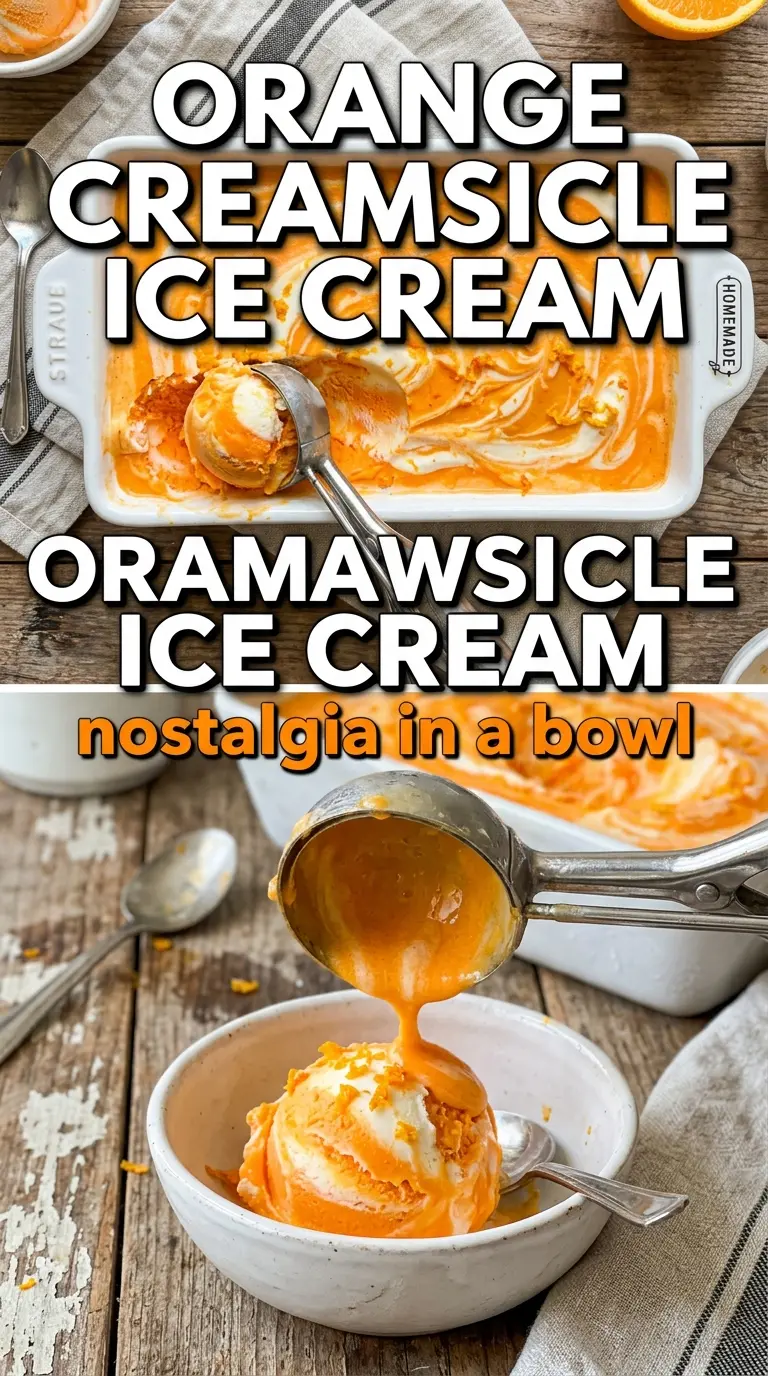
The orange layer isn’t just for color. It brings a concentrated burst of citrus that cuts through the richness of the custard, which is why the finished ice cream tastes bright instead of merely sweet. Simmering the juice with zest and sugar reduces some of the water content and helps the swirl stay visible after freezing.
- Orange juice — Fresh juice gives the cleanest flavor. Bottled juice can work in a pinch, but it usually tastes flatter and less fragrant.
- Orange zest — Don’t skip this. Zest carries the oils that make the dessert smell like a creamsicle before the first bite.
- Granulated sugar — The sugar sweetens the syrup and helps it thicken slightly as it cooks. It also keeps the orange from tasting sharp against the dairy.
- Salt — The small amount in the custard keeps the vanilla and citrus from tasting one-note. You won’t taste salt, just a cleaner finish.
Three Ways to Adapt This Creamsicle Ice Cream
Make It Dairy-Free
Use full-fat coconut milk in place of the cream and milk, but know the texture will be a little softer and the coconut flavor will show. The orange still works beautifully with coconut, but it becomes more tropical than classic creamsicle. For the best result, chill the base very well before churning.
Skip the Food Coloring
The ice cream will still taste right without it. You’ll get a paler cream color with natural orange ribbons, which looks understated and still gives you plenty of citrus flavor.
Turn It Into Orange Dream Bars
Let the churned mixture firm up in a shallow pan, then sandwich scoops between vanilla wafers or soft sugar cookies. The flavor stays the same, but the texture shifts from spoonable ice cream to a soft, handheld dessert that works well for parties.
Storage and Reheating
- Refrigerator: Not applicable once frozen; keep the churned base chilled only before freezing.
- Freezer: Store in an airtight container for up to 2 weeks. After that, the texture can get icier and the citrus flavor starts to fade.
- Reheating: No reheating needed. For the best scoop, let the container sit at room temperature for 5 to 10 minutes until the edges loosen slightly; digging in too soon is what tears the ice cream into hard shards.
Questions I Get Asked About This Recipe

Orange Creamsicle Ice Cream
Ingredients
Equipment
Method
- Heat the heavy cream and whole milk in a saucepan over medium heat until steaming, then whisk to combine.
- Whisk the egg yolks with 1/2 cup of the granulated sugar until smooth, then slowly whisk the hot cream mixture into the yolks.
- Return the mixture to the heat and cook, stirring constantly, until it reaches 175F, when the custard visibly thickens and coats the back of a spoon.
- Strain the custard into a bowl to remove any bits, then whisk in the vanilla extract and salt.
- Cool completely at room temperature, then refrigerate if needed so the custard is fully chilled before churning.
- Combine the fresh orange juice, orange zest, and the remaining 1/4 cup granulated sugar in a small saucepan.
- Simmer for 5 minutes until slightly syrupy and reduced, with a glossy look that clings lightly to a spoon.
- Cool completely.
- Churn the vanilla custard in an ice cream maker until thick, with a soft-serve consistency that holds ridges.
- During the last 2 minutes of churning, drizzle in the orange syrup to form swirls, then stop churning without fully mixing it in.
- Transfer the ice cream to a freezer container and layer spoonfuls, keeping the orange ribbons visible in the cross-section.
- Freeze for at least 4 hours until firm enough to scoop cleanly.