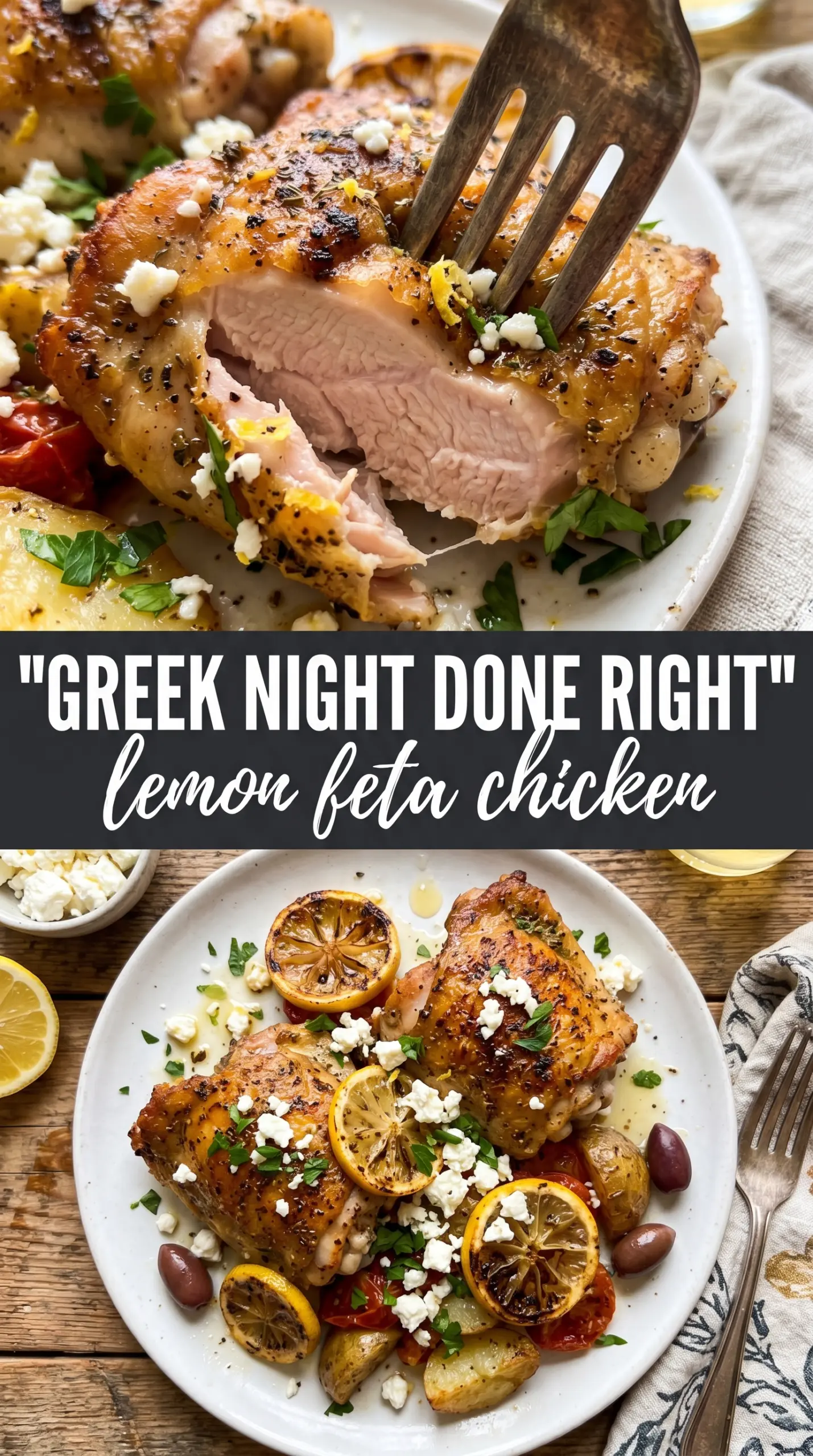
Golden chicken thighs, tangy lemon, and salty feta turn into a pan of dinner that tastes like it took a lot more effort than it did. The skin goes crisp at the edges while the chicken underneath stays juicy, and the feta softens just enough to melt into the lemony pan juices without disappearing completely. That mix of browned chicken, briny olives, and charred lemon is the part that keeps this one on repeat.
The trick here is letting the chicken sit in a sharp, garlicky marinade long enough to season the meat, then baking it hot enough to build color before the feta goes on. If you add the cheese too early, it can dry out and lose that creamy-salty contrast. Added near the end, it turns golden on top and stays lush underneath.
Below, I’ve included the small timing details that keep the chicken from steaming and the feta from turning chalky, plus a few swaps that still keep the dish feeling distinctly Greek.
The chicken came out juicy, the feta browned on top without getting rubbery, and the lemon slices turned sweet and almost jammy in the oven. I served it with rice and there wasn’t a spoonful of the pan juices left.
Greek Chicken With Lemon and Feta brings crisp chicken, golden cheese, and charred lemon together in one baking dish.
Save this lemony feta chicken for an easy Greek-style dinner
The Reason the Feta Goes on Late
The biggest mistake with this kind of baked chicken is treating feta like a topping that can sit in the oven the whole time. Feta doesn’t melt like mozzarella. It softens, browns, and can dry out fast if it gets too much heat. Added during the final stretch, it keeps its creamy edges and picks up color without turning sandy.
The other piece that matters is the chicken skin. If the thighs go into the oven wet from the marinade, they’ll steam before they brown. A hot oven and a baking dish with a little space around each thigh give the skin a chance to render and crisp while the tomatoes collapse into the juices underneath.
- Chicken thighs — Bone-in, skin-on thighs stay juicy through the longer bake and give you the best browned skin. Boneless thighs work in a pinch, but you’ll lose some of the richness and the cooking time will drop.
- Feta — Buy a block and crumble it yourself if you can. Pre-crumbled feta is drier and doesn’t brown as evenly. The goal is soft, salty pockets with some golden edges, not a powdery topping.
- Lemon — One lemon gets juiced for the marinade, the other gets sliced for the pan. That split matters. The juice seasons the meat, while the slices roast into something sweeter and less sharp.
- Kalamata olives — They bring the briny finish that makes the whole dish taste anchored and Greek. If you need a substitute, use another dark olive, not green olives, which push the flavor in a harsher direction.
- Cherry tomatoes — They burst into the pan juices and keep the dish from feeling heavy. Larger tomatoes can work, but cut them small so they break down at the same pace as the chicken finishes.
What Each Ingredient Is Actually Doing in This Chicken Dish
- Chicken (pat dry for browning) — Room temperature cooks more evenly. Even pieces ensure uniform doneness.
- Oil or butter (the browning medium) — High-heat oil essential for proper searing. Creates pan flavor.
- Seasonings (salt, pepper, spices) — Apply generously. Chicken carries the entire flavor profile.
- Aromatics (garlic, ginger, herbs) — Cook with fat to bloom flavors. Become the foundation.
- Sauce or braising liquid (if using) — This keeps chicken moist. Balance richness with acid.
- Vegetables (if using) — Layer by cooking time so everything finishes together.
- Acid (vinegar, wine, lime, or pineapple) — This brightens and prevents one-dimensional flavor.
- Proper doneness (165°F internal temperature) — Use thermometer for accuracy. Overcooked is dry.
Building the Pan So the Chicken Browns and the Cheese Melts
Whisking the Marinade
Start by whisking the olive oil, lemon juice, garlic, oregano, thyme, salt, and pepper until the mixture looks slightly thick and cloudy. That tells you the oil and lemon are suspended enough to coat the chicken evenly. If the garlic clumps at the bottom, keep whisking; uneven seasoning shows up fast in a short marinade. The chicken only needs 30 minutes here, but that window is enough to season the surface and wake up the herbs.
Lining Up the Chicken
Arrange the thighs skin-side up in the baking dish with enough room for the heat to move around them. Crowding leads to pale skin and watery tomatoes. Spoon some of the marinade over the chicken, then tuck the lemon slices and cherry tomatoes around the edges so they can roast in the rendered fat and juices. If the chicken is buried under liquid, it will braise instead of brown.
Finishing With Feta and Olives
After the first bake, the chicken should be mostly cooked and the tomatoes should have burst. Scatter the feta and olives over the top, then return the pan to the oven until the cheese starts to take on color. Broiling for the last few minutes gives you those browned, craggy edges, but stay close; feta goes from golden to bitter faster than most cheeses. Pull it as soon as you see the top spots turning amber and the edges looking slightly crisp.
How to Adapt This Greek Chicken When You Need a Different Dinner
Make It Dairy-Free
Leave off the feta and finish the dish with extra lemon zest, a handful of parsley, and a drizzle of good olive oil. You’ll lose the salty creaminess, but the chicken, olives, and roasted tomatoes still carry the Mediterranean flavor cleanly.
Use Boneless Chicken Thighs
Boneless thighs work if that’s what you have, but start checking them earlier because they cook faster and dry out more quickly. The skin won’t crisp the same way, so keep the top of the pan uncovered and use the broiler only for a brief finish.
Make It More Vegetarian-Friendly at the Table
The chicken itself doesn’t have a true vegetarian swap in this exact format, but the same lemon-feta pan works well over roasted cauliflower steaks or chickpeas. Roast the vegetables first so they get real color, then add the feta and olives near the end the same way you would with the chicken.
Storage and Reheating
- Refrigerator: Store leftovers in an airtight container for up to 4 days. The feta will firm up and the chicken skin softens, but the flavor stays strong.
- Freezer: Freeze the chicken without the feta if you want the best texture later. The baked feta can get crumbly after thawing, so this dish freezes best with the cheese added fresh after reheating.
- Reheating: Warm it covered in a 325F oven until the chicken is hot through. The mistake is blasting it in the microwave, which makes the skin rubbery and the feta tough.
Questions I Get Asked About This Recipe

Greek Chicken With Lemon And Feta
Ingredients
Equipment
Method
- Whisk olive oil, lemon juice, garlic, dried oregano, dried thyme, salt, and pepper until evenly combined.
- Place the chicken thighs in a baking dish (or shallow tray), then pour over the marinade and turn to coat.
- Marinate for 30 minutes at room temperature while you preheat the oven to 425F.
- Arrange the chicken thighs in a baking dish with cherry tomatoes and lemon slices.
- Bake at 425F for 25 minutes, until the chicken is mostly cooked and the juices are bubbling.
- Scatter the kalamata olives and crumbled feta over the chicken.
- Bake at 425F for 10 more minutes, until the feta is golden and the chicken is cooked through.
- Broil for 3 minutes until the feta is slightly caramelized, watching closely so it doesn’t burn.
- Garnish with fresh parsley and serve hot.