Pineapple, soy, garlic, and ginger turn slow-cooked chicken thighs into something glossy, sticky, and worth spooning over a bowl of rice. The sauce lands in that sweet-savory space that keeps pulling you back for one more bite, and the chicken stays tender enough to shred with a fork but still hold its shape if you’d rather serve it in pieces.
What makes this version work is balance. The reserved pineapple juice brings fruitiness and enough natural acidity to keep the sauce from tasting flat, while the brown sugar and ketchup round out the edges without making it taste like dessert. Sesame oil adds depth fast, so you don’t need a long ingredient list to get a sauce that tastes layered after a few hours in the slow cooker.
Below you’ll find the exact timing that keeps the chicken juicy, the trick for thickening the sauce without lumps, and a few smart swaps if you need to stretch it, lighten it up, or work with what’s in your pantry.
The sauce thickened up beautifully after the slurry went in, and the pineapple chunks stayed intact instead of turning to mush. I served it over coconut rice and my husband went back for seconds before I even sat down.
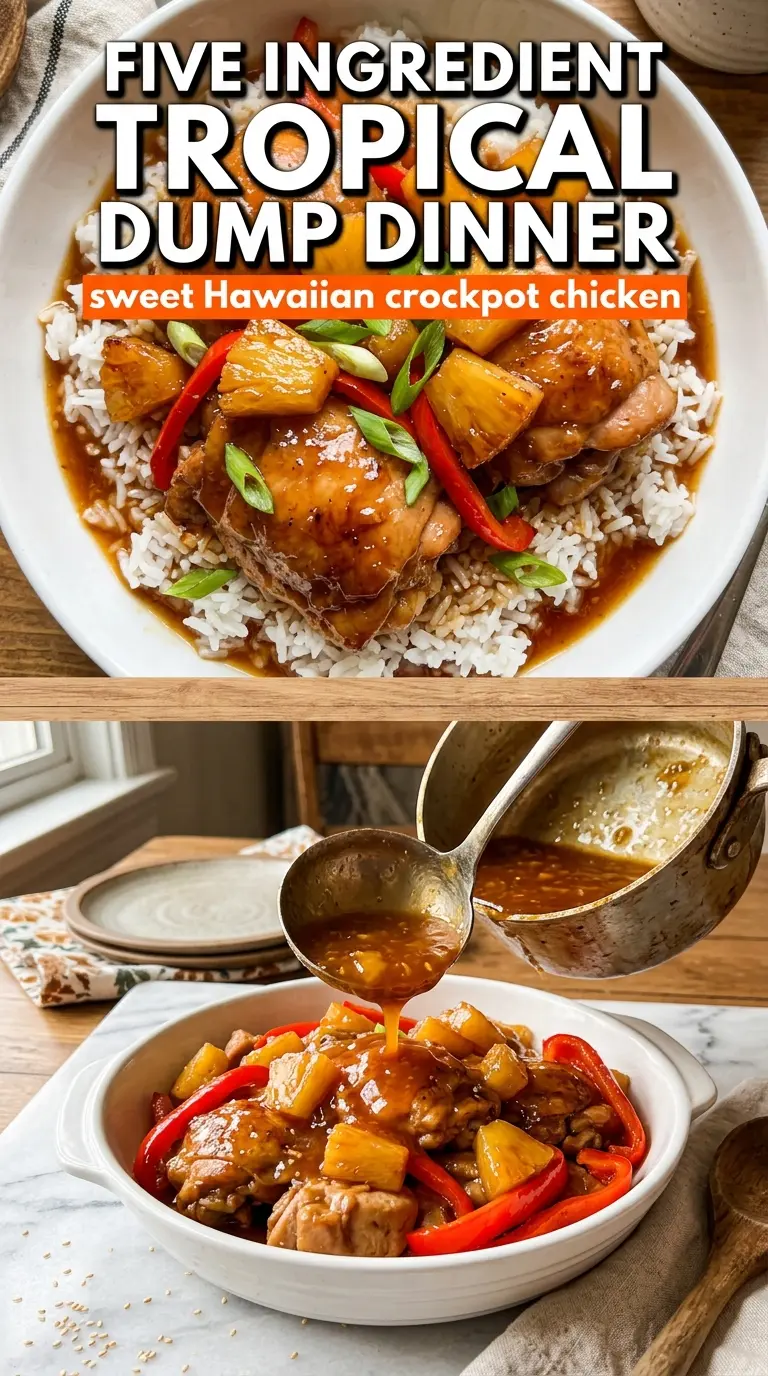
Sweet Hawaiian Crockpot Chicken is the kind of dinner that turns tender chicken and pineapple-teriyaki sauce into something people remember.
Why the Sauce Stays Glossy Instead of Watering Out
Slow cookers trap moisture, which is great for tenderness and not so great for sauces that need to concentrate. The fix here is starting with a sauce that already has enough body and flavor to survive dilution, then thickening it at the end after the chicken comes out. That keeps the pineapple chunks from breaking down into the sauce too early and gives you a finish that clings to the chicken instead of pooling thinly at the bottom of the bowl.
Chicken thighs earn their place here because they stay succulent during a long cook. Breasts can work, but they dry out faster and need a tighter cooking window. If you cook on high, watch the edges first; if the chicken is done before the sauce has a chance to deepen, you’ll end up with good meat and a flat sauce. Let the slow cooker do the work, then use that last 15 minutes on high to turn the liquid into something spoonable.
What Each Ingredient Is Doing in the Slow Cooker
- Chicken thighs — Thighs stay juicy through a long cook and hold up better than breasts in a sweet sauce. If you use breasts, cut the cook time down and pull them as soon as they hit 165°F so they don’t turn stringy.
- Pineapple juice — Reserved juice gives the sauce its fruity backbone and helps dissolve the sugar. Canned pineapple in juice works better than pineapple packed in syrup because you control the sweetness.
- Soy sauce — This is the salt and umami base. Low-sodium soy sauce works fine if that’s what you keep on hand, but don’t swap in something much thicker or sweeter, or the balance of the sauce will shift.
- Sesame oil — A small amount adds that toasted, nutty finish that makes the sauce taste fuller. Use the real thing here, not plain oil with sesame flavoring if you can avoid it.
- Cornstarch slurry — This is what turns the cooking liquid into a glossy sauce. Mix it with cold water first, then stir it into the hot liquid at the end so it thickens evenly instead of clumping.
How to Build the Sweet Hawaiian Flavor Without Overcooking the Chicken
Whisking the Sauce First
Mix the reserved pineapple juice, soy sauce, brown sugar, ketchup, sesame oil, garlic, and ginger before anything goes into the slow cooker. That gives the sugar a chance to dissolve and keeps the garlic and ginger from sitting in one spot. If you skip this and dump everything in separately, the flavor can land unevenly and the brown sugar may stick in a grainy layer on the bottom.
Letting the Chicken Sit in the Sauce
Place the chicken in the cooker and pour the sauce over the top, then add the pineapple chunks. Don’t stir aggressively; you want the thighs coated, not smashed. The chicken should be mostly submerged but not buried under so much liquid that the sauce turns watery. If your cooker runs hot, check near the end of the window so the edges don’t dry out before the center is done.
Thickening at the End
Lift the chicken out before adding the slurry, then stir the cornstarch mixture into the hot sauce and cook on high until it turns glossy and lightly thickened. The sauce should coat a spoon and leave a clear trail when you drag a finger through it. If it still looks thin, give it a few more minutes; cornstarch needs a little heat to activate, but too much simmering after that can make it thin again.
Finishing and Serving
Return the chicken to the thickened sauce and spoon it over coconut rice. Green onions and sesame seeds add freshness and a little crunch, which keeps the dish from feeling one-note. If you want the cleanest presentation, spoon the sauce over the chicken right before serving instead of stirring it hard enough to break the pieces apart.
Three Smart Ways to Adjust This Recipe Without Losing What Makes It Work
Make it with chicken breasts
Chicken breasts will work, but they need less time and a closer eye. Start checking early and pull them as soon as they’re opaque and tender; if they overcook, the texture turns dry faster than thighs. You’ll still get the same sauce, just with a lighter, leaner bite.
Make it gluten-free
Swap the soy sauce for gluten-free tamari or coconut aminos. Tamari keeps the savory depth closest to the original, while coconut aminos lean a little sweeter, so you may want to reduce the brown sugar slightly if that’s the route you take.
Make it a little less sweet
Cut the brown sugar back to 2 tablespoons and add an extra splash of soy sauce. That keeps the pineapple from pushing the dish into candy-sweet territory and gives the sauce a stronger savory edge. The result tastes a little sharper and works well if you’re serving it with plain rice.
Turn it into a meal prep bowl
Portion the chicken and sauce over rice in containers and keep the garnishes separate until serving. The sauce thickens more as it chills, so a spoonful of water or pineapple juice when reheating helps bring it back to its original texture. This is one of those dishes that tastes even better the next day after the flavors settle.
Storage and Reheating
- Refrigerator: Store in an airtight container for up to 4 days. The sauce will thicken as it cools, and the pineapple softens a bit more by day two.
- Freezer: It freezes well for up to 2 months. Freeze the chicken and sauce together, then thaw overnight in the fridge before reheating so the sauce stays smooth.
- Reheating: Warm gently on the stove or in the microwave with a splash of water or reserved pineapple juice. Don’t blast it on high heat, or the chicken can toughen and the sauce can turn overly sticky.
Answers to the Questions Worth Asking

Sweet Hawaiian Crockpot Chicken
Ingredients
Equipment
Method
- Whisk reserved pineapple juice, soy sauce, brown sugar, ketchup, sesame oil, garlic, and ginger until smooth and the sugar dissolves.
- Place the chicken thighs in the slow cooker, then pour the sauce over and add the pineapple chunks.
- Cook on Low for 4-5 hours (or High for 2-2.5 hours) until the chicken is tender.
- Remove the chicken from the slow cooker and stir the cornstarch slurry into the sauce.
- Turn the slow cooker to High and cook 15 minutes until the sauce thickens and looks glossy.
- Return the chicken to the sauce, then serve over coconut rice with green onions and sesame seeds.