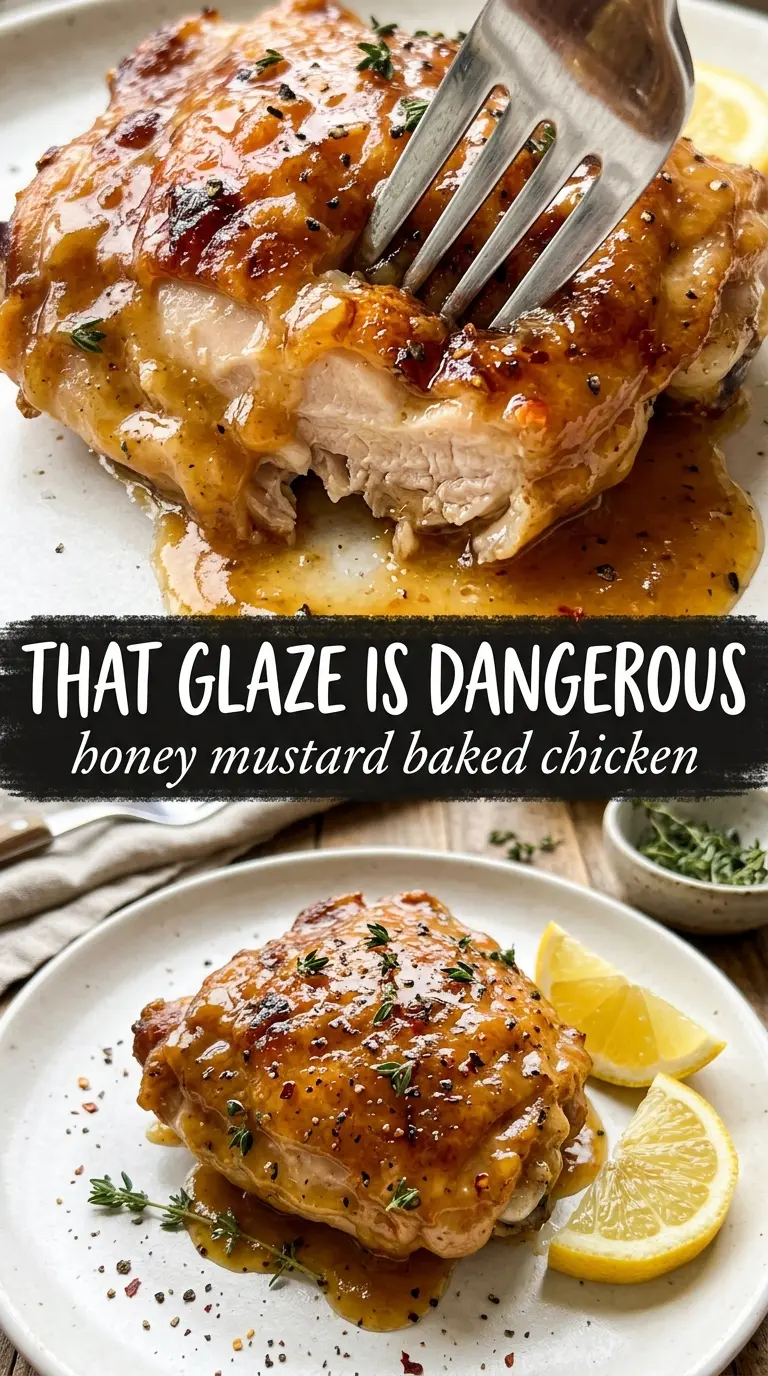
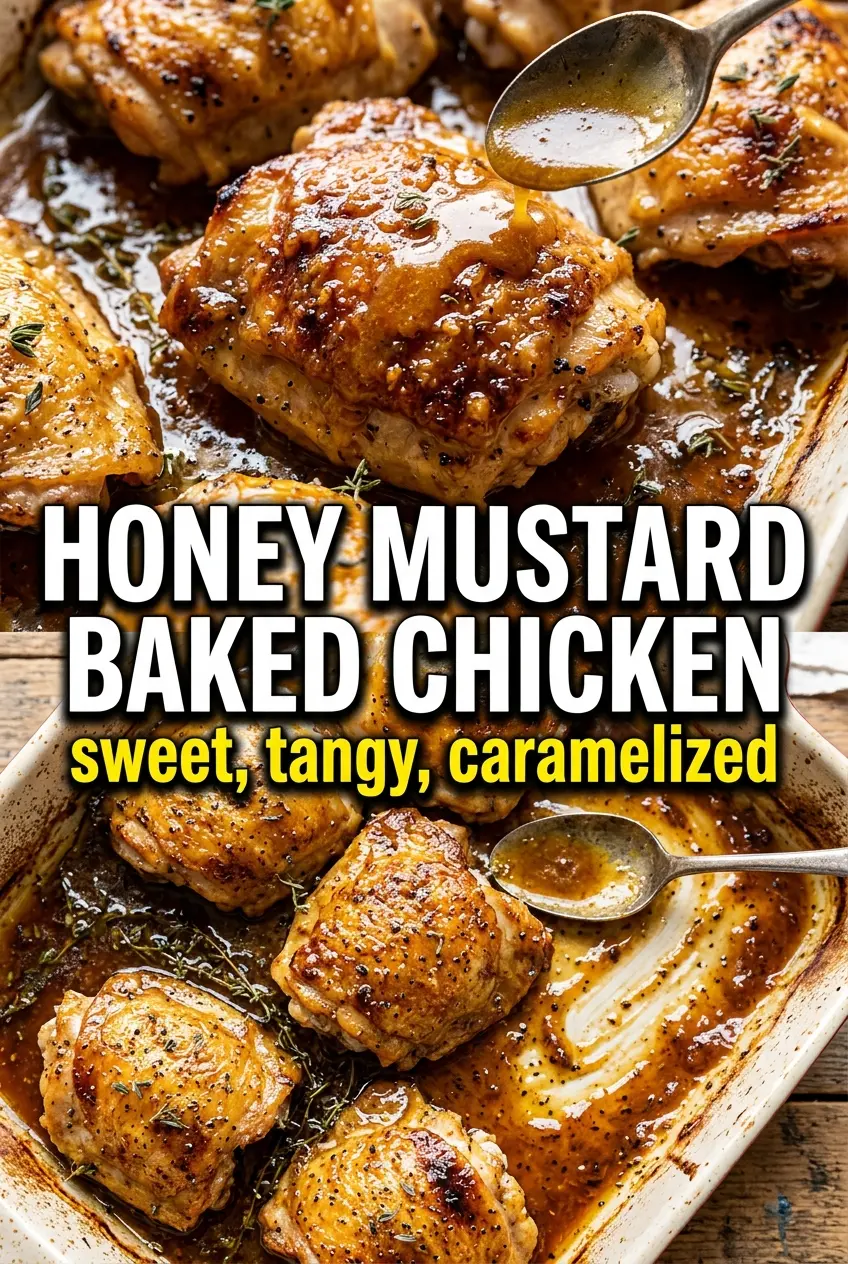
Baked honey mustard chicken thighs come out with crisp, bronzed skin and a sticky glaze that clings to every bite. The mustard brings sharpness, the honey rounds it out, and the chicken thighs stay juicy enough to handle the oven heat without drying out. It’s the kind of dinner that looks like you worked harder than you did, which is exactly why it ends up in the regular rotation.
The trick here is using a mix of Dijon and whole grain mustard. Dijon gives the glaze its backbone and smooth texture, while the whole grain mustard adds little pockets of bite and keeps the sauce from tasting flat. A little lemon juice wakes everything up, and the olive oil helps the coating spread evenly and caramelize instead of burning before the chicken is done.
Below, I’ve included the small details that matter most: how to get the glaze glossy instead of grainy, when to broil without drying out the chicken, and what to change if you need to work with boneless thighs or drumsticks.
The glaze caramelized beautifully and the chicken stayed juicy all the way through. I broiled it for just 2 minutes at the end and got that sticky, golden finish everyone fought over.
Golden, sticky baked honey mustard chicken thighs that caramelize in the oven and stay juicy inside.
The Reason the Glaze Turns Sticky Instead of Burnt
The biggest mistake with honey-based chicken is using too much heat too soon. Honey browns fast, and if the oven is too aggressive from the start, the glaze darkens before the thighs have had time to cook through. At 425°F, the chicken gets enough heat to render the skin and caramelize the glaze without turning the sugars bitter.
Bone-in, skin-on thighs are the right cut here because they stay tender during the bake and give the glaze something to cling to. If you swap in boneless thighs, the timing drops, but you lose some of the rich, roasted flavor that comes from the skin and bone. Broiling at the end works because the chicken is already cooked; you’re only finishing the color, not trying to force the whole dish along under direct heat.
What Each Ingredient Is Doing in the Pan
- Dijon mustard — This is the backbone of the sauce. It emulsifies with the oil and gives the glaze its smooth, tangy finish. Cheap Dijon works fine here as long as it tastes sharp and clean.
- Whole grain mustard — This adds texture and a deeper mustard bite. Don’t skip it unless you have to; the little mustard seeds keep the glaze from tasting one-note.
- Honey — Honey is what makes the coating caramelize and cling. Maple syrup can work in a pinch, but it tastes softer and less classic, and the finish won’t be quite as shiny.
- Chicken thighs — Bone-in, skin-on thighs give you the most forgiving result. Patting them dry before coating helps the skin brown instead of steam.
- Lemon juice and garlic — The lemon keeps the glaze from tasting heavy, and the garlic gives the sauce a little savory depth. Fresh garlic matters more than jarred here because the sauce is short-cooked and the flavor shows.
How to Get the Chicken Cooked Through Without Losing the Caramelization
Whisking the Glaze Until It Stays Emulsified
Start by whisking the Dijon, honey, whole grain mustard, olive oil, garlic, lemon juice, thyme, salt, and pepper until the mixture looks smooth and glossy. It should coat the back of a spoon without separating into oily streaks. If it looks broken in the bowl, keep whisking for another few seconds; the mustard needs that agitation to pull the oil into the sauce.
Coating the Thighs for Even Browning
Arrange the chicken in a baking dish with a little space between pieces. Spoon or brush the glaze over the top and sides, then use the back of the spoon to spread it into an even layer. If the thighs are crowded, they’ll steam and the skin won’t blister and brown the way it should.
Roasting Until the Glaze Darkens at the Edges
Bake until the glaze looks deeply caramelized and the chicken reaches 165°F at the thickest part without touching bone. The surface should be sticky and bronzed, with some darker edges where the honey has baked down. If the top is browning too fast before the center is done, lay a loose piece of foil over the dish and let the chicken finish gently.
Broiling for the Final Shine
Move the dish under the broiler only after the chicken is cooked through. Stay close, because the line between caramelized and burnt is thin when honey is involved. One to three minutes is enough to deepen the color and give you that glossy, just-finished look.
How to Make This Dinner Fit What You’ve Got
Boneless Thighs for Faster Weeknights
Boneless thighs work well if you need dinner on the table faster, but start checking them early because they can go from juicy to dry quickly. The glaze still caramelizes, though the finished dish won’t have quite the same roasted depth you get from bone-in thighs.
Gluten-Free Without Changing the Method
This recipe is naturally gluten-free as written, as long as your Dijon mustard is certified gluten-free. That’s the one label worth checking, since some mustards use additives that vary by brand.
Maple Instead of Honey
Maple syrup gives you a darker, earthier sweetness and a slightly softer glaze. It works, but the finish is less sticky and more mellow, so expect a gentler caramelization.
Leftovers That Still Taste Good Tomorrow
Store leftovers in an airtight container in the refrigerator for up to 4 days. The glaze will thicken as it chills, and the skin softens, which is normal. Reheat in a 350°F oven until warmed through so the chicken stays closer to its original texture; the microwave tends to make the glaze tacky in a less appealing way.
Questions I Get Asked About This Recipe
Baked Honey Mustard Chicken Thighs
Ingredients
Equipment
Method
- Preheat oven to 425F and arrange the bone-in skin-on chicken thighs in a baking dish in an even layer.
- Whisk Dijon mustard, honey, whole grain mustard, olive oil, garlic, lemon juice, fresh thyme leaves, salt, and black pepper until smooth.
- Coat the chicken thighs generously with the honey mustard mixture, ensuring the skin is well covered.
- Bake 30–35 minutes until the glaze is deeply caramelized and the internal temperature reaches 165F.
- Broil 2–3 minutes to add extra caramelization to the glaze and skin.
- Garnish with fresh thyme and let rest briefly before serving.