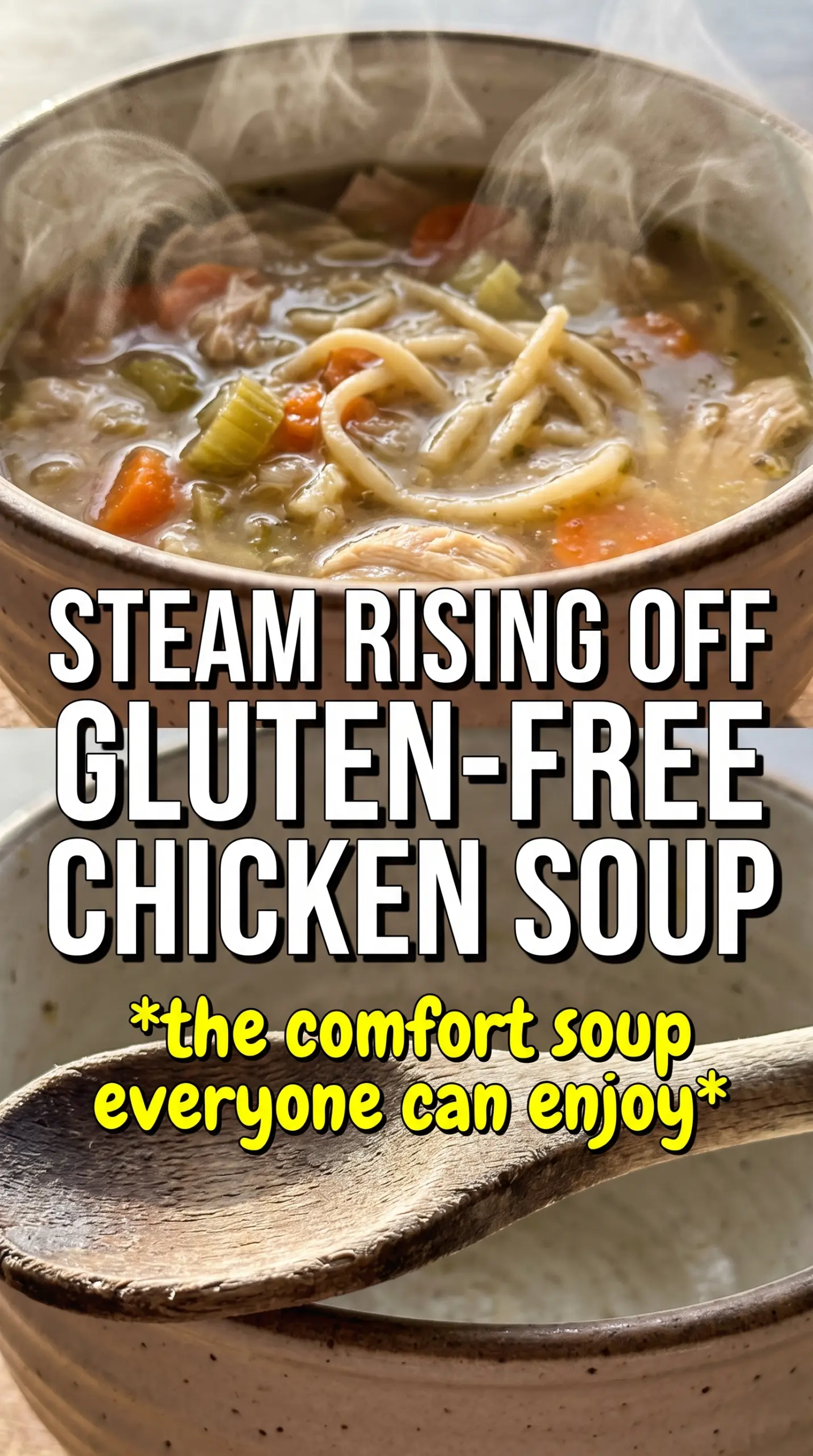
Gluten-free chicken noodle soup should still taste like the bowl people reach for when they want comfort, not a compromise. This version keeps the broth clear and savory, the chicken tender, and the vegetables soft without turning mushy. The noodles hold their shape, which matters more here than in most soups, because gluten-free pasta can go from just right to falling apart in a minute.
The difference is in the timing. The chicken simmers in the broth until it’s cooked through, then gets shredded and returned to the pot so it stays juicy. The pasta goes in at the very end, after the soup is seasoned, because once gluten-free noodles sit in hot liquid too long they keep drinking broth and can turn bloated. Certified gluten-free broth matters too; that’s the quiet detail that keeps the whole pot safe and dependable.
Below, I’ve included the part that trips people up most often: how to keep the noodles from overcooking without undercooking the chicken, plus a few smart swaps if you want to use rice noodles, egg noodles, or make the soup ahead.
The broth tasted just like the chicken noodle soup I used to make before going gluten-free, and the rice noodles stayed pleasantly firm instead of getting gummy.
Save this gluten-free chicken noodle soup for the nights when you want a classic broth-and-noodles dinner without worrying about the pasta falling apart.
The Part That Keeps Gluten-Free Noodles From Turning to Mush
The biggest mistake in gluten-free chicken noodle soup is treating the pasta like regular egg noodles. Gluten-free pasta keeps softening after the heat is off, and it drinks broth fast. If you cook it all the way in the pot and let the soup sit, the noodles get bloated and the broth disappears into them.
The better move is to cook the chicken in the soup first, then add the pasta only when the chicken is shredded and back in the pot. That gives you control over both textures. If you know you’ll have leftovers, undercook the pasta by a minute or two and pull the pot from the heat as soon as the noodles are just tender. The soup will finish a little more in the hot broth.
- Chicken breast — Lean breast meat stays tender as long as you simmer it gently. A hard boil tightens it up and makes the soup stringy.
- Certified gluten-free broth — This is where hidden gluten usually sneaks in. A regular broth can contain yeast extract, flavoring, or thickener that isn’t safe, so choose one labeled gluten-free.
- Gluten-free pasta — Brown rice rotini, GF egg noodles, and rice noodles all work, but they behave differently. Rotini holds the best shape for leftovers; rice noodles are the most delicate and should be added right before serving.
- Fresh parsley — The garnish matters here because it wakes up a brothy soup that can otherwise taste a little flat at the end. Stir some into the pot and save a little for the bowl.
What Each Ingredient Is Actually Doing in This Recipe
- Primary ingredient (the star) — Quality matters most. Choose the best you can find.
- Cooking medium (oil, butter, or broth) — This carries flavors and prevents dryness.
- Seasonings (salt, pepper, spices, herbs) — Layer flavors so nothing overpowers. Build depth gradually.
- Aromatics (garlic, onion, herbs) — Cook with fat to bloom flavors. Become the foundation.
- Supporting ingredients — Complement the main ingredient without overpowering it.
- Sauce or liquid (if applicable) — Brings flavors together. Balance richness with acid.
- Acid (lemon, vinegar, wine, or other) — Brightens and prevents flat-tasting results.
- Final finish (garnish, glaze, or sauce) — Prevents one-dimensional taste and adds visual appeal.
How to Keep the Broth Clear and the Chicken Tender
Start by softening the onion, carrots, and celery in olive oil until the onion turns translucent and the edges of the carrots look glossy. That first five minutes builds the base of the soup; if the vegetables are still raw when the broth goes in, the soup tastes thin even after simmering. Add the garlic for just one minute so it smells fragrant, not browned.
Building the Base
Pour in the certified gluten-free broth, then add thyme, parsley, garlic powder, and the chicken breast. Bring it up to a boil only once, then lower the heat so the soup sits at a gentle simmer. If the liquid is rolling hard, the chicken fibers tighten and the broth can cloud.
Cooking the Chicken Through
Simmer until the chicken reaches 165°F and looks opaque all the way through, about 18 to 20 minutes depending on thickness. Pull it out and shred it while it’s still warm; it comes apart cleanly and returns to the pot more evenly. If you wait until it cools completely, the meat gets harder to shred into the small pieces that belong in soup.
Finishing with the Noodles
Add the gluten-free pasta after the chicken goes back in. Cook it at a steady simmer and start tasting early, because most gluten-free noodles soften faster than the package timing suggests once they sit in hot broth. Turn off the heat as soon as the noodles are tender and the broth still looks a little loose; it thickens slightly as it rests.
How to Change This Soup Without Losing What Makes It Work
Rice Noodles for a Softer Bowl
Rice noodles give you a lighter, more delicate texture, but they won’t hold as long as brown rice rotini. Add them at the very end and serve right away, because they keep soaking up broth even after the burner is off.
Dairy-Free and Naturally Gluten-Free
This soup is already dairy-free as written, which is part of why it tastes clean and brothy. Just keep the broth certified gluten-free and skip any creamy add-ins if you want the classic chicken noodle character to stay front and center.
Turkey Instead of Chicken
Cooked turkey works well here, especially leftover roast turkey. Stir it in near the end just long enough to heat through, since it’s already cooked and doesn’t need the simmering time that raw chicken does.
Storage and Reheating
- Refrigerator: Store for up to 4 days. The noodles will keep absorbing broth, so expect the soup to thicken.
- Freezer: The broth and chicken freeze well, but gluten-free noodles often turn soft after thawing. For best results, freeze the soup without pasta and add freshly cooked noodles when reheating.
- Reheating: Warm it gently over medium-low heat until steaming. A hard boil will break down the noodles and make the chicken stringy, so keep the heat low and add a splash of broth if the soup has thickened too much.
Questions I Get Asked About This Recipe
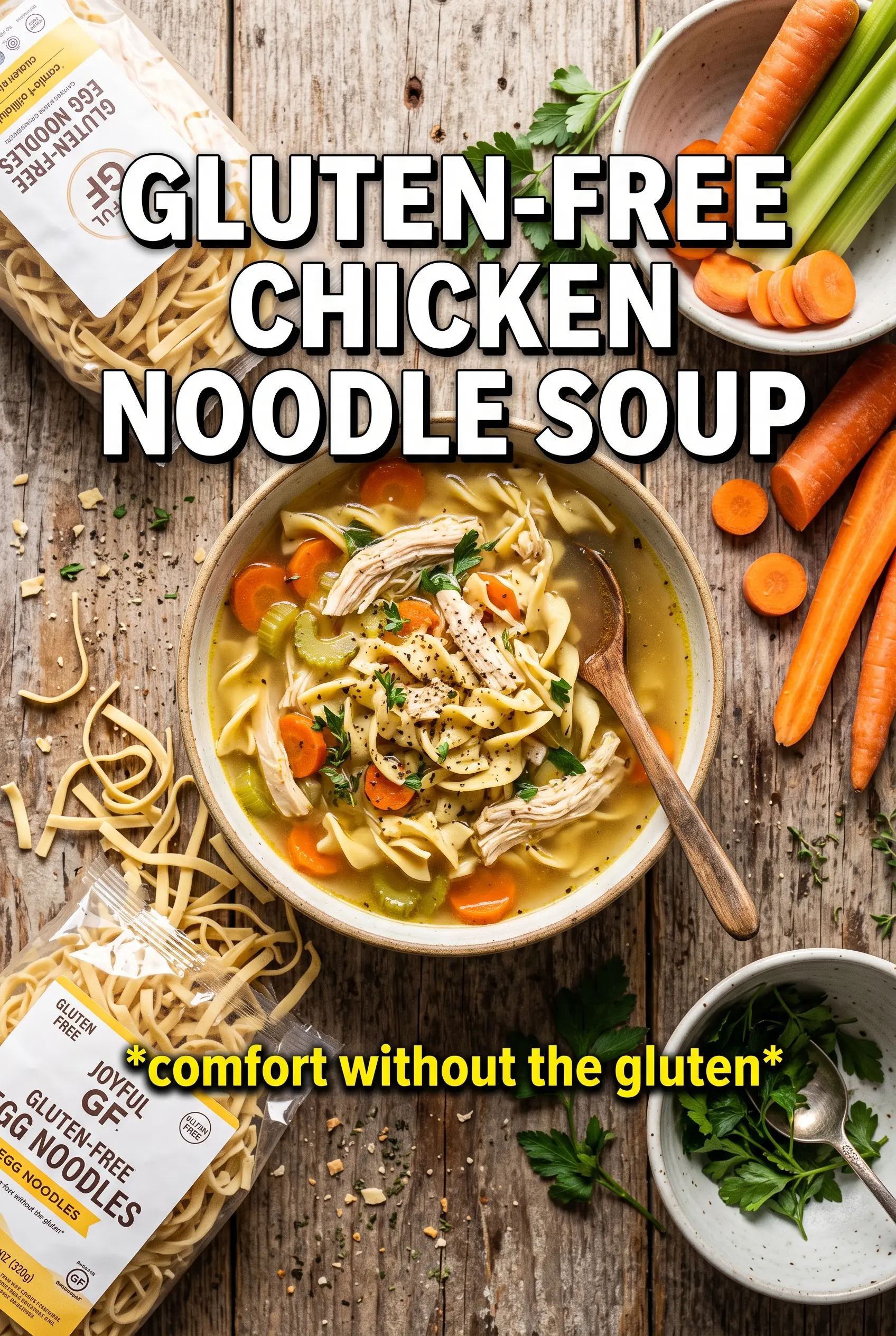
Gluten-Free Chicken Noodle Soup
Ingredients
Equipment
Method
- Heat the olive oil in a large pot over medium heat and sauté the onion, carrots, and celery for 5 minutes until the onion softens and the vegetables look slightly glossy.
- Add the garlic and cook for 1 minute, stirring, until fragrant and just beginning to turn golden.
- Pour in the certified GF chicken broth and bring the mixture to a boil, stirring to lift any browned bits from the bottom of the pot.
- Add the dried thyme, dried parsley, garlic powder, and chicken, then return to a steady boil.
- Reduce to a simmer and cook for 18-20 minutes until the chicken is cooked through and flakes easily at the thickest part.
- Remove the chicken to a plate and shred it, then return the shredded chicken to the pot.
- Add the gluten-free pasta and cook according to the package instructions, checking frequently because GF pasta can overcook.
- Season generously with salt and pepper, then garnish with fresh parsley and serve hot.