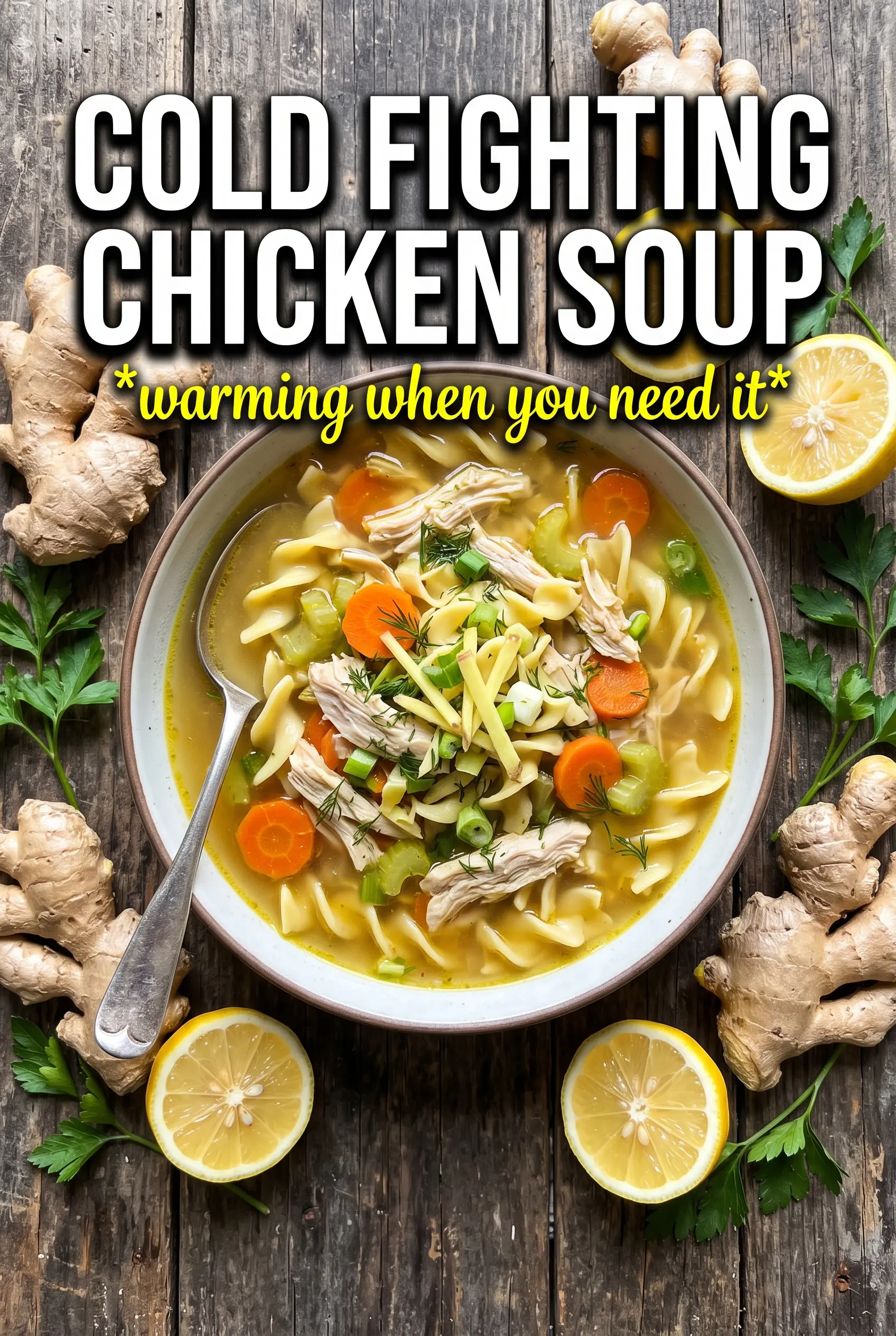
Deeply golden broth, tender shredded chicken, and soft egg noodles make this chicken noodle soup the kind of bowl people want when they’re run down and nothing else sounds right. The ginger, garlic, turmeric, and lemon don’t just add flavor; they give the broth a bright, clear backbone that tastes clean instead of heavy. It’s comforting without turning bland, and that balance is what keeps me coming back to it.
The trick is building the broth with bone-in chicken and aromatics from the start, then letting everything simmer long enough for the chicken to give up its flavor before the noodles go in. Turmeric brings that warm color and earthy edge, while the vinegar and lemon at the end sharpen the whole pot and keep it from tasting flat. I’ve found that adding those acids only after the chicken is shredded keeps the broth tasting fresh instead of harsh.
Below you’ll find the small details that matter here: when to add the noodles so they stay tender, how to avoid an overcooked broth, and the easiest swap if you only have boneless chicken on hand.
The broth had that bright ginger-garlic kick and the noodles stayed separate instead of turning mushy. I added the lemon at the end like you said and it tasted way fresher than my usual chicken soup.
Save this cold fighting chicken noodle soup for the days when you want a golden, ginger-bright broth with tender noodles and shredded chicken.
The Broth Needs Time to Taste Like More Than Water
Chicken noodle soup goes wrong when the broth stays thin and the aromatics never get a chance to merge. Starting with bone-in chicken pieces changes that fast. The bones bring body, the skin and dark meat add richness, and the vegetables soften into the broth instead of floating around like separate ingredients. That’s what gives this soup its real depth.
The other thing that matters is when the acid goes in. Lemon juice and apple cider vinegar added at the end keep the soup bright, but if you add them too early, the broth can taste sharp before the chicken has finished doing its work. Turmeric also needs enough simmering time to mellow; otherwise it can taste dusty instead of warm and savory.
- Bone-in chicken pieces — This is what gives the broth its best body. Boneless chicken will work in a pinch, but the soup won’t taste as full or rounded.
- Fresh ginger and garlic — These are the bright, warm notes that make the bowl feel restorative. Powdered versions can work, but they won’t give the same clean edge.
- Turmeric — It adds color and a gentle earthy note. Don’t overdo it; too much turns the broth muddy and can dominate the other flavors.
- Egg noodles — Standard egg noodles are the right call here because they soak up broth without falling apart right away. If you use a thinner noodle, cut the simmer time a little.
What Each Ingredient Is Actually Doing in This Recipe
- Primary ingredient (the star) — Quality matters most. Choose the best you can find.
- Cooking medium (oil, butter, or broth) — This carries flavors and prevents dryness.
- Seasonings (salt, pepper, spices, herbs) — Layer flavors so nothing overpowers. Build depth gradually.
- Aromatics (garlic, onion, herbs) — Cook with fat to bloom flavors. Become the foundation.
- Supporting ingredients — Complement the main ingredient without overpowering it.
- Sauce or liquid (if applicable) — Brings flavors together. Balance richness with acid.
- Acid (lemon, vinegar, wine, or other) — Brightens and prevents flat-tasting results.
- Final finish (garnish, glaze, or sauce) — Prevents one-dimensional taste and adds visual appeal.
Building the Pot in the Right Order
Start with the Chicken and Aromatics Together
Put the chicken, carrots, celery, onion, garlic, ginger, broth, turmeric, and thyme in the pot before the heat comes up. That gives the chicken time to flavor the broth as it warms, instead of shocking it with boiling liquid. Bring it just to a boil, then drop it to a steady simmer. If the pot is roaring, the broth turns cloudy and the chicken gets stringy before it’s tender.
Simmer Until the Meat Pulls Cleanly Away
After about 25 minutes, the chicken should be falling off the bone and the vegetables should be soft but not collapsed. Lift the pieces out and shred them while they’re still warm enough to handle easily. Discard the skin and bones, then return the meat to the pot. If the chicken still feels tight or rubbery, give it a few more minutes; rushing this stage leaves you with chewy soup.
Add the Noodles at the End, Not the Middle
Stir in the egg noodles only after the chicken goes back in. They usually need 6 to 8 minutes, depending on the brand, and they should be tender with a little bite left. If they sit in the broth too long, they soak up liquid and go pasty. The soup is best when the noodles are cooked through but still hold their shape in the bowl.
Finish with Acid and Adjust the Salt
Turn off the heat, then stir in the lemon juice and apple cider vinegar. That last hit of acid wakes up the broth and pulls the ginger, garlic, and thyme into focus. Taste before serving and season with salt and pepper until the broth tastes clear and balanced. If it tastes flat, it usually needs salt more than anything else.
How to Adapt This Soup Without Losing the Point
Use Boneless Chicken Thighs for Faster Prep
Boneless thighs save time because you don’t need to fish out bones or skim as much fat. The broth won’t have quite the same depth, so let the soup simmer a little longer and don’t skip the thyme, ginger, and turmeric.
Make It Gluten-Free
Swap the egg noodles for a certified gluten-free noodle that holds up to simmering, or use rice noodles added right at the end. Rice noodles soften fast, so pull the pot off the heat as soon as they turn tender or they’ll go mushy.
Add Rice Instead of Noodles
If you want a thicker, more filling bowl, stir in cooked rice at the end instead of noodles. Brown rice gives the soup more chew, while white rice turns it softer and more soothing. Add a splash more broth if the pot tightens up.
Storage and Reheating
- Refrigerator: Store for up to 4 days. The noodles will keep soaking up broth, so expect the soup to thicken a bit.
- Freezer: Freeze the soup without the noodles for the best texture. Thaw, reheat, and cook fresh noodles separately or stir them in at the end.
- Reheating: Warm it gently on the stove over medium-low heat. A hard boil turns the noodles mushy and can make the chicken dry, so keep the heat low and add a splash of broth if needed.
Questions I Get Asked About This Recipe
Cold Fighting Chicken Noodle Soup
Ingredients
Equipment
Method
- Combine bone-in chicken pieces, carrots, celery, onion, garlic, fresh ginger, chicken broth, turmeric, and dried thyme in a large pot. Bring to a boil over high heat, then reduce to a steady simmer.
- Simmer uncovered at a gentle boil for 25 minutes, until the chicken is falling off the bone. You should see small bubbles rising consistently around the chicken and vegetables.
- Remove the chicken from the pot and shred it, then return the shredded chicken to the pot and discard skin and bones. Keep the broth at a gentle simmer as you return the chicken.
- Add egg noodles and cook for 6-8 minutes, until tender. Stir occasionally so noodles don’t stick to the bottom.
- Stir in lemon juice and apple cider vinegar, then season with salt and pepper to taste. Taste the broth and adjust seasonings so the flavor pops.
- Ladle the soup into bowls and top each serving with fresh parsley and lemon wedges. Serve hot while the noodles are still springy.