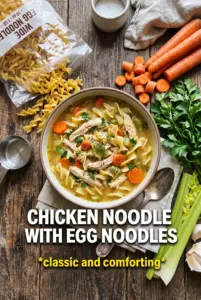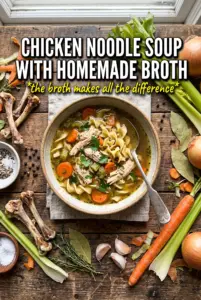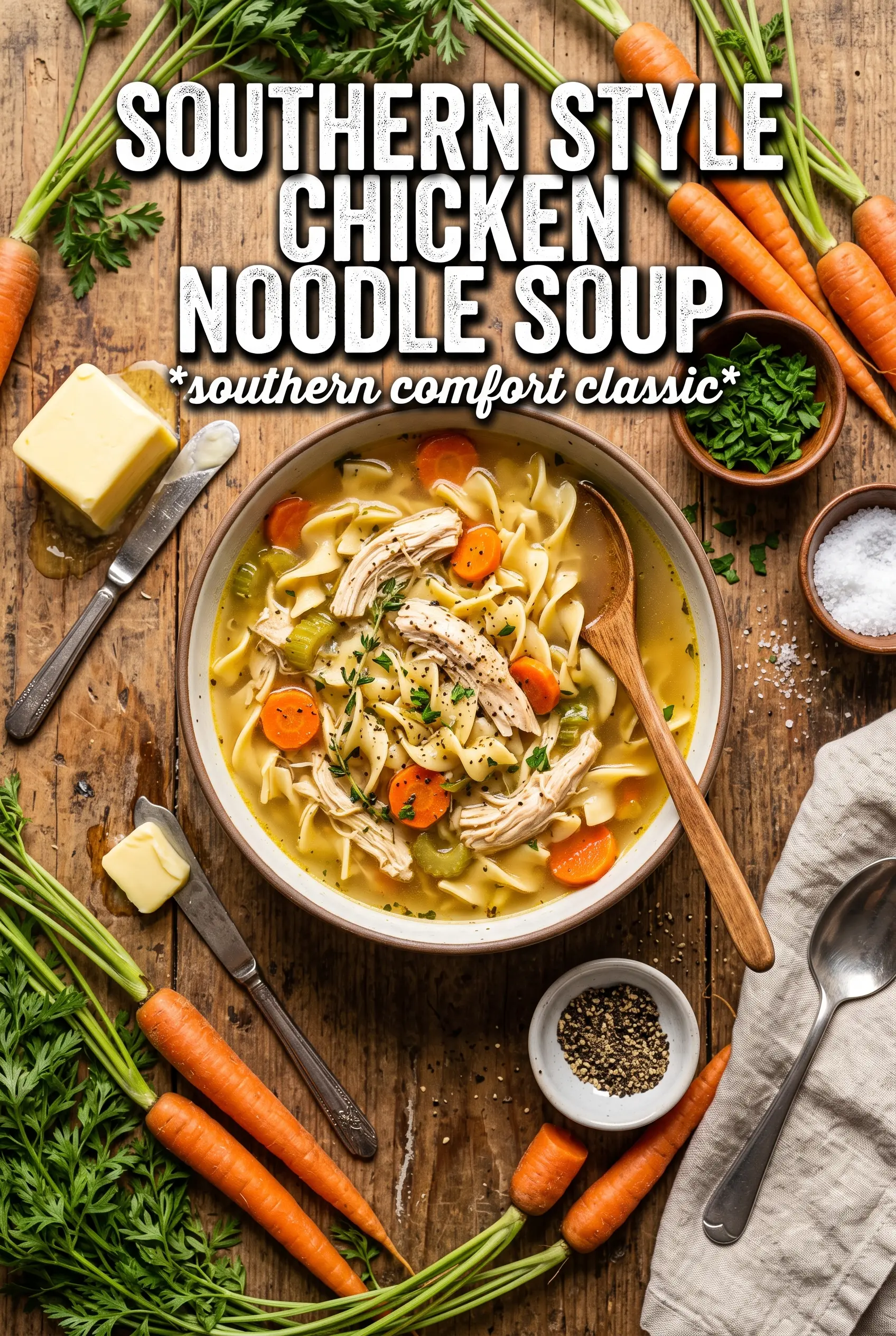
Paula Deen chicken noodle soup lands with the kind of rich, old-school comfort that makes a big pot disappear faster than you expect. The broth turns golden and full-bodied, the chicken stays tender enough to shred into soft bite-size pieces, and the wide egg noodles soak up just enough flavor without going mushy. It tastes like the kind of soup that’s been simmering all afternoon, even though the work is straightforward.
What makes this version stand out is the way it builds flavor in layers. The chicken simmers first with part of the vegetables, so the broth starts with real depth before the second round of carrots, celery, onion, and butter goes in. That extra butter isn’t there to make it heavy; it rounds out the broth and gives the soup that Southern-style richness people expect from a recipe like this. Wide egg noodles finish it off, and they need to go in near the end so they stay tender instead of bloated.
Below, I’ll walk through the part that matters most: how to keep the broth clear enough to taste clean, how to avoid overcooked noodles, and what to change if you want to stretch the pot for a crowd or make it a little lighter.
The broth came out rich and clear, and the egg noodles held up even after reheating the next day. I loved that the chicken simmered until it shredded easily without turning stringy.
Pin this buttery chicken noodle soup for the nights when you want a rich broth, tender chicken, and wide egg noodles in one comforting bowl.
The Broth Gets Richer When You Don’t Rush the First Simmer
The biggest mistake with chicken noodle soup is chasing flavor too fast. If the chicken cooks hard and fast, the broth turns cloudy and the meat dries out before the bones have time to give up anything useful. A gentle simmer is what pulls the flavor out cleanly and keeps the shredded chicken soft instead of chalky.
This recipe also avoids the thin, flat taste that happens when everything goes in at once. Starting with part of the vegetables and some broth, then adding the second round later, gives the soup more texture and a broth that tastes layered instead of boiled-together. The butter goes in after the chicken is shredded, which helps the finished soup taste round and full without needing cream.
- Whole chicken — A bone-in bird gives you the deepest broth and the best shredded meat. Boneless chicken breasts will work in a pinch, but the soup will lose that homemade depth.
- Wide egg noodles — These hold up better than thin noodles and give the soup its classic body. If you swap in another pasta, cut the cooking time back and add it only at the very end.
- Butter — This is part of the signature richness here. Salted or unsalted both work, but unsalted gives you better control over the final seasoning.
- Fresh parsley and thyme — Dried herbs build the simmered base, but fresh parsley at the end keeps the soup tasting bright. If you only have dried parsley, use less than you think; it fades fast.
What Each Ingredient Is Actually Doing in This Recipe
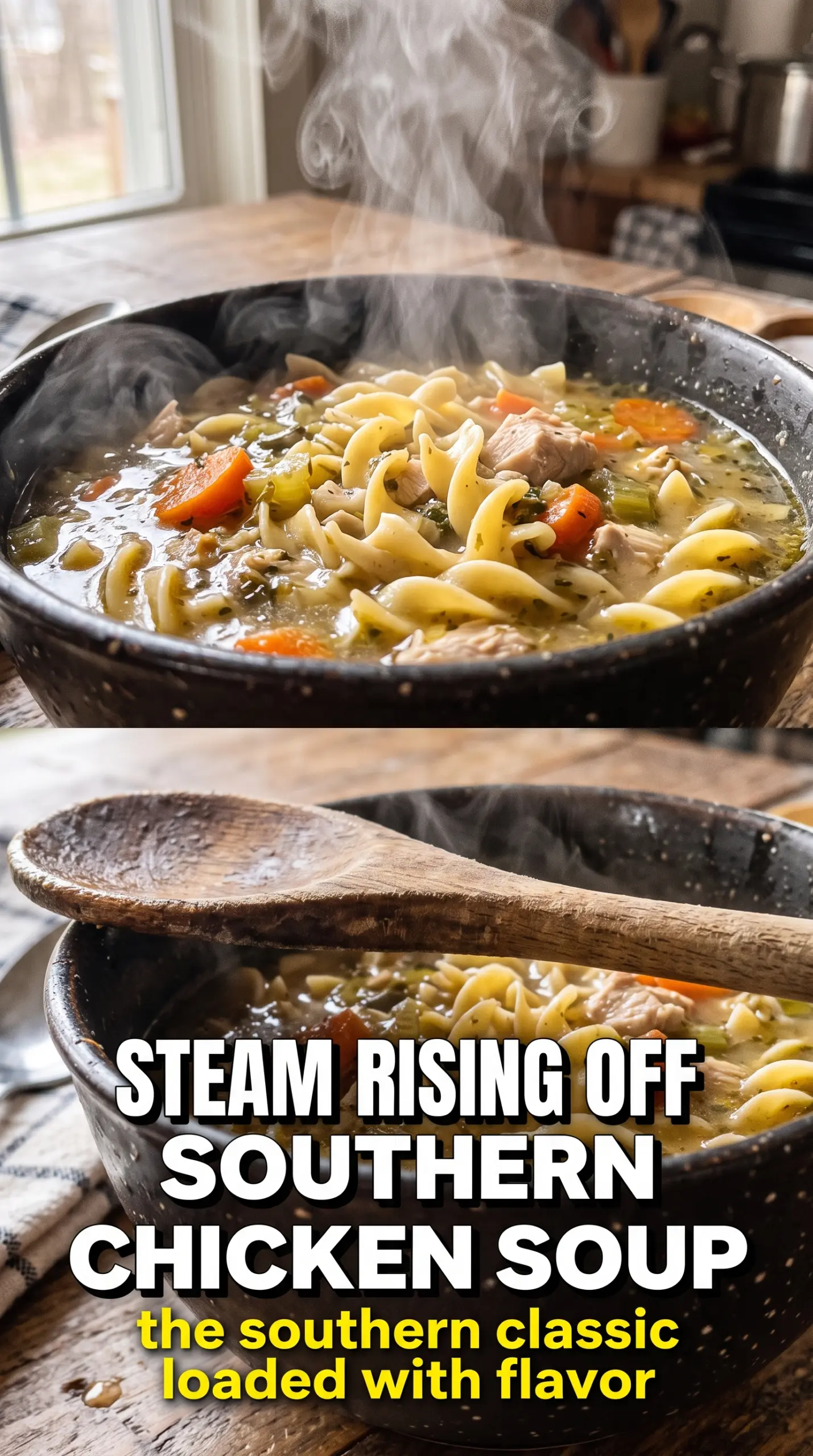
- Primary ingredient (the star) — Quality matters most. Choose the best you can find.
- Cooking medium (oil, butter, or broth) — This carries flavors and prevents dryness.
- Seasonings (salt, pepper, spices, herbs) — Layer flavors so nothing overpowers. Build depth gradually.
- Aromatics (garlic, onion, herbs) — Cook with fat to bloom flavors. Become the foundation.
- Supporting ingredients — Complement the main ingredient without overpowering it.
- Sauce or liquid (if applicable) — Brings flavors together. Balance richness with acid.
- Acid (lemon, vinegar, wine, or other) — Brightens and prevents flat-tasting results.
- Final finish (garnish, glaze, or sauce) — Prevents one-dimensional taste and adds visual appeal.
The Part Where the Soup Turns From Broth to Dinner
Building the Chicken Broth
Set the chicken in a very large pot with the water, some of the broth, half the carrots, celery, onion, bay leaves, and the first teaspoon of salt. Bring it just to a boil, then turn it down so the surface barely trembles. Skim off the foam early; that’s what keeps the broth tasting clean. If the pot boils hard, the broth gets greasy-looking and the chicken tightens up before it’s tender.
Shredding and Straining
Once the chicken is falling off the bone, pull it out and let it cool just enough to handle. Shred the meat into bite-size pieces and throw away the skin, bones, and cooked-down vegetables from the first simmer; they’ve done their job. Strain the broth before moving on. That step matters because it removes any grit and gives you a smoother, more polished soup.
Finishing With the Vegetables and Noodles
Return the broth to the pot with the remaining broth, butter, fresh carrots, celery, onion, and garlic. Let that simmer until the vegetables start to soften, then stir in the shredded chicken and herbs. Add the noodles only when you’re close to serving, because they keep cooking in the hot broth even after the burner is off. If they go in too early, they’ll swell and drink up too much of the soup.
Seasoning at the End
Taste before you ladle it out and season with enough salt and pepper to wake up the broth. Chicken noodle soup often tastes flat right before the final seasoning, and that’s normal. The broth needs a firm hand at the end because the noodles absorb salt as they sit. A good pot should taste full, savory, and just a little buttery in the finish.
How to Stretch This Soup, Lighten It, or Make It Fit What’s in Your Kitchen
Dairy-Free Version
Leave out the butter and use a little extra broth to keep the soup loose and savory. You’ll lose some of the roundness that butter brings, but the chicken and vegetables still carry the dish. A drizzle of olive oil at the end can give it back a little body without changing the flavor too much.
Gluten-Free Bowl
Swap the egg noodles for a sturdy gluten-free pasta and cook it just until tender. Gluten-free noodles can go soft fast, so it helps to keep them slightly underdone if the soup will sit for a while. Another option is to serve the broth and chicken over rice for a cleaner texture.
Using Leftover Chicken Instead of a Whole Bird
If you’ve got cooked chicken already, skip the long simmer and build the broth with the vegetables, herbs, and broth instead. Stir the chicken in near the end just long enough to warm through. The soup will be quicker, but it won’t have the same depth as the version made with a whole chicken and bones.
Storage and Reheating
- Refrigerator: Store for up to 4 days. The noodles will keep absorbing broth, so the soup gets thicker as it sits.
- Freezer: Freezes well, but the noodles soften after thawing. For the best texture, freeze the soup without the noodles and cook fresh noodles when reheating.
- Reheating: Warm it gently over medium-low heat until steaming, not boiling. If it’s too thick, add a splash of broth or water. Boiling reheated noodle soup is the fastest way to turn the noodles mushy.