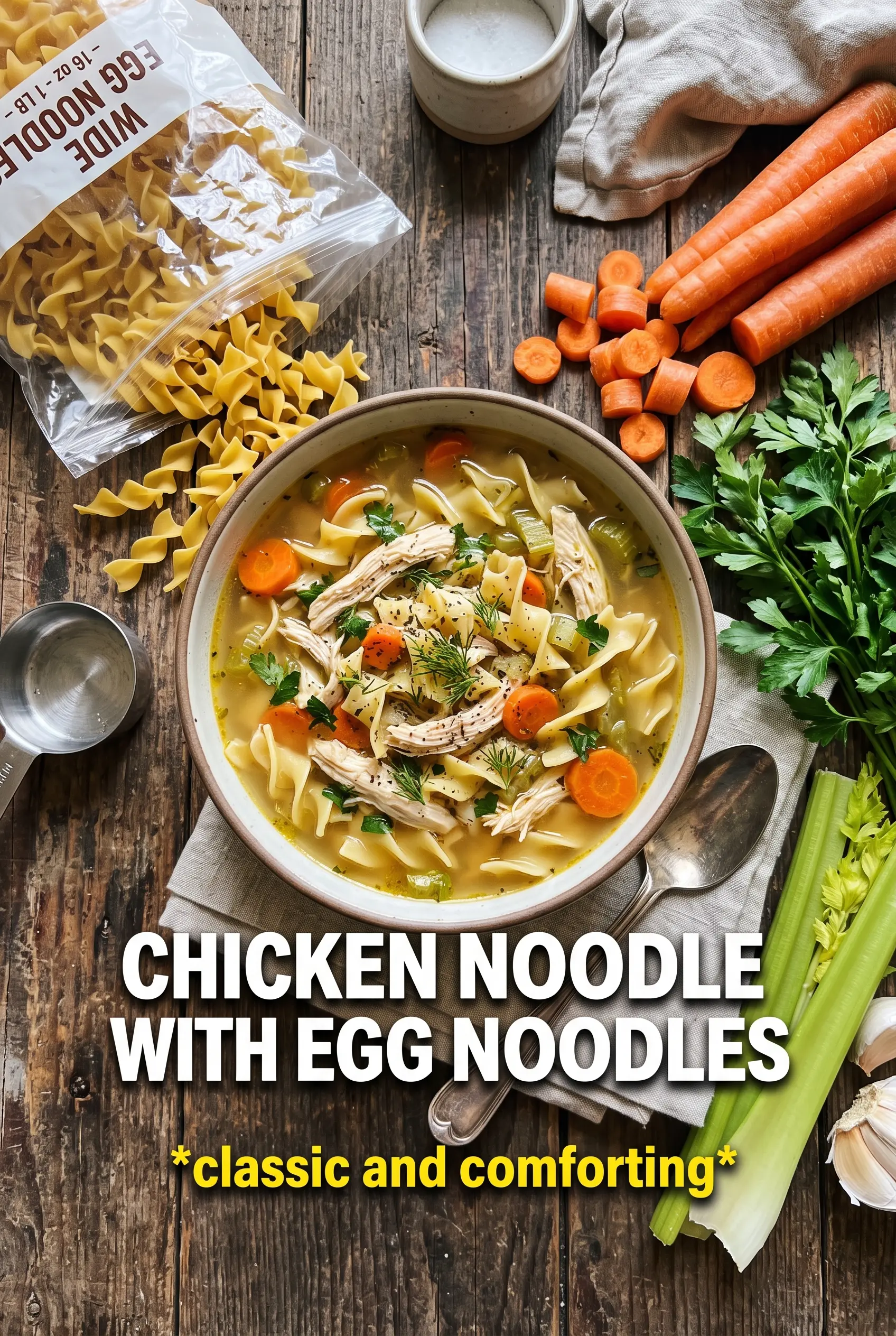
Chicken noodle soup gets its reputation from being comforting, but the version worth making at home has a broth that tastes like something, noodles that stay pleasantly bouncy, and vegetables that still hold their shape. Wide egg noodles are the move here because they catch the broth in their folds, and fresh dill at the end gives the whole pot a clean, grassy finish that keeps it from tasting flat.
The key is building the soup in stages. Sautéing the onion, carrots, and celery first gives the broth a deeper base before any liquid goes in, and simmering the chicken in that seasoned broth keeps the meat tender instead of stringy. The noodles go in only after the chicken is shredded, which keeps them from soaking up all the broth and turning soft before you even get to the table.
Below, I’m walking through the little details that matter most: when to salt, why the dill goes in at the end, and how to keep the noodles from stealing the show in the wrong way.
The broth tasted rich even before I added the noodles, and the egg noodles stayed perfectly tender instead of falling apart. My husband said it tasted like the kind of chicken soup you get when someone actually knows what they’re doing.
Save this chicken noodle soup with egg noodles for a broth that stays savory, noodles that stay tender, and a dill finish that brightens every bowl.
The Step That Keeps Egg Noodles From Going Soft
The broth and the noodles need to be treated like two different jobs. If the noodles cook too long in the pot, they keep swelling and drink up broth faster than you expect, which leaves you with soup that feels heavy instead of brothy. That’s why the chicken gets cooked and shredded first, then the noodles go in near the end when everything else is already seasoned and ready.
The other detail that matters is the simmer. A hard boil can beat the chicken into dryness and make the vegetables fall apart before the noodles are ready. Keep the pot at a lively simmer, not a rolling boil, until the chicken is just cooked through and the broth has picked up the flavor from the vegetables and herbs.
What Each Ingredient Is Actually Doing in This Pot
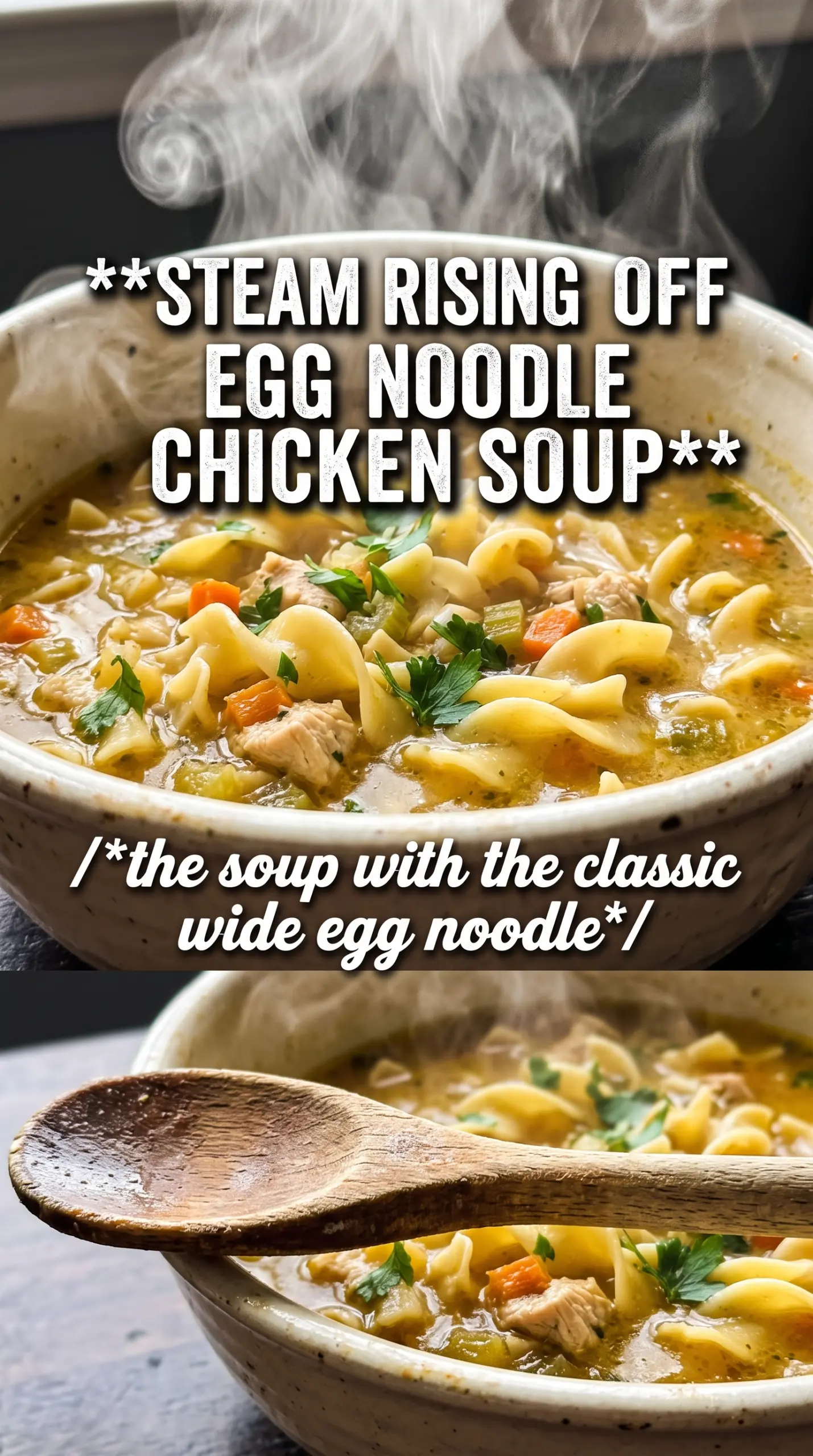
- Chicken breast — It gives you lean, shreddable meat that turns tender in the broth. Thighs work too if you want a richer soup, but breasts are easy to slice into even pieces and shred cleanly after simmering.
- Wide egg noodles — These are worth using here. They hold onto broth better than thin noodles and stay pleasantly chewy if you cook them just until tender; regular pasta can work, but it won’t give you the same old-school soup feel.
- Carrots, celery, and onion — This trio builds the base flavor before the broth even goes in. Dice the onion small and slice the carrots and celery evenly so they soften at the same rate and don’t leave you with crunchy pieces in a finished soup.
- Fresh dill — Add it at the end so it stays bright. If you cook it too long, it loses the clean, herbal lift that keeps the soup from tasting one-note.
- Chicken broth — Use one you’d actually sip. A bland broth makes the whole pot taste thin, and no amount of herbs can fully cover that up.
Building the Soup in the Right Order
Softening the Vegetables First
Start by heating the olive oil and cooking the onion, carrots, and celery until the onion turns translucent and the carrots just begin to lose their raw edge. You want them softened, not browned. If the pot is too hot and the vegetables start to color fast, lower the heat; browning isn’t the goal here, and it can make the broth taste sharper than it should.
Letting the Chicken Poach in the Broth
Once the garlic goes in for just a minute, add the broth, herbs, and chicken and bring everything to a boil before dropping it to a simmer. The chicken should cook gently until it’s opaque all the way through and pulls apart easily with two forks. If the liquid is bubbling hard the whole time, the chicken will tighten up and shred dry.
Finishing with Noodles and Dill
Shred the chicken, return it to the pot, then add the egg noodles and cook just until they’re tender with a little bite left in the center. This is the stage people overdo. Pull the pot off the heat as soon as the noodles are done, then stir in the dill and adjust the salt and pepper so the broth tastes complete instead of muted.
Three Ways to Adjust This Soup Without Losing What Makes It Good
Use chicken thighs for a deeper, richer broth
Thighs make the soup taste a little fuller and stay moist even if you simmer a bit longer. They’ll give you a slightly richer bowl than breast meat, which is handy if you like a more savory, almost roast-chicken flavor.
Make it gluten-free with sturdy gluten-free noodles
Swap in a gluten-free noodle that holds up to simmering, since some brands turn soft fast and can cloud the broth. Cook them separately if the package says they’re delicate, then add them to each bowl so the soup stays clear and the texture stays firm.
Add extra vegetables without watering it down
Mushrooms, peas, or chopped spinach all work, but add them near the end so they don’t turn to mush. Keep the liquid amount the same; the vegetables should support the broth, not stretch it thin.
Storage and Reheating
- Refrigerator: Keeps for 4 days in a sealed container. The noodles will absorb broth as it sits, so expect the soup to thicken a bit.
- Freezer: Freezes well if you leave the noodles out and add fresh-cooked noodles later. Frozen soup with noodles gets mushy once thawed.
- Reheating: Warm it gently on the stove over medium-low heat until steaming. If it looks too thick, add a splash of broth or water before heating; boiling hard will overcook the noodles and toughen the chicken.