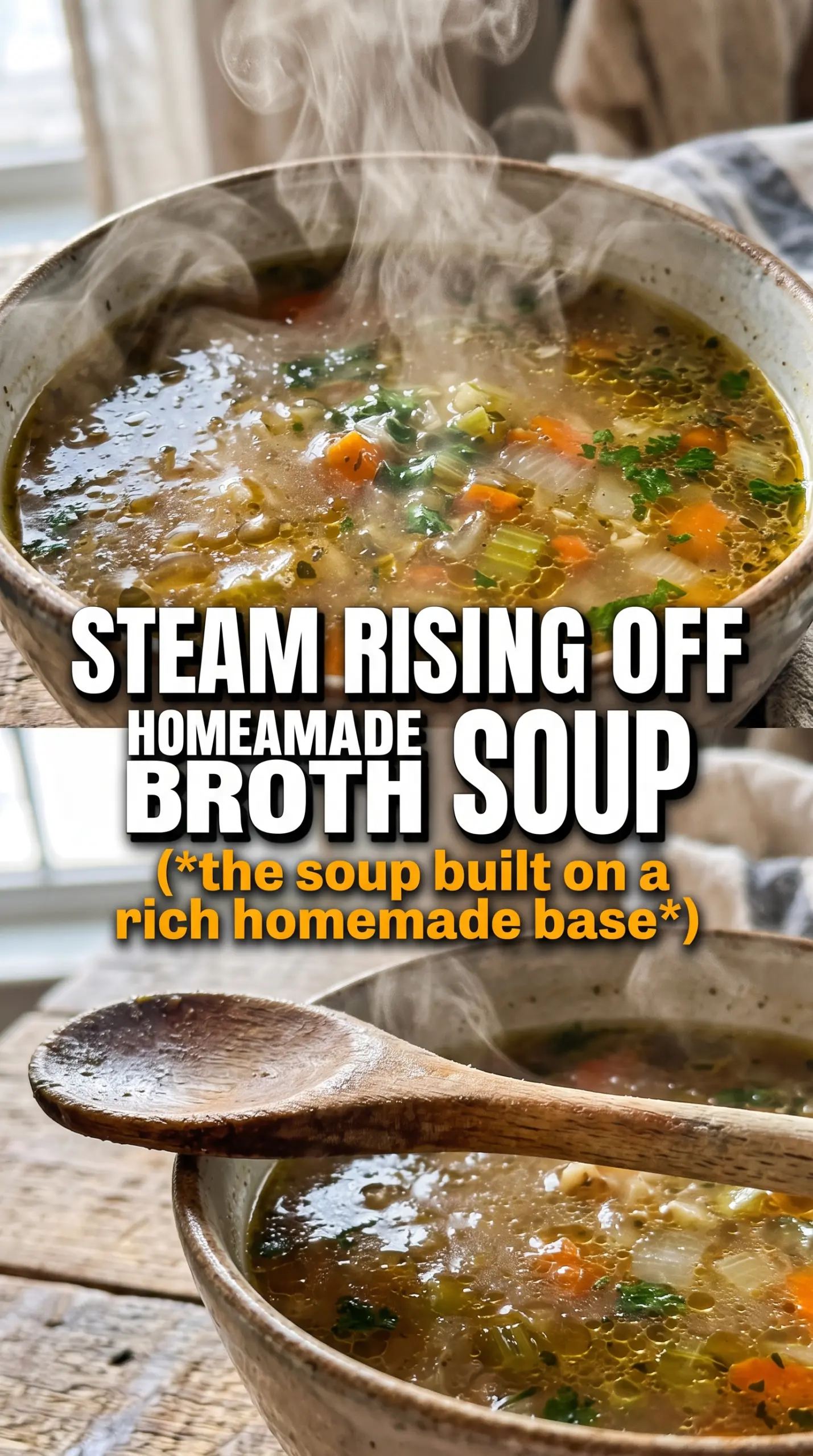
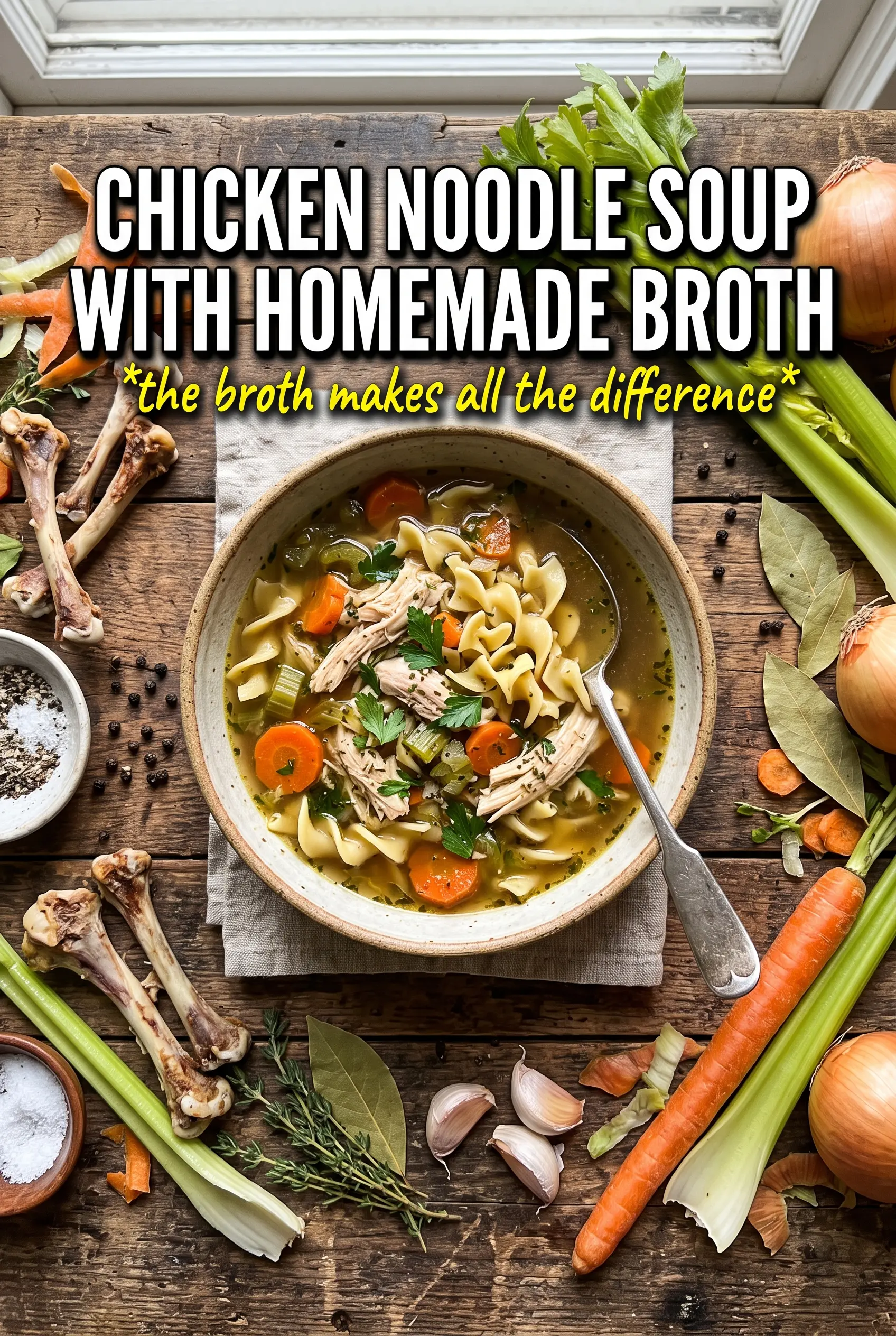
Chicken noodle soup made with homemade broth has a depth that boxed stock just can’t touch. The broth turns rich and golden, the noodles soak up all that savory flavor, and the shredded chicken stays tender instead of stringy. It’s the kind of pot that smells like real cooking from the moment the bones hit the water.
The difference here comes from patience, not fancy ingredients. Starting with chicken pieces, vegetables, and cold water gives the broth time to pull out collagen and flavor gradually, which is what gives it body. A splash of apple cider vinegar helps coax more from the bones, and skimming the foam early keeps the broth clean instead of muddy.
Below you’ll find the exact timing that keeps the noodles from going soft and the broth from tasting flat. There’s also a practical note on using the chicken you cooked for the stock, so nothing good gets left behind.
The broth came out deep and silky, and the apple cider vinegar gave it a richness I never get from store-bought stock. My noodles held their texture even after reheating the next day.
Save this chicken noodle soup with homemade broth for the kind of bowl that tastes deeply savory, golden, and worth the extra simmer time.
The Broth Gets Its Body Before the Noodles Ever Go In
Most chicken noodle soup turns thin because the broth never gets a chance to build itself. Starting with chicken pieces, cold water, and aromatics gives you time to draw collagen from the bones and flavor from the vegetables before anything else is in the pot. That slow simmer is what gives this soup the kind of richness that coats a spoon instead of tasting like seasoned water.
Keep the heat low enough that the surface barely trembles after the initial boil. If it boils hard the whole time, the broth turns cloudy and the chicken gets tight instead of tender. Skimming the foam early matters here too; that first rise of foam is where a lot of the bitterness and murk lives.
What Each Ingredient Is Actually Doing in This Soup
- Chicken pieces — Backs, necks, and a whole chicken all work because the bones carry collagen and flavor into the broth. If you use a whole chicken, pull out the cooked meat once it’s tender and save it for the soup at the end.
- Apple cider vinegar — You won’t taste it in the finished broth, but it helps extract more from the bones during the long simmer. Don’t skip it if you want that fuller, more rounded body.
- Carrots, celery, onion, and garlic — These build the base flavor twice: once in the broth and again in the finished soup. The broth vegetables can be rough chopped because they’re getting strained out, but the fresh soup vegetables should be sliced evenly so they cook at the same pace.
- Wide egg noodles — These hold up better than thin noodles and give the soup that classic hearty texture. Cook them just until tender; if they go much past that, they soften fast in the hot broth.
- Fresh parsley — It brightens the finished bowl and keeps the soup from tasting heavy after the long simmer. Add it at the end so the flavor stays fresh and green.
Building the Soup in the Right Order So Nothing Turns Mushy
Cooking the Broth First
Combine the chicken pieces, rough chopped vegetables, bay leaves, vinegar, and cold water in a large pot, then bring everything to a boil before dropping it to a gentle simmer. That initial boil helps the pot come up to temperature, but the long cook should stay quiet so the broth stays clear and the chicken stays tender. Skim off any foam that rises in the first few minutes, because leaving it in gives the broth a dull, cloudy look and a slightly muddy flavor.
Straining and Saving the Chicken
Once the broth has simmered for 1.5 to 2 hours, strain it and season it with salt while it’s still hot. Pull out any chicken meat that’s fallen off the bones and save it for the soup. If the broth tastes flat at this point, it’s usually because it hasn’t been salted enough; a properly seasoned broth should taste good on its own before anything else is added.
Cooking the Vegetables and Noodles
Bring the strained broth back to a simmer and add the fresh carrots, celery, and onion first so they get a head start. After about 10 minutes, stir in the egg noodles and cook until they’re just tender, usually 6 to 8 minutes. If you dump everything in at once, the noodles steal the timing from the vegetables and you end up with either crunchy carrots or overcooked pasta.
Finishing with Chicken and Herbs
Add the shredded chicken and parsley at the very end, then taste and season generously with salt and pepper. The chicken is already cooked, so it only needs a minute or two to warm through. This last seasoning pass matters more than people think; soup needs enough salt to wake up the broth, the noodles, and the vegetables all at once.
How to Adapt It When You Need a Different Bowl
Gluten-Free Chicken Noodle Soup
Swap the egg noodles for a gluten-free noodle that holds up well in broth, or cook rice separately and add it to each bowl. Gluten-free pasta tends to soften faster, so pull it from the heat as soon as it’s tender and don’t let it sit in the pot too long.
Use a Rotisserie Chicken Shortcut
If you don’t have raw chicken pieces for broth, use a good store-bought chicken stock and simmer it with the broth vegetables for 20 to 30 minutes. The soup will still be comforting and balanced, but it won’t have the same deep body that comes from making the broth from bones.
More Herbs, Brighter Finish
A little thyme or dill works well here if you want a stronger herbal note. Add dried herbs during the broth simmer and fresh herbs at the end so the flavor doesn’t disappear into the pot.
Storage and Reheating
- Refrigerator: Store for up to 4 days. The noodles will keep soaking up broth, so expect the soup to thicken as it sits.
- Freezer: The broth and chicken freeze well, but cooked noodles don’t. Freeze the soup base without noodles, then cook fresh noodles when you reheat it.
- Reheating: Warm it gently over medium-low heat until steaming, not boiling. If the pot boils hard, the noodles break down and the chicken turns dry.
Answers to the Questions Worth Asking
Chicken Noodle Soup With Homemade Broth
Ingredients
Equipment
Method
- Place chicken pieces, carrots, celery, onion, garlic, bay leaves, apple cider vinegar, and cold water into a large pot. Bring to a boil over high heat, and watch for a foamy surface that starts to rise.
- Skim foam from the top as needed until the broth looks clearer. Reduce heat so the pot maintains a gentle simmer, then continue simmering for 1.5-2 hours with small bubbles.
- Strain the broth and return it to the same pot. Season the strained broth with salt, and discard the cooked vegetables and aromatics.
- Bring the strained broth to a simmer. Add the fresh sliced carrots, celery, and diced onion, and wait until the liquid returns to a steady bubble.
- Simmer for 10 minutes. The vegetables should begin to soften but still hold their shape.
- Add wide egg noodles and stir once to keep them from sticking. Cook for 6-8 minutes, until the noodles are tender with a slight bite.
- Stir in the shredded chicken reserved from the broth bones. Add fresh parsley and season generously with salt and pepper, tasting until the flavor stands out.