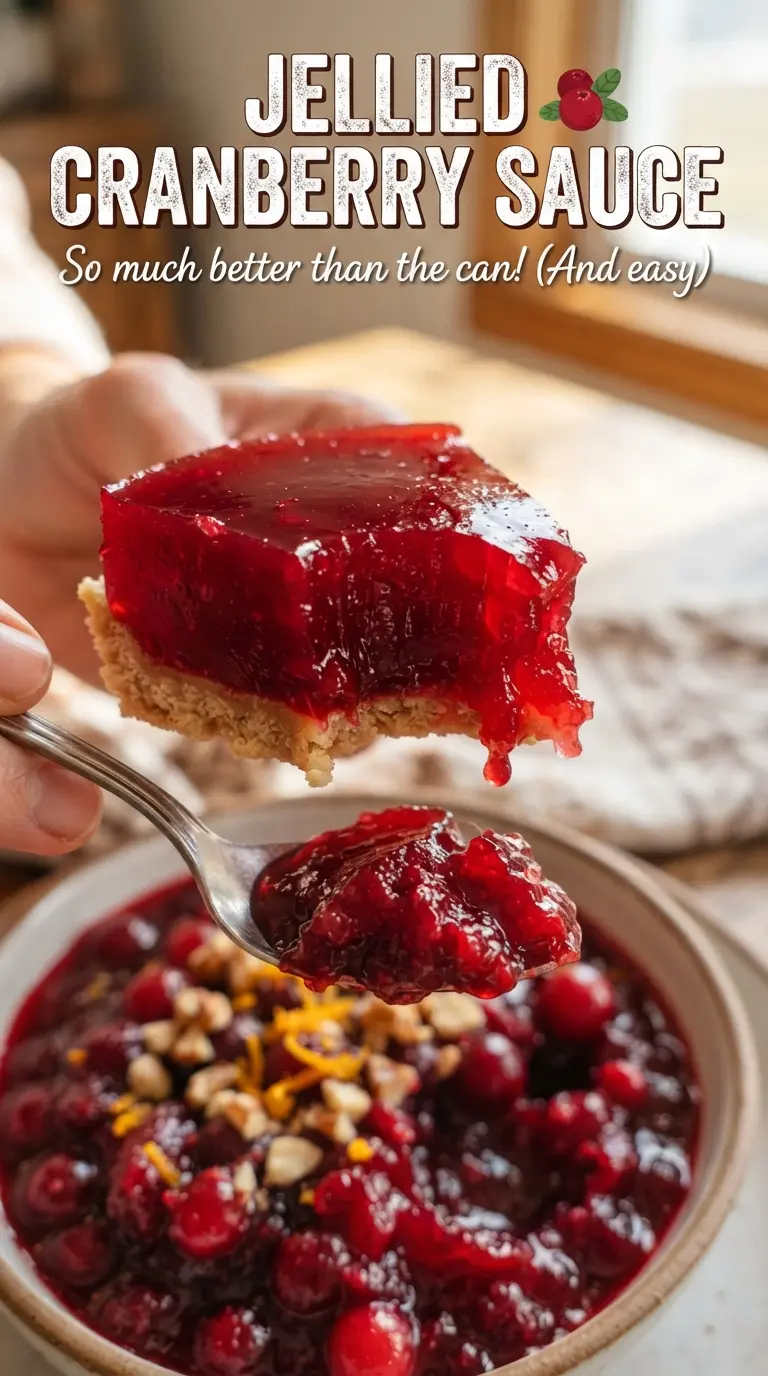
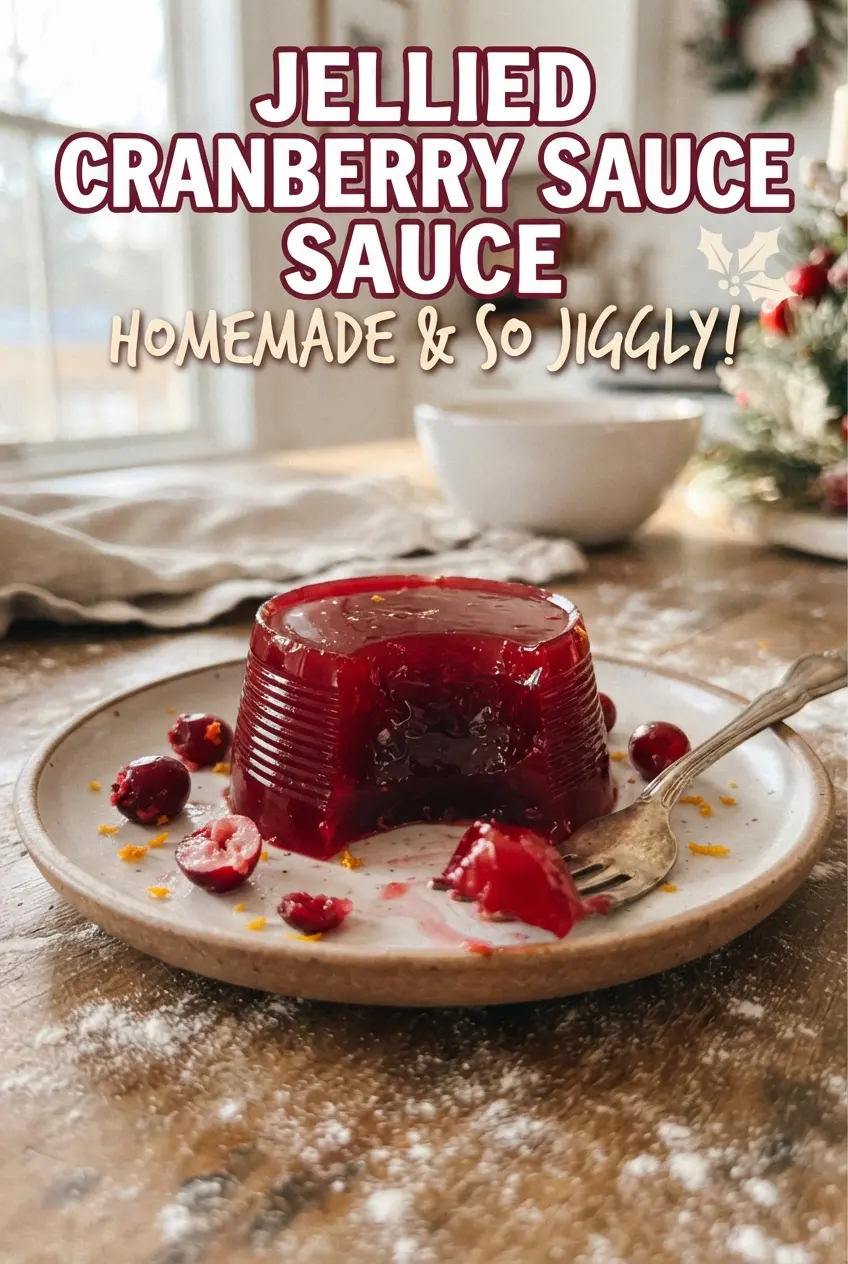
Jellied cranberry sauce sets up into that glossy, sliceable loaf people either grew up waiting for or never quite trusted until they taste a good homemade version. When it’s done right, it unmolds with clean edges, holds its shape on the plate, and still tastes bright instead of candy-sweet. The texture is the whole point here: smooth, firm, and just soft enough to give when you cut into it.
What makes this version work is the balance between sugar, acid, and the natural pectin in the cranberries. You boil the berries until they all burst, then press everything through a fine-mesh strainer so the sauce turns silky instead of chunky. A short second boil after straining tightens the set, and the lemon juice keeps the flavor from going flat.
Below, you’ll find the small details that matter most, including how to get a clean unmold, what to do if your sauce seems loose, and the easiest way to turn this into the kind of cranberry sauce people actually ask for again.
The sauce set up beautifully overnight and sliced into perfect rounds the next day. I loved that it was smooth instead of pulpy, and the lemon kept it from tasting too sweet.
Save this smooth jellied cranberry sauce for the holiday table when you want those clean slices and that bright cranberry-lime look on the plate.
The trick to a clean set without a gummy texture
The biggest mistake with jellied cranberry sauce is stopping too soon after the berries burst. At that stage, the mixture still has too much free water, and it will look thick in the pot but turn loose after chilling. The second boil matters because it concentrates the puree just enough to help it slice instead of slump.
Straining is another place where people rush. Press the cranberry mixture through the fine-mesh strainer until only dry skins and seeds are left behind. That step gives you the smooth, classic texture, and scraping the underside of the strainer helps capture the last bit of body without watering the sauce down.
- Cranberries — Fresh cranberries bring the natural pectin that lets this set. Frozen cranberries work too; use them straight from frozen and expect the boil to take a few extra minutes.
- Sugar — This is doing more than sweetening. It supports the set and keeps the sauce from tasting sharp or thin. Cutting it much lower changes the texture, not just the flavor.
- Lemon juice — A small amount wakes up the cranberry flavor and keeps the finish bright. Bottled works in a pinch, but fresh lemon gives a cleaner edge.
- Fine-mesh strainer — This matters more than the pot size. A food mill can work, but a fine strainer gives the smoothest result for the classic molded texture.
What Each Ingredient Is Actually Doing in This Recipe
- Primary ingredient (the star) — Quality matters most. Choose the best you can find.
- Cooking medium (oil, butter, or broth) — This carries flavors and prevents dryness.
- Seasonings (salt, pepper, spices, herbs) — Layer flavors so nothing overpowers. Build depth gradually.
- Aromatics (garlic, onion, herbs) — Cook with fat to bloom flavors. Become the foundation.
- Supporting ingredients — Complement the main ingredient without overpowering it.
- Sauce or liquid (if applicable) — Brings flavors together. Balance richness with acid.
- Acid (lemon, vinegar, wine, or other) — Brightens and prevents flat-tasting results.
- Final finish (garnish, glaze, or sauce) — Prevents one-dimensional taste and adds visual appeal.
What to do in the pot, in the strainer, and in the mold
Cooking the berries until they burst
Put the cranberries, sugar, and water in a saucepan and bring everything to a boil before lowering it to a steady simmer. Within a few minutes, you should hear the berries pop and see the mixture thicken slightly as the skins split. Keep cooking until every berry has burst; if a handful stay whole, the finished sauce can taste uneven and set patchy.
Pressing the puree smooth
Set a fine-mesh strainer over a bowl and work the mixture through with a spoon or silicone spatula. Press firmly enough to move the pulp, but don’t drag a lot of skin back through the mesh. The puree should look glossy and thick, with the strainer left mostly full of skins at the end.
Building the final set
Return the strained puree to the pot with the lemon juice and salt, then boil it for 3 to 4 minutes while stirring. You’re looking for a tighter, slightly more resistant texture and a sauce that mounds briefly when stirred. If it still seems loose in the pot, it almost always needs those extra minutes now rather than a rescue later.
Chilling and unmolding
Pour the hot sauce into a lightly oiled mold, loaf pan, or clean can and let it chill until fully firm. Six hours is the minimum, but overnight gives the cleanest slice. Run a thin knife around the edge, invert it onto a plate, and let gravity do the rest; if it clings, dip the outside of the mold briefly in warm water and try again.
How to Adapt This for a Different Table or a Smaller Crowd
Frozen cranberries instead of fresh
Use the cranberries straight from frozen and add them to the pot without thawing. The cook time may stretch by a few minutes, but the set and flavor stay right on track. This is the easiest swap when fresh cranberries aren’t in season.
Lower-sugar version
You can trim the sugar a little, but not by a lot if you want a true molded slice. Less sugar means a softer set and a sharper cranberry bite. If you go this route, use the sauce as a spoonable side instead of expecting a firm loaf.
Vegan and gluten-free by default
This recipe already fits both diets as written. Just confirm that your sugar and any serving additions meet your needs if you’re serving a mixed crowd. The texture doesn’t need any specialty ingredients to work.
Storage and Reheating
- Refrigerator: Store covered for up to 1 week. The texture firms up a bit more after the first day, which is exactly what you want here.
- Freezer: It freezes well. Wrap the unmolded loaf tightly or freeze in the mold, then thaw overnight in the refrigerator before serving.
- Reheating: This is meant to be served cold or cool, not reheated. If you want a softer spoonable sauce, let it sit at room temperature for 20 to 30 minutes instead of heating it, which can make the set weep.
Answers to the questions worth asking
Jellied Cranberry Sauce
Ingredients
Equipment
Method
- Bring fresh cranberries, sugar, and water to a boil in a pot, then reduce to a steady simmer and cook for 10 minutes until all the berries burst, stirring as needed.
- Maintain the simmer until you can see the skins fully softened and the mixture looks thick and ruby-red.
- Press the hot mixture through a fine-mesh strainer, scraping to push all the pulp through, then discard the skins.
- Keep straining until only mostly dry solids remain in the strainer.
- Return the strained cranberry puree to the pot with lemon juice and salt, bring to a boil, and stir while boiling for 3-4 minutes.
- Boil until the sauce looks slightly glossy and thickened, then remove from heat.
- Pour the hot cranberry mixture into a lightly oiled mold, loaf pan, or a clean can, and spread evenly so it sets flat.
- Chill at least 6 hours or overnight until firm.
- Run a knife around the edge of the chilled mold, then invert onto a plate to release the jellied cranberry log.
- Slice into rounds and serve immediately, or keep chilled until ready to plate.