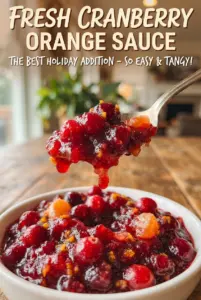
Fresh cranberry orange sauce lands on the table with a bright, glossy finish and the kind of tart-sweet pop that cuts right through heavier holiday food. The cranberries soften just enough to burst, but they don’t turn into jam unless you cook them down too far, and that little bit of texture is what makes this version worth repeating. The orange keeps it from tasting flat or one-note, while the final fold of orange segments gives every spoonful something fresh to catch onto.
The trick is starting with the sugar dissolved in orange juice before the cranberries go in. That gives you a clean, even base and helps the berries cook quickly without scorching. Zest goes in off the heat so it stays fragrant instead of bitter, and the segmented orange is folded in at the end so it keeps its shape. If you’ve only ever had cranberry sauce from a can, this is the version that makes people pause for a second and ask who made it.
Below you’ll find the timing that keeps the sauce bright instead of dull, plus a few smart swaps if you want to make it a little less sweet or a little more citrus-forward.
I loved how the cranberries burst just enough to thicken the sauce without turning it into jam, and the orange segments stayed bright and juicy. It tasted fresh even after chilling overnight.
Save this fresh cranberry orange sauce for the side dish that brings bright citrus and juicy cranberry pops to the holiday table.
The reason this cranberry sauce stays bright instead of dull
The biggest mistake with cranberry sauce is cooking it until every berry has collapsed and the mixture turns thick before it cools. Cranberries keep cooking after they come off the heat, so if you wait for it to look finished in the pan, it usually ends up too dense once chilled. Pull it when most of the berries have burst but a few still hold their shape. That gives you a sauce with body and a little texture instead of a soft gel.
Orange juice does more than add flavor here. It gives the sugar a clean base to dissolve in, and that keeps the sauce from tasting grainy at the start. Zest goes in after the pan comes off the burner because heat strips away the bright citrus oils fast. The orange segments go in last for the same reason: they should taste fresh and juicy, not cooked into mush.
What each ingredient is doing in the pan
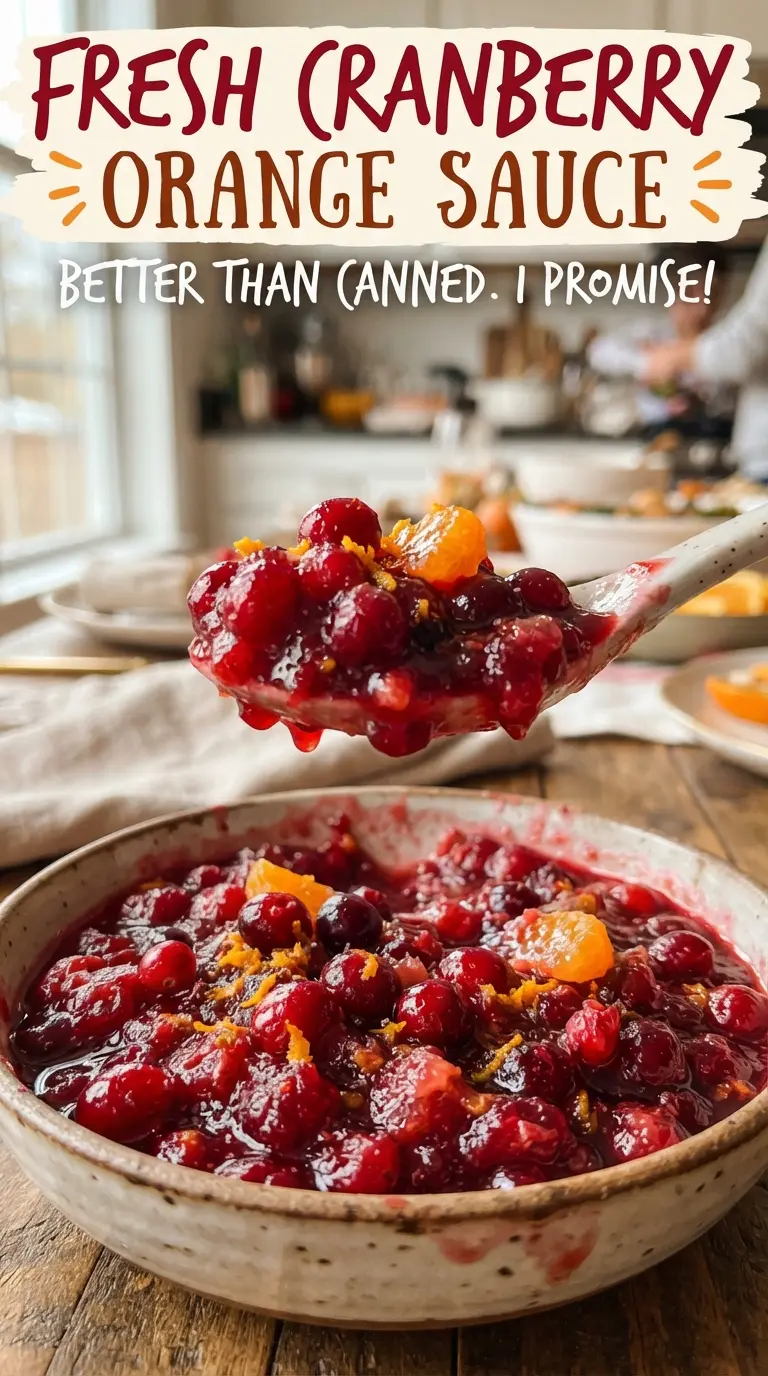
- Fresh cranberries — These bring the tart backbone and the natural pectin that thickens the sauce as it cooks. Frozen cranberries also work; use them straight from the freezer and add a minute or two to the simmer.
- Fresh orange juice — This softens the sharpness of the berries and gives the sauce its sweet citrus base. Bottled juice works in a pinch, but fresh juice tastes cleaner and makes the sauce brighter.
- Sugar — It balances the cranberry tartness and helps the fruit break down into a glossy sauce. If you cut it back much, the sauce will taste sharp and thin after chilling.
- Orange zest — This is where the strongest orange aroma lives. Add it off the heat so the oils stay fresh instead of fading in the simmer.
- Orange segments — They turn a simple sauce into something with little bursts of fresh fruit. Peel them fully so no bitter white pith slips into the bowl.
Building the sauce before the berries burst
Dissolving the sugar first
Bring the orange juice and sugar to a boil before anything else goes in. You want the sugar fully dissolved and the liquid bubbling evenly, with no grit left at the bottom of the pan. That gives the cranberries a head start and helps the sauce cook at a steady pace instead of clumping up in pockets.
Simmering until the berries split
Once the cranberries and salt go in, the pot should settle into a lively simmer, not a hard boil. After a few minutes, you’ll hear the berries start to pop. Keep stirring occasionally so the bottom doesn’t catch, and stop cooking when most berries have burst but a few still look intact. If you cook until every berry is completely broken down, the sauce usually tightens too much once it chills.
Finishing with citrus
Take the pan off the heat before you stir in the zest. That keeps the orange aroma sharp and fresh. Let the sauce cool slightly, then fold in the segmented orange gently so you don’t tear it apart. Chill it after that; the texture sets as it cools, and the flavor settles into something cleaner and more balanced.
How to adjust this sauce without losing the fresh citrus bite
Less sweet, more tart
Cut the sugar back by 2 to 3 tablespoons if you like a sharper sauce. The texture will still thicken, but the flavor will read more cranberry-forward and less jammy. Don’t reduce it too far or the fruit can taste harsh once chilled.
Make it vegan-friendly for any table
This sauce is already naturally vegan, which makes it easy to serve alongside a wide range of dishes. Keep the ingredient list simple and use fresh citrus for the cleanest result. The sauce gets all of its body from the cranberries themselves, so no gelatin or extra thickeners are needed.
Using frozen cranberries
Frozen cranberries work well and don’t need to thaw first. Add them straight to the simmering juice and give them an extra minute or two on the stove if needed. The only real difference is that the sauce may look a little looser while hot, then tighten properly as it chills.
Storage and Reheating
- Refrigerator: Store in an airtight container for up to 1 week. The sauce will thicken as it chills.
- Freezer: It freezes well for up to 2 months. Thaw overnight in the fridge and stir before serving.
- Reheating: Serve it cold or warm it gently over low heat. High heat can break down the citrus and make the texture dull.
Answers to the questions worth asking
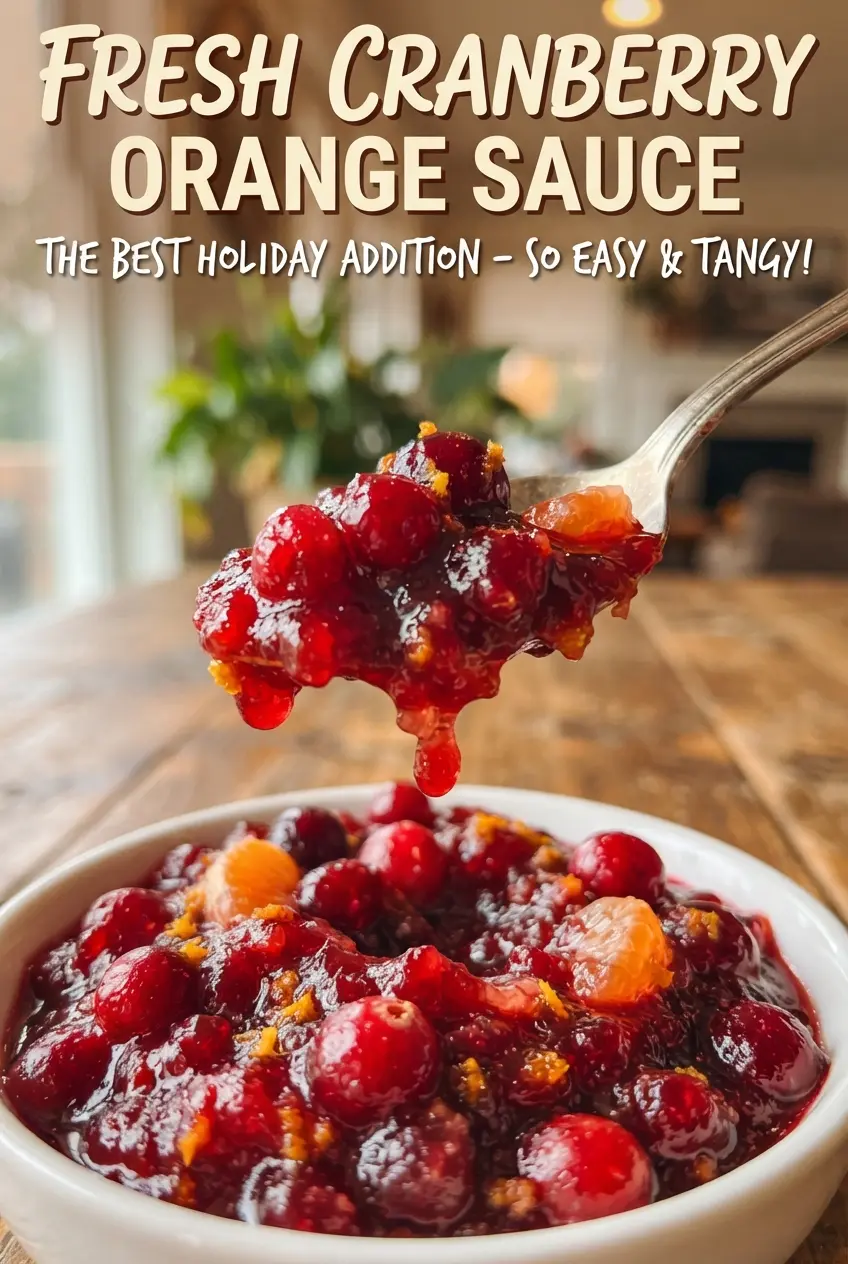
Fresh Cranberry Orange Sauce
Ingredients
Equipment
Method
- Bring the sugar and fresh orange juice to a boil in a saucepan over medium-high heat, stirring until the sugar dissolves. Visual cue: you should see steady bubbling across the surface.
- Add the fresh cranberries and a pinch of salt, then reduce to a gentle simmer. Visual cue: bubbles should be slower and smaller around the berries.
- Simmer for 10 minutes, stirring occasionally, until most of the berries burst and the sauce looks thicker. Visual cue: cranberries will be split and suspended in bright ruby sauce.
- Remove the saucepan from the heat and stir in the orange zest. Visual cue: the sauce will turn more fragrant and slightly more vibrant.
- Cool slightly, then gently fold in the peeled and segmented orange. Visual cue: orange segments should remain intact and evenly scattered.
- Chill until serving, keeping the sauce covered in the refrigerator. Visual cue: it thickens to a spoonable, glossy consistency.