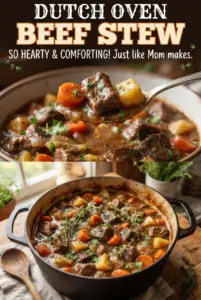
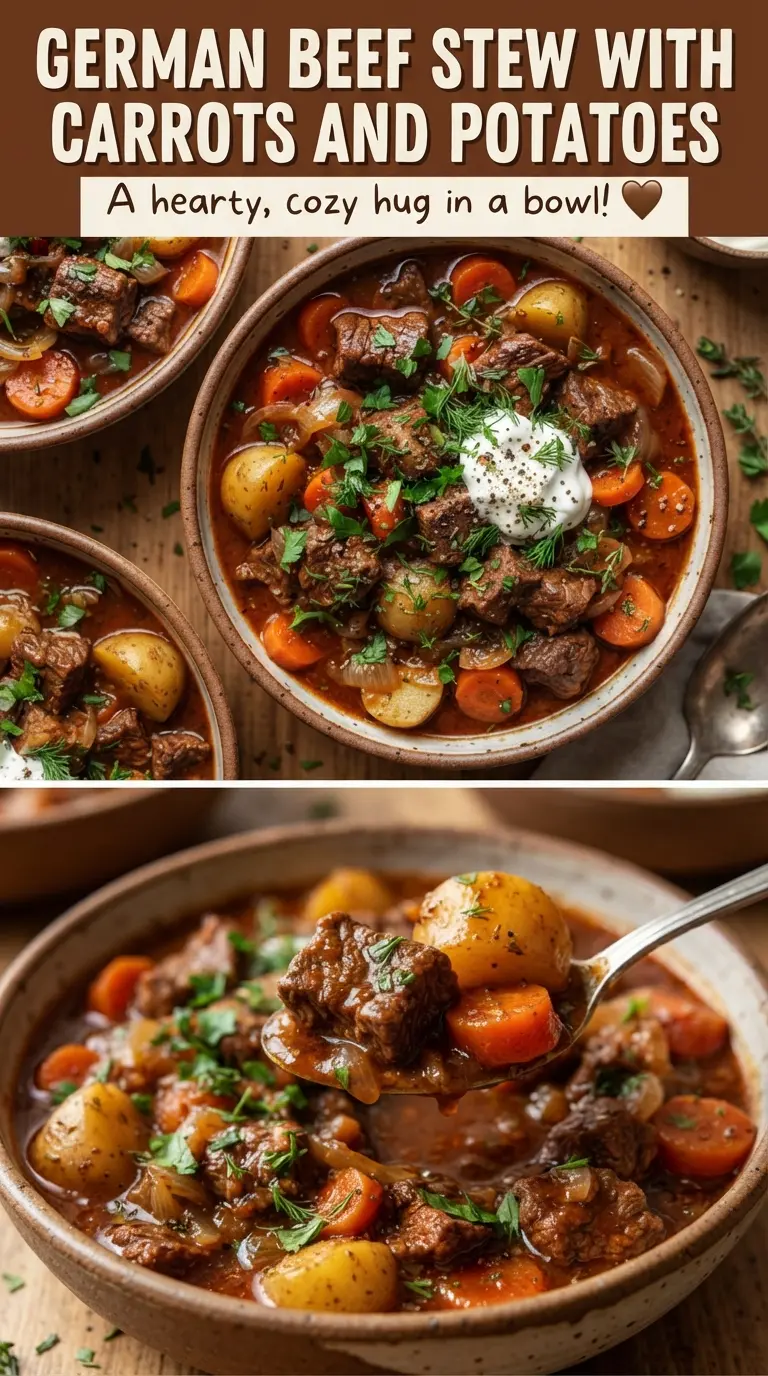
Deep, dark, and fall-apart tender, this German beef stew turns a handful of simple ingredients into a pot that tastes like it took all day because, in the best way, it does. The beef braises until it’s spoon-tender, the broth thickens just enough to coat the potatoes, and the carrots hold their shape without going soft and sweet in the background. It’s the kind of stew that lands on the table with a quiet kind of confidence.
The key here is building flavor in layers before any liquid goes in. Browning the flour-dusted beef gives the stew body, and the onions need enough time to turn deeply golden before the beer hits the pot. That sweet paprika and caraway step matters too; bloom them in the fat and they stop tasting flat or dusty, which is where a lot of stews go wrong.
Below, I’ll show you how to keep the braise balanced, when to add the potatoes so they stay intact, and why that splash of vinegar at the end sharpens everything instead of making the pot taste sour.
The beef got beautifully tender and the broth had that deep beer-and-paprika flavor without tasting bitter. Adding the potatoes and carrots later kept them from turning mushy, and the whole pot tasted even better the next day.
Save this German beef stew for the nights when you want tender chuck, beer-braised depth, and potatoes that soak up every bit of the sauce.
The Step That Keeps the Beer Braise Rich Instead of Thin
The difference between a good beef stew and a flat one usually comes down to the first ten minutes. If the onions are rushed, the beer never gets enough support and the broth tastes one-note. If the beef is crowded, it steams instead of browns, and that lost browning is exactly where the deep savory flavor should have come from.
Flouring the beef before it hits the pot does two jobs at once: it helps the meat brown and it gives the stew a little natural body as it simmers. The flour that doesn’t cling tightly will toast in the pot along with the paprika and onions, which keeps the broth from tasting raw. Keep the heat moderate when the spices go in. Paprika burns fast, and once it turns bitter there’s no fixing it.
- Beef chuck — This cut has enough connective tissue to go tender during the long simmer. Leaner beef will dry out before the vegetables are done.
- German dark beer — This brings malty depth and a little bitterness that balances the carrots and onions. A dark lager works best; don’t use something aggressively hoppy or the stew can turn sharp.
- Caraway seeds — They’re a classic German-style flavor here, and blooming them in the fat releases their earthy, almost rye-bread aroma. If you don’t love them, cut the amount in half rather than skipping them entirely.
- Red wine vinegar — The final splash wakes up the broth and keeps it from tasting heavy. Stir it in at the end so it stays bright instead of cooking off.
What Each Ingredient Is Actually Doing in This Recipe
- Primary ingredient (the star) — Quality matters most. Choose the best you can find.
- Cooking medium (oil, butter, or broth) — This carries flavors and prevents dryness.
- Seasonings (salt, pepper, spices, herbs) — Layer flavors so nothing overpowers. Build depth gradually.
- Aromatics (garlic, onion, herbs) — Cook with fat to bloom flavors. Become the foundation.
- Supporting ingredients — Complement the main ingredient without overpowering it.
- Sauce or liquid (if applicable) — Brings flavors together. Balance richness with acid.
- Acid (lemon, vinegar, wine, or other) — Brightens and prevents flat-tasting results.
- Final finish (garnish, glaze, or sauce) — Prevents one-dimensional taste and adds visual appeal.
Building the Stew in the Right Order
Brown the Beef in Batches
Season the beef, toss it with the flour, and brown it in batches until the edges are deeply colored. You want a dark crust, not gray cubes sitting in a wet pan. If the pot looks crowded, stop and do another round; too much meat at once drops the temperature and blocks browning. Leave the browned bits in the bottom. They’re part of the stew’s backbone.
Cook the Onions Until They Turn Sweet
The onions need a real 8 to 10 minutes, not a quick soften. They should go from pale and sharp to soft, golden, and a little jammy before the garlic, tomato paste, paprika, and caraway join in. That short toast wakes up the spices and cooks off the raw edge from the tomato paste. If the pot starts catching, lower the heat and splash in a spoonful of beer to loosen it.
Let the Braise Do the Heavy Lifting
Once the beer, broth, mustard, vinegar, and bay leaves are in, the pot should come up to a gentle simmer, not a hard boil. Hard bubbling makes the beef seize up and can muddy the broth. Cover the pot and let time do the work for about 1 1/2 hours, until the beef is starting to give when pressed with a spoon. The liquid should barely move while it cooks.
Add the Potatoes and Carrots Later
The vegetables go in after the beef has started softening, not from the beginning. Potatoes dropped in too early turn mealy and collapse into the broth, while carrots lose their shape and sweetness. Simmer them until the potatoes are just tender and the carrots still have a little resistance at the center. The stew thickens naturally as the potatoes release starch, so don’t panic if it looks loose at first.
Finish With Herbs and a Final Taste
Pull out the bay leaves, then scatter the parsley over the top just before serving. Taste the broth at the end and decide whether it needs a pinch more salt or another tiny splash of vinegar. That last acid check matters because the stew will have mellowed during the long cook. The finished bowl should taste deep and rounded, not heavy.
What to Change When You Need a Different Version
Gluten-Free Stew
Skip the flour on the beef and brown it plain, then thicken the finished stew with a small cornstarch slurry if needed. You’ll lose a little of the built-in body, but the broth will still be rich from the beer, onions, and long simmer.
No Beer, No Problem
Use extra beef broth plus 1 to 2 teaspoons of brown sugar or a little molasses to replace some of the beer’s maltiness. The stew will be slightly less deep, but the paprika and mustard still keep it layered and savory.
Make It a Bigger Pot for Leftovers
You can stretch this with another potato and an extra carrot or two, but don’t double the liquid unless you also use a larger pot. A wider, shallower pot helps the stew reduce properly; in a cramped pot, the broth stays thin and the vegetables cook unevenly.
Storage and Reheating
- Refrigerator: Store covered for up to 4 days. The flavor deepens overnight, and the broth will thicken as it chills.
- Freezer: Freezes well for up to 3 months, though the potatoes will soften a bit after thawing. Cool completely before freezing in airtight containers.
- Reheating: Rewarm gently on the stove over low heat with a splash of broth or water if needed. Don’t boil it hard or the beef can tighten and the potatoes can break apart.
Answers to the Questions Worth Asking
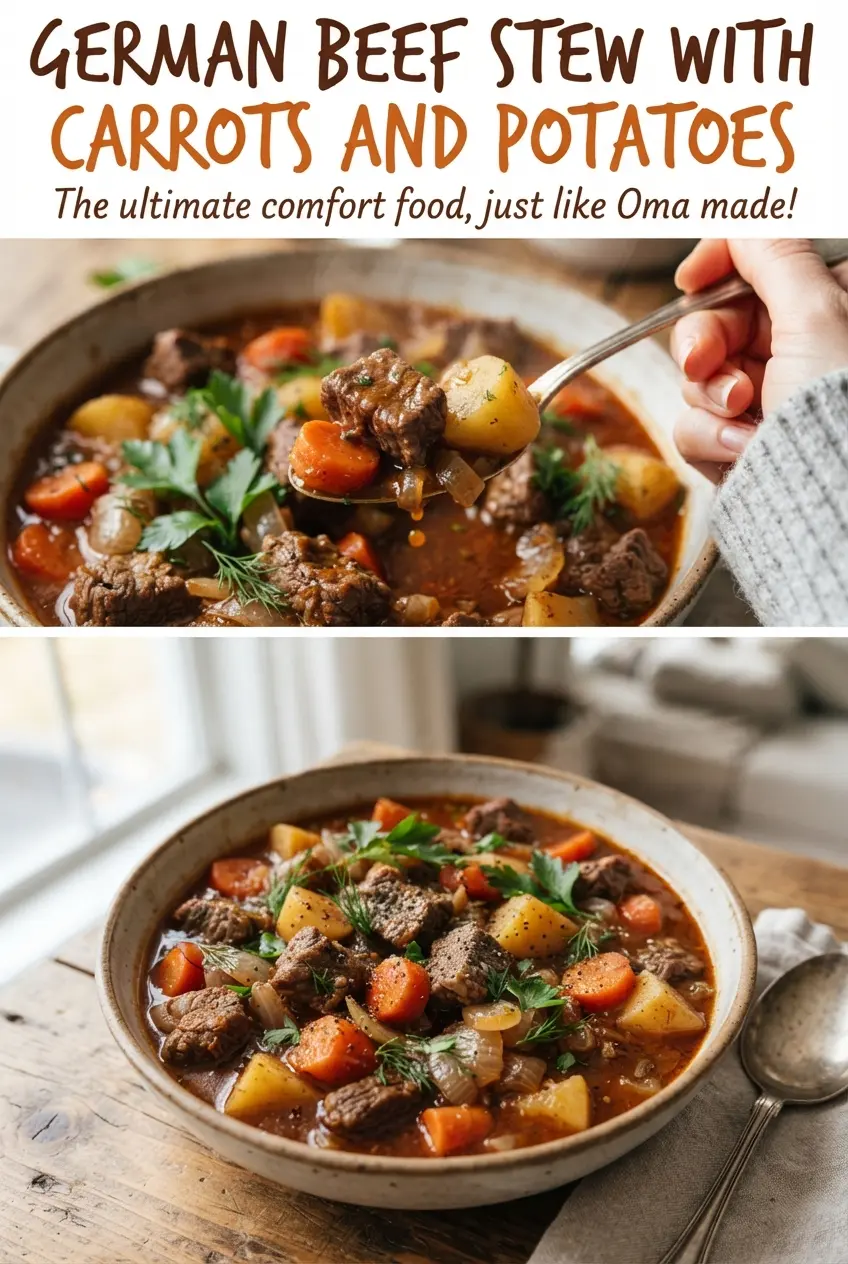
German Beef Stew with Carrots and Potatoes
Ingredients
Equipment
Method
- Season the beef cubes with salt and black pepper, then toss with the all-purpose flour until coated. Brown in batches in the butter or oil over medium-high heat until deeply browned, about 6-8 minutes total per batch, and transfer to a plate as the beef gives off a clear, roasted color.
- Cook the sliced onions in the same Dutch oven over medium heat for 8-10 minutes until golden, scraping up any browned bits. Add the minced garlic, tomato paste, sweet paprika, and caraway seeds and cook for 1 minute until fragrant.
- Pour in the German dark beer and scrape the pot thoroughly to dissolve the browned fond. Stir in the beef broth, Dijon mustard, red wine vinegar, and bay leaves, then return the beef to the pot and bring to a gentle simmer.
- Cover and simmer on low until the beef is tender, about 1 1/2 hours, keeping bubbles steady but not rolling. Check occasionally for a gentle simmer and add a splash of broth only if the pot looks dry.
- Add the cubed potatoes and sliced thick carrots, then cover and simmer 45-60 minutes until tender when pierced with a fork. Watch for the vegetables to soften while the sauce thickens and clings to the meat.
- Remove the bay leaves, then top the stew with chopped fresh parsley. Let it sit 5 minutes off the heat so the flavors settle, and serve hot.